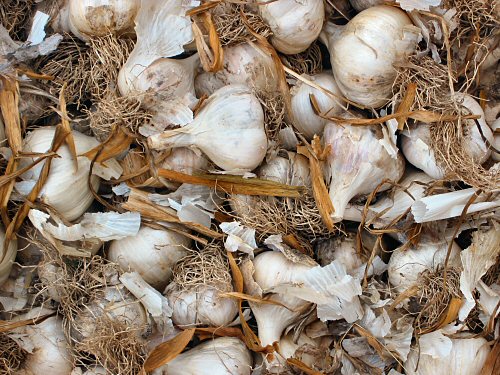
Garlic for sale…?

It’s never too early to make sure you have enough garlic to seed next year’s crop. Local garlic is kind of a cult item, people who want it get quite intense about stocking up, whether for winter or to finally take a shot at growing their own. And it’s somehow hard to resist selling your every last bulb… It’s not a money thing, because it costs me just about exactly what I make to buy back the same quantity, it’s that people seem so happy to have gotten some.

I’ve chatted with independent garlic growers small and large, and overselling your stock seems to be quite common. As a bonus to saving rather than buying every season, selecting the best bulbs as seed garlic from your own harvest may eventually result in an improved strain for your particular plot (the way garlic reproduces via vegetative cloning, I’m not sure what genetic science says about this as an improvement strategy, but it certainly can’t hurt!).

Every year, I go through this same bit of reasoning…and can’t resist loading up another bushel for market… This year, I had the urge to check my garlic suppliers earlier than ever before (at some point every year, they run out), and a couple of quick calls today gave me added incentive. Apparently, seed garlic is selling out fast, possibly because of an apparently growing public aversion to garlic from China (that’s where much of the cheap supermarket garlic comes from). Last year, I was able to get garlic in November. Now, my big wholesaler of certified organic Music thinks he might be sold out by next week! Time to start selecting…
Weed gone to seed

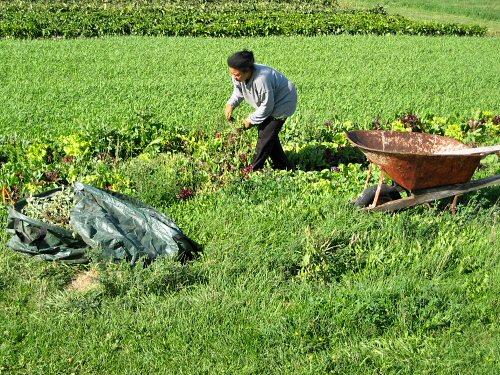
With more people in the field this year, end-of-season clean-up is already well underway. Here, Midori, visiting after moving to France a couple of years back, removes weeds that’ve gone to seed from three older beds of mesclun that’re waiting to be tilled in.

Ideally, finished beds would be promptly mowed down, spread with compost, tilled, and then seeded with a new veggie or cover crop a week or two later. Things aren’t usually that efficient, finished beds sometimes sit for weeks, weeds pop up in the interim, and if they go to seed, have to be removed before tilling so as not to add more seed to what’s already there…

Lying around: the green plastic garden totes are quite useful once the handles have been properly reinforced with rivets; the old builder’s wheelbarrow comes in handy for rocks, fallen tomatoes and the like.

The grass in front, in need of mowing, is part of a wide path on one side of the greenhouse, the grass beyond is the magnificent oats green manure cover crop.

Oh, no frost last night, as you can see from the happy peppers at the top of the pic!

Trying fall rye

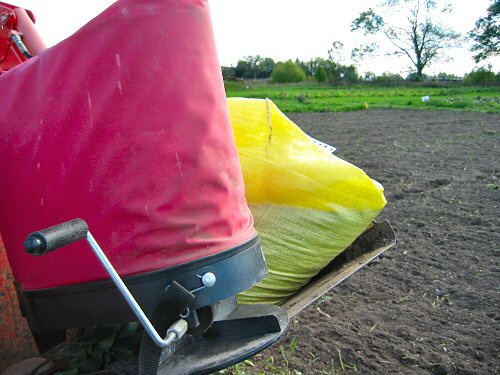
With the oats experiment going good all around the field, it’s time for experimental green manure-cover crop #2, fall rye (starts and grows well in cool weather). Reading about cover crops online, I found one apparently popular method for seeding ’em is…”airplane”. I use the more down-to-earth Earthway broadcast seeder, which works like one of those hand-held lawn seeders, except there’s a big zippered bag and shoulder strap instead of the handgrip and little funnel. You fill up the bag, sling it over your shoulder, and then, in one smooth movement—limbs, synchronize!—turn the crank with your right hand, slide open the seed hole (with a little spring-loaded lever) with your left, and start walking (I go forward). The seed streams out of the aperture at the bottom of the bag, onto a rotating plate with dividers that flings the seed a little over 180° in front of you. The combination of seed hole size (determined by how far back you pull the lever), and the cranking and walking speeds determine the coverage. Seed is spread maybe 5′-7′ (1.5-2.1m) on either side. Open the seed hole aperture too much and you’ll drain the bag in no time at all—heavy coverage. It’s not at all difficult, you can be broadcasting seed in minutes, but still, a little bit of a trick!

Return of spinach

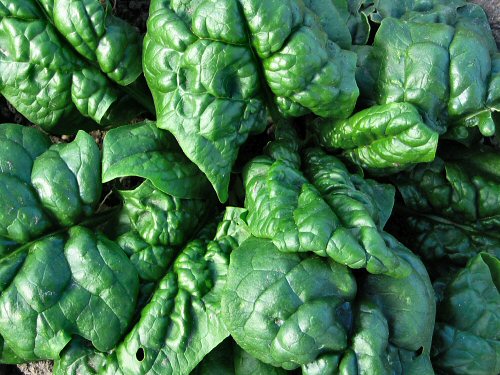
Spargo spinach

Fall spinach is finally ready to pick! The first five beds are pretty sparse—really poor germination in the dry heat of August—but what’s there is looking…succulent. The scattered new plantings of spinach, radish, mesclun and spicy brassica greens make parts of the field look like a whole new season…

A September view…

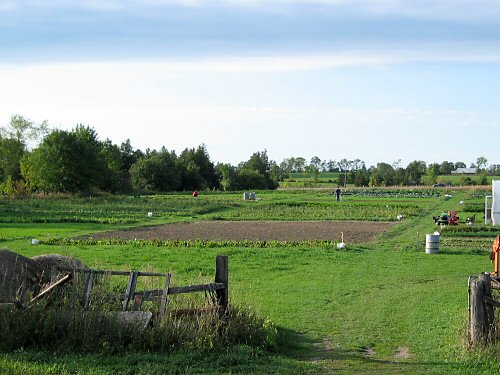
A rather warm (28°C) and sunny Sunday, feels more like late spring than the early days of autumn. The field is looking oddly full, thanks to the sections of oats, and quite orderly. Specks in the distance, Heike from Germany (the red dot), our third WWOOFer of the season, weeds spinach, and to her right, Conall waters in another fall seeding of salad mix and spinach. A laid-back day on the farm…

Hot peppers

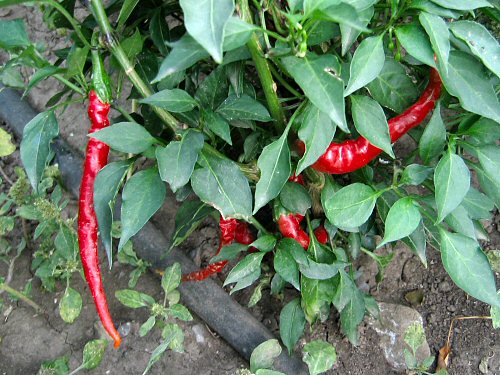
As things begin to slow down in the field, with crops finishing for the season, half-forgotten gems brighten up the harvest days. Here, two beds of hot peppers, tucked away at the bottom of the field, have been doing uncommonly well. I’m not well versed in pepper heat, but I can tell that most of the selection is…rather hot. So hot that delicately biting into the flesh, without actually chewing a piece, is enough to provide a sensation that most people find quite intense, even slightly alarming. These beautiful red Cayenne Long Slim are no exception!

Pumpkins’ progress

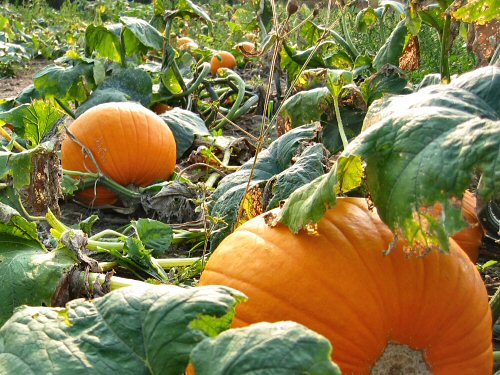
The pumpkin patch, recently a soothing sea of green, is now a mess of dried out leaves and expired plants. Most varieties were all but obliterated by the last month’s heat and lack of water—no rain, no spare irrigation. Still, they’ve all done quite well. It’s always fun to have fat orange and pale green-white pumpkins assembled on the grass in the field in the fall. So far, I haven’t had much other use for them, most are too bulky and low-priced to haul to market (we load in a pick-up truck, a trailer is the next step), or fit into off-farm CSA shares. This year, maybe a one-day “organic pumpkin” mini-sale on the farm stand… And there are some small pie and seed pumpkins (Small Sugar, Snack Jack), more portable at 3-5 pounds (1.4-2.3kg). Here, a row of larger Neon, looking nice!