Garden in transition

Garden in transition

The weather is warm, the days still feel long (although, at 5:00 a.m. for Saturday market, I’m already waking up in the dark)—summer is in full effect, but you know the season’s soon changing because the field is clearing out. Today, I did some tilling, cleaning up before weeds get too established, and preparing for a last seeding of spinach for fall harvest (a gamble, for sure).

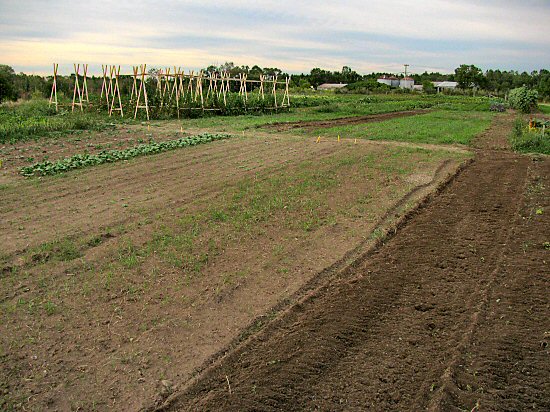
In the pic, a couple more passes to the left of the freshly turned strip and we’ll be at the edge of the previous spinach planting, barely visible, seeded about 3 weeks ago. To the left of that, a half-bed of bok choi, delicious and miraculously untouched by flea beetles, at tiny baby stage from seedlings transplanted at the beginning of the month. Beside the bok choi, beds of broccoli and cauliflower, also set out 4 weeks ago, and looking pretty good for harvest in October.

This section was planted out at the start of the season to snap peas, lettuce, and the first spinach. After adding in some of the handy pelletized alfalfa, it gets to go round again!

In the next section (top right of the photo, which is…east), I’ve started tilling in an overgrowth of grass and vetch, where more peas and the first plot of potatoes used to be. That section is done for the year, and may get a protective cover of fall rye, as a green manure to be turned under in spring.

In the market garden, it’s always one thing after another… :)
All clear…

January and the field’s all clear

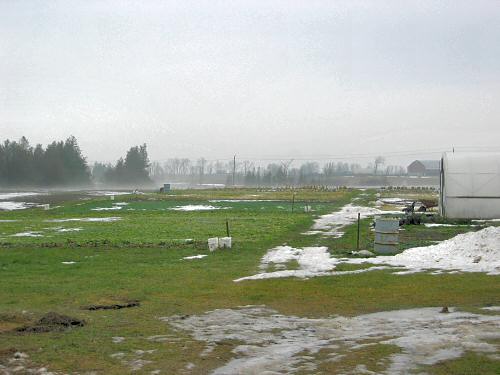
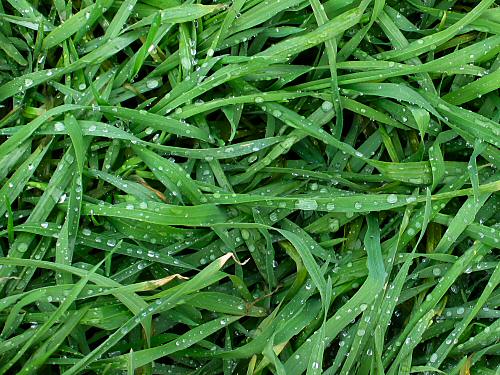
After a night of rain and 50°F (10°C) warmth, the field is just about clear. What a difference a couple of days can make… I took a walk. The ground isn’t even frozen—with the odd way all that snow came before a real cooling down period, the ground was insulated by the snow and didn’t freeze too deeply. It’s quite strange. Usually, during the March end-of-winter melt-off, the clayey soil is wet, sticky, mucky, sucking, and the drainage is slower as the frozen ground thaws out, but now, some areas are dry enough to till! The scene also looks quite differen—greener!—than in previous years, because I’ve left a lot of cover crops (oats, bit of rye), and there were quite of few beds of late harvest veggies caught in the first snow. There’s potentially good stuff out there: huge carrots, beets, spinach. They may be too cold-damaged to be worth a harvest, I’ll check ’em out tomorrow. And the unmulched garlic is doing fine!

Read more

Cleaning up

Fall field

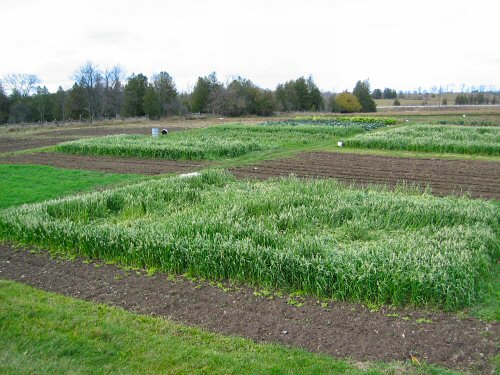
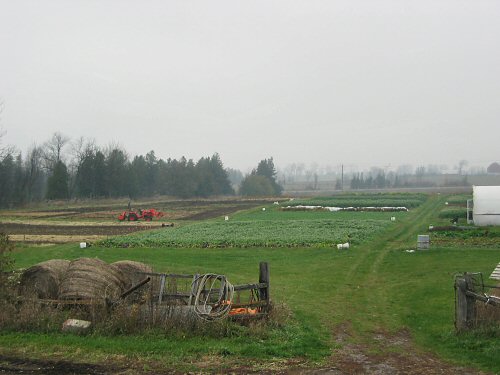
Here’s a look to the north from my new favorite photo spot, on top of the farm stand. We’re down to mainly brassicas, oats and rye (that’s the low, darker green section poking in on the left). The oats has started to die off and topple over, leaving collapsed areas that look as if animals had bedded down… The days lately have mainly been overcast and quite cold, just above 0°F, with a fair bit of rain that leaves the ground mucky. My hours a day spent in the field are winding down, a two or three hour job at a time, weather permitting. Elsewhere, there’s lots of putting in order and stowing away, and clean-up in the Extended Milkhouse where all kinds of junk accumulates over the year. Getting set for winter.

Turn to the left and here’s the view over the greenhouse. The grass-alfalfa mulch is still inside, along with stacked rolls of row cover.

Checking on rye

Rye

The fall rye has stayed low and not gotten too dense, but filled out nicely. As a cover crop/green manure experiment, I guess it’s doing fine. It’ll be there overwinter, and we’ll see how it does come spring. My only concern is that it gets too established and turns into a weed—it’s supposed to be potentially invasive—and that we’ll find out when the time comes!

Rye arrives!

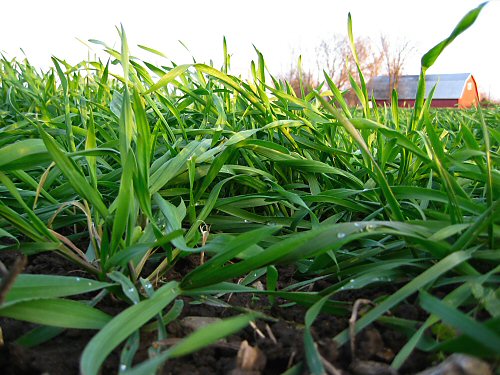
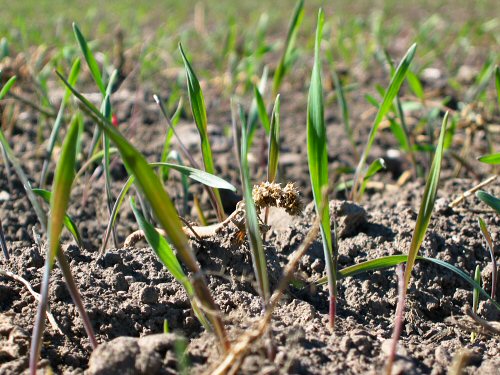
Where the oats arrived with a dramatic, iridescent splash of green, the fall rye made a much more sedate entrance, so much so that I didn’t notice it until today. It probably emerged a couple of days ago. It’s looking great! I dunno why I’m so extremely pleased by these green manure cover crops…but I am! The rye comes with a lot of promise. It probably won’t winterkill, instead, start up again in spring, making it good for sections that won’t be planted out till May. It thrives in cool weather, also making it great for fall and spring service. And it may have an allelopathic effect on PIGWEED, meaning that, on a plant-produced chemical level, future pigweed may suffer… That’s nice. On the caution side, if it gets too well-established, it could be a little tough to eradicate. No worries. I won’t seed it on sections that’ll be used for the earliest spring planting (there won’t be time to till it in), but otherwise, I’ll spread this around everywhere I can for the next month or so and see what happens!