
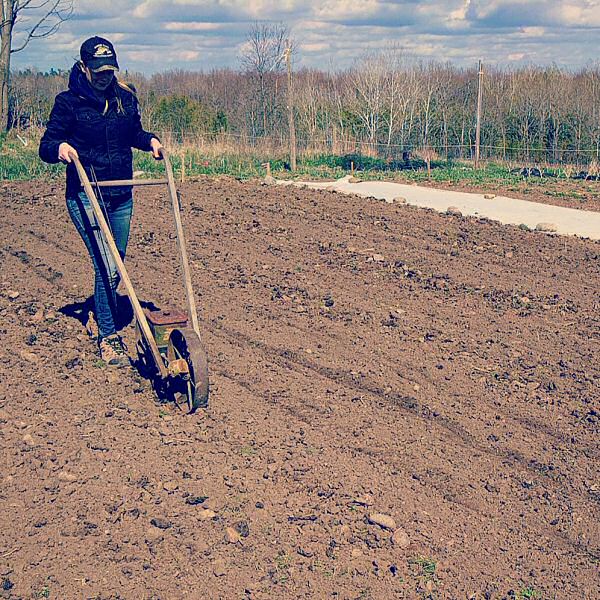
The Planet Jr. rides again. Clara learns the way of the antique seeder, having just laid down three rows of Kestrel beets. This old seeder continues to serve well!
Tools
Equipment for large-scale agriculture is too big or too expensive, and many home gardening tools don’t work efficiently on larger jobs or break easily. Tiny farming on plots up to two or three acres requires its own special gear…
The indispensably cheap sprinkler
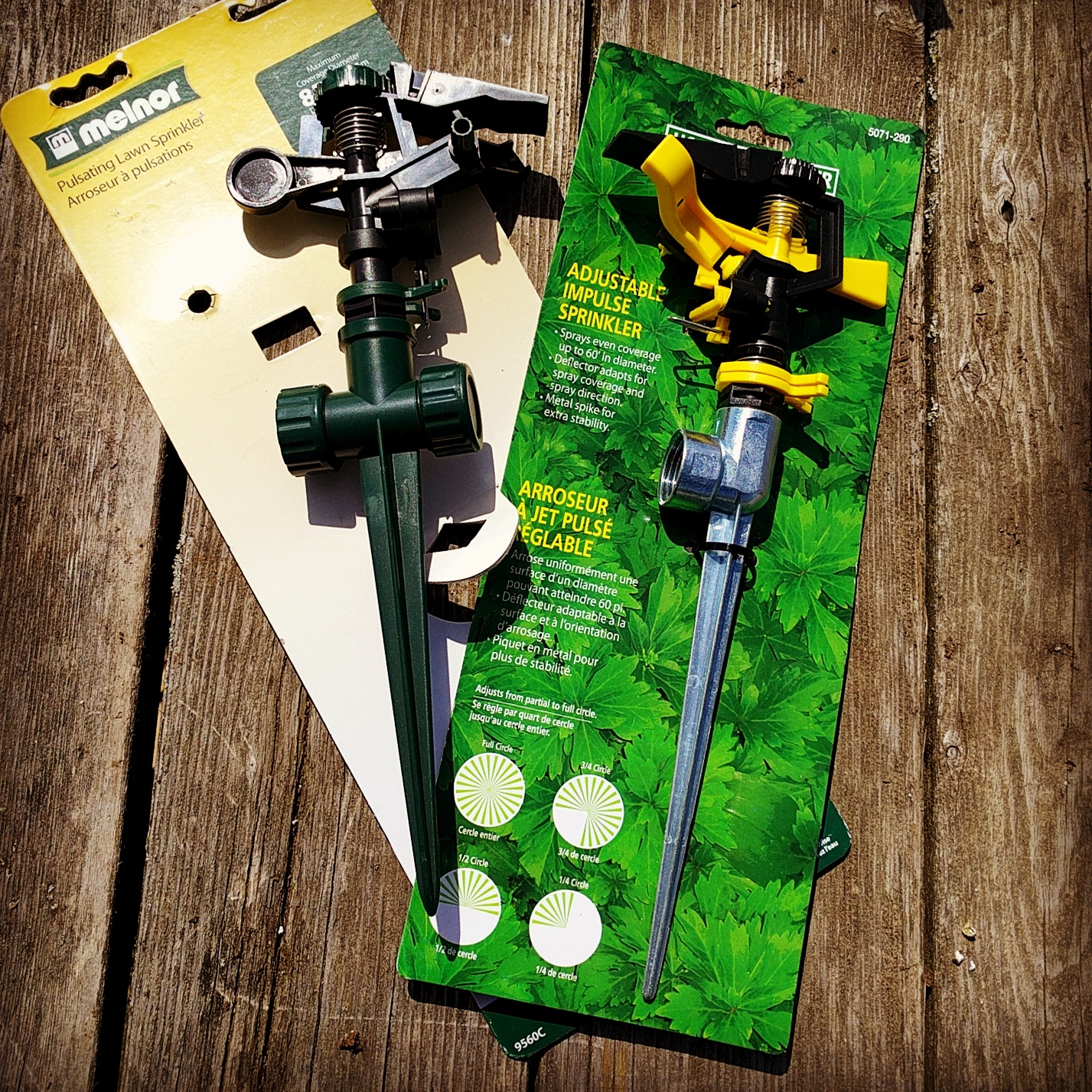
Cheap! To truly appreciate tiny farming, you have to embrace the humble tools that make it all possible, like these cheap ($6) plastic lawn sprinklers that work with the well pump’s low pressure (maybe 20% of normal urban tap psi), where better quality models are too well-built (heavy) to move. On the hunt for more replacements, I picked up a couple of versions at a second stop, after a failed attempt in the sprawling garden center of a giant hardware store, where they’d stopped carrying the cheap stuff. Overhead irrigation is inefficient at any scale, what with evaporation and water being blown off target, but at this small scale, it’s still an effective time-saver for watering in newly seeded beds…
Making salad mix
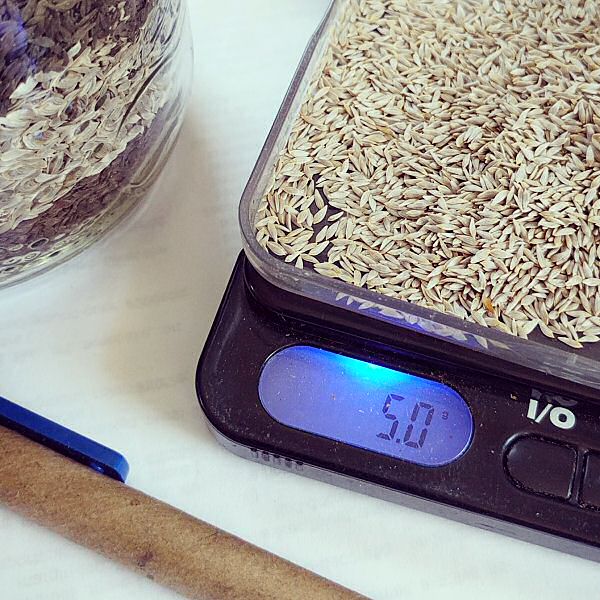
Adding a pinch (5g) of fairly pricey Rushmore (a beautifully deep-red oakleaf) to a batch of salad mix. This is the basic all-lettuce summer blend: seven varieties, selected mainly for color (greens to reds), texture (flat to frilly), and to some degree, seed cost (the price range of lettuce varieties is quite extreme). This inexpensive digital gram scale makes it easy to add relatively small quantities of certain varieties, and keep each batch consistent. Weigh out, shake up in bottle, ready to go. Here: 100g – that’s a lot of little lettuce!
Weed ID-ing in the Digital Age
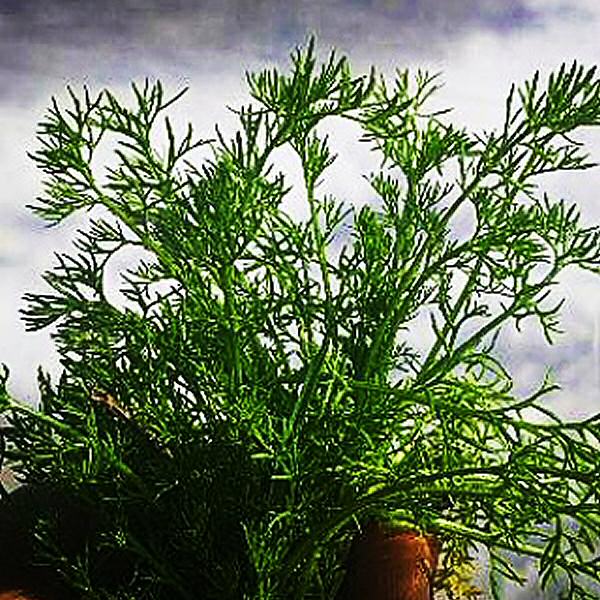
Wormwood of some sort, this weed from the greenhouse, according to our best guess from a selection of possibilities offered up by the smart smartphone plant identification app I’ve been playing with/trying out. There are several such apps for Android: this one’s called Like That Garden—”See a plant, take a photo, and find out what it is – instantly!” It got the highest ratings, and is free, so I grabbed it.
Like the advertising says, it’s that simple to use. With the app, you take a snapshot of the mystery plant that’s saved as a low rez image (above) and sent off into the ether where it’s checked against a vast plant photo database, several possibilities soon return, with multiple images for each, and you pick the one most likely (I suppose in some cases, only one choice comes back, but so far, that hasn’t happened). The technology is all about advanced image recognition and visual searches, very…digital. Trying it out on a few plants, it’s worked quite well.
While this app is doing fine, I have a great (effective) weed book as well. Is the app a novelty toy, or a serious tiny farming tool? Or will the smartphone be accidentally dropped in a puddle and destroyed before we get a chance to decide? Only time will tell…
Seedlings start here

Staring up close at a stack of 72-cell plug sheets in webbed trays. Exactly where most of the transplant seedlings around here get started…!
Spring begins with the weather!
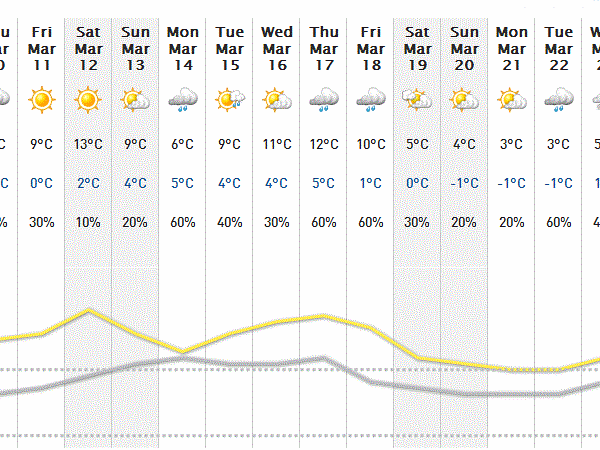
There’s official calendar Spring, and then there’s spring in the field, that ignores exact dates and goes by the weather, marking winter as over whenever the freezing temperatures end. If today’s two-week weather forecast is anything to go by—it is, in this case, when being off by ±5-10°C (14-23°F) either way isn’t a big concern—market garden spring starts now. For the moment, I’m mainly concerned about overnight lows in the unheated greenhouse, and whether row cover is necessary. If it stays above -15-20°C, my safe-with-no-cover cutoff, it should be fine to pull back the covers and let the sun shine in (prepared, of course, to put it right back if there’s a sudden severe dip, which we hope doesn’t happen). Nothing complicated, just a little of the gambling that’s called working with the seasons!
Excellent soil building book
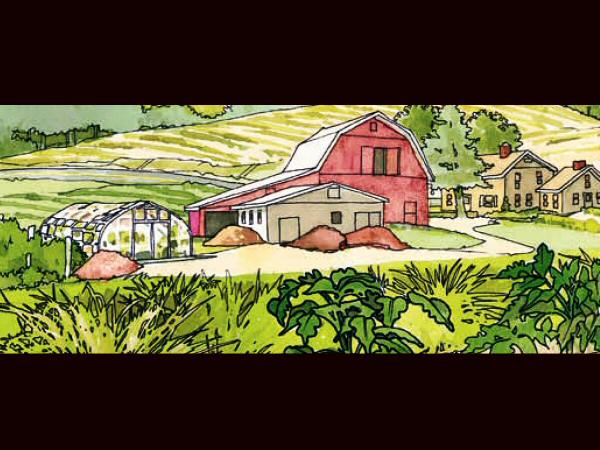
A reminder: Building Soils for Better Crops: Sustainable Soil Management is an excellent, book about soil for growers, free to download, or you can buy a hard copy. Follow the link, or read a bit more where I posted about it quite a while ago. The image above is cropped from the cover, a very specific type of old school farm view and set-up, which happens to be the one I’m familiar with; where you are may be totally different, as may be the soil, but the idea of growing is the same, and chances are this book is useful!