Rock, pebble, stone

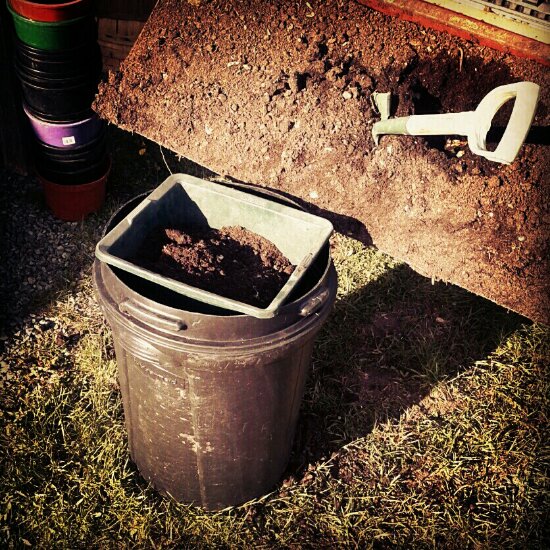
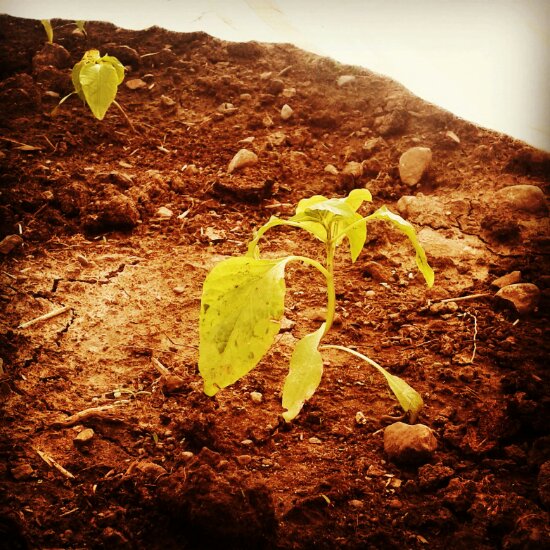
Imagine a world of soil without stones… In the three farming locations I’ve fully worked, they’ve been everywhere and in all sizes. You get used to them: collecting heavier, smoother specimens for weighting row cover, moving even bigger ones to avoid breaking tines on the rototillers, piling up the grapefruit and orange-sized rocks by the tractor bucket load, and raking the smallest out of the way of the seeders. I have experimented a bit with how much I can leave and still have the seeders not bounce around and lay down seed unevenly. Raking as the last step of bed preparation is still the way we go.

Toothpick timekeeping!

A toothpick tracking system. Before heading out to be transplanted in the field, so they don’t bet burned, seedlings growing under lights first have to be introduced to the sun. They go out in the day, get a toothpick, and come back in for the night. Each day of hardening off is marked by a toothpick—two or three days and they’ll be fine. Simple and sustainable—reuse your toothpicks and a single box could probably be made to last a lifetime.

Tape time!

Tape time again, measuring out this year’s market garden. I’ve come up with various schemes to do away with this step as an annual thing, but end up wanting to move things around, or accidentally tilling under a critical stake or two left from the year before. The method is pretty primitive:  walk around with a 200′ reel tape measure, trying to keep things square (the 3-4-5 trick!), staking an outline that can be used later to easily line up smaller sections as needed. That’s Rochelle at the other end, doing this two-person is the preferred way to go. The eventual result: a new garden map

Ice storm

Ice storm. Some strange, quick mix of rain and freezing cold that puts a thick coating of ice on everything, and creates sturdy little icicles wherever water drips (like, above, from the 3-point hitch that’s attaching the rototiller to the tiny tractor). Quite amazing, and a little alarming as well when you pass under big trees drooping and sagging under the extra weight. Massive branches falling and whole trees toppling are taking out power lines all over, it’s already been out for 12 hours in places around here, and the radio’s saying it might not be restored for another 24 hours. Back to the Stone Age. The Ice Age. At least, the pre-Electric Era. No Internet at night? Light a candle, or use your long-lasting LED headlamp, and read a book!

New plug sheets

Picked up a small shipment of new plug sheets and webbed trays at the post office. I really stretch ’em out, have some going for years—they’re reusable, but not incredibly tough, especially when you take them into the field for transplanting. Handle with care and all that, and replace as needed! These are 72-cell sheets, my basic standby. Bigger is generally better here (my other standby is 38-cells), but there’s only so much room under the lights: if you keep the timing tight, don’t leave things in there too long, they’re fine for just about any small seed. Waste no space! 

The refractometer has arrived!

Yep, the refractometer has arrived by mail! It’s quite exciting. This one is calibrated for the Brix scale—it indicates the amount of sugar and other dissolved solids in water. Drip a couple of drops of juice from the veg of your choice onto the screen, point at light, and peer through eyepiece to find out how nutrient-dense it really is (it’s a tool to see if we can measure results from this season’s remineralization plans). As easy and meaningful as it sounds? Well, we’ll see!