Tomato seed

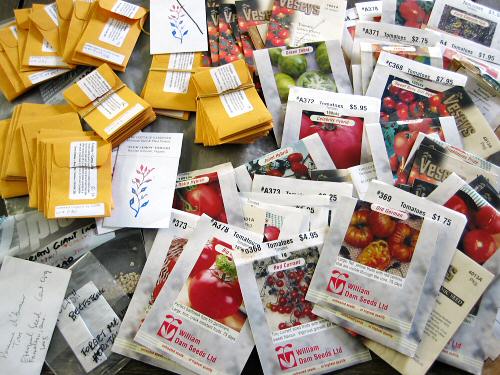
It’s sounds a little odd to call it that, but this is my tomato seed collection. A rough count says there are maybe 150 packets, with another 30 on the way with the just-completed all-heirloom tomato seed order. I’ll get a few more basics, like Juliet, in the last big general seed order, and that’ll be it for the season.

Most of these are different cultivars, there are only a few…doubles. The brown envelopes are heirlooms from a small seed company. The printed packets are mostly hybrids, from my two main seed suppliers. The plastic pouches and plainer white envelopes are various seed given to me to try (I’ll generally only accept seed from trusted sources, people who actually garden and seed-save, to avoid…disease).

Why so much, so many? I dunno. I don’t think of any other veggies in my seed supply as “collections” (like trading cards or tiny action figures). I do clearly remember looking closely at a fuzzy little tomato seed back in Year 1, about to start my first transplants, and thinking, “No way is this little thing is going to turn into a massive tomato plant with 20 lbs of big, fat tomatoes?!” (At that point, all I knew was what I’d read and seen in pictures.) It wasn’t so much disbelief in the powers of the seed, but in my ability to actually manage this obviously intense process—what a tiny seed!—to a reliable, predictable harvest.

Of course, once you’ve watched seeds grow into plants, it becomes…normal: clear the way a bit, and the plants do most of the work! Still, having imprinted themselves on my consciousness FIRST, right at my gardening start, I guess tomatoes have a mild hold on me, and I obsessively plant a few more different varieties every year.

This year, there may be a more manageable 40 varieties (down from over 60 a couple years back). I haven’t finished the starting line-up yet.
Exploring down below…

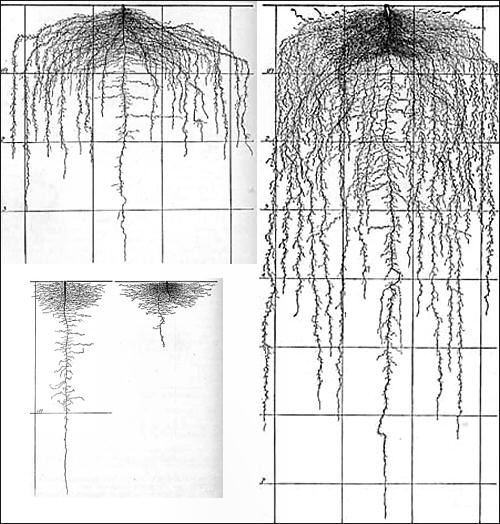
These technical drawings of a lettuce root system are from Root Development of Vegetable Crops*, first published in 1927 and now in the public domain. This is an incredible book that I just discovered. The text is like a complete gardening course delivered from underground. Over 30 North American common garden veggies are covered, a chapter each. The drawings record direct observation, the result of years of root excavation.

I can hardly describe how satisfying and…enlightening it is to simply look at page after page of painstakingly drawn root systems! Here, the top two pictures are lettuce at two months and then at three months and flowering. Each square in the grid is one foot. The little side-by-side illustratation shows 3-week-old seedlings, grown on the left in loose soil (nearly 2′ down!!), on the right in compacted soil (and to think, I have 3-week seedlings in tiny plug sheet cells, 2-1/2″ deep!). One look at this and your mind expands!

*I downloaded it from the fantastic Soil & Health Holistic Agriculture Library, an online repository for numerous excellent books, mostly from 1910-1960, and all entirely free—there are many organic farming classics, tons of great, practical stuff!

Lettuce-watching

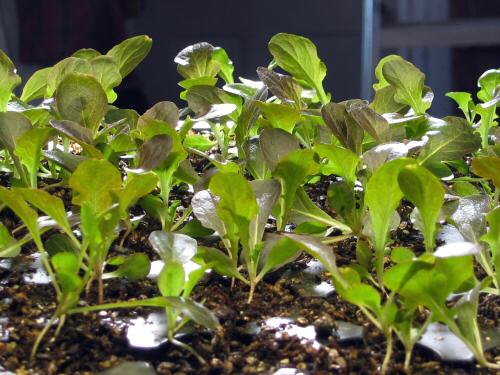
Tiny farming is in a mid-winter slow motion state right now, kinda like the calm before the storm. I don’t have daily livestock chores—I don’t have animals, yet!—and as far as garden activity, I’m waiting. About the only thing visual going on, besides lots of reading and staring at one screen or another, are the early seedlings. Here, the Granada is rapidly putting on color on its way to deep red… Lettuce-watching. Not that there’s little to do. There’s a new grow rack to build, lots of organizing in the Milkhouse and drive shed, materials to source and order, tons of stuff, actually. I could even get an early start on tax-time bookkeeping… Instead, I’m pushing it a bit, savoring leisurely reading for a few days, when there’s a little time!

Still snow…

The snow hasn’t gone anywhere in the last week, and there’s not much to see or do out there. The greenhouse needs to be cleaned up and made ready for an early March opening. That’ll be a day’s work next week, I still have to purchase a heater (indoor kerosene, I think it’ll be). And that’s it for now for gardening outdoors…

Leeks appear

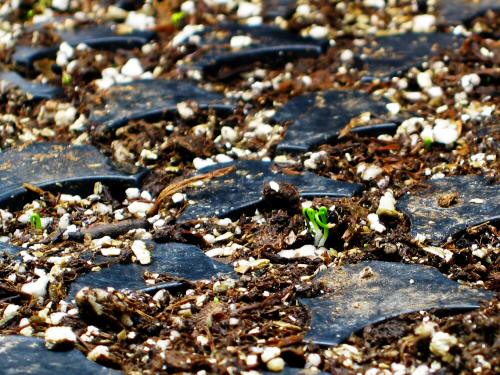
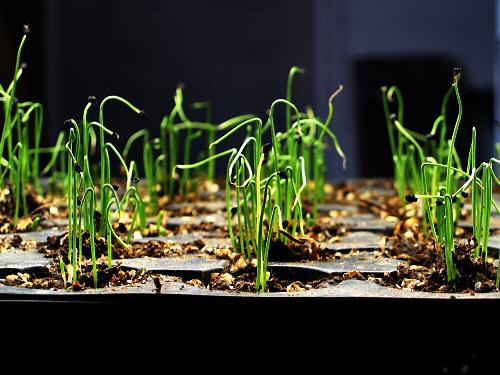
That was quick! After barely four days, the Jolant 75-day early leeks are poking up quite vigorously (there are early leeks and long season one’s that’re usually 100 days+ and more cold hardy). I used a mix of seed from last year and three years ago. Seed from the onion family has a short shelf life, it’s usually rated good for only a year, and I’ve noticed a pretty big drop in germination rate (I tested 2-year-old green onion seed, and it went from 88% germination to around 50%). Anyhow, because of that, I was pretty generous, dropping in maybe 6-8 seeds per, which will be thinned down to one or two. Anyhow, these guys are just raring to go…!

Little lettuce

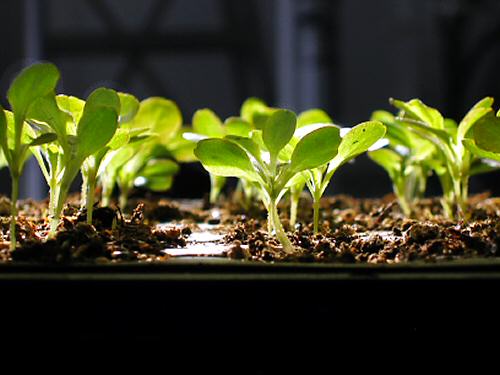
The year’s first lettuce is beginning to put on its true leaves. Here, Granada that will turn an intense burgundy, is just barely showing a tinge of red around the edges. The seedlings are still looking sharp: stocky and upright. Under the relatively weak fluorescents, they’ll inevitably stretch, but that’s OK, it’s…expected. Mid-February and it’s quiet and calm around here, the spring rush remains just around the corner, there’s still plenty of time to stop and gaze at the seedlings…

1 111 112 113 114 115 168