
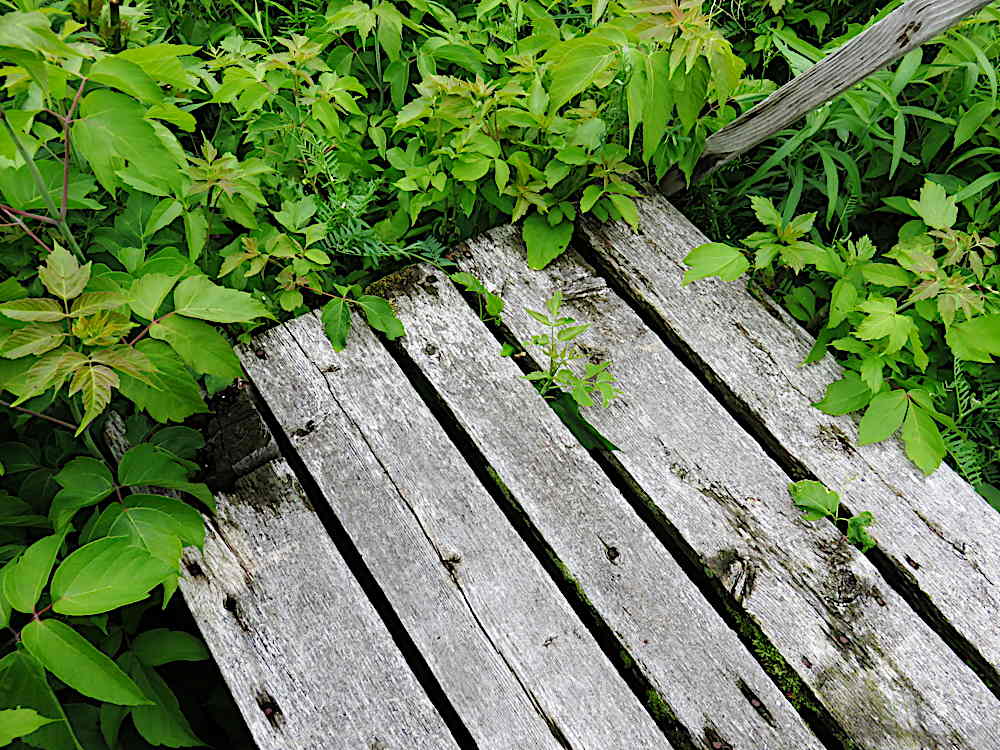
There’s definitely a kind of cheerful dark humor in the relentlessness of it all. When you settle in and observe, the calm and peaceful veggie garden is in a constant push-and-pull of competition and ways to get what they want. Everything’s hungrily chomping, from microorganisms in the soil, all the way to the deer who are hopefully getting zapped by the electric fence (it keeps them on their toes!). Weeds and crops sneak their solar panels to the front, trying to hoard light. The plants, the animals, the powdery mildew, you name it, they all just want to eat and grow, and they have no problem clearing each other out of their way. Wow! But maybe it’s not a battle royale, it’s a wondrously vast, seamless balancing act that can’t be properly described with words. Relax. Don’t overthink. Enjoy the invasive box elder, brutally cut back a couple of weeks ago, regrouped and now trying to eat the work table. Once again.
Quick storms and rainbows
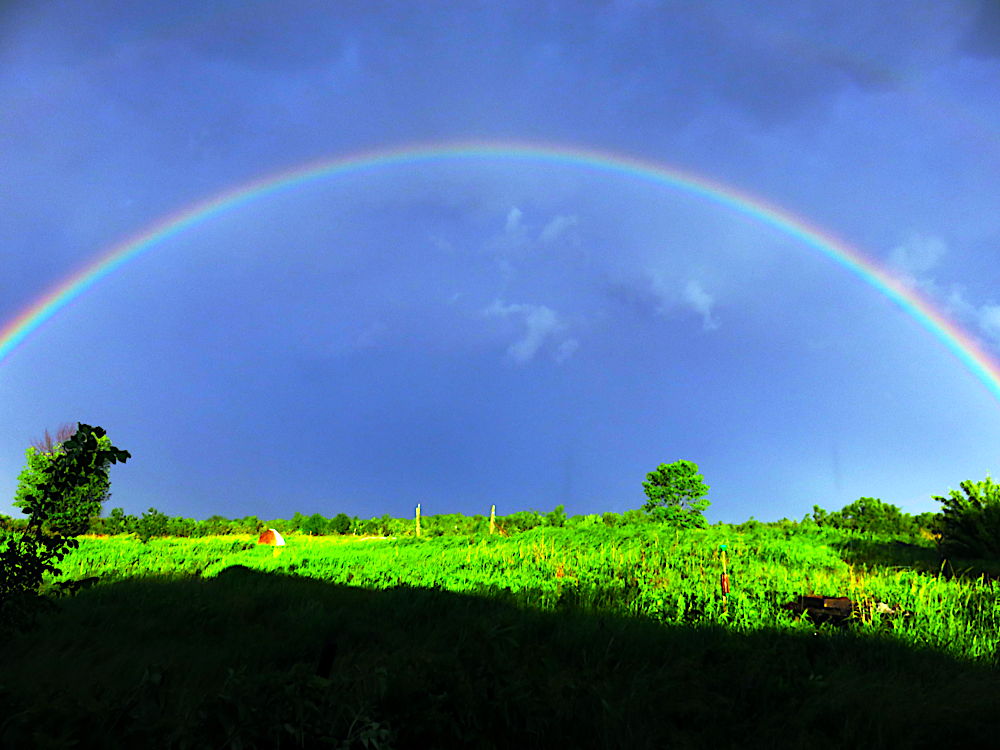
Seems to be a little weather pattern repeating over the last few weeks: ominous darkness rolls in with gusting wind, a short, sharp storm with lighting but usually no thunder, half an inch to an inch of rain drops in just a few minutes, then the sun suddenly pops up and…a rainbow. Quite the little show. There’ve been several storms like that recently, and although this is only the second rainbow I’ve seen, I wouldn’t rule out others I missed. This one was a full arc, treeline to treeline. Didn’t have a wide enough lens or enough backing up room to get it all on digital film. Overall, the rain is welcome, even if not the slow and soaking in kind, and the pretty massive rainbow was cool, good for letting your sci-fi imagination wander for a few minutes!
Mud on the leaves
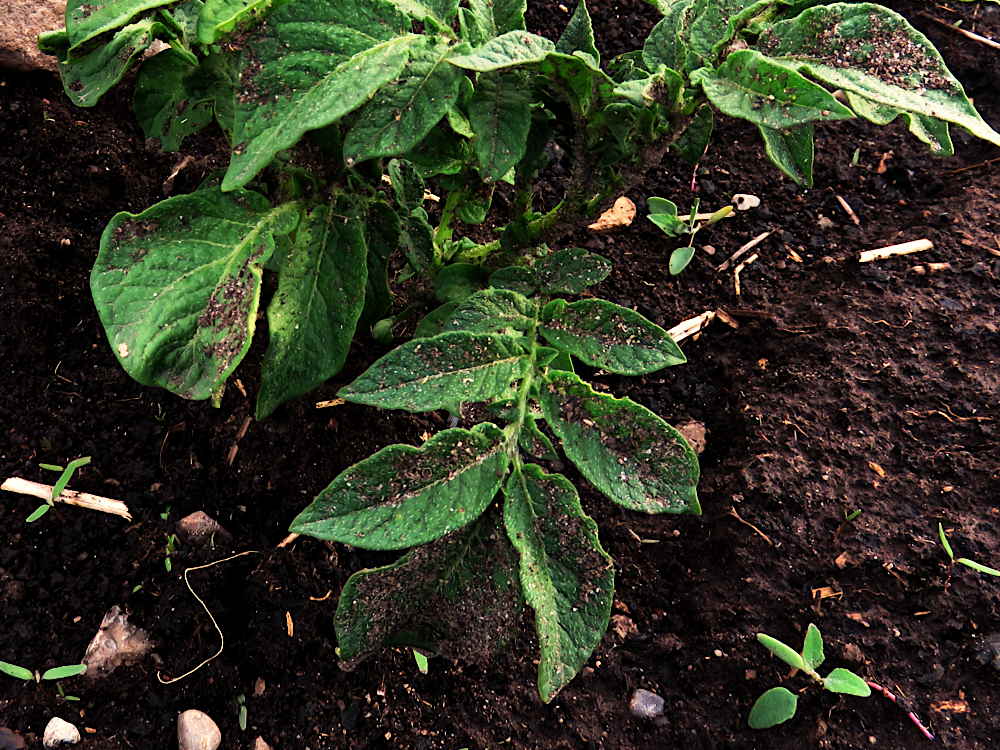
[From yesterday] Unless someone went wild with a hose, mud on the leaves is a sure sign of heavy, pelting rain. It came down this afternoon while I was on a supply run to town, hidden away in a giant box store, completely disconnected from big weather events (that is, until the power went out, which was its own little adventure in a dimly lit cavern). Back in the field, taking stock, the veggie plot was nicely watered in, the rain gauge read a decent half inch (1.25 cm), and no plant problems, just mud-splatter.
These potato plants do a good job of illustrating the ability of pounding rain to throw up a startling amount of dirt. Still, it’s really only of particular veg garden interest if you have to harvest in quantity. Grabbing some salad greens for dinner, a quick mud rinse and into the salad spinner, no problem. On the other hand, harvesting quantities of lettuce, baby salad greens, beets, radish, and carrots with tops, anything with leaves low to the ground right after a deluge becomes instant extra rinsing work. Which adds up! Of course, rain is manna from heaven for growing stuff. We can’t ever wish rain away, at least not around here (well, not most years). Harvest mud is just one of those things to take in stride…
Debatably late
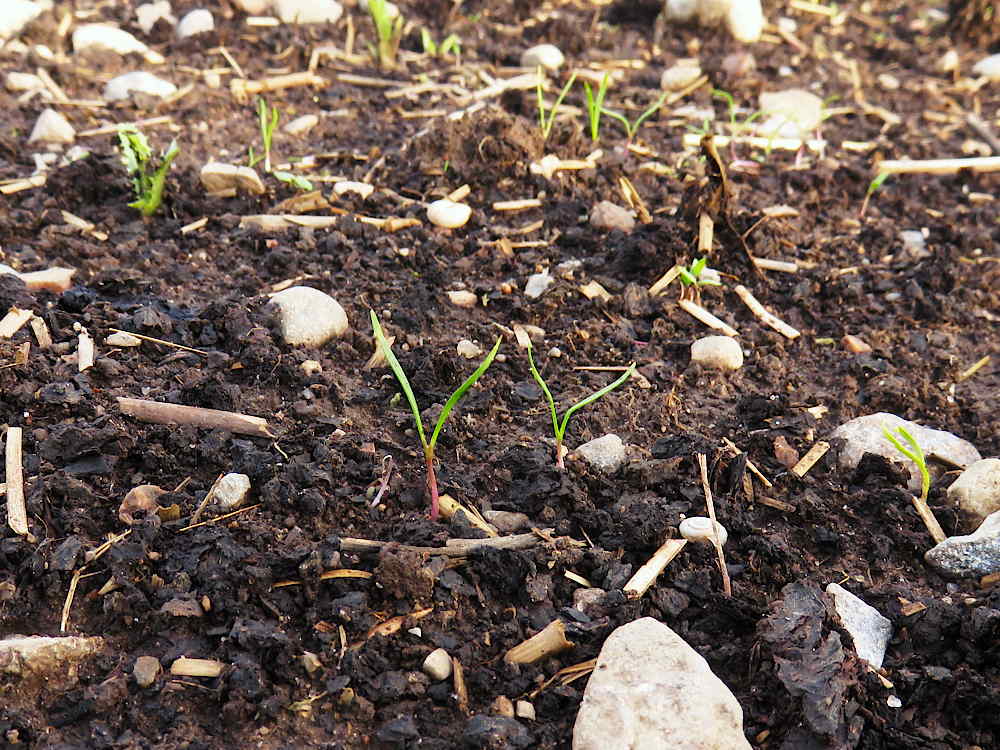
Much more me than the carrots in thinking they were taking so long, they weren’t going to arrive at all. The variety is Miami, a reliable hybrid, and the seed is from last year. To me, that’s fresh and ready to go. Given the recent soil-warming heat, uninterrupted moisture from watering and rain, and nice thick black landscape fabric cover to keep the heat and moisture in, I figured when I checked on day 7, then 8, they should be up and yelling for the sun. But there was nothing. I took off the cover, and didn’t let the bed dry out, but I was about to reseed. Then one more day went by, and there were a few tiny carrot seedlings starting to arch out of the soil. Still skeptical, I ignored it for another day, then checked this evening and…decent germination—actually, they’re really popping!
It’s not out of the ordinary, this production thinking that gets out of sync with reality. Patience is often rewarded. In this case, it’s not as dense germination as an Earthway seeder overseed, but it’ll do for a first round, and that’s over a week not wasted in re-starting the season’s first carrots! :)
On the right side of the fence
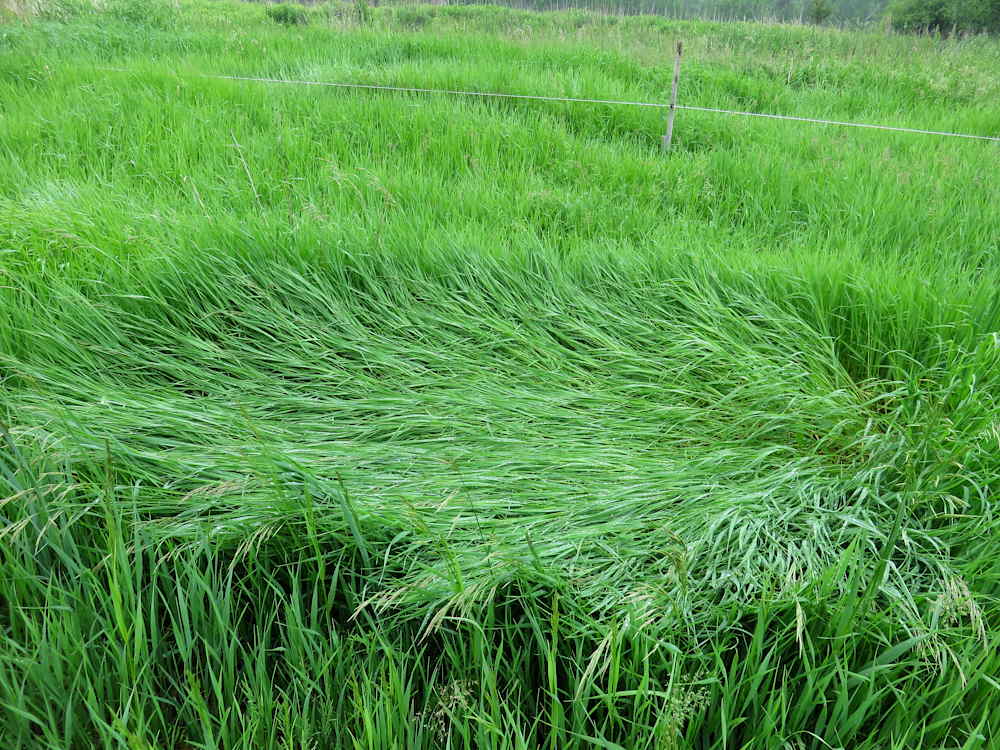
Wonder who spent the night here in the tall grass, so close to all those veggies. At least they stayed on the right side of the fence! It’s endlessly satisfying how that single white line and its steady pulse of intense electrical jolts have managed to keep the veg plot clear of deer. I can’t say for sure that’s what’s doing it, but deer are definitely all around, traveling through these fields, and they were a big garden forager before and during various lighter-weight fencing attempts. They only completely stopped devouring after that single line of defense went up. No electric fence guides I’ve read suggest just a single line, and yet, the plot’s been deer-free for years now. Can’t say the same for groundhogs, that extension of the electrical defense was a fair bit of work and a fail. But, still no deer!
Potatoes settle in
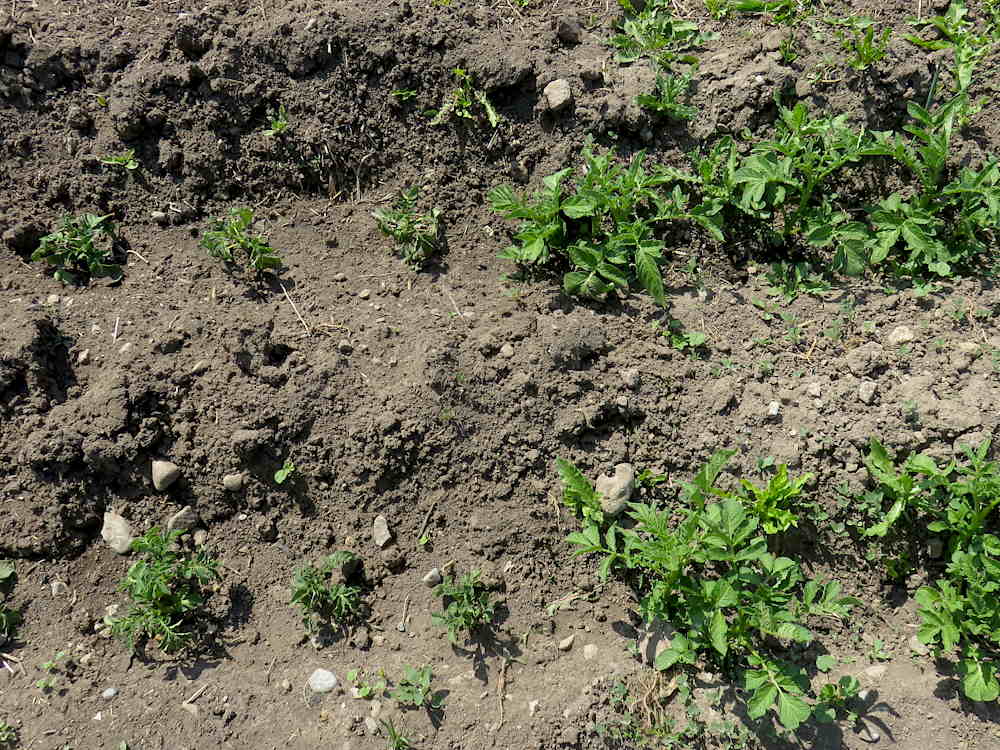
The volunteer potatoes from elsewhere in the garden, dug up and transplanted a couple of days ago, sit side by side with the original settlers in these trenches. Guess which! The transplants seem to be doing fine, but the directly overhead high-noon view is the harshest. They do look a little huddled and scrunched, not like the expansive riot of green growth of their neighbors. The roots of the new guys haven’t reestablished enough to pump a full measure of water to the stems and leaves, that’s my simple guess. Give them time to settle in.
Morning dew
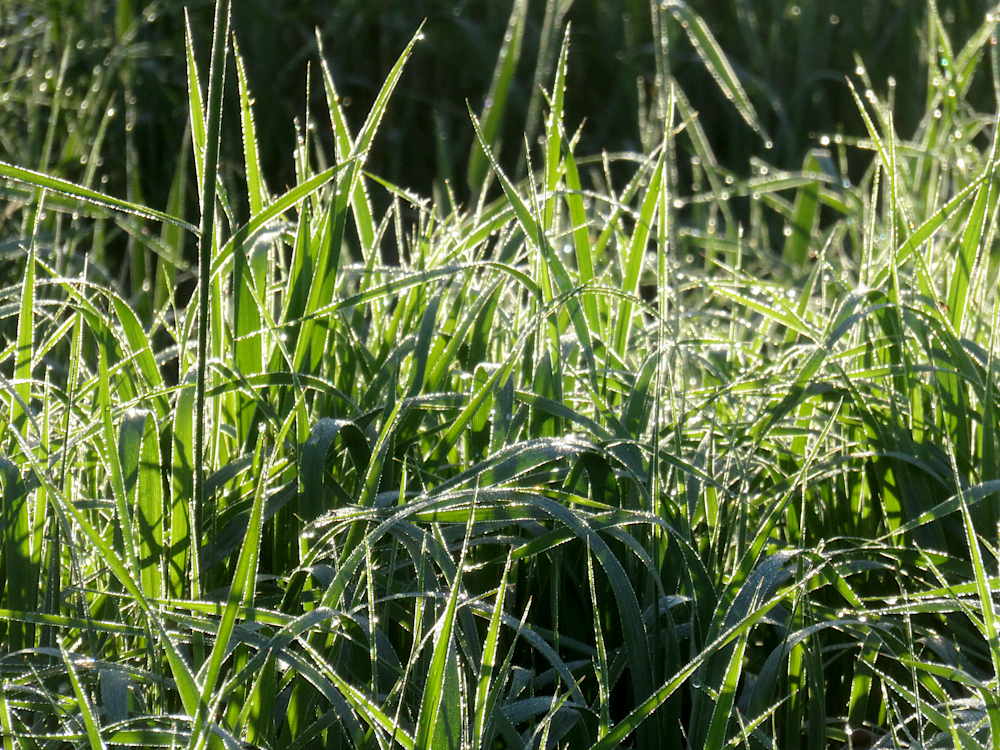
It’s around 6 a.m. and I’m out in the field, in a grassy meadow that hasn’t been cut in years. At this hour on a sunny June morning, it’s wet out here! The sun is low but fully risen, backlighting the dew. The light is intensely glittering but without glare, like millions of tiny droplet-sized lightbulbs, each nearly as bright as the sun. To get to the tool shed, I’m walking a well-trodden single-file path through the unchecked grass. Weighed down blades lean in and soak a line in my jeans as I brush by. Rubber boots for sure. It’s almost mind-blowing when you think about how much water is gathered out there, all in single drops. Then the sun burns it off in an hour or two, and it’s back to the regular day.