
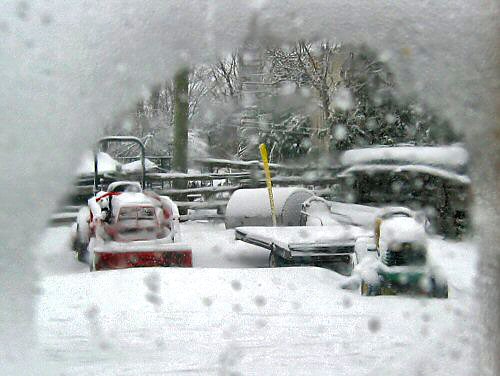
Looking out the side door of the Extended Milkhouse, this is what I see. The mighty tiny tractors don’t seem too formidable under a little snow. A good old fashioned blizzard and they’d be…gone! A few years of crazy short winters, and it’s easy to forget how different the seasons used to be around here. Not that long ago, 15-20 years, winter meant a whole new ground level, with permanent snow at least two or three feet deep settled in for the duration wherever it wasn’t plowed. Now, it’s practically a novelty. I can hardly believe I’m not exaggerating… Well, there may not be as much snow, but winter’s still coming, and I’m still going to have to soon finish cleaning out the drive shed to put the machines away…
tractor
Compact tractor tricks
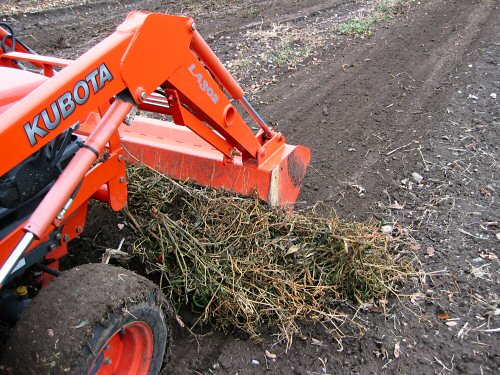
For some reason, I always feel a little guilty when I use the Kubota compact tractor in ways that make things way too easy. For instance… Probably the worst is the clearing technique I came up with a couple of years ago when it was cold and hand work was going slow. If you set the bucket of the front end loader pointing nearly down, and drag backwards, you can completely clear old plants in NO TIME AT ALL. Here, I’m removing a 50′ bed of hot peppers in one pass (the sweet peppers, in another section of the field, were lower growing and got tilled under a couple of days ago…). Is this gratuitous soil compaction, driving the machine over the beds unnecessarily? Well, maybe. But it’s so QUICK, and not an all-the-time thing. Does it drag off valuable topsoil? Not if you start feathering as you go, lifting and lowering the bucket a few inches lets the tangled mass of plants roll, freeing the soil. I try to do most clearing by hand, but sometimes, well, you take the shortcut…!
More fall finishing
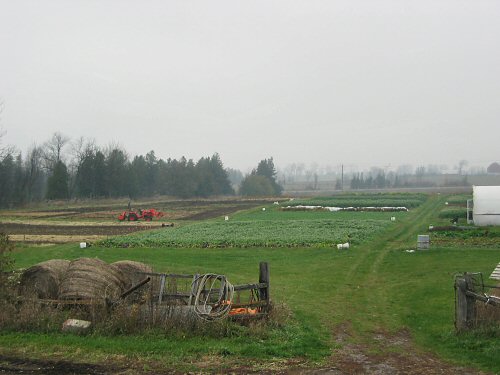
Fall clean-up is moving along bit by bit between the weather. Half the field is cleared, fertilized, and tilled or about to be. The rest is mostly covered by oats and a little rye. The Kubota compact tractor is ready to take up where it was stopped yesterday by the broken rototiller chain. At this point, I have an hour or so before the rain…
Rototiller breakdown
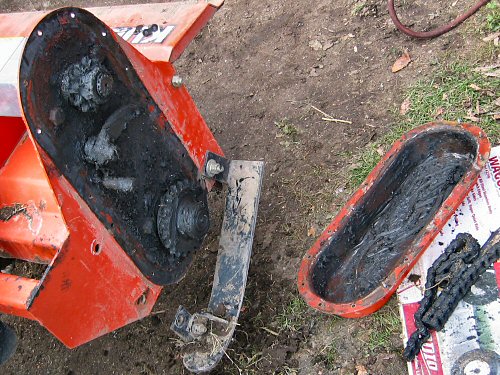
Like machinery everywhere, gear on the farm tends to break down just when you need it. This may be obvious, but it’s no less annoying for it!! Some breakdowns you know are coming sooner or later, like when you decide to let it wear out rather than fix it at the first signs of trouble. This you can avoid with regular maintenance including INSPECTION—checking things out for looseness and wear always eventually pays off—but often I, uh, don’t get around to it (as with, recently, the riding mower). Most breakdowns are, at least on the surface, sudden failures, like today, when in the midst of tilling with the 48″ rototiller on the back of the Kubota compact tractor, the tines suddenly stopped turning. This had happened once before, so the diagnosis was easy: broken chain. And that’s a good one. Every time something breaks and we fix it, I stock up on extras of whatever was used in the repair—DIY repair and a good selection of spare parts go hand in hand on the tiny farm! So, for the chain, there are parts: full links, offset links, master links. A replacement chain is also quite cheap and a good thing to have on hand. This particular repair job is dirty but extremely simple and straightforward, same as for a bicycle chain. Pop off the chain guard, scrape off the excess grease, bang out the rivets on the broken links and add new ones, or decide to replace the whole thing, put the chain back on…it’s about as simple as that, and you’re back in the saddle again!
Manure spreading action!
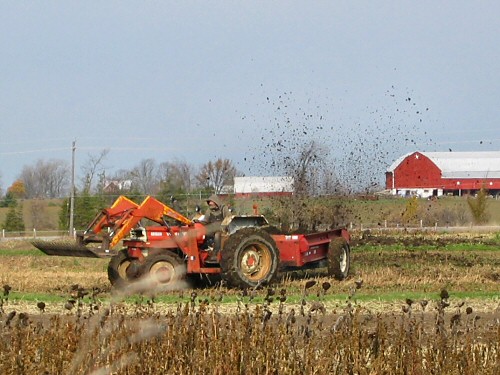
A satisfying few hours today, spreading year-old cow manure on the market garden. Bob and the old White 70hp handled the spreader (and you can see a rock picker attached in front!). I used the Kubota compact tractor to fill from the aging pile in the yard outside the loafing barn. Spreading, and the infrequent moldboard plowing, add up to an average of maybe a couple of full days a year of big tractor action. For 2007, this was a good chunk of it! (Guest photo by Karen.)
At the wheel
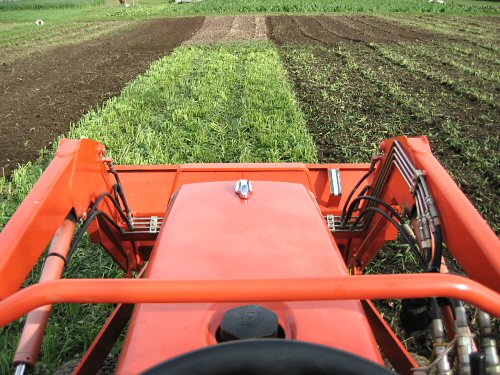
Tilling in the monster oats green manure/cover crop is a task where the Kubota compact tractor sure comes in handy. The oats is tall, dense and seemingly unstoppable by cold. It took a double mowing to get it down to a manageable state, and even then, it’s a slow till. The walking rototiller could’ve gotten the job done as well, but it would’ve taken several passes and a couple of tanks of gas, so I was happy to be at the wheel for this one. Originally, the plan was to let the oats winter kill, and work it in in the spring, but there’s just so much of it, I decided to take it out now rather than lose an extra week or two next year, waiting for it to break down. Decisions!
Pigweed: going in!
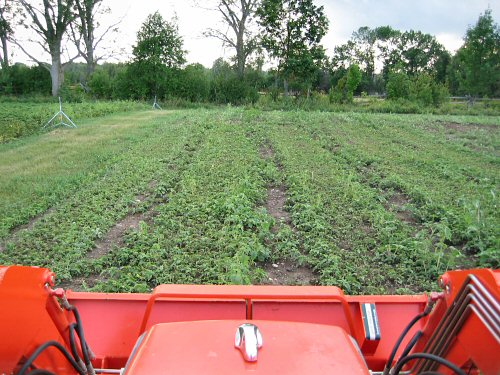
There’s no exaggerating the amount of pigweed in some sections of the field. Here, where the last seedings of spinach and peas failed—really poor germination in the heat—pigweed happily took over in no time. I mowed it down, and now I’m going in with the 48″ rototiller, prepping for fall spinach. Ideally, I’d keep the rototilling and any heavy gear off the garden beds, but this is practically an emergency. I apply the in-moderation rule here… It’s growing on me that round about next year, much of the pigweed seed, deposited three years ago in two-year-old manure, is due to expire… Right now, though, the seed seems pretty healthy to me.