
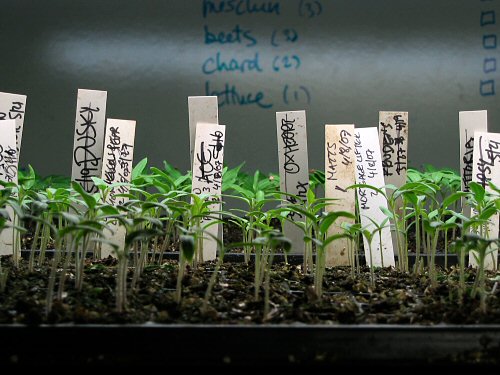
Some of the last-started tomatoes. This was a first-time experiment with starting toms in 200-cell plug trays, also, starting as close to last frost date as seemed reasonable. You can get a lot going in a little space, but they won’t fit in there for long. (Gotta admit, this photo’s a bit of a placeholder in my post-a-day plan. With the sudden fantastic weather, and my first full-time all-around helper in the garden just arrived—energetic, enthusiastic, no microfarming experience—I was totally immersed in fieldwork and FORGOT TO SNAP a slice of today’s main action. Tomorrow’s another day!)
Mike (tfb)
Greenroom bubbling over…
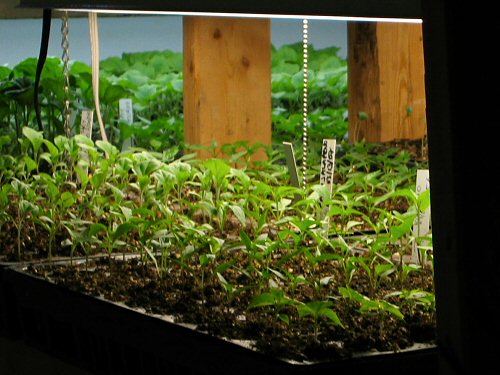
Today the weather finally broke for the warm and sunny. Amazing what a difference a day can make! And not a moment too soon. The grow racks are full to overflowing. I’ve been holding the seedlings in their original positions for as long as possible, but at least half absolutely need to be potted up to larger quarters right away. With better weather, moving them to the greenhouse is finally a reasonable proposition. Time to head for the fields!
Greens machine!
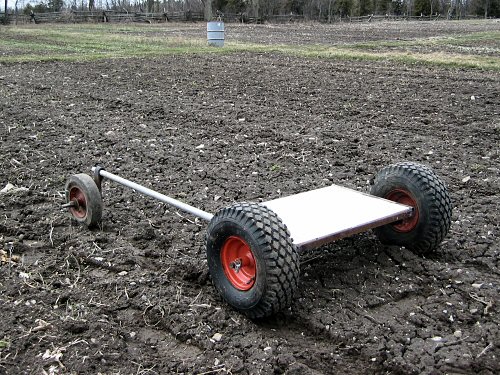
Surprise! I feel like a kid with a new go-kart. I plan to learn how to weld this year, and I’d been discussing with Bob this specialized harvest cart as a first project. Well, he went ahead and whipped up his own interpretation, using parts that were hanging about. Voila! The cart sits over a bed of mesclun, spinach or other low greens, wheels in the paths, you lean forward to cut, and move it a foot or two at a time with your feet. The minute I sat on it, the improvement from crouching or straddling the bed and bending over was clear. Cutting in comfort, and it’s supposed to near double your speed. It moves easily even in pretty wet soil, and the height seems right, but it’s still a prototype, to be harvest-tested and refined. Over the season, I cut TONS of greens (maybe not literally, but feels like it), so I’m excited!
Wood pile
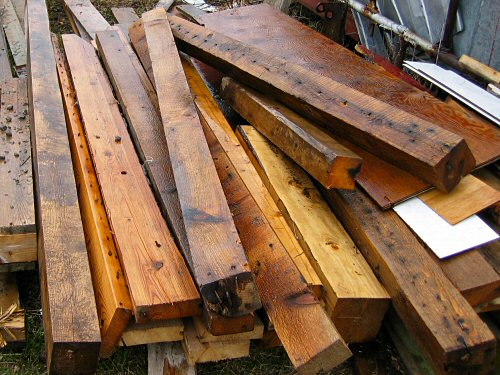
It’s too wet today for fieldwork, and the seedlings are all set till starting squash, cukes and melons in a few days. There’s always lots of other stuff to do, like building an enclosure for the new composting toilet (a modern outhouse in the field). For that I did a quick inventory of scrap lumber. This outdoor pile (there’s more in the barn) comes mainly from the demolition when we extended the old Milkhouse last fall. Some of the wood is over 50 years old and in fine shape for framing. Building and fixing the stuff you need is a natural part of tiny farming. It’s even more satisfying when you can use materials you have on hand—recycling that you can actually see in action! It makes sense!!
Gardener of all I survey…
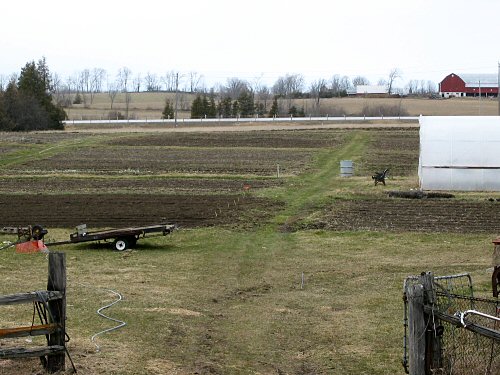
The View from the top of the gangway that leads into the upper level of the barn. Once things get growing, I go up here every day to survey the scene. Today, it pretty much sums up the spring so far, mainly damp, grey and gloomy (see Mar.16, Feb.18). Without sun, the grass has hardly started to green up. You can just make out the yellow markers in the very first section on the left where yesterday I got in beds of spinach (Bloomsdale, Spargo), beets (Scarlet Supreme, Detroit Dark Red) and radish (Rebel, French Breakfast). That felt good!
Breaking new ground
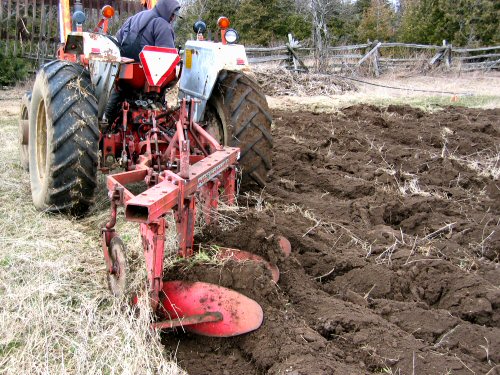
Added a new section to the garden plot today, with a helping hand from Bob, his tractor and a moldboard plow. The moldboard turns the top few inches almost completely over. It’s very effective for breaking up sod, and it’s also sort of an old school approach. Apparently, some farms moldboard once or twice a season, but as a regular practice, it’s not great for the soil and has somewhat fallen from favor in recent years. Here, it’s a one-time plowing that gets the job done!
Flowers on my mind…
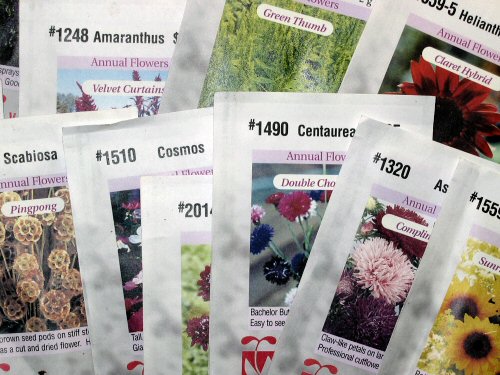
Most of the flower seed for the new cutting garden arrived today. Cool. This is going to be interesting! Apart from growing a couple of hundred glads in Year 1, flowers are new to me. The PLAN is to take it slow. I selected all annuals for direct seeding, and from what I can tell, this bunch will just grow themselves. Really! With all the veggie work to do, it’ll be basically put the seed in the ground and see what happens! (I have faith.)