
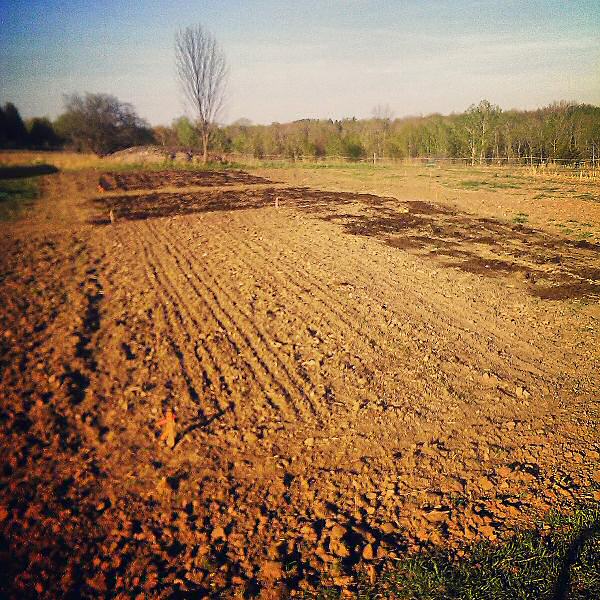
This is exactly what small-scale looks like. Prepping and seeding another 20 or so beds, a couple already seeded with salad greens, the rest with compost lightly scattered—maybe a little more spreading, then tilling, sectioning into 50′ or 100′ by 4 or 5′ beds, smoothing, and seeding with the Planet Jr. Sometimes this tiny farming feels to me like being in a little boat on a big, big ocean. Maybe not that dramatic, but I’m definitely adrift in a deep blue sea! Fun.
Fieldwork
Good gloves
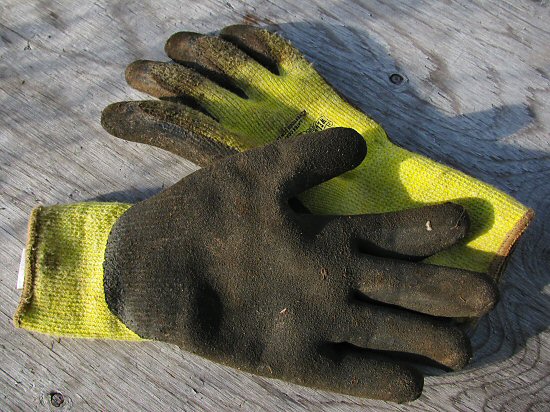
Used right, these gloves are quite fantastic. The different brands I’ve tried have all been pretty much the same: fairly heavy stretch fabric for warmth and a snug fit, and a rough-textured latex coating for waterproof protection and a good grip. Perfect for fall field work, when the temperature is around zero, and everything tends to be damp and cold. They’re close-fitting and not too thick, so the touch is sensitive enough for hand-harvesting of root crops in moist soil when you have to feel around, coiling muddy hoses, picking up various field debris. They’re also tough enough to use as work gloves, to move stuff like damp wood and metal. The trick is that they’re waterproof, and they also breathe, so your hands don’t sweat and freeze they way they would if they were completely waterproofed, but the tradeoff is, you can’t use them in water, only to grip wet things, the minute the fabric gets soaked, well, the fun is over. Most of the time, I choose bare hands: getting nicked, freezing, whatever, it’s usually worth it for that direct contact, and gloves are one less thing to keep track of. When I do decide to use gloves, having the right ones for the job is a little pleasure, and these guys have their place. Nice!
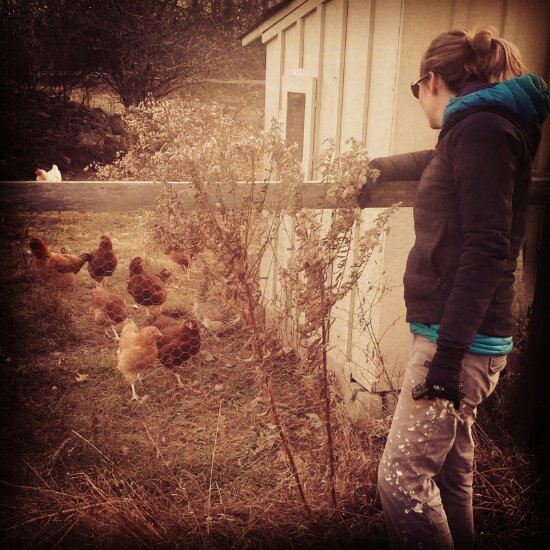
Enter the Riot Garden
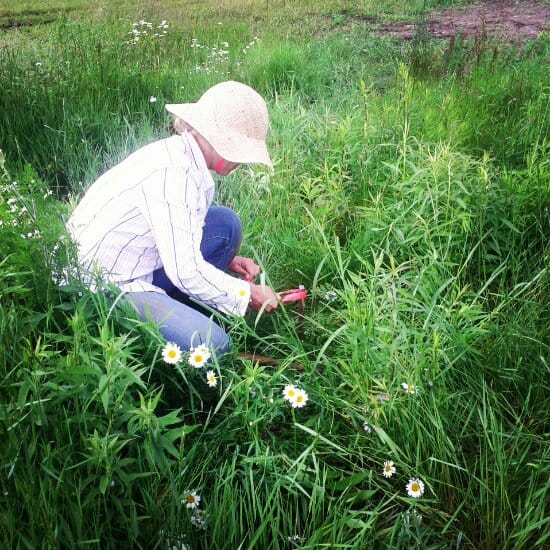
Tried this a couple of times before, to varying degrees of success, a small garden within the market garden, a kinda test/demo back yard-sized plot. One year, it was an elaborate set-up we called Home Garden, masterminded by Shannon: after a great start, I think it eventually went to the weeds, being lower on the weeding list than many other things… This year, it’s a simple 10’x20′ rectangle, being measured, squared and staked out for tilling by Ashley. This version is called the Riot Garden because the plan is no plan, just throw in odds and ends of leftover seedlings and seeds, and edit as we go…what could be easier, right?!
Choosing straw!
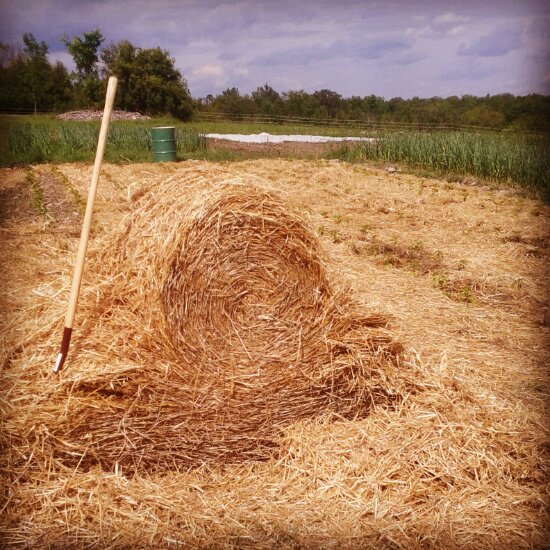
Mulching peppers with straw. So pretty! Plastic mulch is cheaper than straw, also, quicker to lay down and clean up, and generally more effective in suppressing weeds and retaining soil heat, but plastic is also less fun! Hahaha, those crazy business decisions. I’ve used plastic before, and like as not will again—in tiny farming, thinking small in 50′ and 100′ beds, flexibility comes easy. In any case, this year, we choose straw!
Brrrr… Peppers under wraps
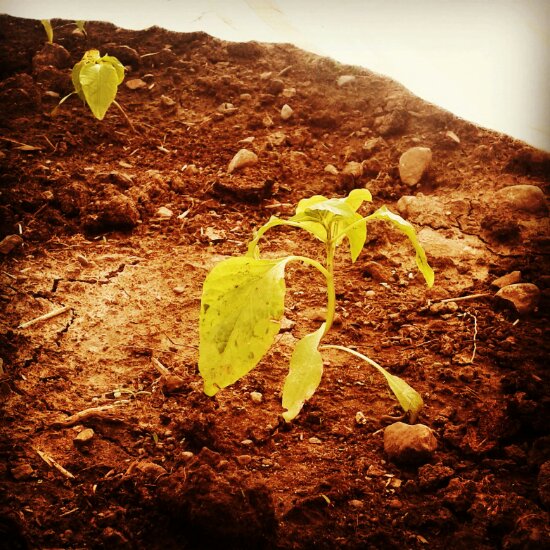
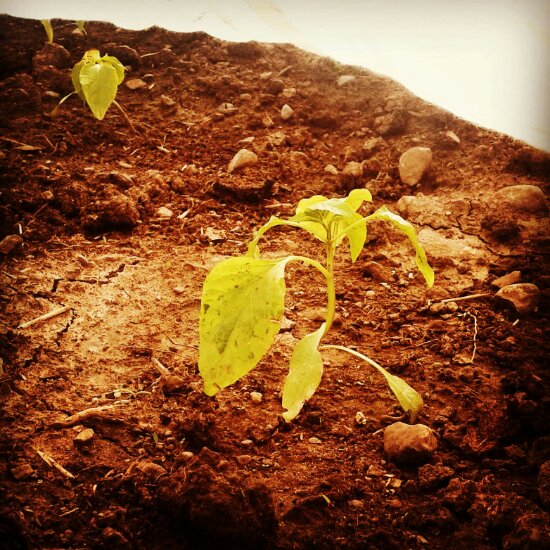
Not the happiest campers after three days and nights of frost protection, peppers and eggplant have one day and two nights more under row cover, if the forecast is to be believed. But the 15-day forecast a week ago was for no more cold nights, so…who knows! We’ve had about a week of frost warning nights so far since the second week of May, which I don’t think I’ve seen before. Normally, the covers would come off during the day, but with everything else to do now, and the kinda elaborate weighting-down-with-rocks setup, it’s simpler to leave it in place till the end…
Shrouded against the cold
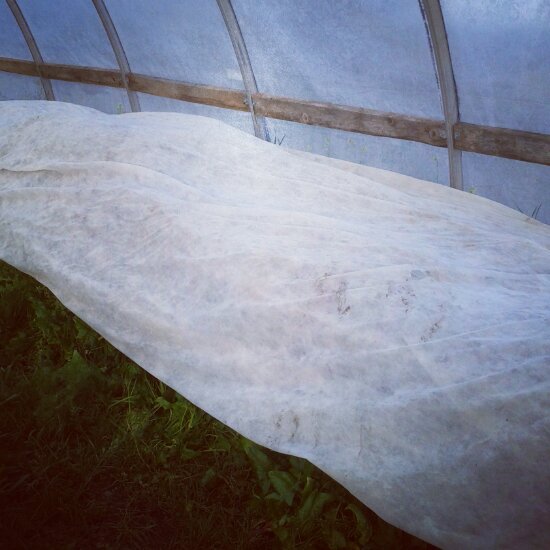
Shrouded against the cold: Not much to look at, but nice for the tomatoes, peppers and other seedlings on the tables underneath. It’s a double layer of medium weight floating row cover, tried and true, a familiar spring sight in the unheated greenhouse, good for a few degrees of protection in the forecast overnight near-freeze. Three days of chilly nights, they say.