Weed ID-ing in the Digital Age

Weed ID app photo

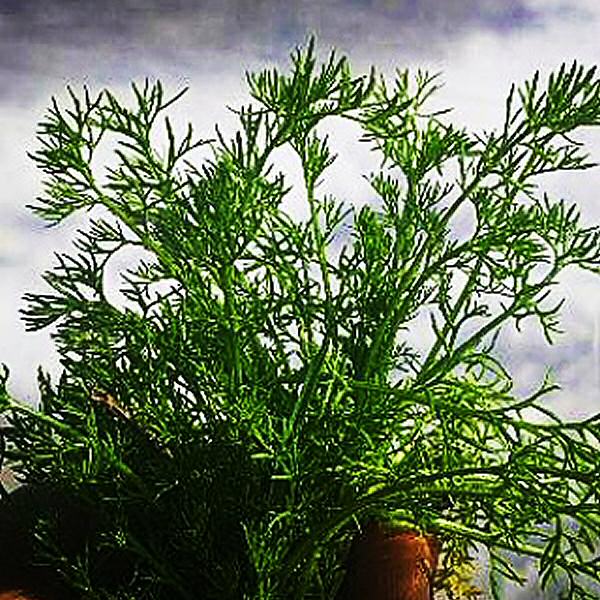
Wormwood of some sort, this weed from the greenhouse, according to our best guess from a selection of possibilities offered up by the smart smartphone plant identification app I’ve been playing with/trying out. There are several such apps for Android: this one’s called Like That Garden—”See a plant, take a photo, and find out what it is – instantly!” It got the highest ratings, and is free, so I grabbed it.

Like the advertising says, it’s that simple to use. With the app, you take a snapshot of the mystery plant that’s saved as a low rez image (above) and sent off into the ether where it’s checked against a vast plant photo database, several possibilities soon return, with multiple images for each, and you pick the one most likely (I suppose in some cases, only one choice comes back, but so far, that hasn’t happened). The technology is all about advanced image recognition and visual searches, very…digital. Trying it out on a few plants, it’s worked quite well.

While this app is doing fine, I have a great (effective) weed book as well. Is the app a novelty toy, or a serious tiny farming tool? Or will the smartphone be accidentally dropped in a puddle and destroyed before we get a chance to decide? Only time will tell…
Transplanting: tiny sections

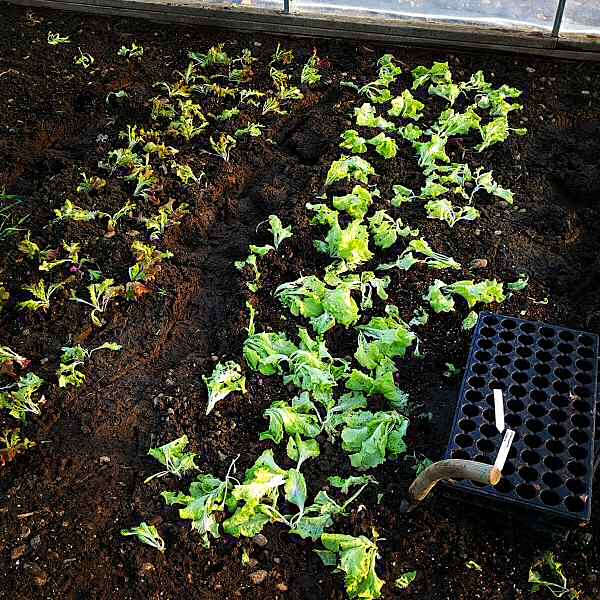
Greenhouse transplanting: tiny sections

Transplanting lettuce into the unheated greenhouse, filling it out in small sections to work around wetter areas. The seedlings, waiting for drier conditions, stayed a couple of weeks longer in trays than ideal—now they’re a little floppy and stretched, but I’m confident they’ll figure it out. This first spring, seeing how the ground dries in the new hoophouse is part of the learning curve. Tiny farming!

Seedlings in the sun

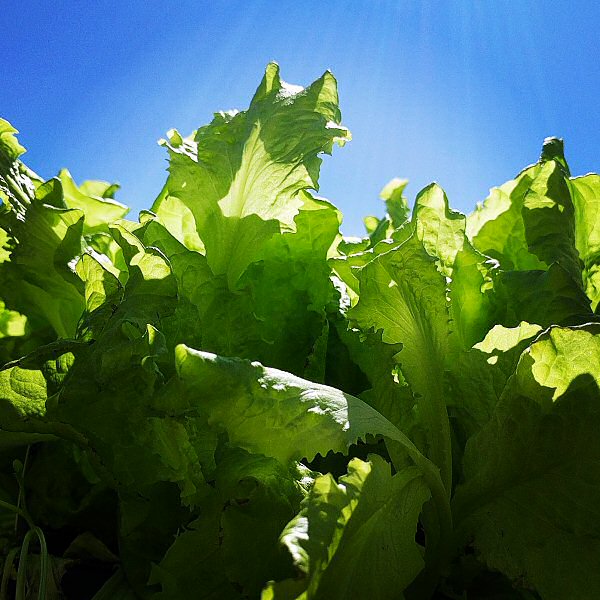
Hardening off leetuce seedlings

Lettuce seedlings get their first taste of full-on springtime sunshine. Next stop, into the ground in the greenhouse. I wouldn’t call this hardening off, some of these are being transplanted later today—tomorrow’s cloudy forecast should give them all the post-transplant adjustment break they need, then bring on the sun! (Starring in this pic, always reliable Black Seeded Simpson.)

Sundown in the hoophouse

Sundown in the hoophouse

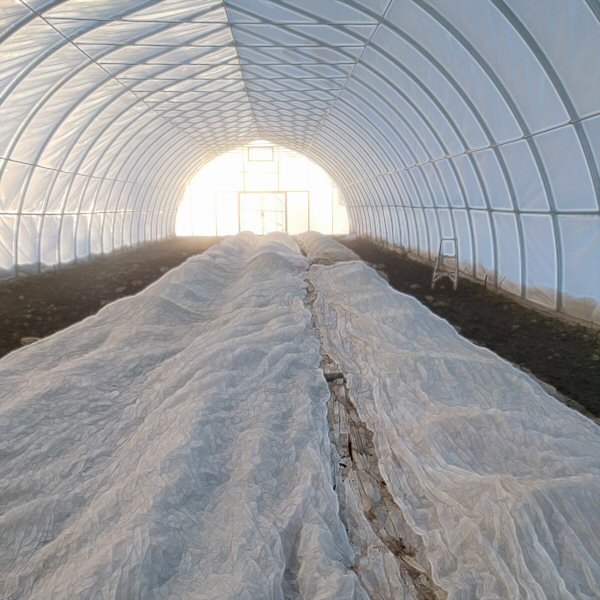
Not your typical postcard sunset, and it’s kinda chilly, damp and mucky in here, even as the temperature outside slides down to an overnight -15°C (5°F). But it’s all about the greens, tucked under a couple of layers of row cover, maybe not exactly cozy with only ground heat to keep them warm—who knows how they’re really feeling—still, well-set to survive another sub-zero night. With that in mind, sundown through 6 mil plastic is a cheery-enough sight to see!

Working around steel

Bed preparation and hoophouse steel

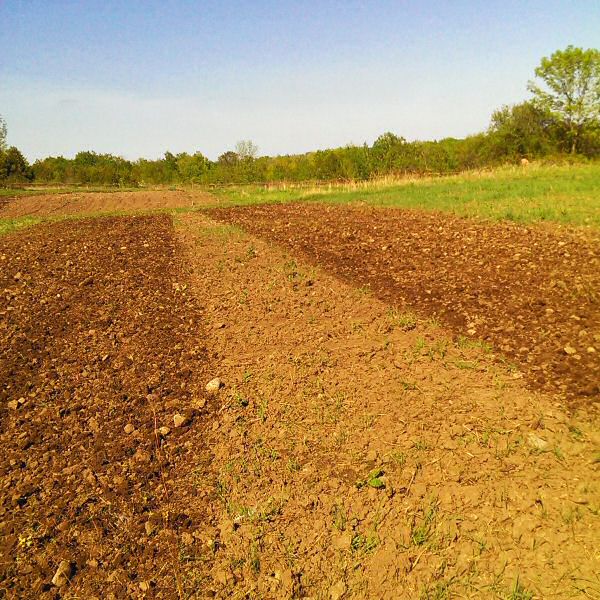
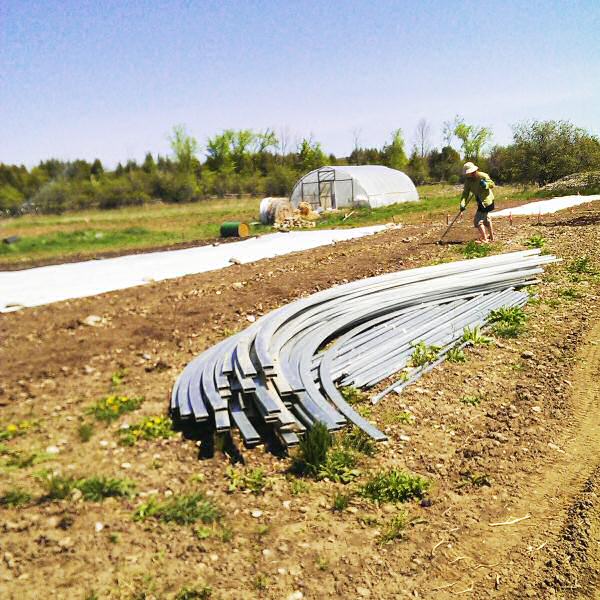
Exactly where it was delivered last fall, the steel for the new hoophouse is kinda in the way, so we’re working around it (it doesn’t look like much in the pic, but it will expand into 30’x108’x16’H of plastic-covered year-round field protection). Beds of brassica greens are already in and protected by row cover from flea beetle attack. Lisa preps beds for more. Spring direct seeding proceeds…

Picking rocks

Rocks in front end loader bucket

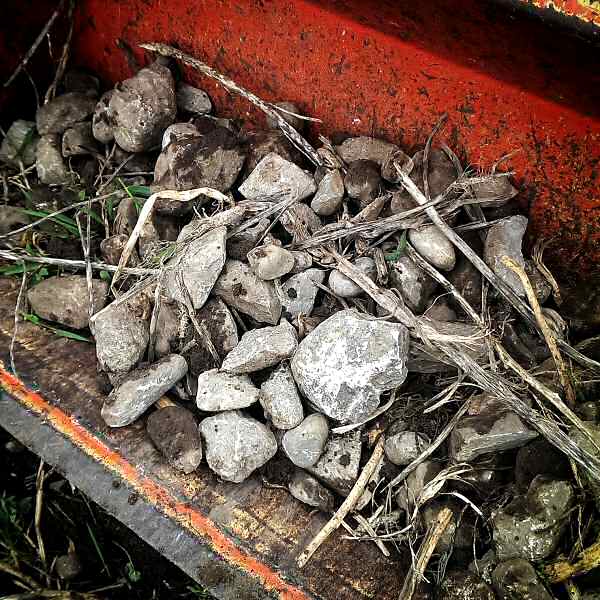
We have rocks, it’s not a big deal when you get used to them, although I suppose I’d really notice the difference if suddenly all the rocks vanished. As it is, little ones like these are usually ignored, but in one small area they were dense as cobblestones, so we picked them… The method: pick ’em up, toss ’em into the Kubota compact tractor bucket, when the bucket’s full, dump it on one of the rather large rock piles. With two or more people, you can spread out and toss rocks into piles from a convenient tossing radius, and travel around with the Kubota, loading the piles into the bucket. It’s really quite straightforward. And quite quick. Of course, there’s a mechanical alternative, with various tractor-run contraptions for removing rocks in large volume. It’s all about scale, and how many hands and rocks you have!