More carrots…

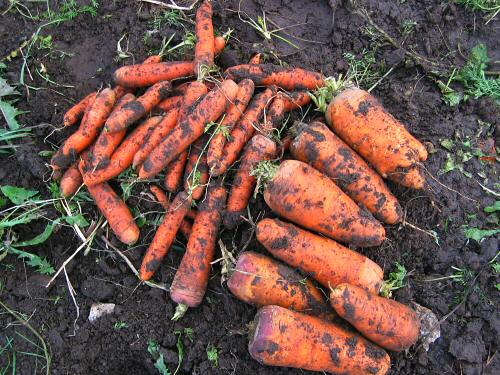
A good stretch in the field today. Harvested a bushel and a half of carrots (huge Danvers Half Long, enough to last through the winter) and a bushel of beets, a mix of red, golden and the Chioggia striped. Mulched another garlic bed, leaving just one uncovered. Did some clean-up with the compact tractor, moving empty barrels, turning crop remains into one end of the compost windrow. Took a trip down to the pond: it’s unfrozen, with only a layer of ice on top…

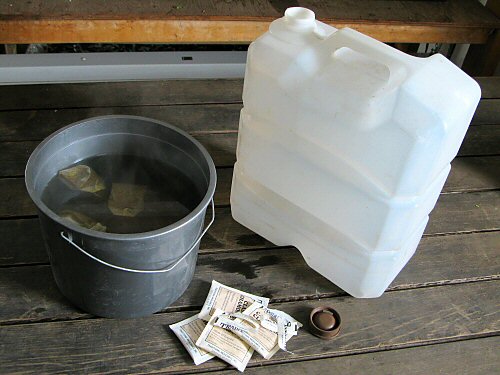
The pond is as full as it gets. Normal level is several feet lower, after the winter runoff evaporates, usually sometime in June. The barrel is a float that keeps the end of the uptake hose that leads to the pump suspended above the bottom.

A little fieldwork

Carrots!

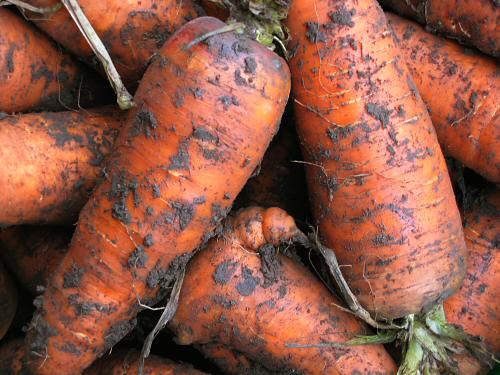
Spent about four hours out in the field. The feeling of calm satisfaction as you head in after doing some work in the garden never fails! I dug up about half a bushel of carrots to see how they’ve done. These are, I think, Nelson and Danvers Half Long (the BIG ones)—the label stakes were out, so I couldn’t immediately check the varieties, it’s not necessarily that easy to tell! They’re mostly in fine shape. On a few, the inch or two exposed above-ground had frozen and thawed, leaving the top tips spongy and mushy, but this didn’t affect too many. I can probably get a couple of bushels! This mid-January harvest is actually consistent with last year, except for the extra 6-7 weeks of RealWinter… I also mulched the garlic, leaving a couple of beds clear as a test (I’m not sure how useful an experiment that is, since I’ll mulch them for moisture and against weeds first thing in spring…). Anyhow, a bit of winter fieldwork…

Read more

Yellow…

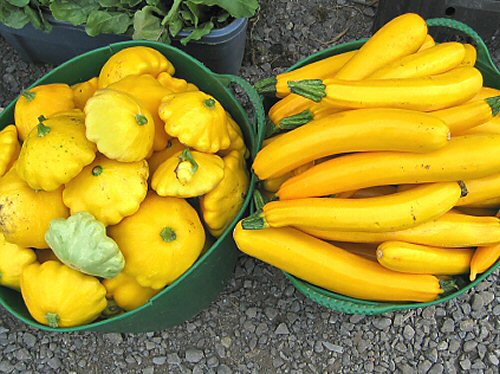
Winter white is OK, but a splash of color is nice for a change, even if it’s only a picture. These summer squash are from a late September harvest last year: Sunburst scallopini, with one green Peter Pan patty pan, and on the right, Golden Dawn III zucchini. The scallopinis are picked a lot bigger than the 2-3″ (5-7.5cm) babies favored by some, but, well, the taste for baby vegetables I usually don’t get… Wait a little longer and they’re so much bigger: more eating, less picking! :)

Brussels sprouts for Christmas?

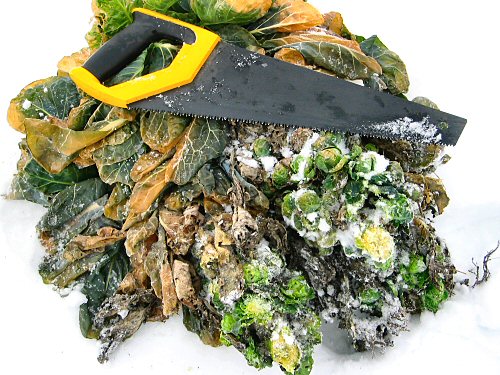
Got the idea this morning to get something REALLY FRESH onto the Christmas dinner menu. A fat local turkey, plus squash, potatoes, carrots, beets and onions from storage (in addition to a ham and industrial veggies from the supermarket) didn’t seem quite enough. But what could I find? The bed of Brussels sprouts left standing when the snow hit was…still there, not fully buried, and possibly perfectly preserved in a frozen state. Remembering a harvesting lesson of the past, I headed up the field with short, stiff saw in hand and bagged three (once again, the saw did its stuff!). Unfortunately, between the snow and the leaves, the sprouts were too well-mulched and probably never really got frozen solid, or at least, froze and partially thawed a few times. Many were damaged and discolored, but some were definitely…fine (I tasted a few raw on the spot). In the end, between the rather unappetizing, damp mass in a bucket waiting outside the kitchen, and all the other cooking to do, this time around, the good sprouts never got sorted, and it’s on to the frozen compost heap for the lot. But there’s more out there for another try… This is not exactly part of the Professional Market Garden side of tiny farming, more like my personal garden-addicted behavior, but it’s all part of learning!

Heat!

Hot peppers

Dried Cayenne Long Slim hot peppers

Finally finished a bit of hot pepper harvest, now there’s a convenient pile of dried heat! A few weeks ago, wondering whether to cover for frost, I decided to also pull up some hot pepper plants, roots and all, instead. An experiment! We loaded about 20 of the Cayenne Long Slim on the cart and dumped them in the Milkhouse, heaped on the grow racks that we’d been using, with the lights removed, as summer storage shelves. And there they sat, blending into the decor, drying, the peppers that were still green maturing to red. Until today… (This is the kind of thing you can do in a Milkhouse, not so acceptably in a real house…) They’re satisfyingly high on the heat scale, delivering a little pain if you don’t sample carefully. Great!

Read more

Broccoli vs cauliflower

One broccoli (Early Dividend), one cauliflower (Early Dawn), but what’s that Violet Queen in the middle? The EDs are standbys, the VQ is new. It looks like broccoli, cooks like broccoli, tastes like broccoli, but it’s in the seed catalog as a purple cauliflower?! The VQ were transplanted really late, and I didn’t actually expect to see a harvest from them. But they showed up recently, and a couple of days ago, Bert, who buys lots of veggies here, saw them and decided to try a couple. “They’re broccoli,” he said. “Um, I believe they’re…cauliflower,” I said, while for the first time looking closely at ’em. “Don’t argue with him, Bert, Mike knows what he’s talking about,” said Helen, his wife. Last night, we steamed some for dinner. BROCCOLI. Today, I harvested samples for a formal close look, but really, there’s broccoli and there’s cauliflower, it’s not hard. Broccoli. Next, a call to the seed house, where extremely knowledgeable head man Bill assures me that it is…CAULIFLOWER. It beads up more than some varieties, he says. So, I’m confused. It may not sound like a big deal, and it’s not at this time of year, but it does point up yet another aspect of market gardening: knowing what you grow. LOTS of talking about veggies goes on every market day, and I NEVER say things just for the sake of it. I name varieties, explain when I’m very familiar with a particular veggie, or when it’s new to me…honest conversation, although it’s “sales talk” as well. And people trust you to…know stuff. Anyhow, I just looked up Violet Queen online, and it’s indeed, apparently, cauliflower. I’d swear it’s broccoli, and I’m pretty positive that you would, too! Maybe I’ll grow more next year, for when I feel like sounding like a lunatic! :)

Making mulch, part 4

Fat bags of kinda fluffy grass-and-alfalfa mulch are the satisfying end of this little experiment (well, the real end comes next spring when we see how it does at sheltering the garlic for the winter). For this second batch, the bags are actually step 2, not part 4: I eliminated the greenhouse drying stage by letting the cut dry in the field and bagging it on the spot (which was always the plan—cut, wait, bag—the first time was just a bad weather thing). A small but to me really satisfying part is reusing those big clear leaf bags. We go through at least three or four new ones almost every week of the market season, for fresh cut spinach, mesclun, and other greens. They’re used once, and then I’ve been saving them for the last three years for JUST THIS PURPOSE! It’s great to see your plans materialize, right before your eyes!! Little things, big pleasure…