
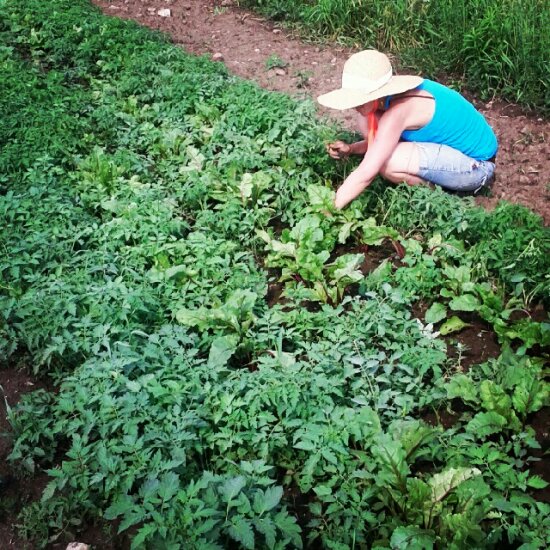
Hand weeding, what can I say, the cornerstone task on a tiny farm. Mel dives in (that’s beets in there, and volunteer tomatoes as weeds). This section has been unusually neglected, and still it’s really not as bad as it might look: in ideal start-of-summer conditions, what a difference just a few days can make, but it’s not too dense or deeply rooted, and a couple of hours of quick hand movements can cover a lot of area. We’ll also wheel hoe down the outside edges of the beds and down the paths, which is at least five times as fast! Give weeds too much of a head start, though, and Hand vs Weed is not a fair fight. Timing!
Veggies
Pea vs drought
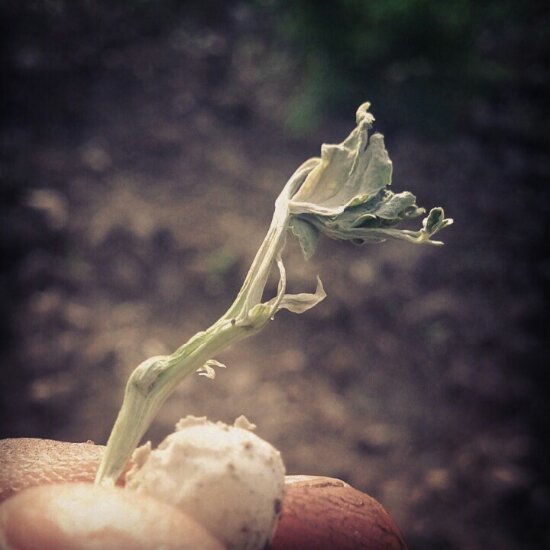
Pea vs drought: Sad and scary when plants die from lack of water. Seems way worse to me than being ravaged by pests. Kinda makes you realize how vulnerable we are. This isn’t a full-on drought, just an extended dry spell with no rain for a couple of weeks and counting. Most crops are doing fine, and only a few shallowly buried peas are getting toasted, so really, it’s all good!
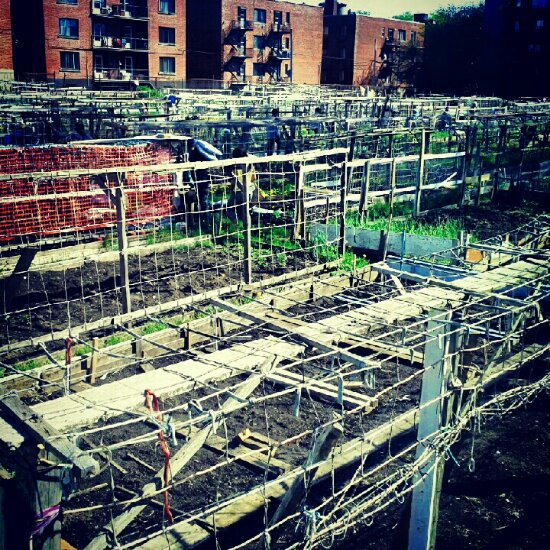
Improbably early corn!
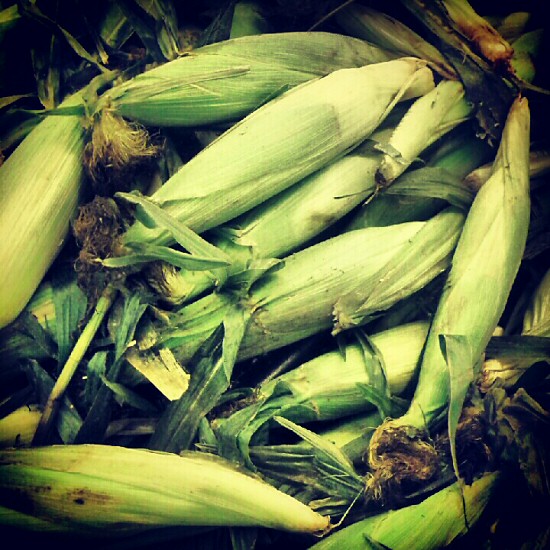
Fresh sweet corn at the beginning of May?! Wow, it’s a miracle! After a period of mild outrage when I first started tiny farming, as it sunk in how far and in what conditions most of our fresh food travels, the knee-jerk negative reaction to the sight of long distance food at the supermarket, and especially at the farmers’ market via the big resellers, thankfully faded away. Automatic anger is a waste of energy that could be put to better uses (weeding comes to mind). So seeing corn in big bins at the store as if it’s fresh from the field down the road, with fields here barely dry and seedlings still in trays, doesn’t surprise or annoy me much now…but it continues to look odd and kinda ridiculous. A miracle, indeed! (I took the photo, but didn’t even think to check the sign to see where exactly this batch is from…)
Rock garden
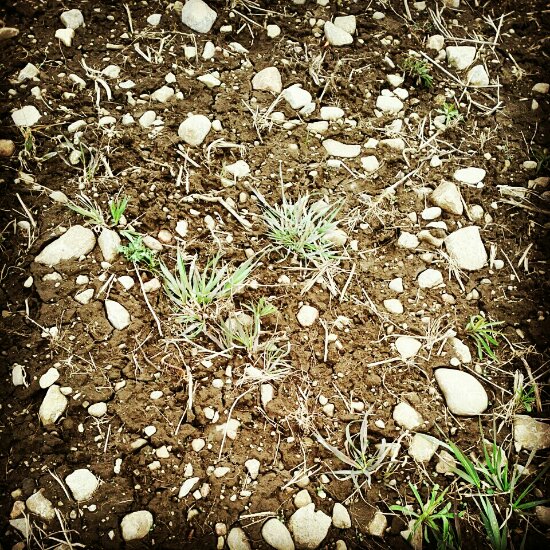
Rocks, rocks, as far as the eye can see. This is how the market garden field looks, before the post-winter work up. Months of snow and rain, have washed the surface rocks clean, so it looks worse than it is. Still, a lotta rocks, pushing up fresh each year.
Bare-root transplant
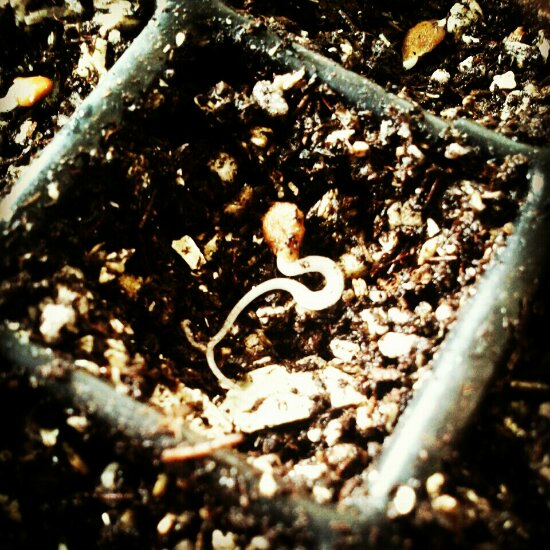
It’s out of the moist paper germination environment, and into the wilder world of the cellpak. This is a baby golden cherry tomato—can’t you tell?!—going into standard sterile seedling mix of equal parts perlite, vermiculite and peat. As long as the root hasn’t gotten too long, I just plunk ’em down, cover and water in, letting the roots find their own way down (a few years back, I probably would have made tiny holes and painstakingly inserted each one, but really, they seem to do that work a lot more efficiently). On a side note, I think I heard that perlite or vermiculite (maybe both) have made it into some people’s not-so-environmentally correct category, along with peat. So complicated—I will look into that. :)
Eggplant!
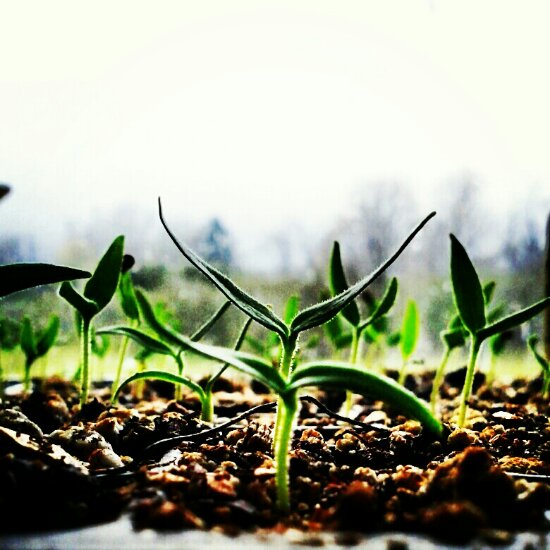
Eggplant pushing up, for the first time probably ever in my tiny farming career, in real sun, not those kinda ghastly (but effective enough) fluorescent lights. This is part of the current season’s unusual start-up, split between two farm locations (where I live and where I grow, about a mile apart, eight minutes by bike!), and smaller and way later than usual, and than the crazy weather allowed. These guys, along with peppers and tomatoes, are in 200- and 128-cell trays, seeded from bareroot germination into a smaller cell size than the usual 72, to make the most of window space. They’ll soon be off to the seedling room on the other farm, and 14-hour days of indoor lighting. Meanwhile, they seem to like it like this—raise your hands in the air! :)