
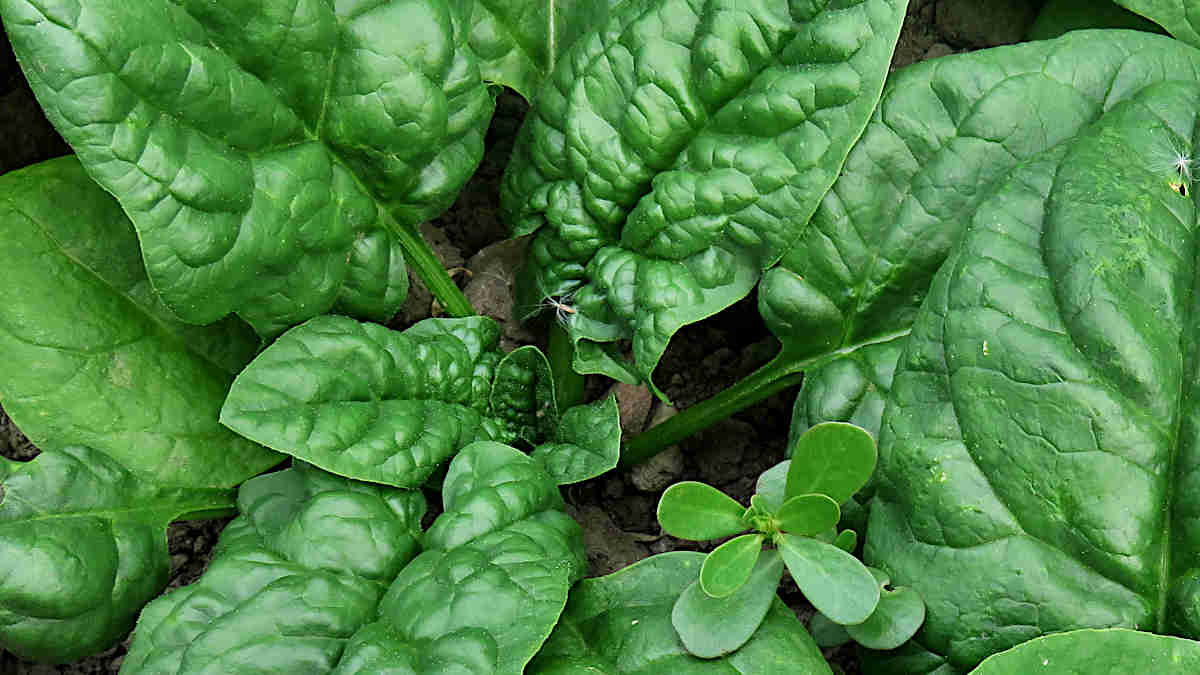
Spinach in August is never a sure thing. Germination in the summer’s heat is a roll of the dice. Keep seeding, over and over, every few days, and the odds of catching the right conditions go up. When a seeding does take, the going gets easy! Here, a sprig of volunteer purslane has pushed through to share the sun.
Early look at a new season
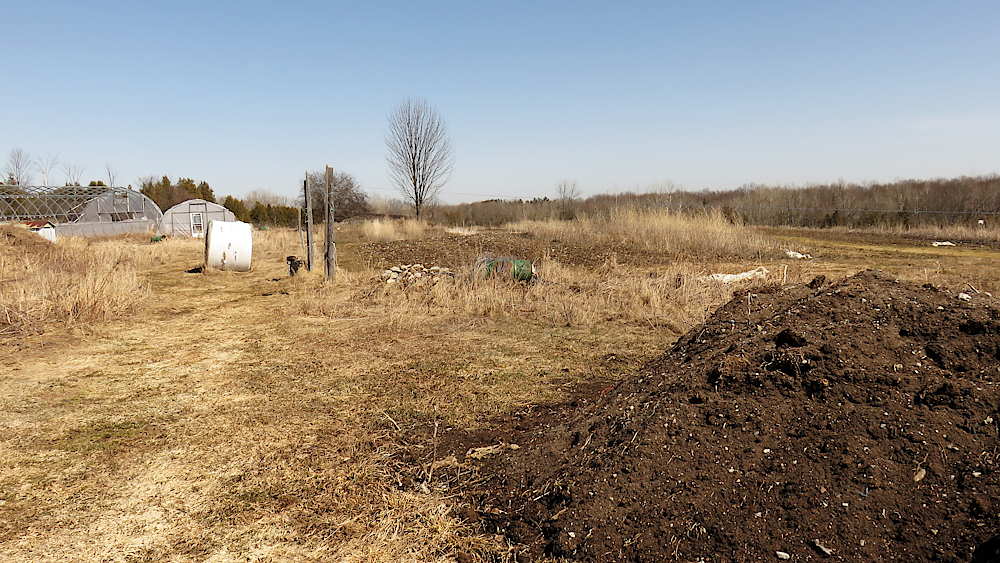
An unusual absence of snow in this early look at the field. The end of the compost pile poking into the photo is color-coordinated with the spring browns of all the dead vegetation. Center and right, a good amount of the market garden area is pretilled—clear and near set to go. In the mid distance, the little greenhouse is still standing, while the big guy is still bare, having had its plastic savagely ripped open by unusually high winds. That white object is a round bale of straw, sheathed in protective plastic, ready to use as mulch. It’s the broad canvas for another new growing season!
Cherry toms and pandemic
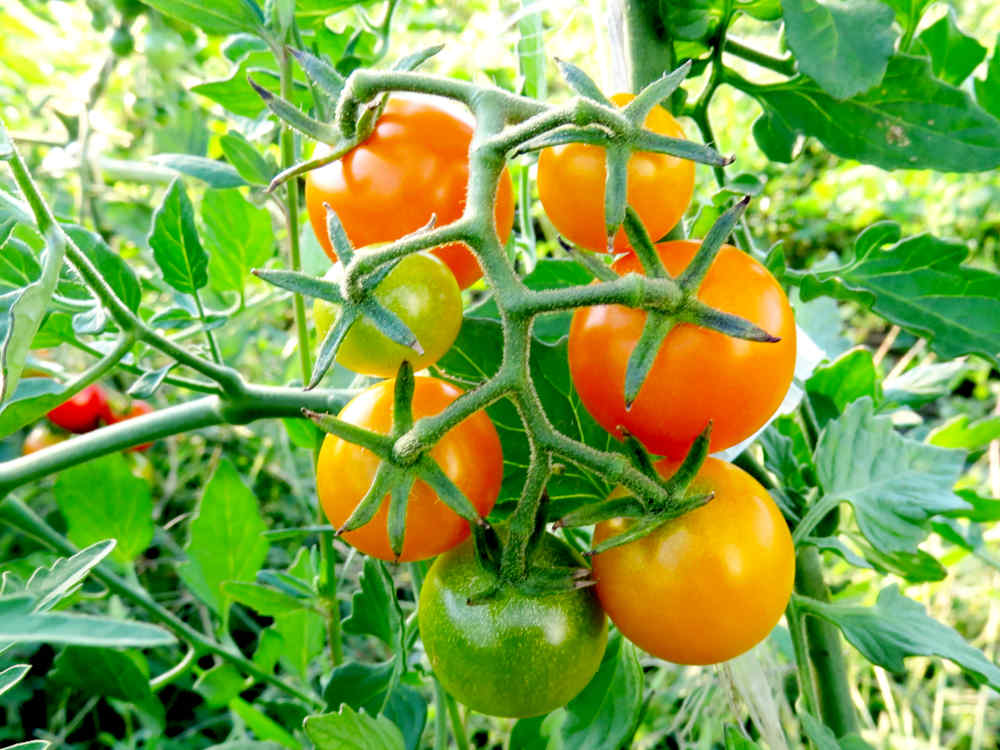
It’s mid-August, the heights of summer, and the cherry tomatoes are doing their thing. I wonder if there’s an endless interconnectedness between all plants, a real, tangible networking, as with cellphones or the internet, and if there is (seems to me as likely as not), what these cherry toms might be hearing about our great pandemic… Here in the field, it all feels to me quite distant, nothing has changed except in my thoughts. I can only imagine cities. Empty stores and restaurants. Few cars. A scattering of people, masked and hurrying away.
When to cover
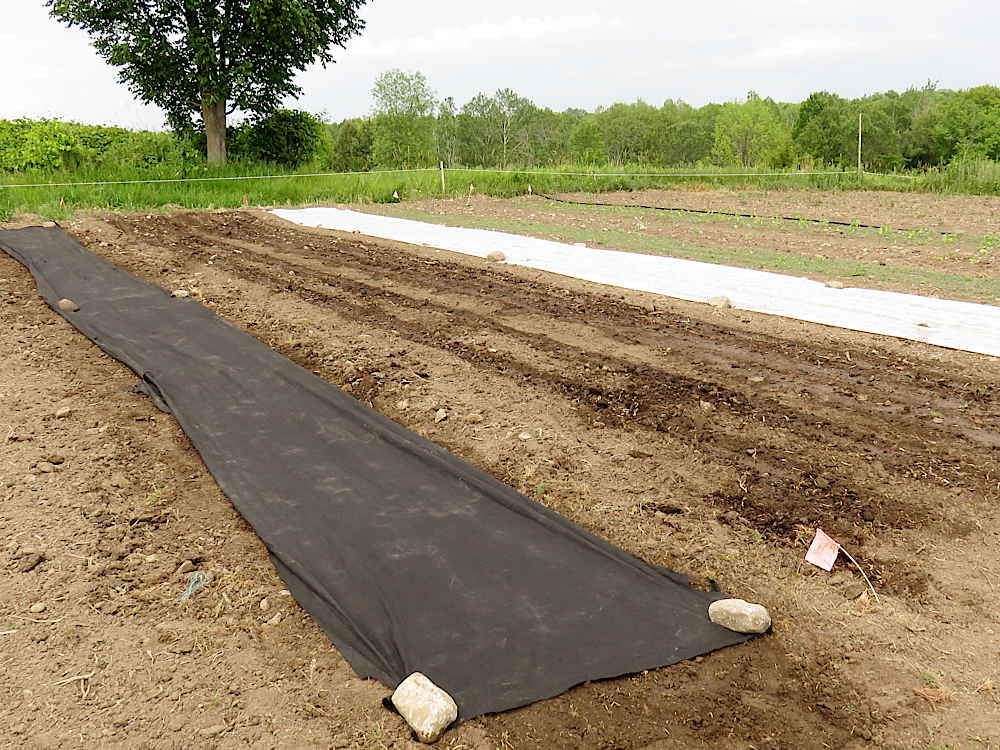
Some crops need to be covered and some crops don’t. It would be excellent if all the vegetables in the garden could bask in the sun together, like a picture-perfect postcard. Which would be possible if it weren’t for pests, and the special conditions some need to germinate. Trusty floating row cover is used here to keep flea beetles chewing holes in the brassica mix—flat-leaf kale, mizuna, mustard, bok choi, and their close cousin arugula, to be harvested as baby leaves for salad. Wee tiny carrot seeds need cover to retain the constant moisture in the ground they need to germinate—I’ve been using black landscape fabric, watering through it as need, for about a week. And some veggies, like green beans and beets, haven’t had insect problems, so they don’t need cover. It all depends!
Late season harvest
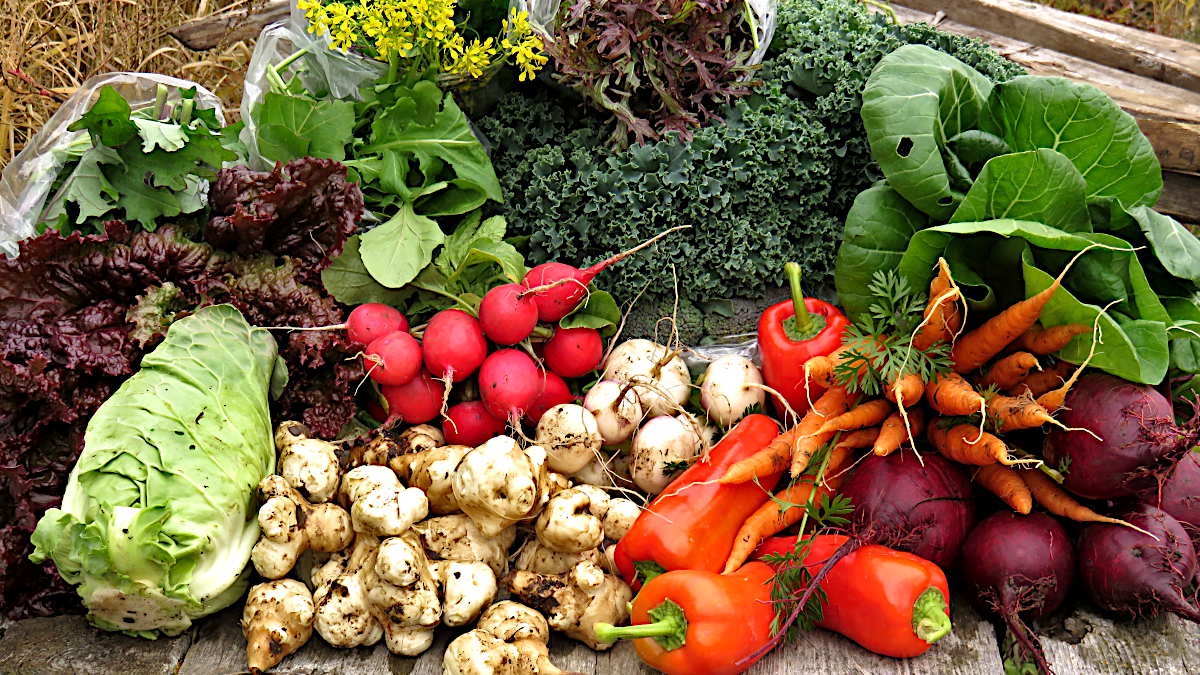
Looking pretty good for the end of October. Classic cool-season crops include leaf lettuce, pointy cabbage, bok choi and kale. Plus, the summer-loving sweet peppers are still hanging in.
Fieldwork, tiny farm style
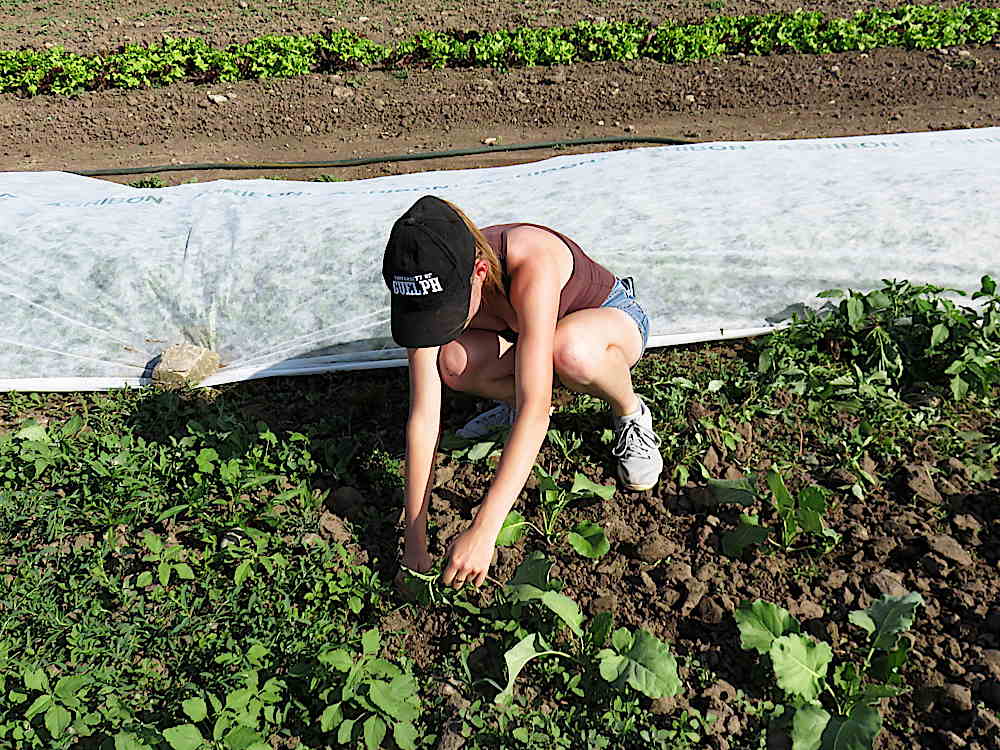
A simple snapshot of hand-weeding brassicas, and yet, a wealth of clues to how tiny farming is done in this market garden. Upfront, can see the weeding before-and-after: give them a few short days, and those weeds would easily catch up to the seedlings. The pulled weeds go around the plants or on the paths, where they do their bit in mulching, that helps keep new weeds from germinating. (Unfortunately, weeds often get bigger: more work, with the smaller tradeoff that they do a much better job as mulch.) Behind Casey, row cover, held down by big rocks that are carefully hoarded for just this use. Without the cover, flea beetles would have already gone to town, perforating the leaves with tiny holes. Further on, a critical water line, a 3/4″ hose off a 1″ pipe from the dug well pump. These are far from from a Big Ag diameters—they don’t deliver a firehose amount of water, but they do get the job done. Besides, there isn’t that much water in this well. The hose is lying on a trodden path, measured out at the beginning of the season to divide the field up into five-foot wide (1.5m), wide enough to take two rows of the bigger plants, like these broccoli and a cauliflower. The tradeoff is, comfortable hand-weeding is often done from both sides, to avoid lots of reaching across, while being a little less…efficient. And then there are open beds, with the clean look of fresh rototilling, ready for more seeding or transplanting. Casy’s fashion choices for fieldwear wouldn’t be mine: too much skin exposed to sun, insects, and spiky thistles—I gave up even shorts ages ago, for long sleeves and jeans—but to each their own. It’s all in the details!
A bushel of Music
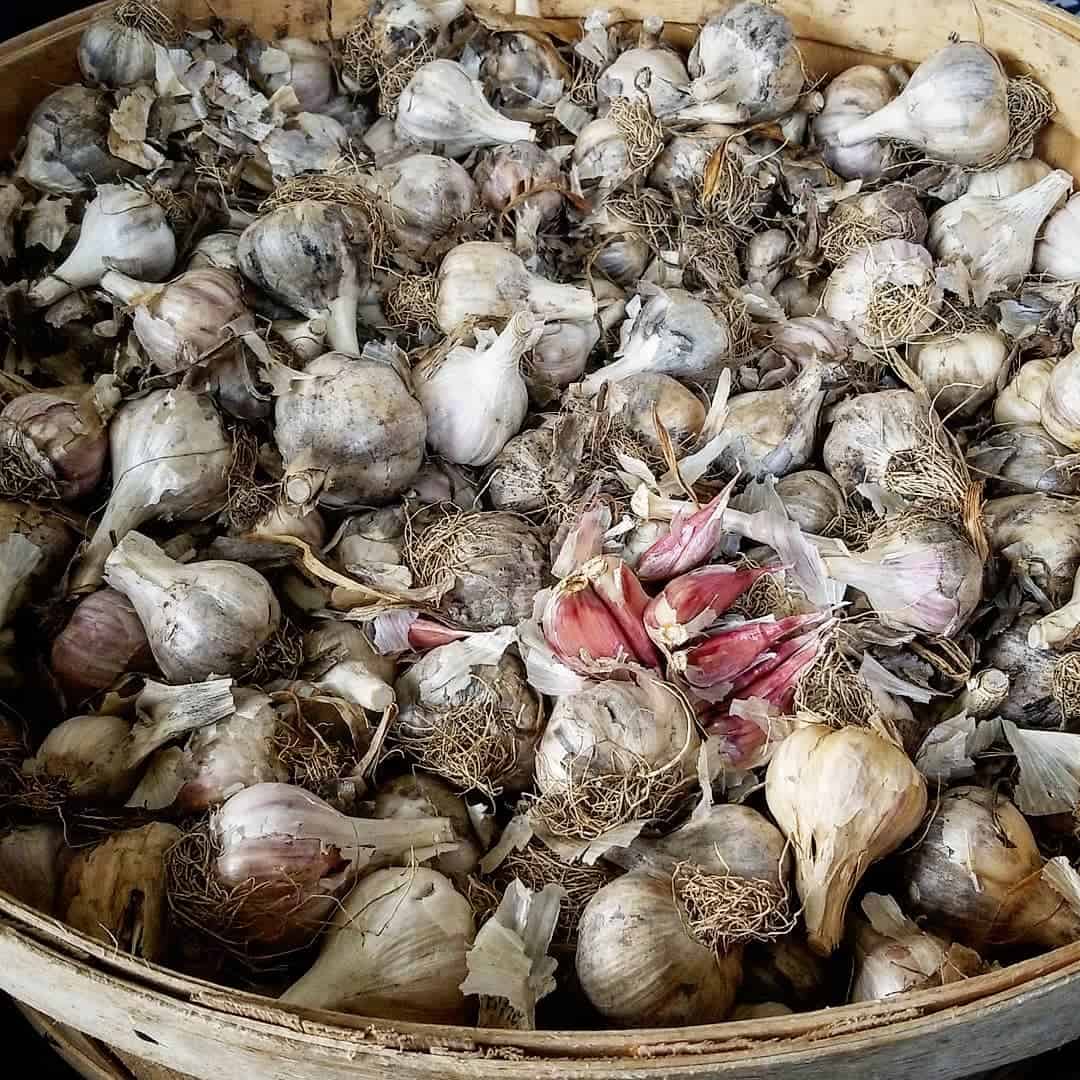
A bushel of Music garlic: The bulbs were significantly smaller than expected, for no reason I could point to, but the fine, strong flavor is fully there. Still plenty of time for planting, going by the 14-day weather forecast… Cause if you can’t count on the weather, what can you count on?!