
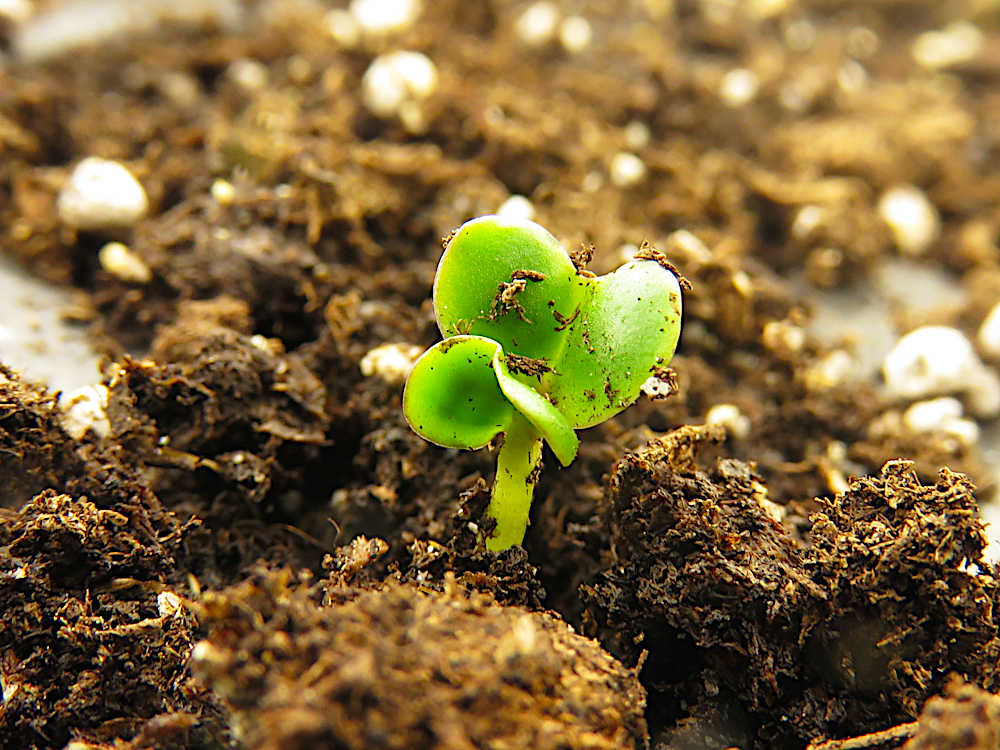
Broccoli? Brussels sprouts? I forgot to check the tray after taking the pic, so I can only narrow it down to one of the two based on size. They’re both in the quite vast garden veggie branch of the brassica family, that also includes cabbage, cauliflower, kale, mustard, bok choi, radish, lots more. The first pair of seed leaves look pretty much all the same. Next leaves take on their own look. At this point, they’re all similar, tiny and pushing up…
March field peek
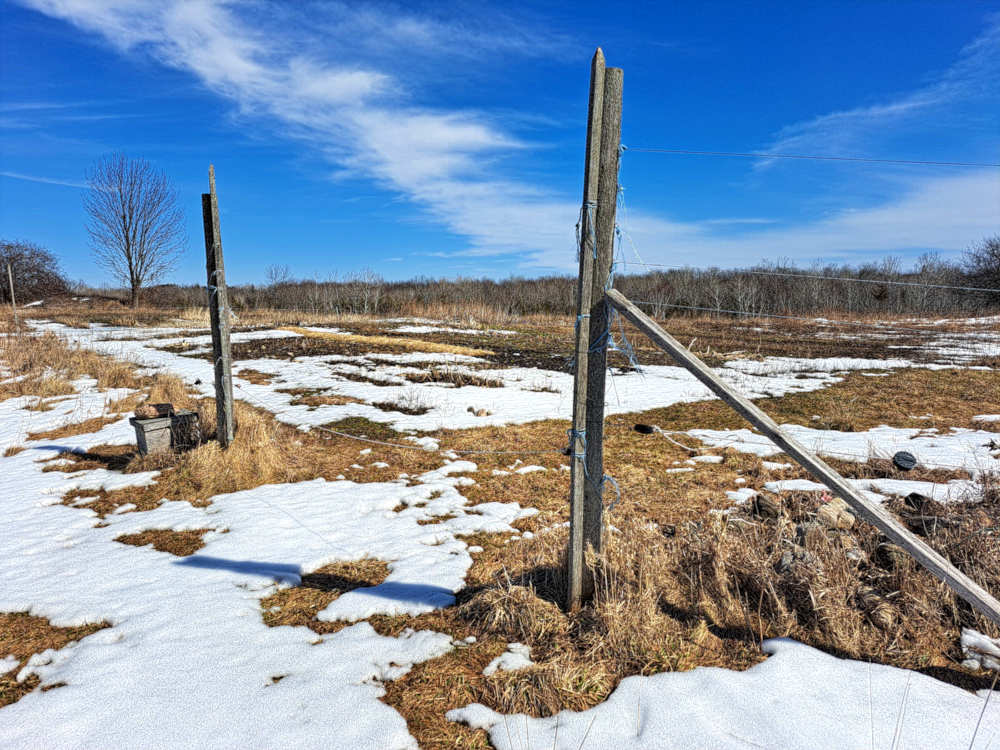
An early spring look at the field, as the snow recedes and the soil takes over. This is the exact moment when the new season begins for me. Seedlings are already growing indoors, planting plans put to paper, things are underway. Still, it only all makes sense out here, with the musty wet smell of decayed vegetation, my boots sinking into the sticky clay mud, wondering when it will dry out enough to work. I see the single strand of electric fence, all that stands between garden and pillaging deer, stayed up! (You can see part of it strung between the gate posts.) Some winters it falls and critters chew through it in a spot or two. Not having to fix it means one less thing to do!
January snow
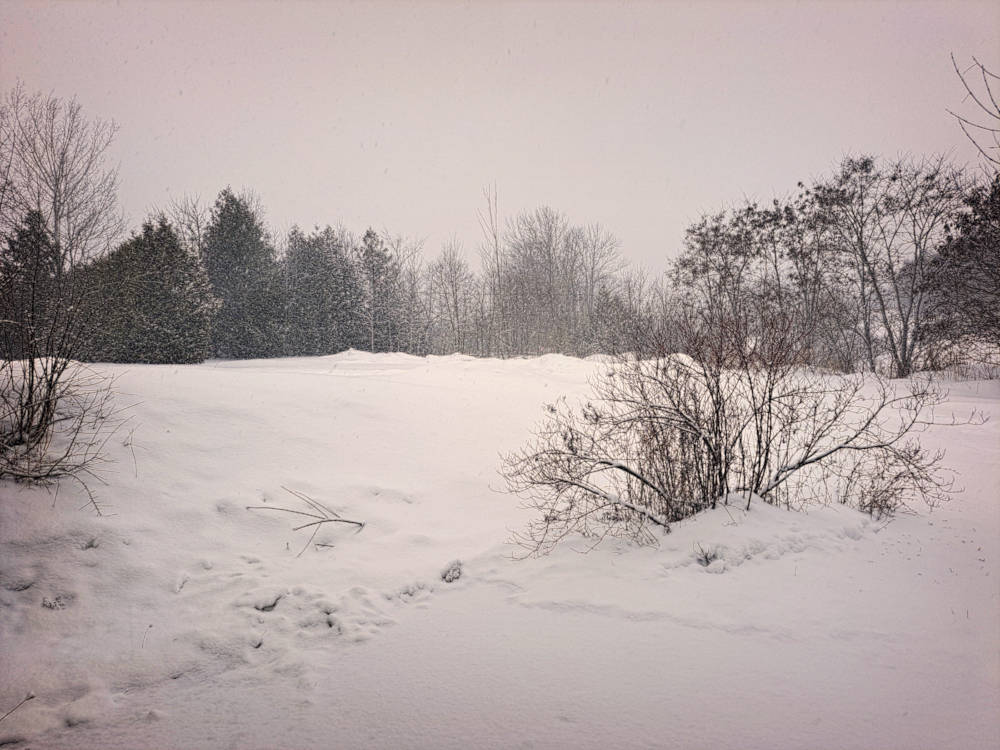
The new year’s view. Snow from week to week in winter is practically a 50-50 proposition in recent years. Go back a couple of decades, though, when weather was more regular and predictable, and this is what it was like around here for four or five months solid. The snow got deeper, the drifts piled higher, as winter wore on. It’s the exact opposite of veggies growing in a field!
October harvest
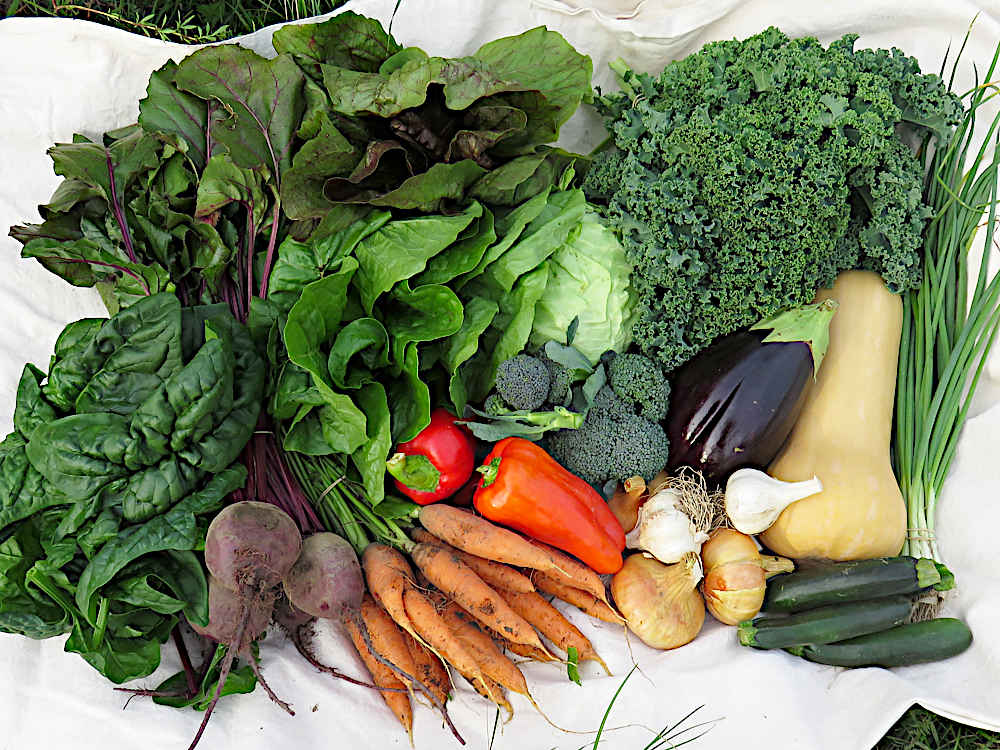
Great weather into the first week of October, with no hard frost so far. The veggie harvest list: beets, carrots, peppers, garlic, onion, green onion, zucchini, spinach, kale, lettuce, cabbage, butternut squash, radicchio, broccoli, eggplant. Nice!
Summer ends!
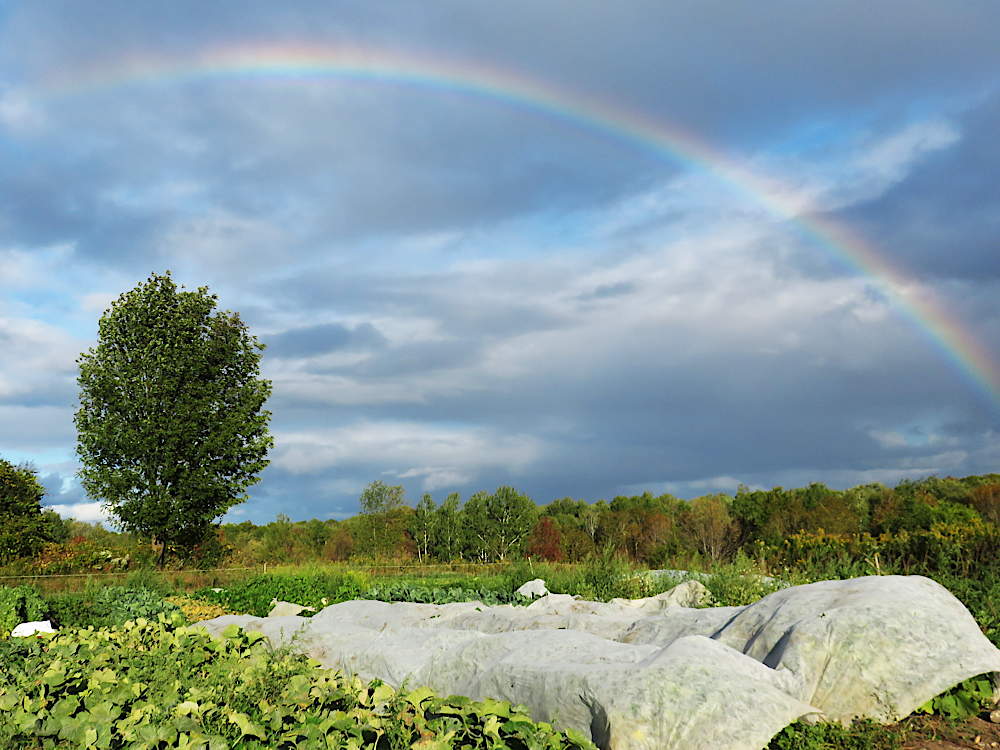
For the last day of summer, a rainbow! The field is looking a bit bedraggled, with some things naturally dying out, some touched by near-freezing overnights, with tender crops row-covered against the possibility of a hard frost. Besides the rainbow, it’s not the postcard look of mid-summer, but what matters most, everything is still producing well!
Mid-September harvest
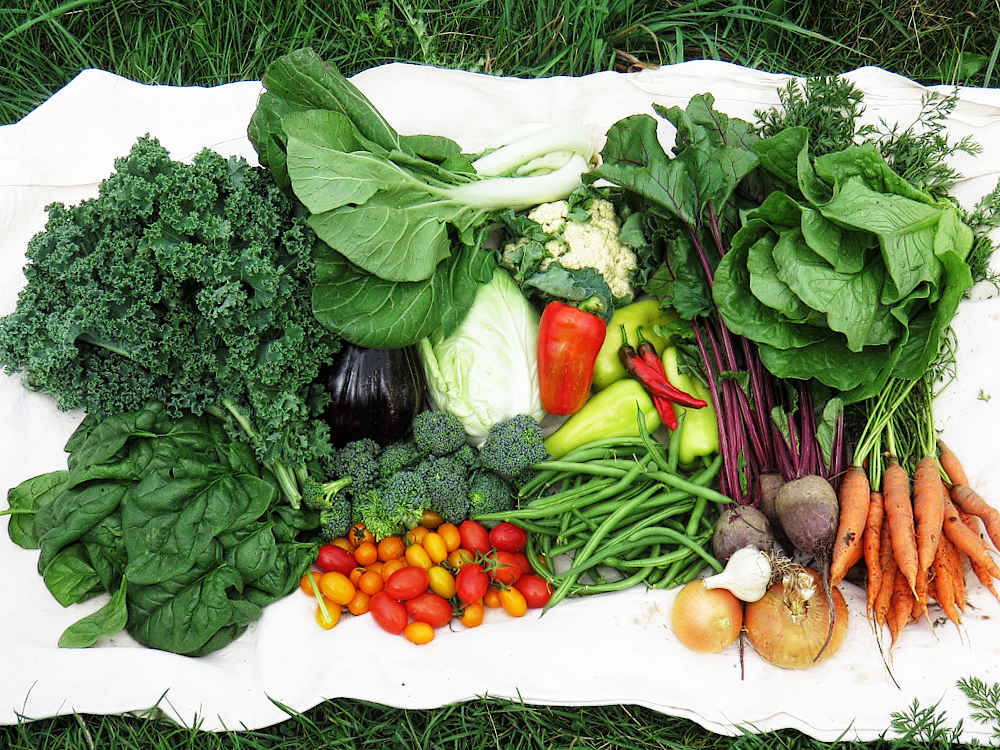
The weather’s been fine, no big frost worries, and the harvest is nice. For the sake of a list, in no particular order, we have: spinach, onion, garlic, carrots, bok choi, broccoli, lettuce, cabbage, kale, hot and sweet peppers, cauliflower, cherry tomatoes, green beans, beets, and…eggplant! I think I got ’em all. The set-up on a strip of canvas is for a newsletter photo–the lighting is an overcast sun, the studio is the field!
Early summer harvest
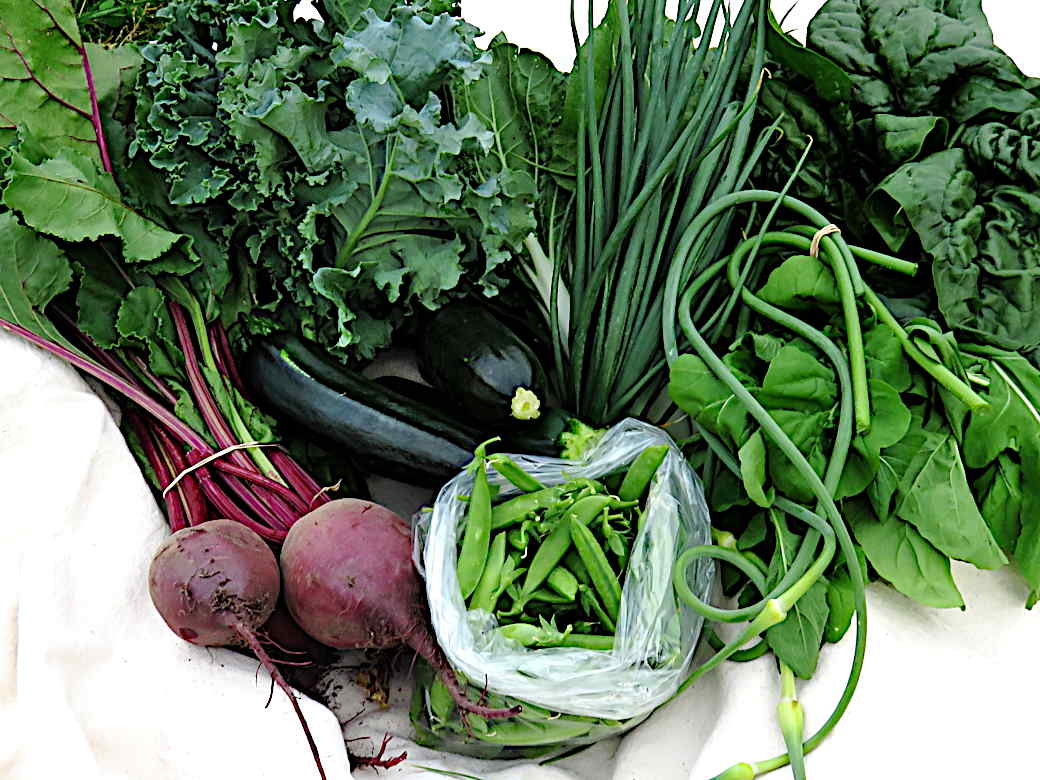
Bigger harvest, still mostly green. Beets, snap peas, spinach, garlic scapes, zucchini, kale, green onions, arugula, bok choi.