
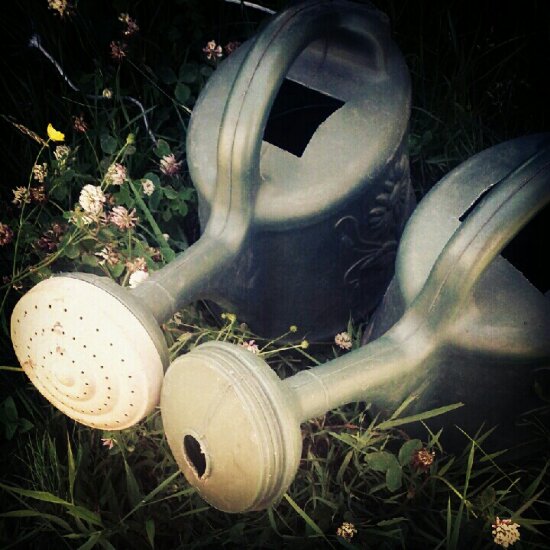
Good tool! These watering cans have been all over—seedling room, greenhouse, field—for the last few years, near perfect for hand watering missions. Five bucks, plastic construction means they’re lightweight, two gallon capacity is decent amount of water that’s still easy to handle, even with one in each hand. The spout cap pours a nice, heavy shower for speed and unscrews for cleaning and for filling smaller containers. I cut square holes on top for quick plunge filling from open barrels. Great!
Mike (tfb)
Pea vs drought
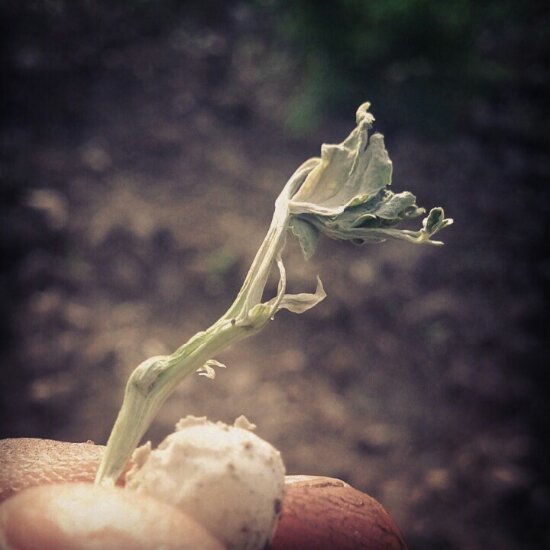
Pea vs drought: Sad and scary when plants die from lack of water. Seems way worse to me than being ravaged by pests. Kinda makes you realize how vulnerable we are. This isn’t a full-on drought, just an extended dry spell with no rain for a couple of weeks and counting. Most crops are doing fine, and only a few shallowly buried peas are getting toasted, so really, it’s all good!
Empty shelves
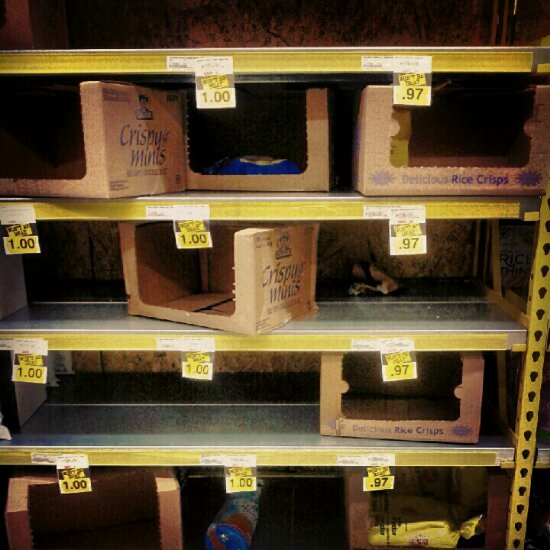
OK, so it’s only the result of a really good price on rice cakes, and emptied shelves aren’t unusual during sales. Still, this time, standing in from of them, I suddenly imagined how fast ALL the shelves could empty, and wonder what we’d do right after that happened. Not an everyday cheery thought (I hope; it’s not for me)…and it quickly passed! Anyhow, I do have lettuce.
Rain watch begins
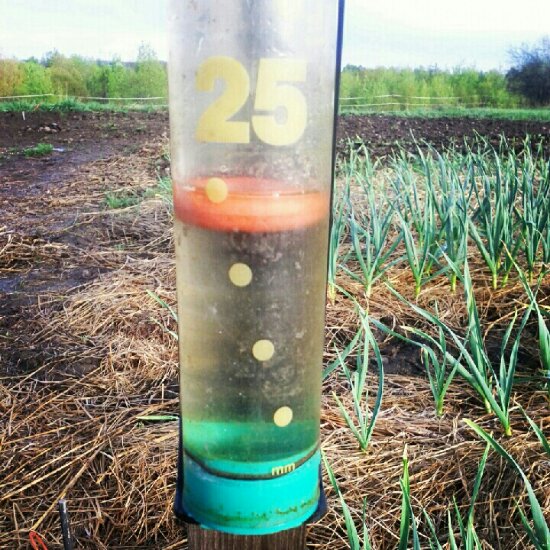
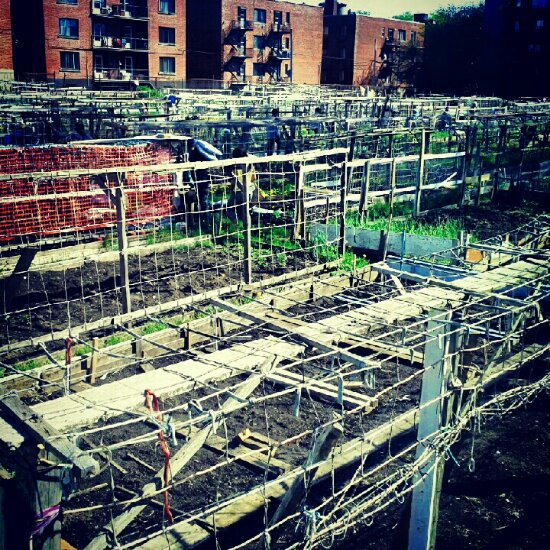
The season’s weekly rain watch begins. Weeks start on Monday. The big 25 on the rain gauge is the magic 25mm/1″ mark, the rule-of-thumb ideal for a week—an inch of slow and steady rain over a few hours, and of course all the rest, sunshine, that’s just…beautiful. A 1/2″ is an OK minimum for a bit. More than an inch a week ongoing for a while can be troublesome, depending on the crop and stage its—disease, small seed washed out, bigger seed rotting, whatnot, it is all possible :)—and it does occasionally happen. So far this week, 18mm here and 20mm total, so, doing fine!
Bucket loading
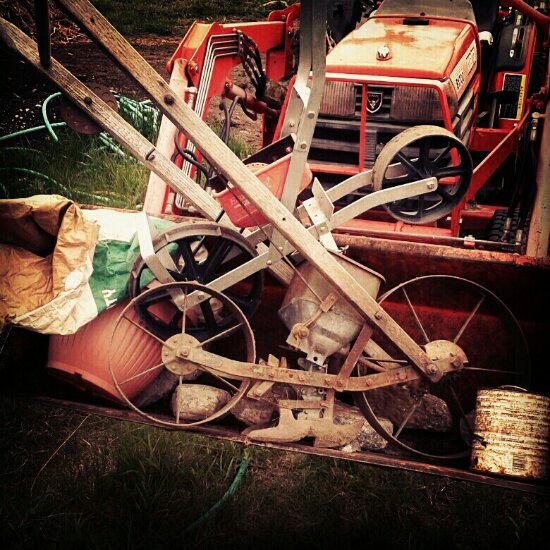
Especially in spring, with constant seeding and transplanting, moving gear around the field is a bigger deal than it may seem. Forget stuff, even little things like a hose fitting or a seed plate or some twine, and you’re heading back the equivalent of practically a city block to get it. A trailer of some sort is the ultimate for a 2-3 acre plot, but with decent packing skills, you can fit a lot into a tiny tractor bucket, too! This carefully balanced load includes everything needed for some direct seeding: the Planet Jr. and Earthway seeders (can’t forget the Earthway seed plates, they’re a perfect fit in that coffee can); seed, clipboard for notes, twine and stakes for row marking (all in that large flower pot); choice rocks for anchoring row cover (it’s never too early to protect brassicas from flea beetles!); and there’s the last of a 50lb bag of snap peas nestled in. It takes a practiced eye to fit everything you need so nothing falls out as you bump along—do it a few times and…easy peasy!
Improbably early corn!
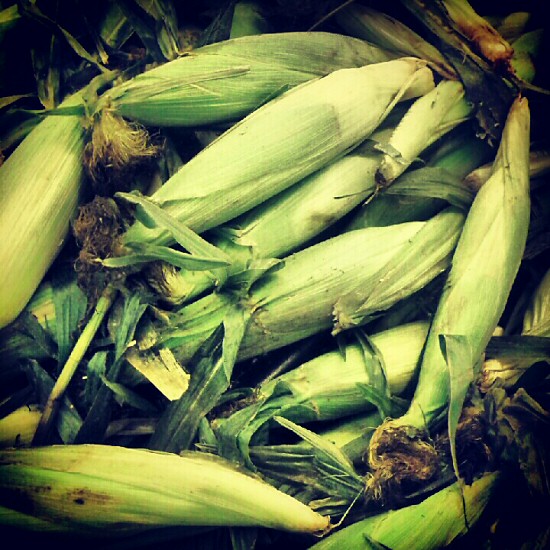
Fresh sweet corn at the beginning of May?! Wow, it’s a miracle! After a period of mild outrage when I first started tiny farming, as it sunk in how far and in what conditions most of our fresh food travels, the knee-jerk negative reaction to the sight of long distance food at the supermarket, and especially at the farmers’ market via the big resellers, thankfully faded away. Automatic anger is a waste of energy that could be put to better uses (weeding comes to mind). So seeing corn in big bins at the store as if it’s fresh from the field down the road, with fields here barely dry and seedlings still in trays, doesn’t surprise or annoy me much now…but it continues to look odd and kinda ridiculous. A miracle, indeed! (I took the photo, but didn’t even think to check the sign to see where exactly this batch is from…)