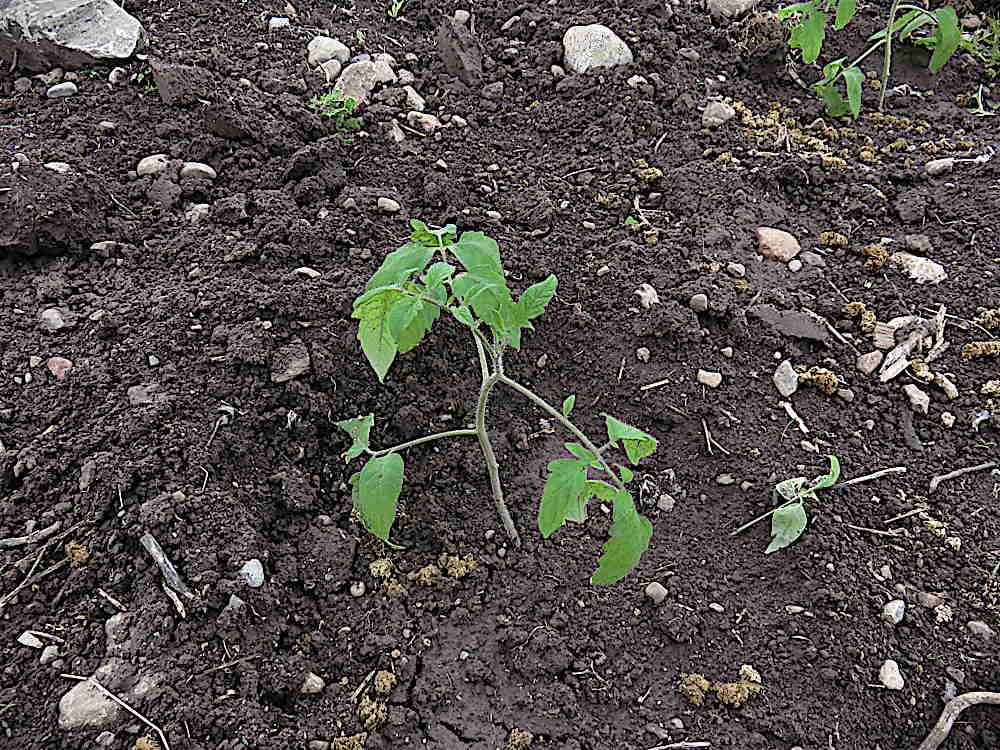
Transplants love drab weather

Tomato transplanted, early days

Transplants, like these tomatoes, do well in mostly overcast, even rainy weather for the first two or three days. Funny the way things in life can turn in an instant. One minute it’s put them in the sun, the next, welcome some cloud cover. My transplants start out under fluorescent light, a weak imitation of the sun: putting them out for a few hours, for at least two or three days, and back in to weaker light of the grow rack every night, gets them used to the sunlight. Once transplanted, though, they’ve got more to adjust to than sun. Their roots have been exposed and jostled. The nights usually get pretty cool in May, 20°F below what they’ve been used to. Maybe they sense the general vastness they’ve suddenly found themselves in, with a plant version of, “Oh my.” Whatever all is going on, it’s an adaptation. Full days of hot sun add the stress of having to pump more water into their leaves to keep from wilting. Although they’ll generally survive that sort of thing—as I’ve observed firsthand…—it’s easy to see the difference when the first few days have a good amount of cloud cover, and they really get rolling, stems thickening, the leaves turning a deep green. There are all sorts of ways, often way closer to ideal, to start seedlings indoors. For my simple, low-tech, rough-and-ready approach, this is how it seems to work!

In the photo: The little golden brown blobs scattered around are alfalfa pellets, used as fertilizer. They start of as hard pill-like cylinders, and expand to crumbly little blobs after being wet, then continue to break down as they join the soil food web.
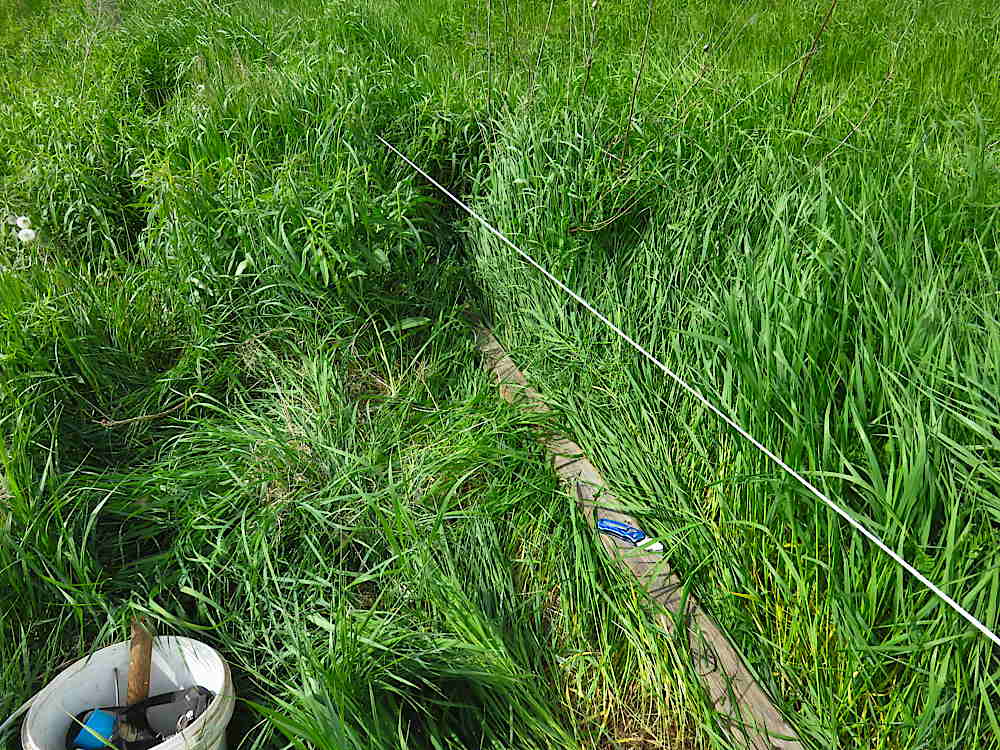
Boldly low-tech grass clearing method

Clearing tall grass

An experimental procedure, effectiveness so far unknown. In some spots, sections of tall grass are swallowing the single strand of electric fence that has so far protected the veggie patch from deer. To keep a nicely unpleasant jolt running smoothly, the grass must be cleared! I’ve used various methods in the past. There’s been the 48″ deck mower on the tiny tractor. Running over the strip under the fence line with the same tiny tractor. Or the handy string trimmer, aka weed whacker, that spits out microplastic particles as the nylon cutting line wears down. And the low tech large garden shears. This year, I’m doing things as manually as possible. If I had a scythe… Since I don’t, and the garden shears haven’t been at all as quick and efficient as I’d hoped, I had a new idea. Lay down a plank under the line—here it’s a 2x4x8—to bend the grass, slide it over a bit so the strip of bent bottoms under the plank is exposed, and slice through with a utility knife, using the plank like a ruler. It went pretty quickly, with only 60-70′ (18-21m) in total of sections to do. And the grass is gone! Whether this really works we’ll find out in how long it takes to grow back. Hopefully, the cut grass will dry into a mulch that helps block future growth. I’m modestly optimistic—the minimum expectation for me to try it at all. Stay tuned!

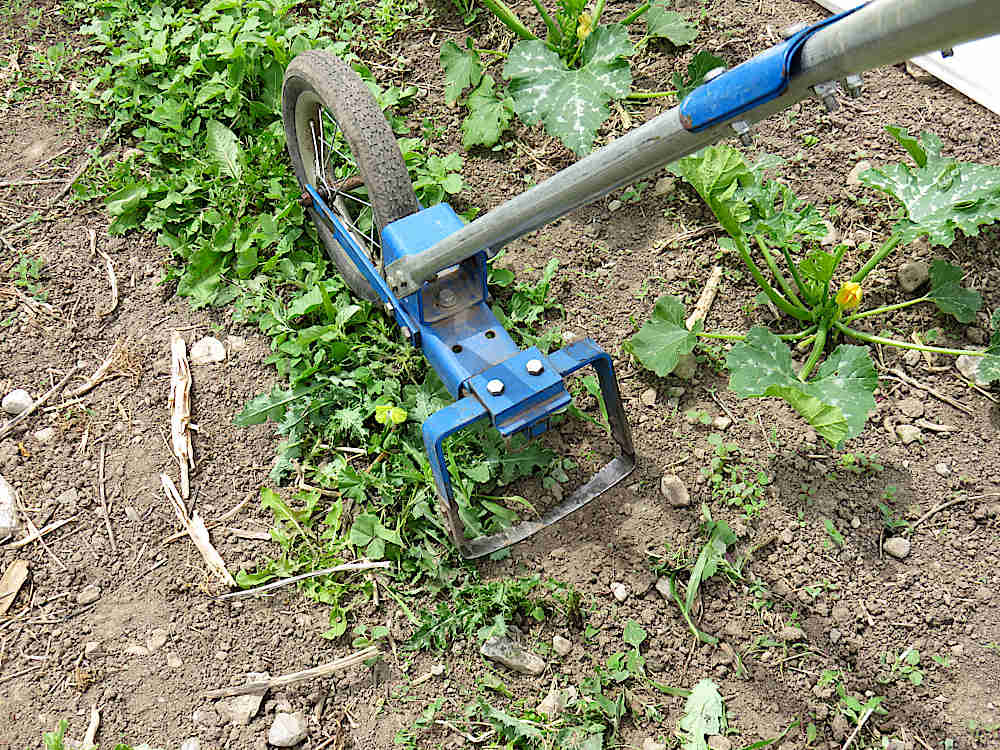
Wheel hoe vs weeds

Wheel hoe in action

A tool in its element! Wheel hoes are great, and this particular one* is fantastic. Unchecked, you can see what weeds get up to given a week or two. This stretch of dirt was protected under the edge of the row cover that’s been protecting the zucchini to the right from cucumber beetles. Now there’s a dense mat of dandelion (weed or excellent salad green?: right now, weed), thistle, mallow, and lambs quarter. And there’s the steel blade that will run through them, gliding just under the soil, slicing them down. Brutal sounding, and all part of the garden balance. (The zucchini have powdery mildew, those white splotches on the leaves, which usually happens when there’s not that much sun. It can get really bad and ruin things, but usually, zucchini will outgrow it. It’s about sunny days…the weather. Another “we shall see…”)

*I got this wheel hoe well over a decade ago from Valley Oak Tool Company, one of the few companies that are a pleasure to recommend, purely out of appreciation for quality product that does its job!

Potato spotting

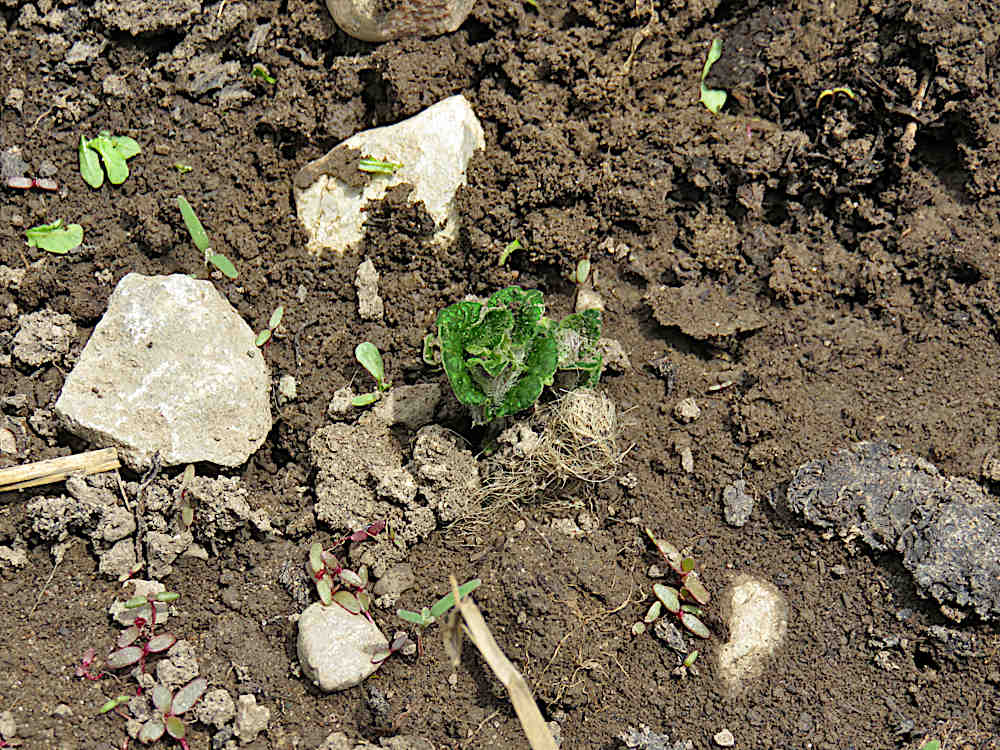
Potato seedling emerging

When you spend a lot of time scanning the ground for the very first sign of germination, you get pretty good at spotting new seedlings as they emerge. This new potato plant is easy, it’s quite large, with a rosette of crinkly, distinctively dark green leaves. Carrots and green onions are a whole lot tinier. Beets, spinach, and brassicas can at first look pretty much like the weeds that pop up around them, they blend in. Still, no matter the crop, after a while, you develop a seedling recognition system that automatically zeroes in on even a single new arrival, just like that. It’s always a pleasure to see that seeds are still getting along with the weather and doing their thing!

Seeding potatoes

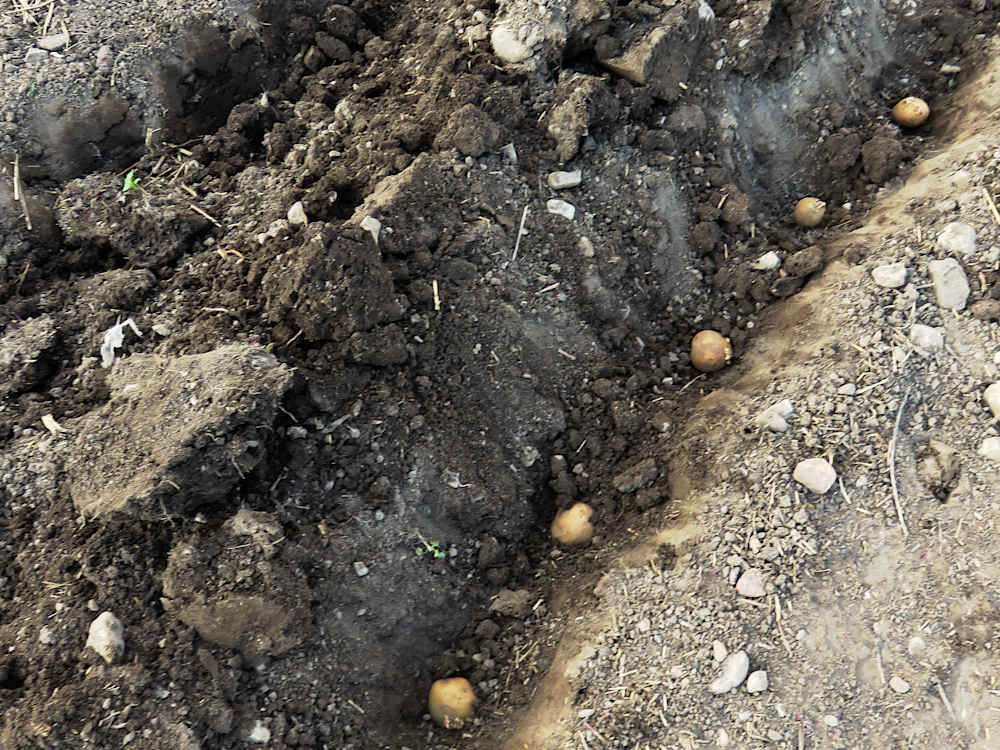
Seed potatoes placed in a trench

Place seed potatoes in a hand-dug trench at about 12″ spacing. Cover with a couple of inches of soil. Wait for stems to grow a few inches. Start hilling: pile on soil to bury the stems so there’s more underground stem rooting and allowing for potatoes to form. Keep hilling every couple of weeks for as long as it’s practical—stems still growing, more soil easy to get at, leaf cover not in the way. As simple as it seems!

Thin white lines

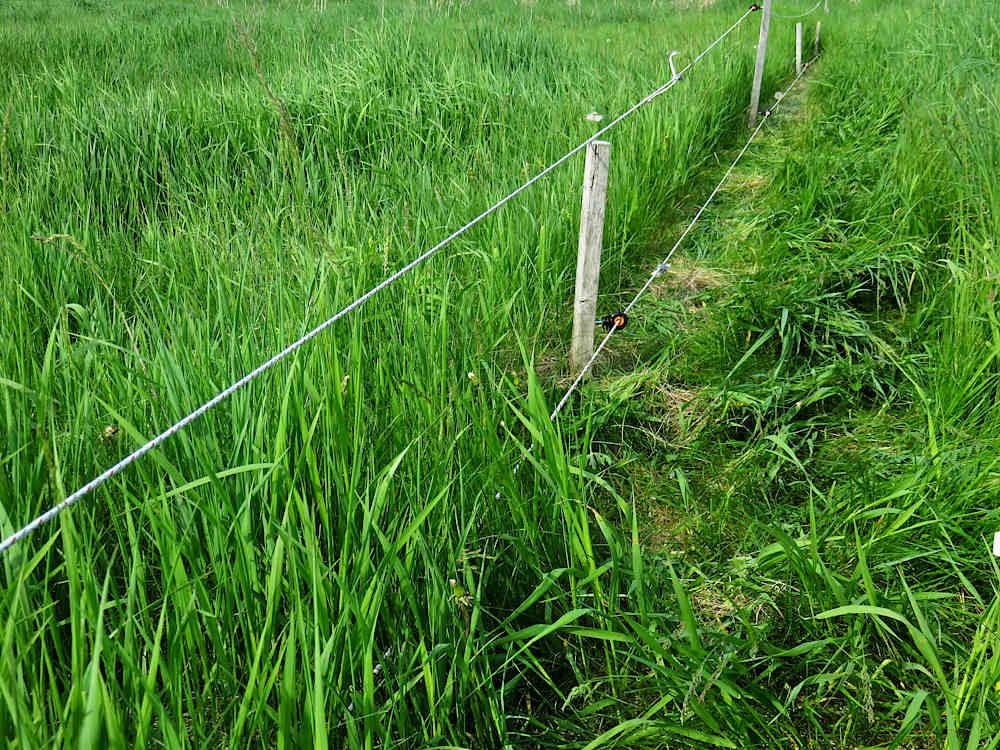
Electric fence lines for deer and for groundhogs

Two lines of electric fence rope, one for deer, one for groundhogs, running through the so-very-healthy grass, perfectly illustrates the nature of the war on weeds. Maybe I should use less militaristic terms, but that’s what comes naturally—guess it’s my cultural upbringing. And it does feel like a battle. On the ground, face to face, against a well-adapted indigenous…opponent. Spraying herbicides would be like an impersonal aerial war, bombing from on high. In this tiny farming, it’s hand pulling and snipping, and using the pulled weeds as mulch to hopefully smother reinforcements that are ready to spring up. Here, letting the grass swamp the fence lines would be bad for the system, draining the battery and reducing the strength of the all-important ZAP!

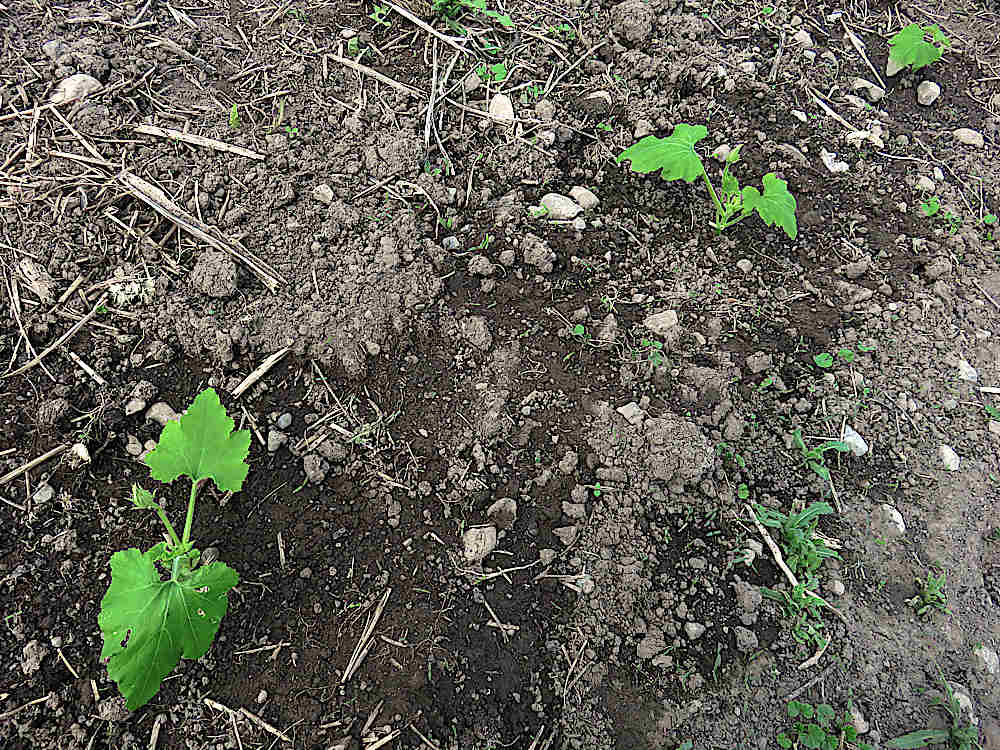
Zukes in the field

Zucchini, transplanted into the field a couple of weeks ago, don’t seem to be doing much so far. Don’t be fooled! Once they get settled—I imagine a lot of root action, spreading wide and down—they will explode. Pop! They’ve been under row cover to protect them from the cucumber beetles that attack all the cucurbits. I’m giving them some air on yet another mainly cloudy day. It’s generally not a good idea on the leaf disease front to keep our local garden veggies in warm damp conditions that can happen under row cover when there’s not a lot of sun. Looking at the photo, I can’t help but notice all the other garden would-be inhabitants, what we call weeds. I see some thistle, mallow, dandelion and of course, pigweed (aka amaranth). Like the zukes, they only seem like they’re not doing much…because I recently wheel hoed!