Spinach in the field

Yay, spinach! Seeing direct seeded crops germinate is one of the most satisfying things in the field. Here, it’s spinach, Reflect variety, seeded a few days ago, coming up nicely. In general, seeds do germinate, that’s a good starting point. But there are lots of variables, and the unpredictable weather extremes that have become the new normal don’t help. Is the seed new this year, or has it been around for a year or more? What conditions does the particular veg like: ground always wet until germination, soil temperature not too low or too high, seed not too deep or too shallow, and so on. It sounds more complicated than it is, only because, as a tiny farmer, you have little control over any of it. You lay seed down at a reasonable depth, water it in, watch, hope for the best, and prepare to reseed if things don’t go your way!

Looking tiny by comparison, you can also see redroot pigweed seedlings popping up. They’re easy to handle if weeded early. Otherwise, a no-joke garden invader!
A day in the sun

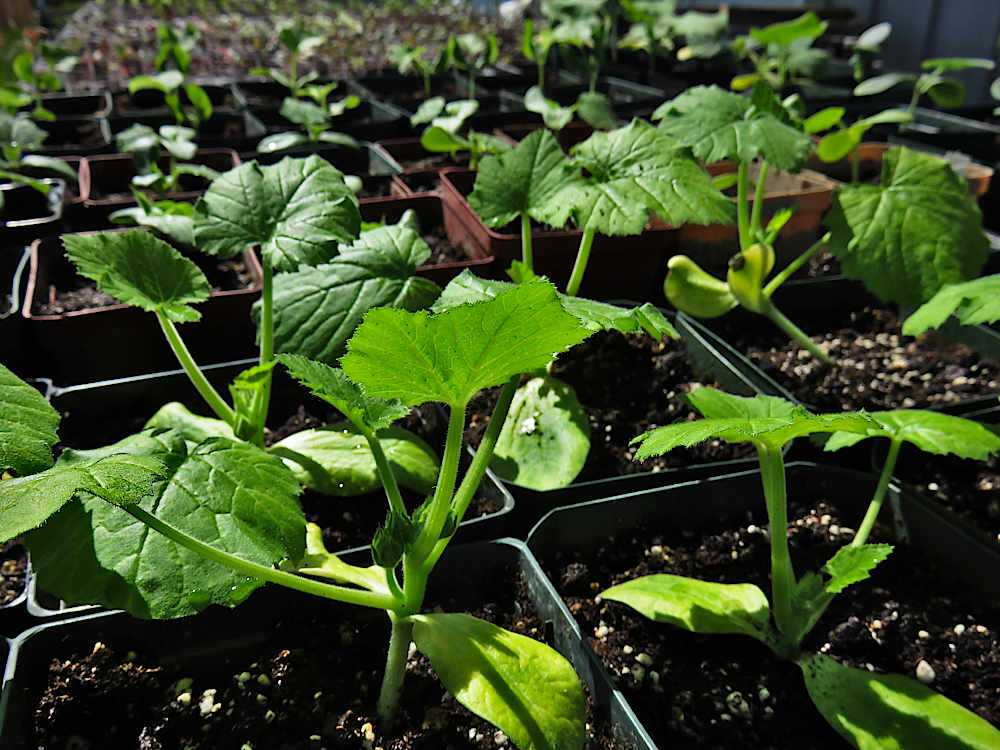
Seedlings hardening off in the sun

I’ve been hardening off trays of seedlings over the last few days, a few at a time, taking them out from the under the lights. Today, they were all outdoors, some for their first taste of the sun. It’s a manual routine, walking back and forth from the light racks with one or two trays at time, then bringing them back in in the early evening. I like it: a clear, simple, straightforward task, and the most important thing to do when you’re doing it. This is also exactly the type of routine that’s perfect for automation, or at least, optimization.

To grow a fair bit more than this year, I would put seedlings out in an unheated greenhouse where they’d stay until transplanting. That brings more convenience and efficiency, and also a few extra concerns. Voles tend to burrow in and munch on greens, so checking the perimeter becomes a thing to do. Daytime temperature in the greenhouse shoots up to 40°C+ (104°F+) on a sunny day, so ventilation is a must. When you open the doors in the day, you have to close them at night against cold and critters, and open them again early the next day. If the forecast is for freezing overnight, row cover placed in the evening and removed in the morning can handle a few degrees below (in a more extreme cold situation, a portable heater fired up in the middle of the night might be necessary).

Then there’s the new super-high winds that started happening around here within the last five years or so, there’s extra concern about the whole greenhouse staying up—mostly not in your control, but you still think about it with every weather warning!

Nothing wrong with scaling up and improving efficiency, while every step to bigger has its complications!

Grass, thistle, puddles, mud

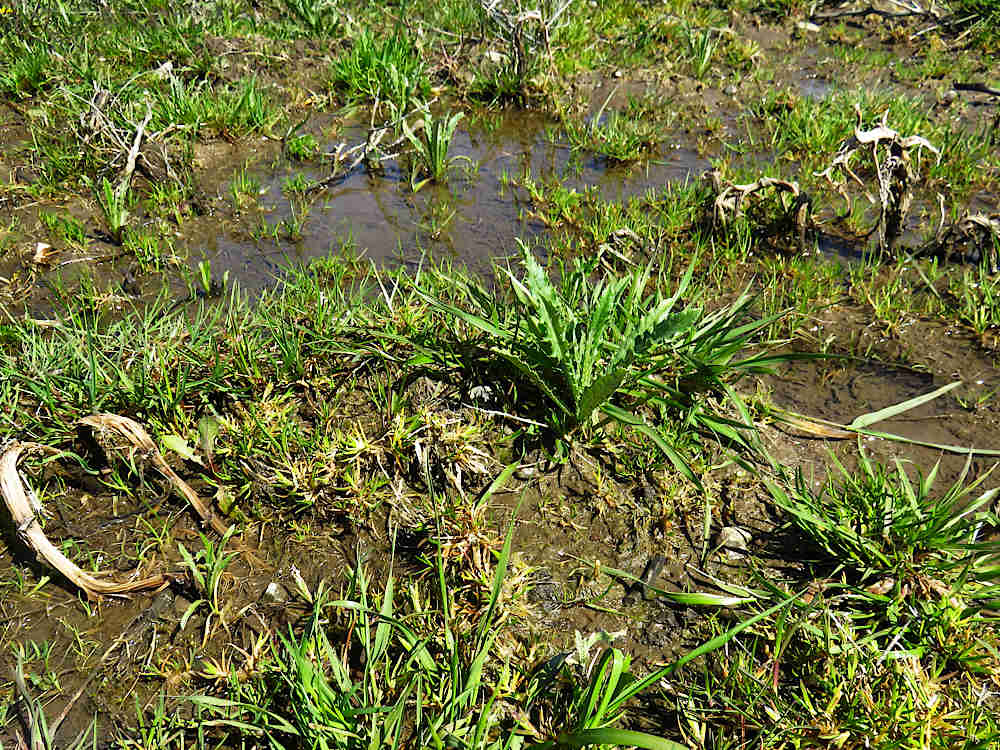
Wet field

This is a piece of ground you’d usually step around and not give a second thought to…unless you wanted to grow things in it right away! A good part of the field is dried out enough to work, but there are low spots where the ground is still saturated with water, all dense, squishy mud and all-day puddles. The weeds don’t mind, this is home! Thistle pops up. Clumps of grass aren’t a problem, when you don’t let them take hold. Unless there’s a lot of rain, a few more days and it’ll be good…

Critical garden gear!

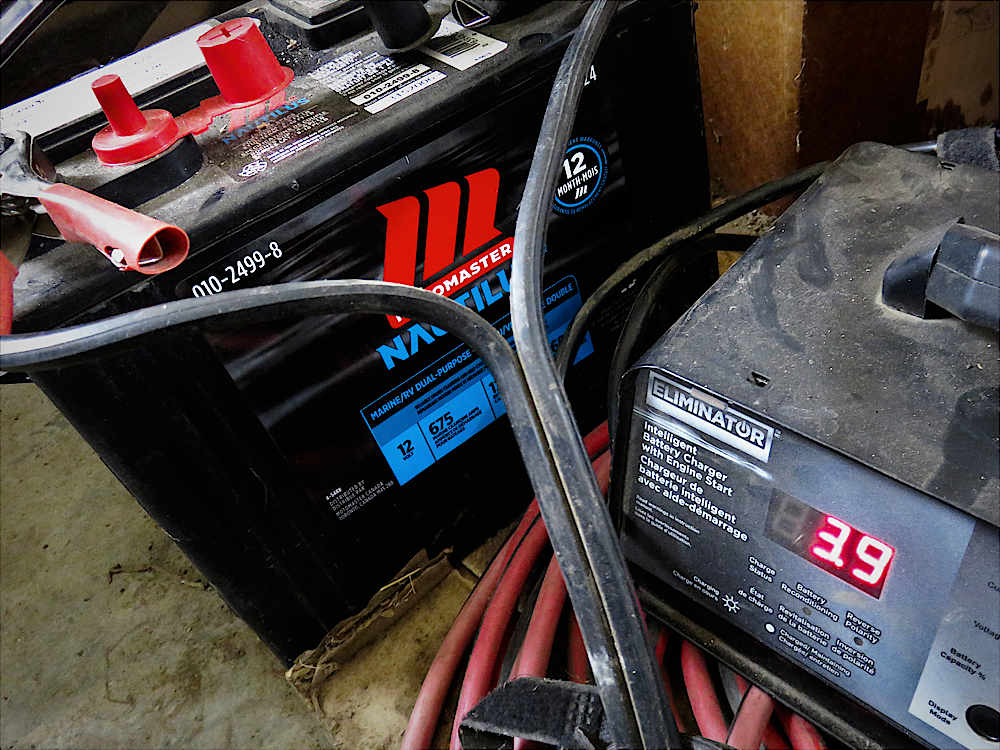
Charging electric fence battery

As important as any tool around here, the battery for the electric fence is absolutely critical: for several years now, it’s powered the first and last line of defense against…deer! As of last season, and the addition of a low-strung line only a few inches above the ground, it also gives a little jolt to the groundhogs that suddenly appeared in force. Without the e-fence, the market garden would eventually be munched into oblivion. Along with keeping the battery charged and checking that the fence line hasn’t gone down or gotten overrun by weeds, there’s also looking daily for animal tracks and signs of snacking. Doing the inspection rounds first thing every day is mix of low-level stress, anticipation of the worst, and general excitement, until it checks out as all-clear. Which, thankfully, is almost all of the time!

Hauling water

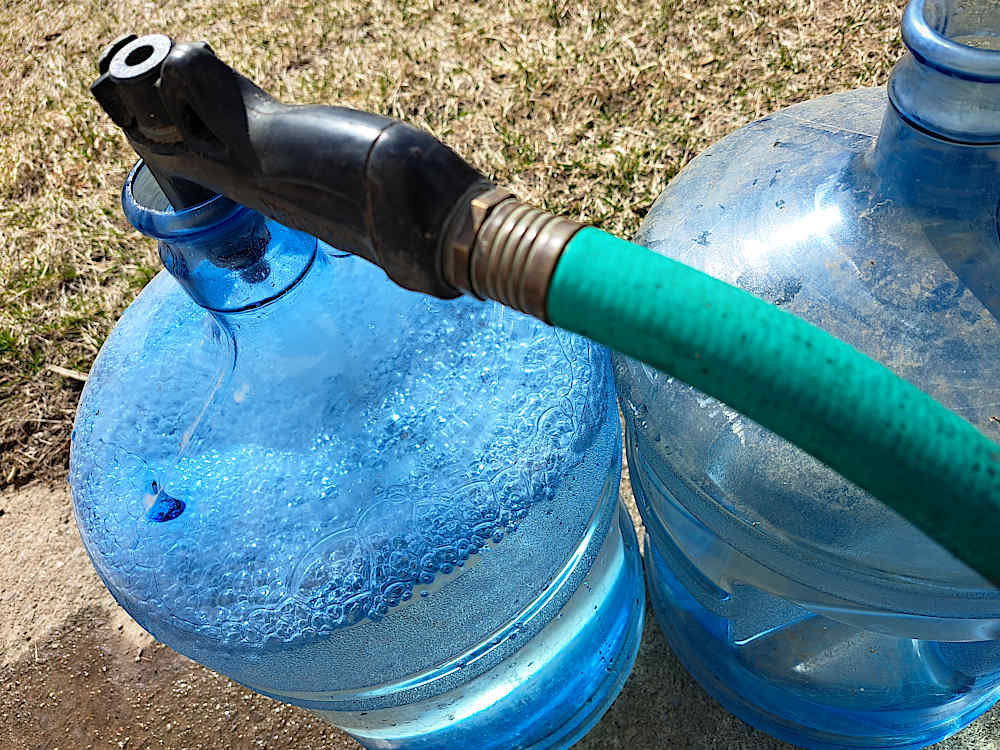
Filling water jugs

The seedling room is in a fully modern building with all the modern conveniences like electricity, heating, ample insulation and screened windows well-positioned for a bug-free cross-breeze and lots of natural light. The only thing missing is a handy supply of running water. Drilling for a new well located nearby ended in failure after a couple days of exploration produced only an expensive dry hole. So, until the gutter-fed rain barrels are turned over in warmer weather—overnight freezing of collected rainwater could crack them—I bring over water for the seedlings in 18 liter jugs filled from another well in a building not too far away. Simple systems and the rituals of spring!

First look of the year!

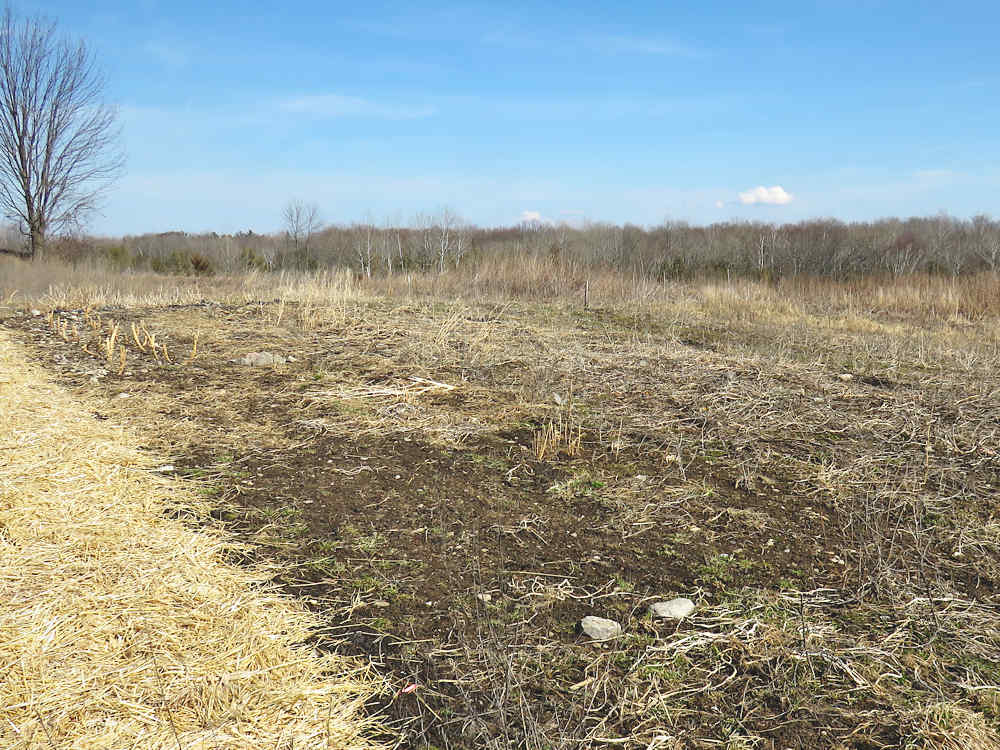
First view of the field for 2024

Today’s view of the field, my first since last fall! I’m about a mile (1.6 km) down the road, and I do sometimes pop by in the off-season. Usually, though, it’s out of sight, not out of mind for the whole winter. I’m still getting used to how much tinier the garden has been since I left the farmers’ market and the pandemic had its way. In any case, it’s looking fine. Most of it was cleared last fall. The straw-mulched garlic on the left seems cool, nothing poking up yet, I suppose not too early is good. And it’s really not wet, not the former usual dense, clinging, suck-you-down mud of the after winter melt-off (I’ve pulled my foot out of rubber boots trying to step forward in that stuff). Unless there’s a mini monsoon season coming up, I’ll be able to get out there pretty early, to set up the anti-deer-and-groundhog electric fence and prep beds. There’s still a broken rototiller to deal with on the tiny tractor, so that could slow things down. As always, we shall see!

Pellets of goodness

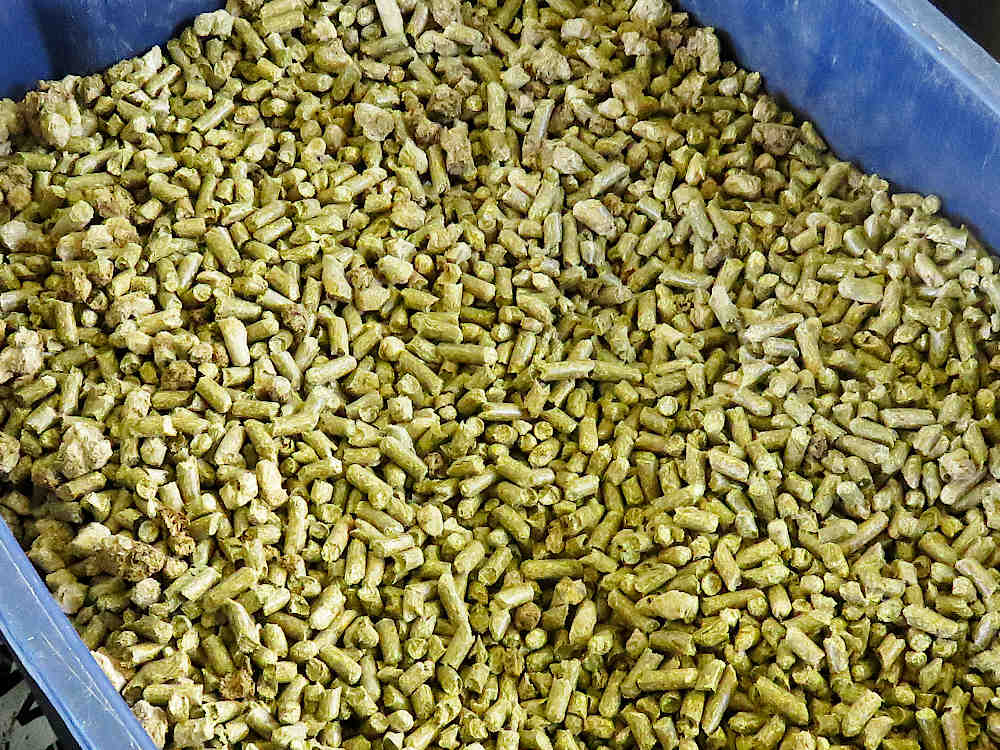
Alfalfa pellets

One person’s low-interest bin of unidentified golden-brownish stuff, is another’s stash of pelletized alfalfa goodness. This is plain old alfalfa, the plant in the pasture that cows especially love, dried and compressed into pellets. No additives, nothing but dry plant pills. They’re a great fertilizer in the veg patch. One season, I counted on mostly pelletized alfalfa, instead of the usual cow manure, as the main plant food and it worked out fine. It’s also quite inexpensive, compact, easy to store and spread. Nowadays, I use it to top up beds over the season, after the main composted manure spreading. At one point, I had all the numbers – how many pounds/kilos per bed, cost per acre – and nutritional details, in front of mind. Now, using it as a top-up, all that has receded and I eyeball it. Just scatter.