
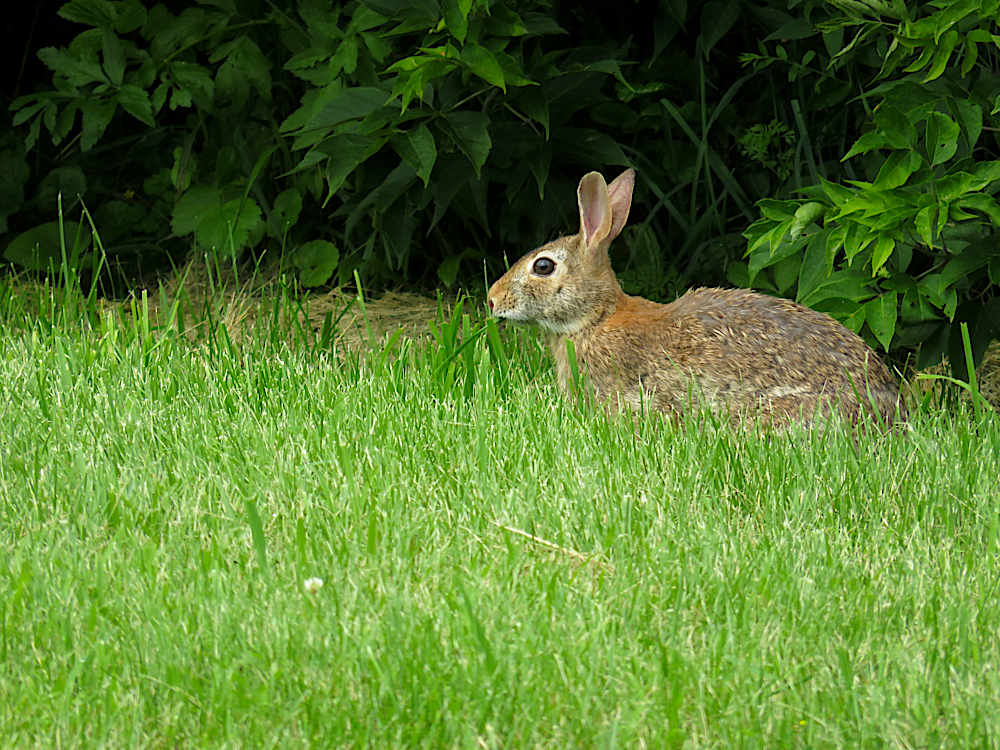
Yeah, these aren’t my buddies. This season, the first time for me, rabbits hopped out of the cute woodland creature category and into Pests & Disease. At least one or two are definitely creeping around the garden, so far not damaging much, but making their presence clear with sightings and droppings. The way it seems to go, regular appearance leads to exploratory munching, then full-on devouring. Where the low-slung electric fence seems to be working for the groundhogs, I suppose bunnies might just…hop over?! Stay tuned!
Pests & Disease
Season of the snail
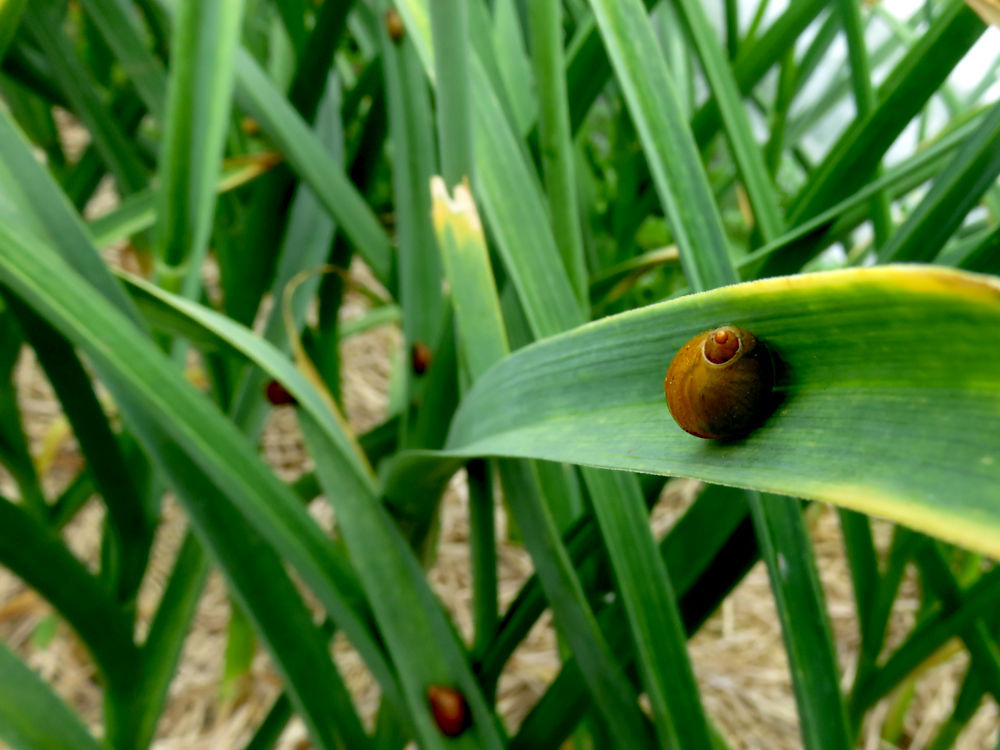
This year, small snails everywhere! My best effort at identifying them (posting pics to the iNaturalist app on my phone) suggests they’re in the amber snail family (Succineidae). Wherever the ground is sheltered and moist, like under rocks or piles of uprooted weeds, and on some veggie leaves and stems, you’ll find a bunch. Here, they’re on the garlic. Voracious leaf munching doesn’t seem to be what they’re up to, so that’s good (and I read that they aren’t likely to be a veggie problem). For better or for worse, no damage, no problem is my motto, and that usually works out!
Wheel hoe vs weeds
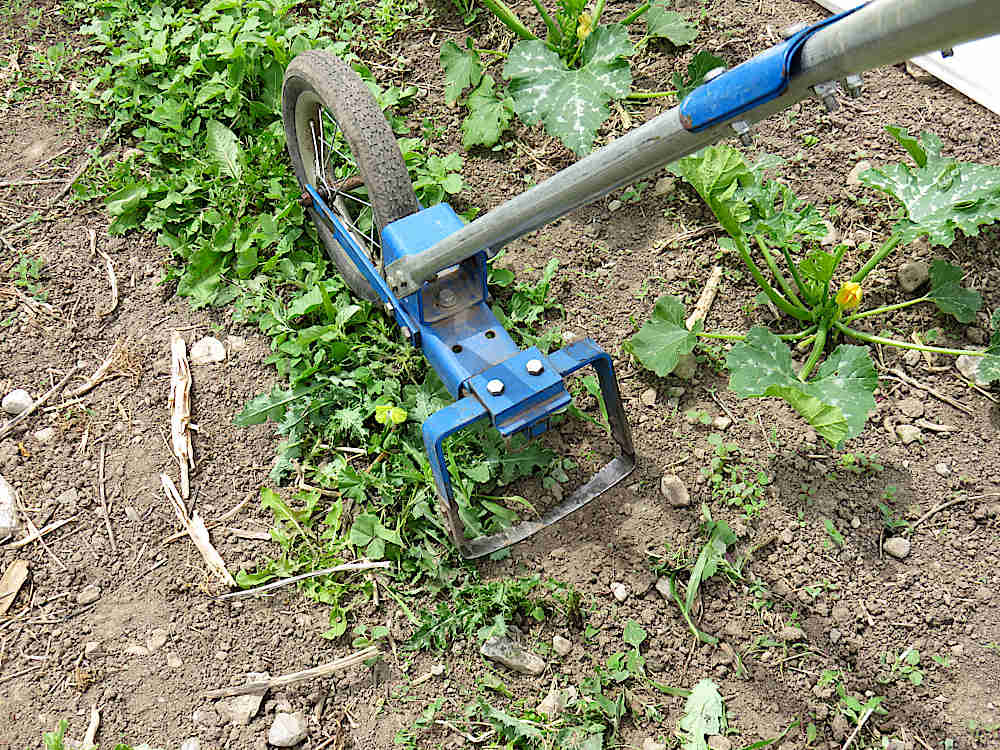
A tool in its element! Wheel hoes are great, and this particular one* is fantastic. Unchecked, you can see what weeds get up to given a week or two. This stretch of dirt was protected under the edge of the row cover that’s been protecting the zucchini to the right from cucumber beetles. Now there’s a dense mat of dandelion (weed or excellent salad green?: right now, weed), thistle, mallow, and lambs quarter. And there’s the steel blade that will run through them, gliding just under the soil, slicing them down. Brutal sounding, and all part of the garden balance. (The zucchini have powdery mildew, those white splotches on the leaves, which usually happens when there’s not that much sun. It can get really bad and ruin things, but usually, zucchini will outgrow it. It’s about sunny days…the weather. Another “we shall see…”)
*I got this wheel hoe well over a decade ago from Valley Oak Tool Company, one of the few companies that are a pleasure to recommend, purely out of appreciation for quality product that does its job!
Thin white lines
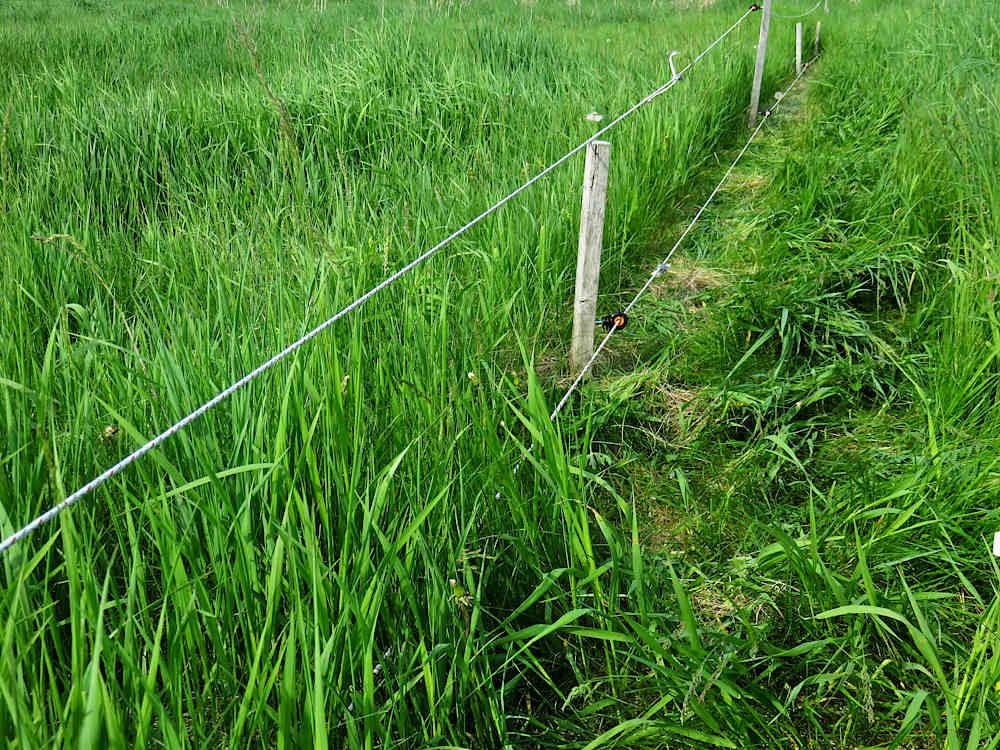
Two lines of electric fence rope, one for deer, one for groundhogs, running through the so-very-healthy grass, perfectly illustrates the nature of the war on weeds. Maybe I should use less militaristic terms, but that’s what comes naturally—guess it’s my cultural upbringing. And it does feel like a battle. On the ground, face to face, against a well-adapted indigenous…opponent. Spraying herbicides would be like an impersonal aerial war, bombing from on high. In this tiny farming, it’s hand pulling and snipping, and using the pulled weeds as mulch to hopefully smother reinforcements that are ready to spring up. Here, letting the grass swamp the fence lines would be bad for the system, draining the battery and reducing the strength of the all-important ZAP!
Spinach in the field

Yay, spinach! Seeing direct seeded crops germinate is one of the most satisfying things in the field. Here, it’s spinach, Reflect variety, seeded a few days ago, coming up nicely. In general, seeds do germinate, that’s a good starting point. But there are lots of variables, and the unpredictable weather extremes that have become the new normal don’t help. Is the seed new this year, or has it been around for a year or more? What conditions does the particular veg like: ground always wet until germination, soil temperature not too low or too high, seed not too deep or too shallow, and so on. It sounds more complicated than it is, only because, as a tiny farmer, you have little control over any of it. You lay seed down at a reasonable depth, water it in, watch, hope for the best, and prepare to reseed if things don’t go your way!
Looking tiny by comparison, you can also see redroot pigweed seedlings popping up. They’re easy to handle if weeded early. Otherwise, a no-joke garden invader!
Groundhogs be zapped!
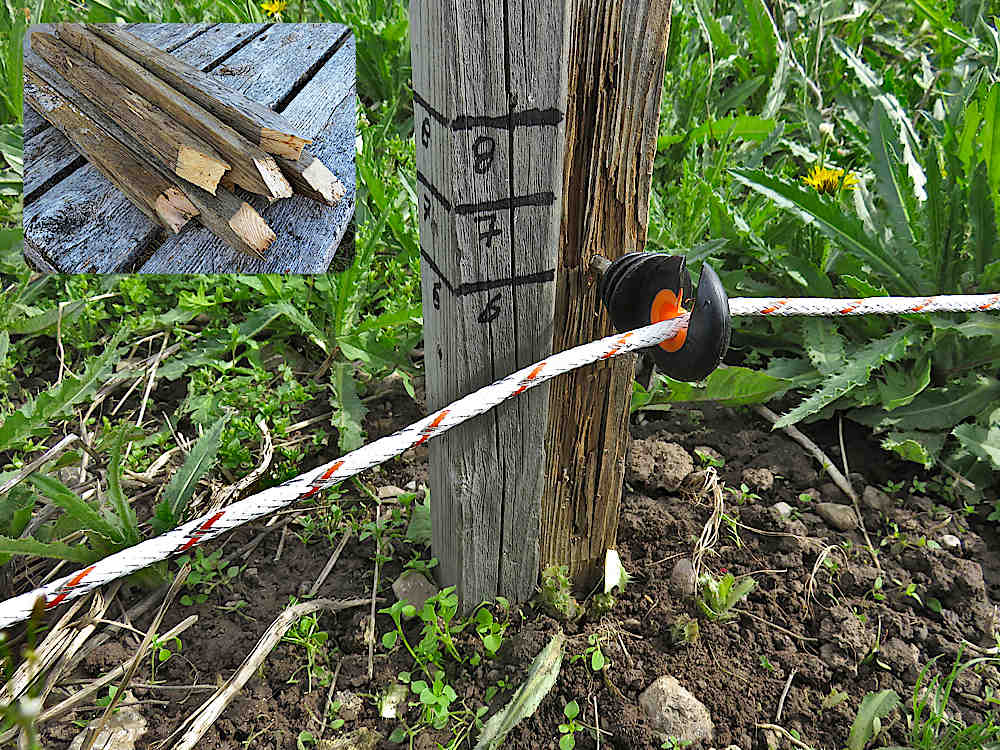
Big Agriculture has its genetic engineering and laserbeam weeding; on the tiny farm, sharpened wooden stakes and startling but harmless electric shocks are about as high tech as it gets. Today I laid out the groundhog electric fence line—poly rope with metal strands twisted in, strung at six inches (there’s another line at 28″ for the deer).
After last year’s first-time groundhog attack, this approach seemed to work. Still, that was later in the season, when the voracious little critters were already starting to get heavy and slow as they bulked up for hibernation. Maybe they were too lazy to put much energy into dealing with short, sharp shocks. This time around, they’re well-motivated, slimmed down, and hungry for the all-you-can-eat veggie buffet only a short waddle away. So…we’ll see! Weeds that touch the low line can draw off electricity—a new extra weeding job to add to the list…
Scratching the zuke
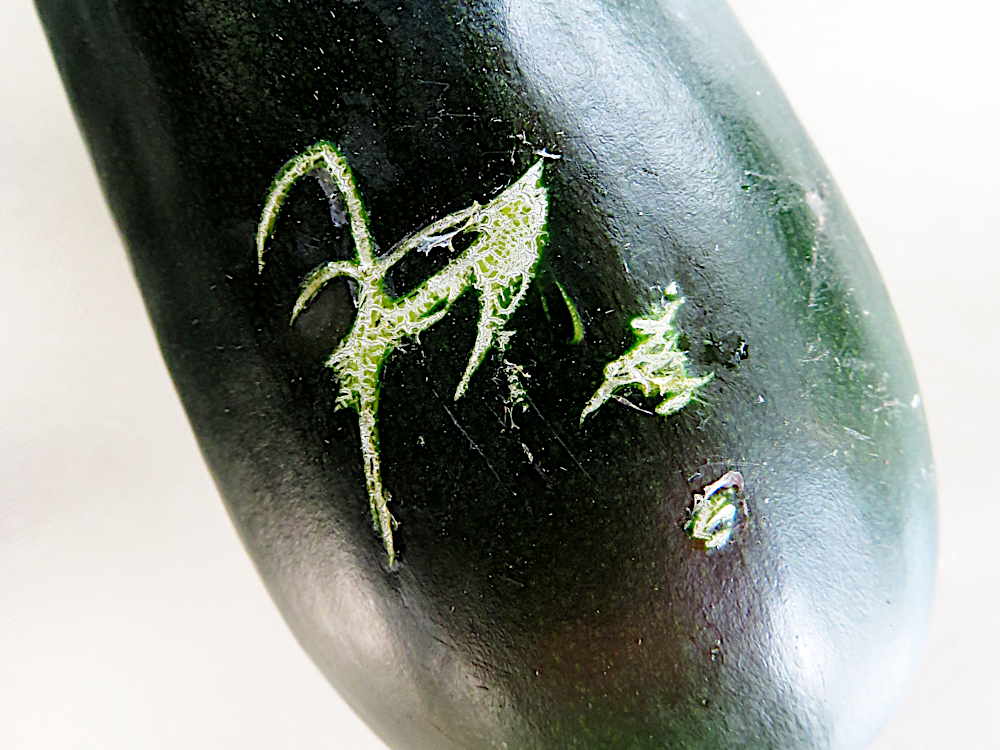
Groundhogs are back again, and they seem to be more active than last year. I’m checking everything out every day to see how far they might go. It comes down to what they turn their beady little eyes and big sharp teeth to next. My garden ravager experience has been for the most part with deer. When a veg garden is new to them, they tend to explore crop by crop. A night or two of nibbling on a new one, then, full-on devouring, and off to the next. So far, the over-sized rodents have focused on lettuce and brassicas. Today, I noticed what look like scratch marks on a single zucchini. I’m no wildlife biologist trained in animal feeding behavior. Still, I suspect some fair-sized beast, like a groundhog, tried to scratch their way into the zuke. And failed. That’s kinda weird, doesn’t look like an A-game effort. Have they given up for good? Or was it a much smaller veg-eating creature? Or something else entirely? The big question is, will the zukes be next?