
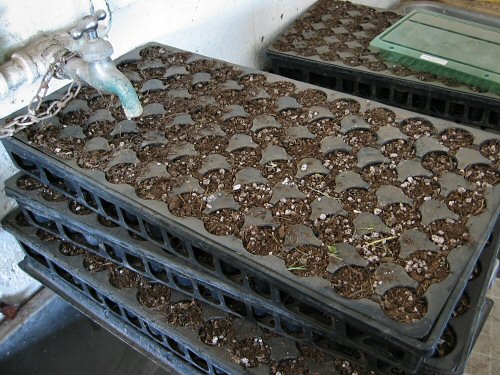
These 72-cell plug sheets, filled with now bone-dry starter mix, have been sitting in the Milkhouse on one half of the double sink since early last summer. They were extras from the final round of seed starting (the last of the brassicas). Now, it’s their time again, as I start the set-up for next year’s seedlings. I usually only do this stuff after the Holidays, but this year, I’m unusually anxious to get going. Maybe it’s a reaction to the unexpected snow and cold. After the recent, freakishly short winters that happened to coincide with my entire farming career, maybe I’m edgy about being cut off from the garden for so long. I mean, all I see is white. I want more greens and browns!! (And there’s the new adventure in fine dining to get started, sparked by Amanda at Apartment Farm’s recent peppy post: “Winter Gardening: Micro Greens”!)
Seed & Seedlings
Last of the seedlings
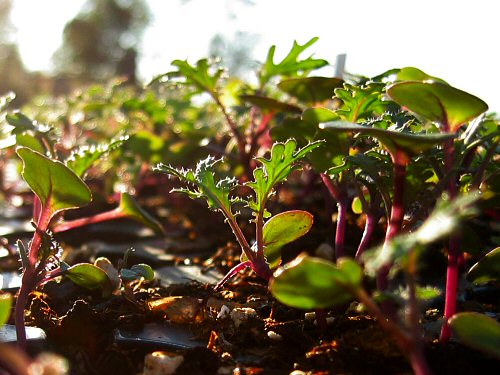
A tray of Red Russian kale are the last transplant seedlings for this year. It’s extremely late to be planting this out now, but RR is a fast grower, there’s space, and it’s always fun (and good experience) to see what happens! Any extra kale is a bit of insurance against a cold October that would see hardy crops as the last ones standing…
Burlap method strikes again!
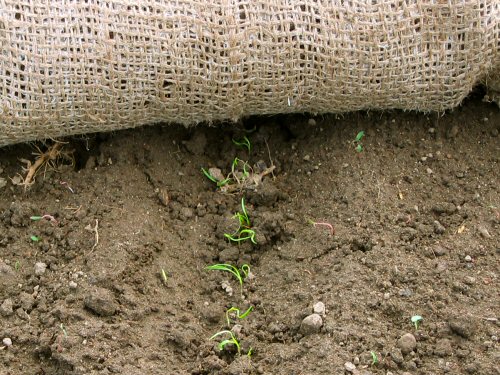
The carrots-under-burlap germination method is now 3 for 4, with this fine performance: solid rows and almost no weeds! The third attempt failed miserably with three different varieties, mainly due to underwatering (the extra drying effect of a very windy week wasn’t given proper respect) combined with using the Earthway seeder’s light carrot plate, which puts down much less seed (what a bad idea, I fall for the allure of little or no thinning every few plantings…). Anyhow, it was back to the regular seed plate and proper checking and watering, and now, a new 800′ of Nelson and Touchon is on its way (although, something’s been munching on carrot seedlings lately). Never dull! :)
Where carrot seed comes from
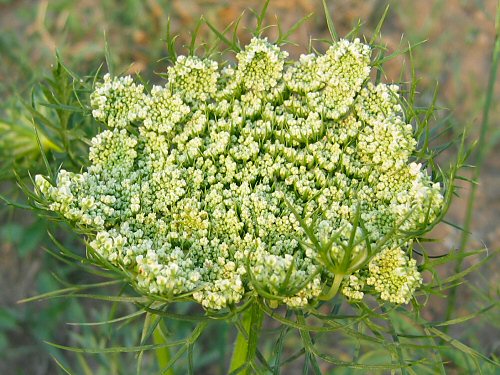
This is where those tiny, slow-to-germinate carrot seeds come from! For leaf and root crops, you often have to go out of your way in the veggie garden to see first-hand how exactly their seeds are produced—the crop is harvested and eaten before the flowering stage starts. Carrots are biennials, they go to seed only in their second year, so unless you’re seed-saving, or accidentally leave some behind over the winter (as we did here), the entire flowering process will remain a garden mystery. For carrots, if it was a mystery, no longer…!
Last of the Milkhouse seedlings
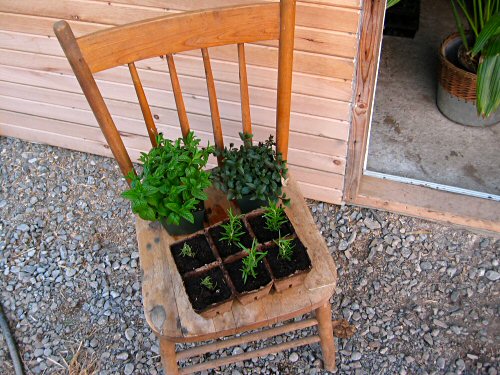
Spearmint, peppermint and some replacement rosemary are all that’s left in—right outside—the Extended Milkhouse. Most of the spring seedlings are in the ground (a few are still in the greenhouse), and it’s time to transform the Milkhouse set-up from seed starting to overnight harvest storage and a place to take a break from extreme weather.
More people in the field…
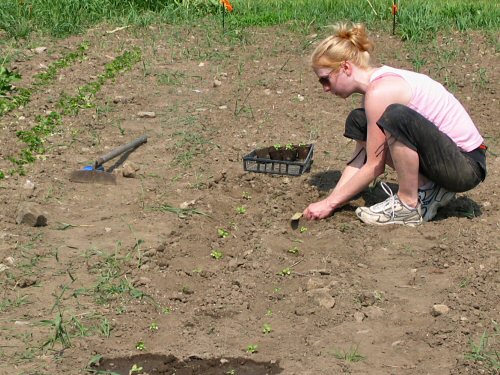
At work transplanting really tiny basil in the still-to-be-shaped-up herb patch, Andrea is doing her very first day of tiny farm gardening. It all worked out very well! After nearly a month of working with Conall, the all-new organic grower, almost every day, and having several other people out for a few part-time hours, it’s a different season for me compared to the previous four. Not less work (we’re planting way more than ever before), but the energy is different. Before, largely working alone, it was more of an against the odds thing as I faced the fairly massive task of each season’s start-up. I liked that solo mission adrenaline and challenge. Now, it’s more of a people puzzle, as this season’s small crew assembles. By the time it comes to more substantial harvests in three or four weeks, I’ll be totally reliant on teamwork to get it all done. No going back: it’s like, Tiny Farm II: People in the Field. :)
Herbs…
Picked up some herb seedlings from local growers at the farmers’ market yesterday. From the bottom left: peppermint, lovage, spearmint, rosemary (started here from cuttings), and tarragon (peeking in from the corner). I generally grow everything possible from seed, so the ones from the market are a bit of an instant treat. I’ll buy a couple of seedlings and multiply them myself to production quantities, which in this case means next year, at least, for the lovage and tarragon. Last frost date was May 18, the 15-day forecast is well above zero C, so it’s now time to get all of the seedlings in. It’s also time to direct seed the flowers. Lots to do…