Carrot-burlap method gets a twist

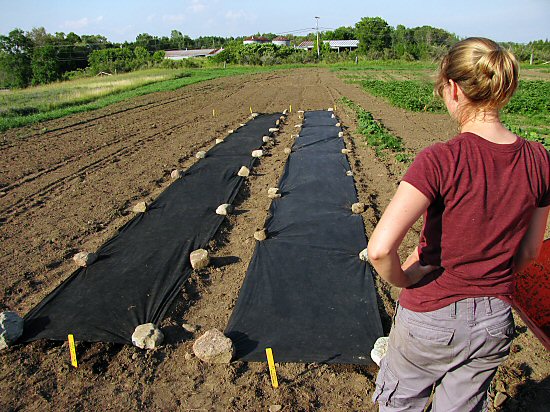
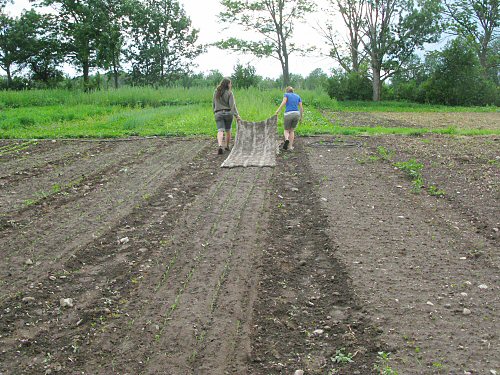
Here’s one of the more extreme displays of crazily labor-intensive tiny farming technique. Andie surveys our work, the result of deciding to try landscape fabric in place of burlap to help carrot seed germination. It’s actually a double experiment, because one of the beds is green onions.

The burlap method has been the way to start carrots around here for the last two seasons: tried and true. The main purpose is to preserve moisture in the seed drills, and the increase in heat helps as well.

After a good run, the first round of burlap expired, and I couldn’t find rolls of it in time for this season (I know it’s out there, somewhere). But, I spotted this gear, landscape fabric, a porous plastic mulch used to permanently suppress weeds in…landscaping. It’s light, and just wide enough (3’/30 cm) to cover 4 rows of carrots (that’s a little closer than usual for the bunching onions). I tried it on two beds earlier in the season, and it works fine!

One little problem: it tears easily, so how to hold it down? With the burlap, we made wire staples out of heavy gauge wire. Here, we placed a LOT of heavy rocks, close enough together that there’s no room for the wind to get under and start really pulling. This does the trick for now, but overall, it’s a little TOO intense. The hunt for burlap: still on!
Burlap expires

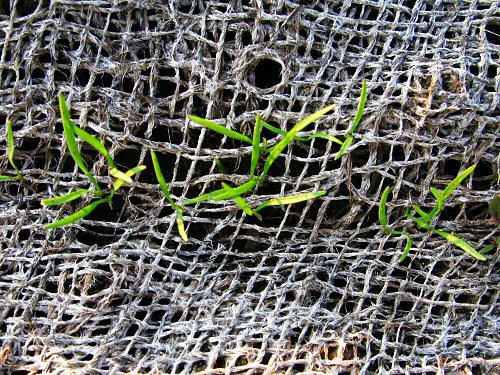
After a nice long ride, the burlap (of the burlap carrot germination method) is finally breaking down, shredding as we fold it up off the final carrot beds of the season.

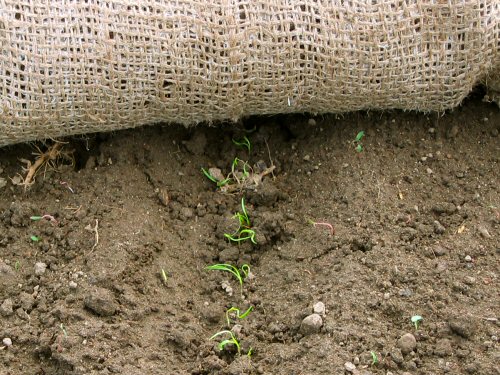
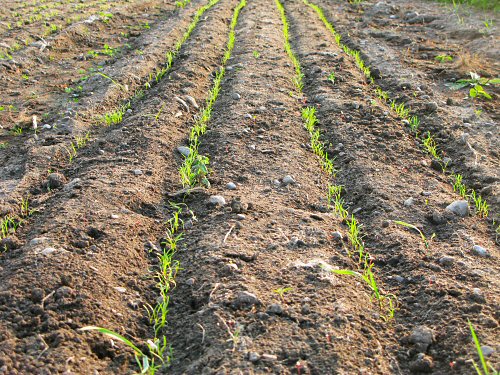
Even in this wet weather, the burlap makes a big difference, probably because it holds the soil heat—the difference is clear at the ends of the beds, where the seed drills extend past the burlap, and germination has barely started.

I haven’t been keeping accurate count, but this batch has done at least eight seedings over the last two years. At about $30 a bed for a double layer of burlap (100’/30m) over a 50′ (15 m) x 4 row bed, that makes it less than $4 per 200′ (60m) of carrots, more than worthwhile. If we’d taken better care of it during this wet weather, mainly by making sure it dried out quickly, it may’ve even lasted for a seeding or two more.

Like floating row cover, burlap is an outside input that I don’t like to rely on, but for now…it works!

View from the stand

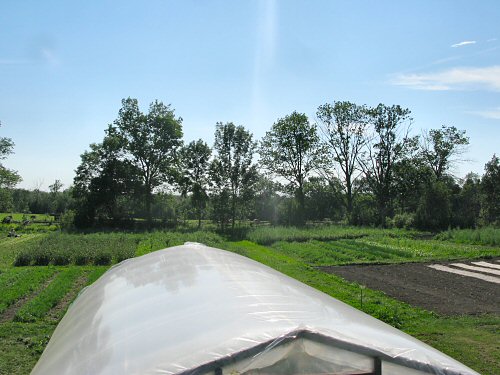
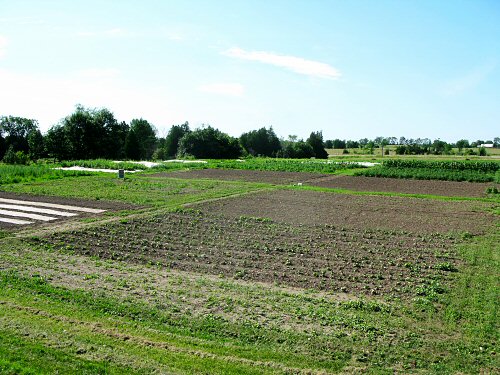
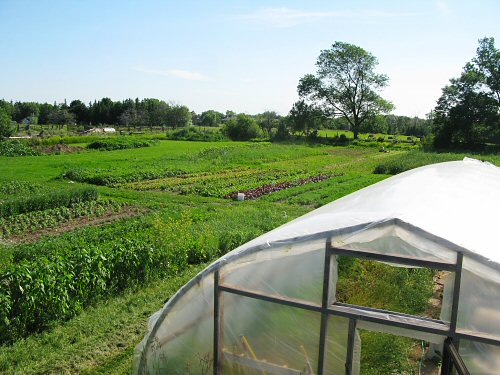
It’s mid-July, and on a (recently rare) sunshiney afternoon, things are looking OK. Better from a distance than up close, because a few sections, like the summer and winter squash, are quite severely in the weeds and in need of intensive hand pulling. And the ground remains almost constantly wet. Our moisture-retaining clay-loam soil, such an advantage in the usual near drought conditions we’ve had over the last three years, is now a bit of a hindrance. Sprawled tomatoes are particularly at risk if they don’t dry out against damp ground, and instead contract early blight (more about that another time!). Still, carpe diem, huh—seize the day! From atop the farm stand, the view is fine! We have the north end (above), with carrots under burlap (third planting), brassicas (newer transplants still under row cover), the cover in the far middle over squash, in front and more to the right, tomatoes, with a windbreak of giant sunflowers at the very right, and sweet potato bottom center. Open sections will include brassica transplants in a couple of weeks, and a fall cover crop. Out of sight to the north are onions…

In the middle, clockwise from the left, there’s a second planting of carrots, fifth mesclun right in the corner (with Maria weeding on the Greens Machine), garlic and parsnips, and potatoes in the distance (with more big WEEDS), the first planting of beets, carrots and green onions, and the edge of the third carrots under burlap from the first photo.

And then, the south end of the field, going left from the peak of the greenhouse, the garlic and Maia in the mesclun, the second planting of carrots and beets (that slash of of red is Bull’s Blood beets), the fourth mesclun , a weedy area with nasturtiums and tomatillos, and to the bottom left, herbs and flowers (fairly towering Jerusalem artichoke at the bottom left). (Guest photos by Lynn)

Mesclun on my mind

Lettuce mix

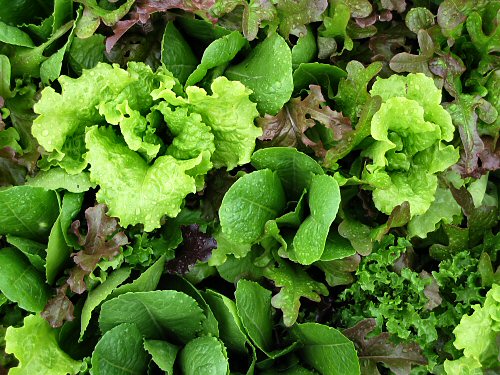
Mesclun remains the mainstay crop on this tiny farm. What I grow is perhaps not strictly “mesclun”, it’s nine varieties of lettuce with no other, more exotic greens—arugula, mizuna, and so forth—mixed in. Also, at times if it gets away a bit, the leaves can be kinda large, making it more of a basic salad mix. Still, it’s all mesclun around here, and this year particularly, we’ve grown LOTS. Salads are popular, and for no reason easily explained, the acceptable price at our farmers’ market is way higher than for any other crop (except, perhaps, blueberries?!). It’s a top seller on market day, it’s dead easy to grow, most of the time, and none of the other, larger local growers bother with it (only one other farm regularly has lettuce). So it’s an all-around winner. Then there’s the big BUT: hot, dry mid-summer weather, when the germination rate is usually terrible, the beds grow rapidly and are hard to time, and the heat can easily turn a fine, fresh-tasting crop into a messier, partially bolted bit of a nightmare. Simply seeding in many extra beds isn’t a solution, because the watering and weeding this would require would be insane. You simply have to keep planting moderately and frequently, and hope for nice weather breaks. Shortages are inevitable, and cut directly into customer satisfaction (expectations, expectations!!). For these reasons, at this time of year, mesclun is always on my mind. For the last couple of plantings, we’ve used…BURLAP for the first few days after seeding, which actually works, reducing watering in time and increasing the germination rate quite a bit. Next year, I intend to finally figure out an even better way…

Burlap method strikes again!

The carrots-under-burlap germination method is now 3 for 4, with this fine performance: solid rows and almost no weeds! The third attempt failed miserably with three different varieties, mainly due to underwatering (the extra drying effect of a very windy week wasn’t given proper respect) combined with using the Earthway seeder’s light carrot plate, which puts down much less seed (what a bad idea, I fall for the allure of little or no thinning every few plantings…). Anyhow, it was back to the regular seed plate and proper checking and watering, and now, a new 800′ of Nelson and Touchon is on its way (although, something’s been munching on carrot seedlings lately). Never dull! :)

Set to explode

Onions, carrots, garlic

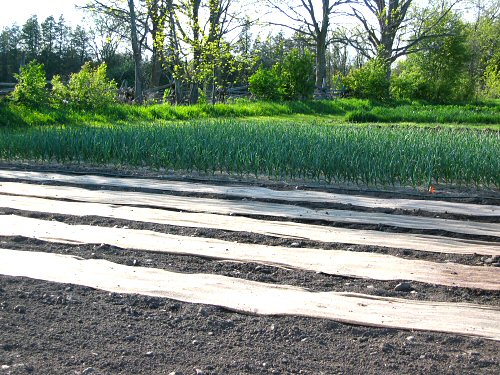
There are many particularly exciting points during the growing season, and this is one of ’em! We’re on the third plantings for some crops, things are emerging everywhere, and some plantings are just getting ready to put on serious growth towards maturity and harvest. In other words, the field is getting ready to explode with veggies. This happens several times during the year, in different sections, with different plantings and crops, but the first time is right across the field and always a thrill. For me, it still seems like kind of a miracle when all those tiny seeds and plans and energy actually turn into…the new Veggie Garden! Here, green onions (in the faint furrows) and carrots under burlap are recent second plantings (yesterday), and the garlic is starting to shoot up on the way to tasty garlic scapes in June…