Fall crops

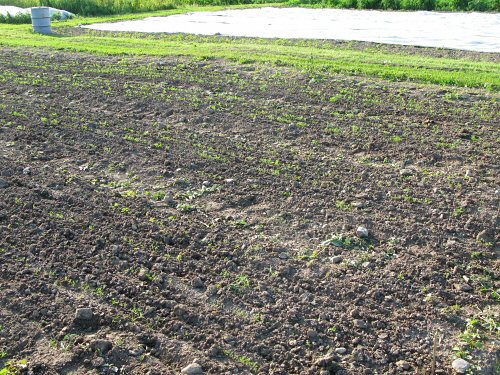
Not much to look at, yet, but the last plantings of 50-day-plus fall crops are doing fine. Here, carrots and, protected from flea beetles by floating row cover, one of two sections of brassicas, including broccoli, cauliflower and kale. There’s a bit of timing risk here, depending on the weather, if growing goes slow, they might not make it to maturity in time for market. But the sun’s been shining for a couple of days now, and the long range forecast is for more of the same. If all goes well, these will be ready for harvest through October!

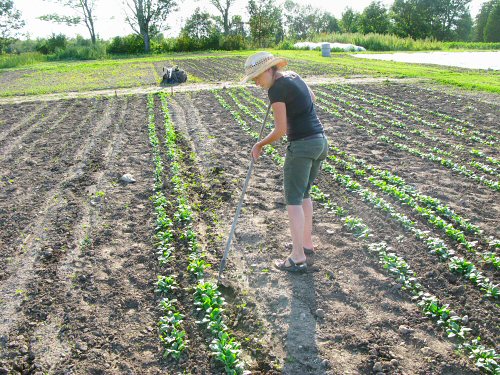
And the summer-seeded spinach couldn’t be doing better. There are two plantings, the first on July 22, and the second (left of the photo) a couple of weeks later. Here, Lynn hoes the first set: in this summer’s wet, cooler, cloudier conditions, germination was absolutely solid, as good as or better than regular spring seedings. Fall spinach has never been this good, by far. Excellent!
Bean watch

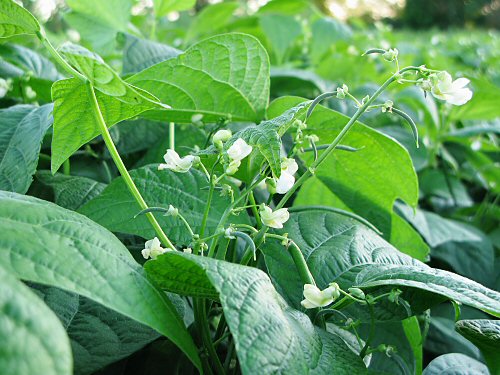
The second bean planting is setting and sizing up nicely, but we didn’t have beans at the farmers’ market today, after a good first and second picking of the first crop over the last two weeks. With succession planting, snap beans are usually a continuous harvest once they start, right through to a killing frost (usually in September, but with row cover, now extended into October in the last couple of years—more of that global warming, I guess). This year, cloudy weather slowed growth and the timing didn’t work out for continuity. There are a couple of ways to insure non-stop beans. Planting really frequently doesn’t work, because if the plantings are too close together, like, only a week or two apart, any two are likely to sync up, either by germinating at different speeds, or catching up during growth (both due to weather), and you’ll have too much one week, and not enough the next. Over-planting is the easiest way to go: if you have a lot ready at once, usually you can hold in the field a week past optimum harvest time and still have good quality, that is, nothing too oversize or woody. Of course, harvesting when ready, then storing in a cooler is the surest way: beans do quite well in cool storage, a good week in the most casual cooler conditions. But of course, there’s fresh and there’s FRESH!

Post-harvest aftermath

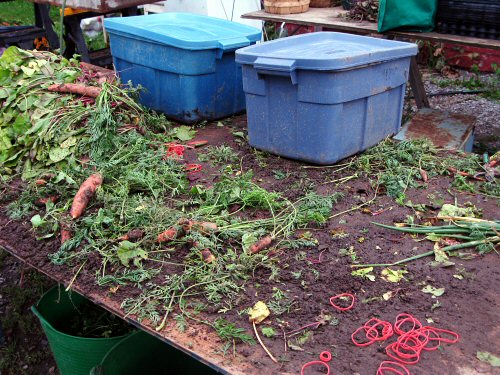
Sorting and packing after harvest—post-harvest processing!—is in good part a wet job, made a lot messier in rainy weather when root crops come in with a load of mud attached. Once again this season, the main work surface for sorting is a 4’x8′ sheet of plywood set on sawhorses. Actually, we added a second table, so now there are…two. Here, we’ve just finished sorting and bundling carrots, which then went for a rinse on the screen table. Sometimes, rinsing is done first, depending mostly on who’s doing what and what else is going on. In the closed blue bins, which hold a little over a bushel each, are carrots already bundled, rinsed and ready to go. This week, there are four bins of carrots, around 160 lbs (73kg). The residue is sorted out: here, damaged carrots will probably be topped and kept for house use, and the greens (there are some beet greens as well at the end of the table) are fed to the goats, some to the chickens, and the rest onto the compost pile. Then the table is hosed off. Couldn’t be simpler or wetter!

Buckets of rainbows

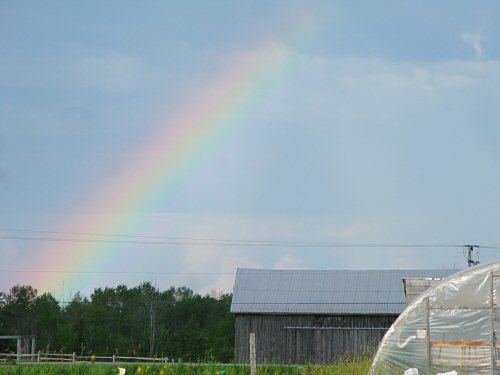
First title that came to mind for this post was: “Yet another rainbow…” That sounded a little…downbeat. After all, rainbows are one of Nature’s delightful wonders, a free, magical expression of light and simple beauty. If memory serves, we usually get one or two spectacular rainbows every year, maybe a couple more that get noticed. With this year’s rain upon rain, they’re kinda everywhere! Still…pretty! :)

Hail damage reassessed

Three days after the nasty hail storm, and the full extent of the crop damage is more evident. It’s quite a bit worse than it first appeared. The plants will bounce back, but we’ve lost a lot of the fruit that were furthest along. Little nicks in maybe 70% of the toms and eggplant and peppers means that the first harvest of these veggies will be…small. Curiously, but not really suprisingly, I’m quite unfazed by this turn. I can really fret about setbacks that I could have avoided, like deciding not to overnight frost protect with row cover, then getting hit with frost, or not seeding a crop when it’s dry, then getting a week of rain and mucky, unworkable ground. But where it’s purely a Mother Nature play, I’m instantly in half-full mode, seeing the good side of things automatically: well, we’ll have SOME first-round tomatoes…and there are lots of other, undamaged crops… So I’m good. But even from my relatively small (and small-scale) experiences with losses due to weather, I can imagine how nerve-racking large-scale monoculture must be, especially in these crazy weather times, when you have dozens or hundreds or thousands of acres tied up in just one thing. That sounds like really bad stress…and mixed crop tiny farming seems by that measure alone, much…better.

Three minutes of mayhem

What at first seemed like a mild three-minute hail storm this afternoon did an impressive amount of crop damage right across the market garden. One of those sudden, short storms that’ve been popping up more or less several times a day built up, rain started to come down quite heavily, this time with a sharp wind, and after a couple of minutes, HAIL joined the action. I went out to check on the trays of seedlings sitting outside the Milkhouse: you could hardly feel the ice pellets on bare arms and the seedlings didn’t seem bothered by the brief pounding. The pellets were pea-sized, in two configurations: smooth, and jagged (the sample in the pic is from a few minutes after the storm ended, with the sharper edges on the rougher pieces already melted off). The hail soon stopped, a few minutes later the rain ended and…sunshine. Great! Not particularly concerned, I went out to inspect (we’ve had small hail a couple of times with absolutely no plant effect that I could notice). Well, SURPRISE!

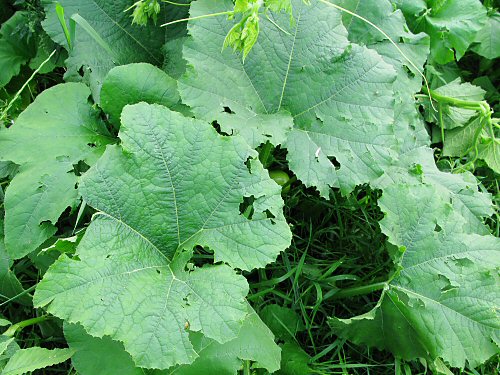
Crops with fairly large leaves, the squash here and more mature beets, had leaf edges sliced and holes punched right through.

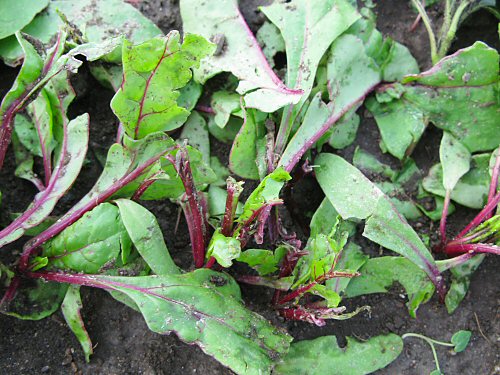
Snapped stems was the most surprising effect. Here, beets were pummeled…

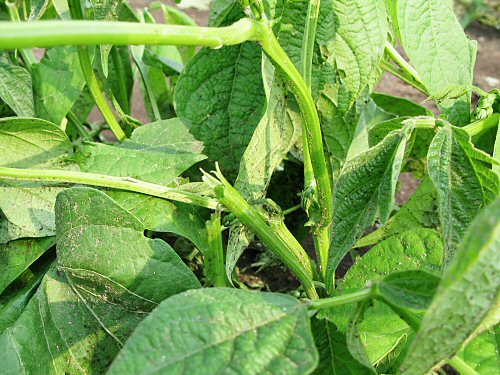
…beans were also quite heavily hit, with severed tops of plants lying in the paths…

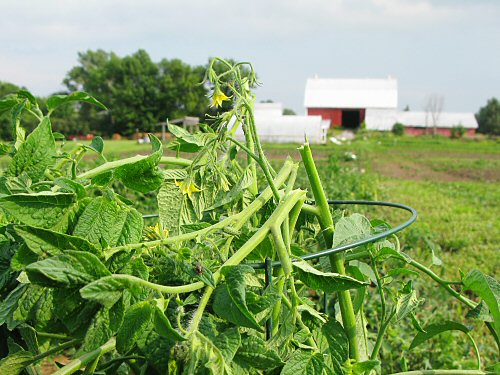
…and tomatoes took a good hit as well. I didn’t closely examine the developing fruit, like tomatoes, peppers and eggplant. It looks like there’s some bruising, but I’ll wait a couple of days when any damage will be easier to spot. Overall, not the end of the world, but a definite setback…not welcome.