
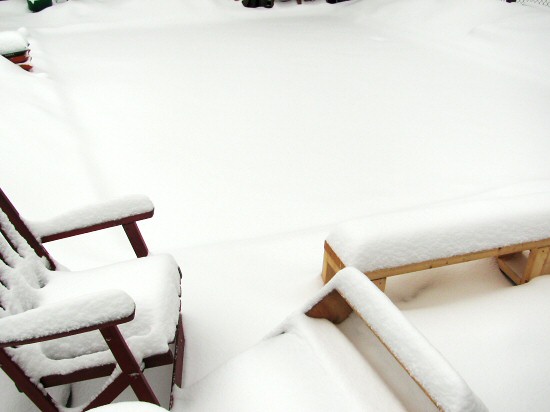
This year’s end-of-winter weather watch is different. It’s March, and I’m still in town, with an urban view, backyards and curb-sides, instead of…fields, which is just not the same. Still, it’s exciting as usual to feel the sun growing higher and stronger, the days getting longer, and the crazy weather rollercoastering along as has become the usual these last few years. Yesterday, steady rain took out all but the high-piled snow and turned the backyard rink into a shallow pool. Overnight, the snow came back strong. But that final meltdown’s coming, it’s just around the bend!!
Winter
Chicken Tractor: The Book
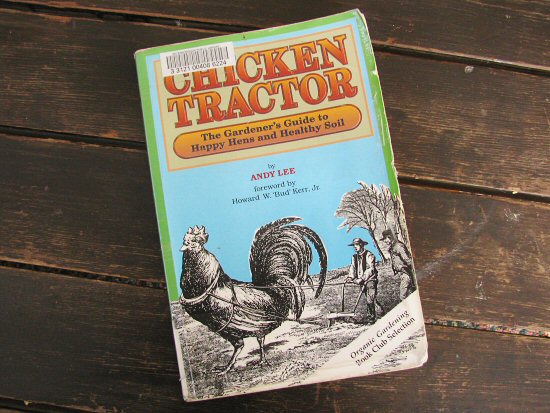
CHICKEN TRACTOR! My book-of-the-moment, a happy find at the municipal library (thanks to Kendall, I rediscovered LIBRARIES a couple of months ago—haven’t held a library card since school days, long, long ago).
The chicken tractor concept is simple, and it’s been chatted about around here quite often over the last few years…but not yet tried. The idea is to provide a mobile enclosure for your chickens, and move them to new sections of land every day or so, rather than keeping them in the usual chickenhouse and yard set-up. The chickens work up a small area of ground and fertilize it with their manure, and then it’s on to the next patch—the birds are always happy with fresh places to scratch and bits to eat, and a large area can be improved in no time. The rig can be any design you come up with that keeps the chickens in, predators out, offers shelter from the weather, and is easily moved. Easy!
Like most good things in smaller-scale farming, the chicken tractor is a startlingly simple and inexpensive approach that offers deep returns on many levels, from food quality to all-round satisfaction. It’s also kind of the EXACT OPPOSITE of high-tech industrial farming gear and methods that make so little sense to me. And the system works for various other farm animals as well, as in well-known (celebrity!) indie farmer Joel Salatin’s chicken-and-beef rotation at Polyface Farm.
So simple, why do you need a book? Well, it’s WINTER around here, all is snow, and reading about growing is the next best thing! In this case, Chicken Tractor, like its to-the-point title, is a perfect example of an energizing just-do-it how-to book, written in enthusiastic, full-on farmer-scientist mode. It’s jam packed with practical instructions and advice, the text assisted by numerous charts and illustrations, with a non-oppressive serving of sustainability philosophy and general food politics worked in, plus chicken trivia (the term “chicken tractor” was apparently coined by permaculture founder Bill Mollison, so now I know).
It’s cool to see this copy so considerately well-worn, although this being the original edition from the mid-1990’s, maybe it hasn’t seen that much use. It was published in 1994, quickly followed in 1998 by an “All New Straw Bale Edition,” with the subtitle upgraded from “The Gardener’s Guide to Happy Hens and Healthy Soil,” to the better-keyworded, “The Permaculture Guide to Happy Hens and Healthy Soil.” In any case, this edition is fun tiny farm reading from the library.
Anyhow, so much for the book review, let’s see how well this year’s chicken tractor plans actually fly! :)
Best laid plans begin here!
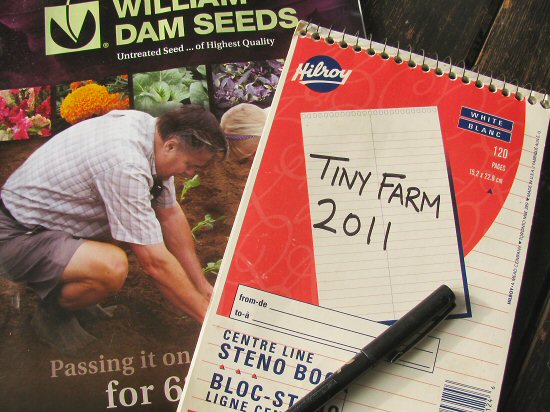
There’s a new tiny farming season just around the corner, and I’ve got my plans plans plans plans…
Well, this year’s Plan is actually WAY more laid-back and simple than that may sound. It’s my ninth consecutive year of full-time small-scale organic veggie farming, and this will be my FIFTH start-up on land that’s new to me (3 in the last 2 years, it’s been interesting times). At this point, I’m kinda used to it, and able to be real streamlined and minimal, economical and quite efficient.
This year, I’m still planning to grow just about everything in the way of garden veggies that can possibly do well in our mid-May to mid-September average frost-free Zone 4 (US) climate, but I’m majorly adjusting the relative quantities, growing more of some crops, and way less of others. I’m also concentrating my seed purchases mostly with one main supplier, and more carefully considering the number and selection of varieties than ever before. Among other big but simple changes from the past.
You could say I’m operating on a “the more you know, the less you need” principle. It’s pretty fascinating. When you let go of one whole set of concerns and details, all kinds of new thoughts, approaches, ideas come flooding in…
To underline the more-is-less point to myself, rather than starting as usual with a brand new planning notebook, I took my very first steno pad, from Year 1, way back in 2002-2003, ripped out all the used pages (saving them, of course, for the wayback machine), and began with a thin new no-waste Tiny Farm 2011 clean slate!
The tiny farming adventure continues. Stay tuned… :)
Seeds still work!
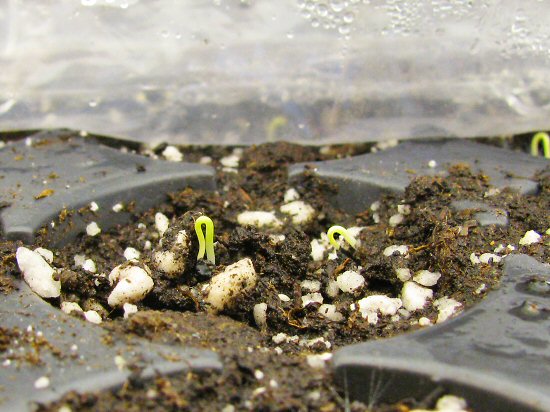
If you’re journaling your gardening seasons, on paper, online, or simply in your head, you just HAVE to take note of the very first seedlings to emerge. Of course, you can’t actually catch the VERY first one, unless you’re kind of mono-focused and a little…obsessive. But a few always come up at about the same time, and a little ahead of the pack. On this tiny farm, I’m there to snap ’em.
This season, the Red Globe onions take the prize. There is garlic out in the field from fall, here and at another location, and tiny tips may already be poking up, especially with the UNSEASONABLY mild, warm and low-snow winter we’ve had so far. For 2010 purposes, though, I’m not stalking the garlic patch, only peering at the plug sheets.
So there we are, four days after first seeding. Some seed exposed at the surface did show up yesterday, the white radicles looking unnaturally glaring and exposed, but today’s the day for “proper” first seed action. They still work!
Farm animals
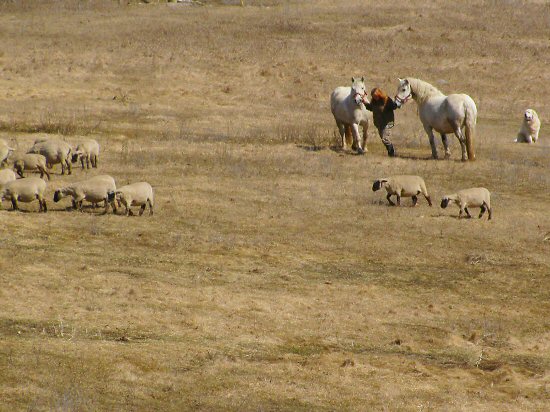
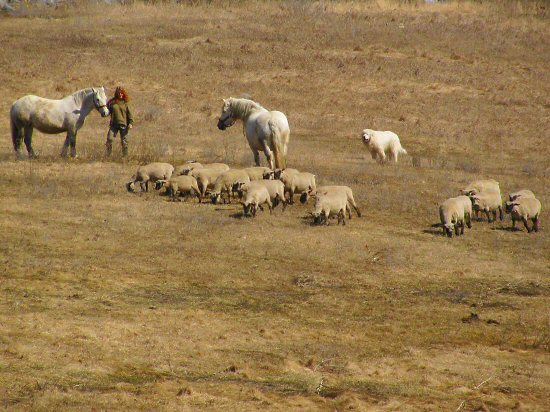
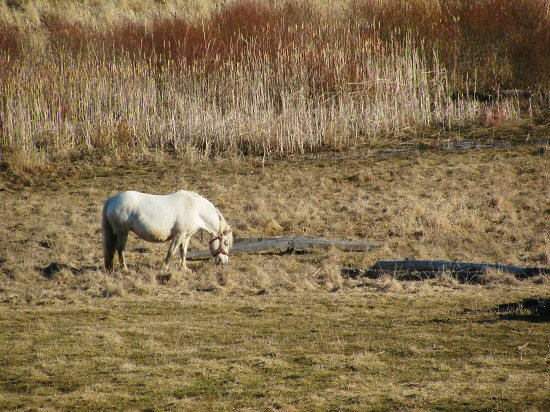
After only chickens last season, it’s farm animals in full force this time around. In the pic, Montana with the new-to-the-farm pair of Percheron work horses, the Shropshire sheep, and Rollie, the youngest of four Great Pyrenees livestock guardian dogs, looking on. Elsewhere, there are heritage breeds of pig, chicken, turkey and goose, plus other dogs, and two cats, as well. I’m looking forward to learning a lot. And if I ever fall behind in posting to the blog, quick and easy photo opportunities are…everywhere! :)
1440 onions
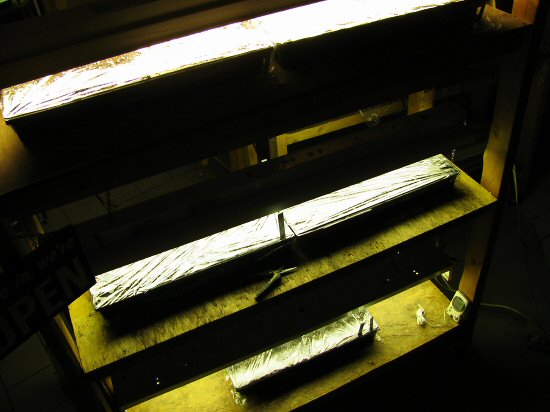
I’m sure I’ve taken this photo before, but somehow, it’s still new—the first transplants of the season! This is the look of 1,440 onions, starting out. These are 72-cell plug sheets, and the plan is to multi-plant four onions in each spot. Do a little multiplication—5 trays, 72 cells, 4 onions per—and the results are clear. Whether things will turn out exactly like this, perfect bushels of Red Globe red and Utah sweet Spanish, is anybody’s guess, but I’m quite confident we will get…something! :)
All the usual tools and methods for this tiny farm are back for another run. There are still at least a couple of years left on the roll of donated food-grade plastic wrap that I use (and re-use for the season) to hold moisture and increase heat, just until the tiny seedlings emerge. To check temperatures in this new seedling room, on the lowest shelf of the light rack, where it’s coldest, is one of the minimum/maximum digital recording thermometers. And of course, there are the trusty, home-built light racks themselves, with an assortment of T-12 and T-8 fixtures and Cool White fluorescent tubes, providing the bare minimum of heat and light to get things started.
I’m always up for trying new approaches and new gear, but a lot of the time, if it gets the job done and you’re already having fun, what more could you need?!
In the beginning, again
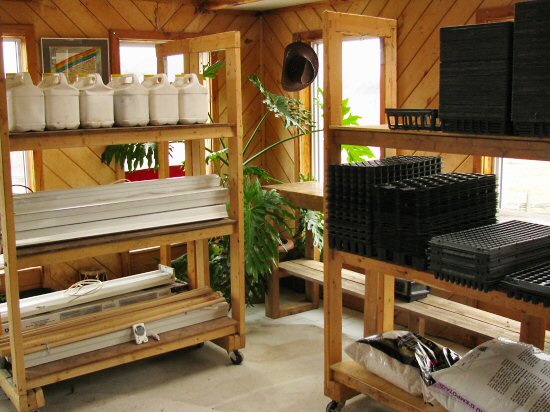
There is really no one absolute moment when a new growing season begins, so I guess today is as good as many to make the call. All the familiar gear is in a new farm home (there’s a bit of backstory here, that I’ll eventually get to in the About…), and right now, we’re setting up the light racks and getting ready to seed. This will be my eighth season of tiny farming, and it should be an interesting one!