
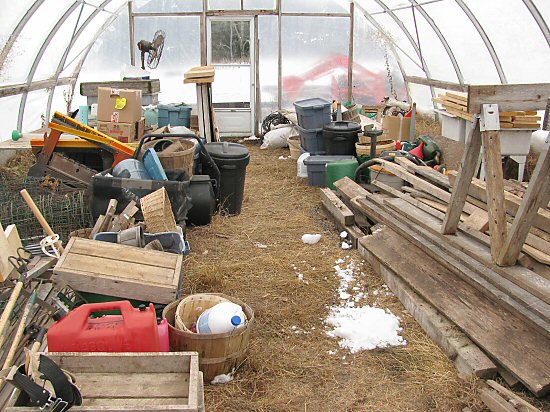
Snow’s here—it’s definitely overwinter storage time! Winter storage is a little different every year, as needs, facilities, and plans change. This time around, a fair bit of gear is in the 20’x32′ (~6×10 m) hoophouse, with its full sun exposure and fairly extreme temperature spread (from double-digit subzero at night, to 80-100°F/25-38°C on a sunny day!). Sooo, you don’t want to be storing just anything in there. Anything that’s damaged by freezing isn’t a good idea. And plastics that aren’t UV-resistant will break down, fading and weakening (really, most plastics not meant for constant outdoor use should probably be kept out of the sun whenever possible). Here, it’s mostly wood—extra rough cut cedar from a project a couple of years back, tomato stakes, tables, farmers’ market display trays—which is OK, and I’ll get the plastic items under cover. Except for checking the snow load on the hoophouse after big storms, that’s all she wrote until early spring. The outdoor part of veggie farming in our growing zone will now take a bit of a snooze…
Winter
Extending the chickenhouse
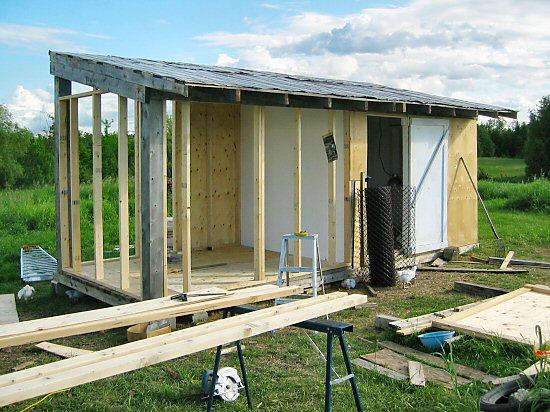
First day of summer, and the day before the arrival of 25 20-week-old, ready-to-lay Shaver Red Sex Link CHICKENS. Clearly, time to begin building out their new home. It shouldn’t take too long! :) Working on and off through the day, the frame went up, and by early evening, the plywood flooring is down, the door is built (on the right) and even a first plywood panel is up. A little more work tomorrow, and we should be good to go. No problem!
Tiny farm moving – Part 3
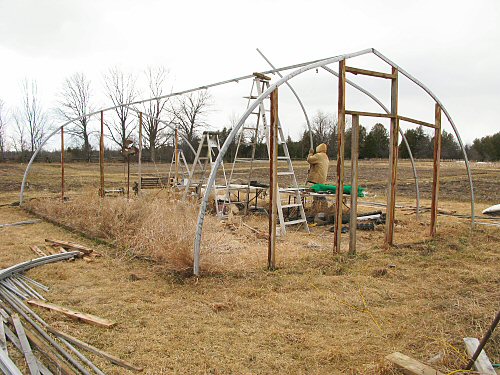
Headed to the old farm to pick up the greenhouse. It’s only been a month since the main move, but the return to a place where I spent practically every day of the last six years felt strange. Inside the farmhouse, it was just a familiar space, but rounding the corner into the barnyard, surrounded by all the old red buildings—barn, goat barn, drive shed—and then, walking into the field, that was different.
I guess this is the first real attachment to LAND that I’ve experienced. It was definitely unusual, not at all emotional, just a really strong, quiet sensation, a deep familiarity maybe describes it. I suppose the memories of all that thinking, observing, and working, tying together place and weather and ground conditions and seasons coming and going in one long, continuous arc, couldn’t help but leave their own type of mark. So that was interesting! :)
Bob had already started dismantling the farm stand, but that was so solidly put together, with thick, rough-cut cedar, heavy old fence boards, and 3″ nails (if you ever expect to move the things you build, for a few dollars more, consider screws!), that’s gonna be for another day. On to the hoophouse teardown…
The hoophouse is all screwed together, so taking it apart was easy. I’d considered lining up some extra hands for removing the plastic—there was a breeze, gusting to 4-5 mph (6-8kmph)—but Bob thought we’d be fine. And we were: the plastic skinned off amazingly easily, without catching the wind at all, and it didn’t disintegrate or tear…it will live again.
Around five hours later, and it’s all in pieces, ready to load up and take down the road. Going up and coming down are exactly the same, so I decided to take step-by-step pictures when we put it up again at the new farm…
More seedlings appear
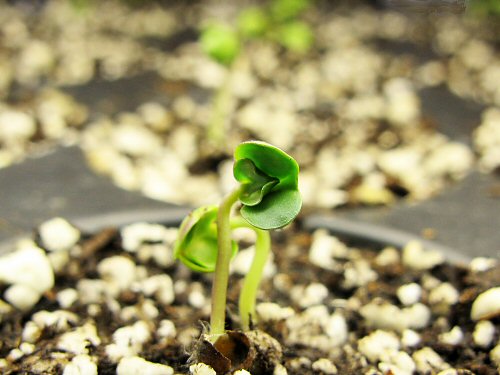
The brassicas—cabbage, broccoli, cauliflower, kale, and so much more—are satisfying at seeding time because they usually come up quick. This tray of Early Dividend broccoli is popping only three days after seeding. I don’t take notes about days to germination, except occasionally here on the blog, but I’m surely watching, especially with older seed. So far this year, with the seedling room usually around 65-68°F (18-20°C), the trays covered with clear plastic, using new seed, it’s been brassicas in 3 days, onions starting around 5. Where brassicas usually come up all at once, over a couple of days, onions can take a week to emerge right across a tray… Details! They’re everywhere! Some seem useful, some seem not.
Abandoned bee village
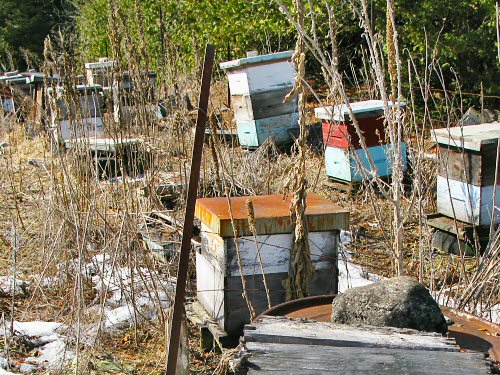
There’s an apparently abandoned bee village on the edge of the tree-enclosed clearing just beyond the main field (the clearing is past the fence, covered in snow, in this pic). There is a backstory here, still to be fully figured out, but the basic fact of the moment is a forlorn, ghost town-looking double row of hives, maybe 15 in all. I don’t know anything about beekeeping, so I did a little research. These seem to be the standard Langstroth hive design, used all over the world. From the photos I saw, the set-up here looks pretty normal, except for the tilting, the worn out paint, and the solidly rusted electric fence that surrounds them. Sorting this out is something new to do this spring. Our future in bees…
Starting more seed!
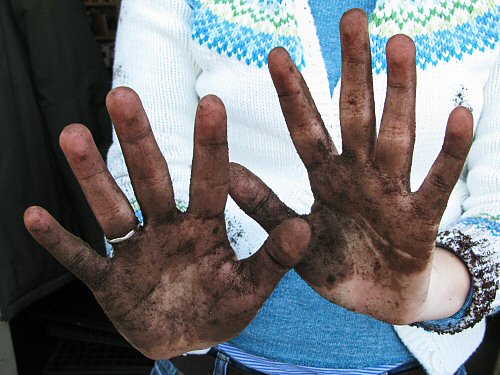
Finally, today seemed like the right time to start the main wave of seedlings! Lynn dropped by to look around, stir up some seed starting mix, and add to the dirty hands collection. This particular dirt isn’t all that dirt-y, it’s actually only peat moss, from the half-and-half perlite-plus-peat mix we’re using this year. Starting now, today and over the next few days: broccoli, cauliflower, kale, Brussels sprouts, cabbage, more onion, leek, pepper and eggplant. And off we go…
Express yourself: parsley
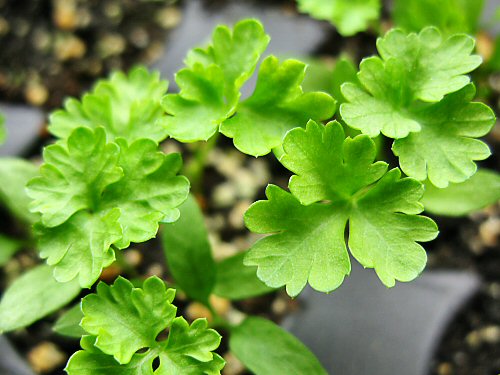
Three weeks old, and the parsley is already well past its seed leaf stage, where everyone pretty much looks the same, and is busy expressing its true nature. On the left, Green Pearl, a curly variety, starting to pucker and…curl. On the right, Hilmar, of the generally stronger-tasting flat-leaf type. Curly, straight, plants, people…we’re all bobbing around in the same big boat! (I’m still WAITING, holding back for a few more days before starting the next wave of seedlings… :)