
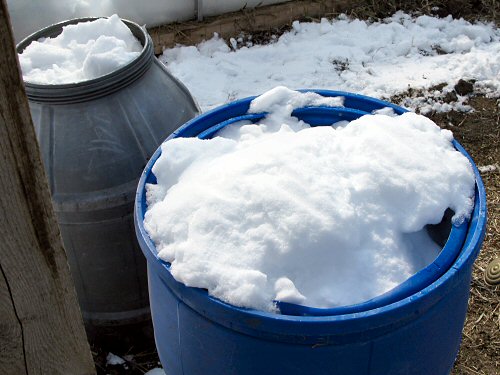
As far as winter irrigation in the greenhouse goes, melting snow in big barrels is the next best thing to a really long hose, a well and an electric pump. Fill ’em up, cover with clear plastic, wait a day (even on a dull, cloudy day, it gets up to 60°F in the hoophouse). Repeat a couple of times, and you have 50 gallons of rainwater in a barrel! The alternative is dragging 200′ of hose through deep snow from the barn to the greenhouse, then reeling it in and draining it, every couple of days. The weather has put the kibosh on the early-March, barely heated greenhouse plan, the happy prospect until March actually came around. The nights have been regularly plunging to 10°F (-12°C), so it’s really not worthwhile to heat things up by 25°F. No worries. Adjusting expectations and schedules more or less by the day is all part of the fun… It’s never boring!
Fieldwork
My old friend the min-max thermometer
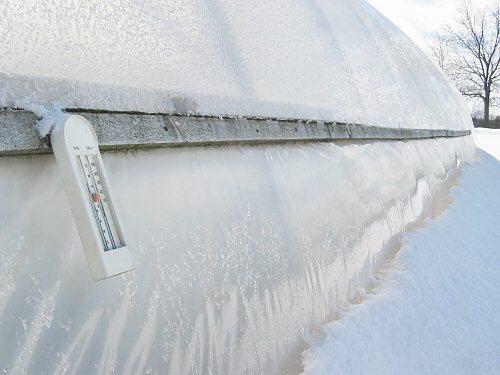
Clearing a path to the hoophouse today, I turned the corner and noticed the original min-max thermometer. I don’t usually. It was one of the first bits of gear acquired in Year 1, when the reality of FROST in the garden was a complete and scary unknown. The thermometer records the lowest and highest temperature that it’s hit; you reset it by pushing the little red button. It’s been hanging on the same nail in the same spot for three or four years, more or less out of sight and mind except in spring and fall, when I check it first thing in the morning to see how cold an overnight cold snap really got. Lately, the min-max is not such a big deal. Each different section of the field, and the particular crop in it, reacts differently to each cold night, so the only way to know what’s happened is to walk around and check things out. And I have confidence in row cover. I still check the thermometer, but it’s not like spring in the first couple of years, when I’d bolt awake at 6:00 a.m. and 10 minutes later be walking through the chill and dewy wet grass, adrenaline pumping, waiting for the verdict from the min-max to see what new transplants may’ve been toasted. It was kinda cool to be reminded, out of the blue, how that’s changed. In the case of gardening, at least, the more you know, the easier going you get!
Assessing greenhouse clean-up
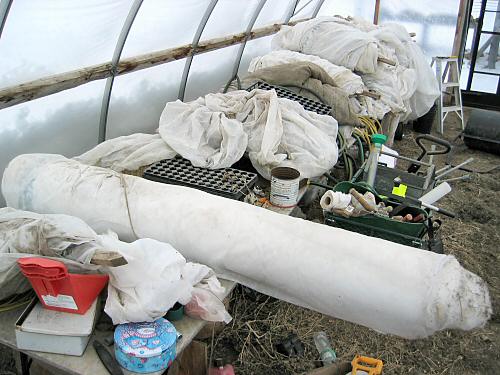
The greenhouse is small, and the layout hasn’t really changed in its three full seasons. A row of tables on the north side are where the seedlings go. On the south side, unshaded by the tables, is an open strip, about 8’x32′ (2.4x9m), where I pursue ever earlier lettuce, trying to have something for the very first farmers’ market of the year (it’s the first Saturday in May; last year’s second Saturday is the earliest so far). It’s a simple set-up. Still, every year, there’s one day when I head out there to assess the clean-up requirements and plan what to do. This year, today was that day. A lot of different gear gets stored on and under the tables. It varies each year. Here, it’s mostly floating row cover, kept up off the ground because, apparently, voles don’t like to climb (voles gnawed a hole through a good part of a roll one year…very annoying, imagine unrolling a neat row of ragged holes). Exposure to UV from the sun is not good for plastics particularly, and I do store most things in the drive shed, or the Milkhouse and barn, or under the tables, but things do get left out… Anyhow, this year’s action plan is settled: clean up!
More carrots…
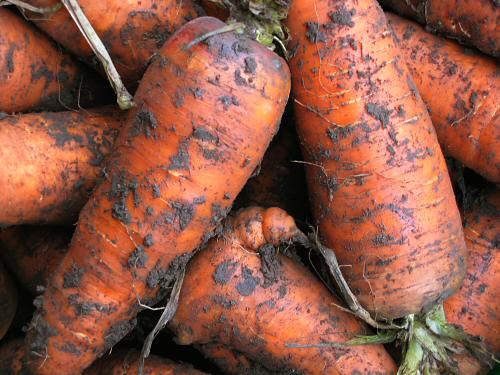
A good stretch in the field today. Harvested a bushel and a half of carrots (huge Danvers Half Long, enough to last through the winter) and a bushel of beets, a mix of red, golden and the Chioggia striped. Mulched another garlic bed, leaving just one uncovered. Did some clean-up with the compact tractor, moving empty barrels, turning crop remains into one end of the compost windrow. Took a trip down to the pond: it’s unfrozen, with only a layer of ice on top…
The pond is as full as it gets. Normal level is several feet lower, after the winter runoff evaporates, usually sometime in June. The barrel is a float that keeps the end of the uptake hose that leads to the pump suspended above the bottom.
Rye thrives…
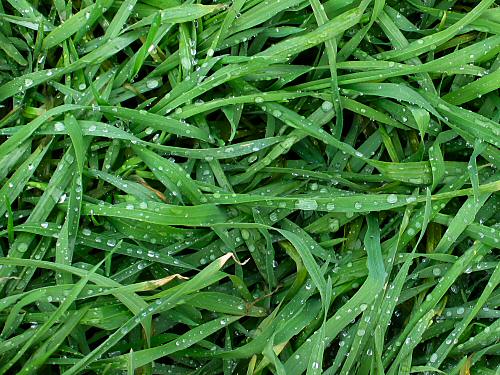
After enduring a pretty wintry two months, the fall rye can only be described as lush and green, the highlight of today’s brief walk around the field. It hasn’t grown much since late November, but it’s alive and kicking. Here, a light dusting of snow has melted as the sun pops in and out. The cover crop experiment continues…
A little fieldwork
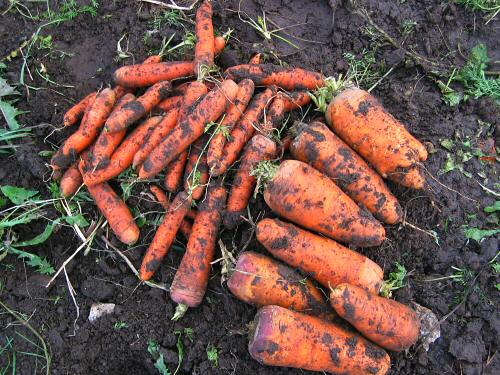
Spent about four hours out in the field. The feeling of calm satisfaction as you head in after doing some work in the garden never fails! I dug up about half a bushel of carrots to see how they’ve done. These are, I think, Nelson and Danvers Half Long (the BIG ones)—the label stakes were out, so I couldn’t immediately check the varieties, it’s not necessarily that easy to tell! They’re mostly in fine shape. On a few, the inch or two exposed above-ground had frozen and thawed, leaving the top tips spongy and mushy, but this didn’t affect too many. I can probably get a couple of bushels! This mid-January harvest is actually consistent with last year, except for the extra 6-7 weeks of RealWinter… I also mulched the garlic, leaving a couple of beds clear as a test (I’m not sure how useful an experiment that is, since I’ll mulch them for moisture and against weeds first thing in spring…). Anyhow, a bit of winter fieldwork…
Called for wind
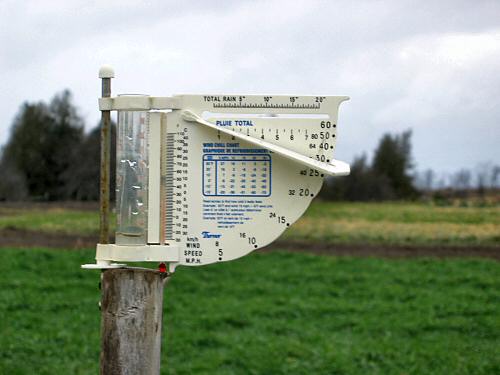
Happily expecting heat, I stepped out into a sharp, nasty wind this morning. The weather’s taken a downward turn from the cheery short-term forecast. It’s still going to be above zero for the next couple of days, They say, but just, and the nights have plummeted below. Also, in the 15-day, that follow-up warm spell predicted for 10 days from now has evaporated. All this meaning: harvest and mulch now! Unfortunately, the heavy wind makes grass mulching nearly futile (the mulch blows away), so I’ve put it all off till tomorrow…
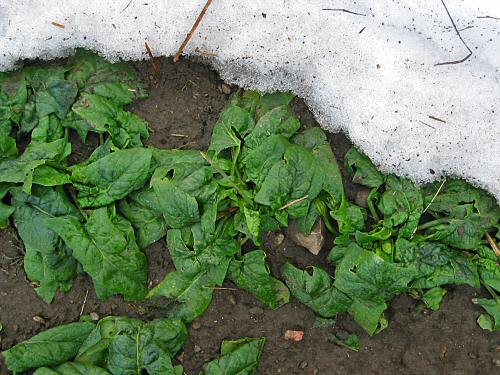
A last hold-out of snow is melting off a section of spinach. While the color is a bit odd, with two distinct shades of green going on (cold effects!), the taste and texture are good. Spinach lives in these conditions, so as long as the leaves haven’t been battered by cold wind, they’re still good eating. Just sort!