
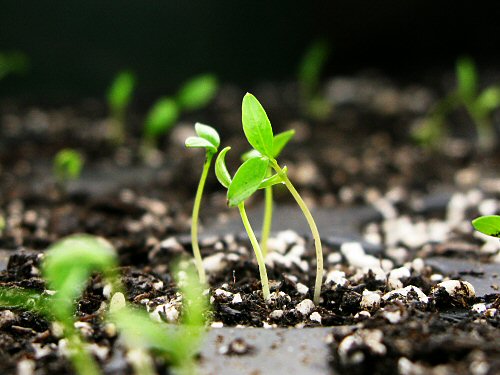
Parsley, seeded 11 days ago, began popping up over the last couple of days, so that’s the second crop of the season, underway. Four varieties this year, two each of flat-leaf (Plain Dark Green Italian, Hilmar) and curly (Forest Green, Green Pearl). They’re 18 cells per variety, in a 72-cell plug sheet, around 4-6 seeds per cell—I’ll eventually thin them down to two. They’ve already started to stretch because they’re sharing a light rack shelf where the lights are set higher to accommodate a tray of onions. Parsley is easy to start, I’ve had no problem with transplants, but my seedlings have always tended to stretch and tangle in the trays before transplant time. Last year, I snipped them back quite a bit so they wouldn’t tie themselves to each other. They seem to like their light strong. These are just early season details that I won’t be much concerned with a little later on, but I’ll see what I can do. I’m gonna hang lights on another shelf for them right now!
Seed & Seedlings
Fava beans test OK
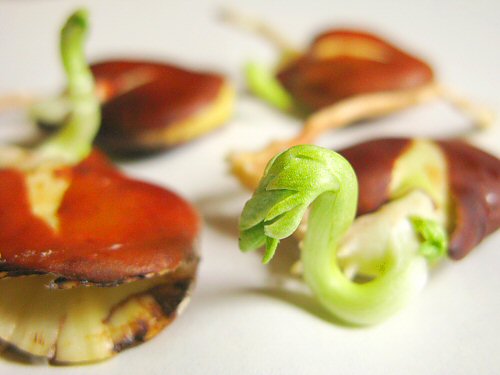
It’s that time of year again when obsession with seedlings somehow takes hold for a short while. I wonder if I’ll ever get over it, that almost overpowering early spring feeling that you don’t want to waste even a SINGLE seedling. Here, I germination tested a few Witkiem fava beans (broad beans) from an overlooked four-year-old supply. Bean seed viability is often rated at three years, but I didn’t doubt that these were fine, they looked and felt great. I tested some anyhow: wrapped them in a paper towel, misted them with water, popped them in a clear ziploc plastic bag, put them in a warm spot. That was about three weeks ago. Sure enough, a week later, the not-so-little white radicles were poking out of all of these big beans. Excellent! So I put them back in the bag and kinda forgot about them, moved them and all. Today, they were unpacked, and even without any light for at least a week, the seedlings were lustily struggling to break free. Now the kinda obsessive part is, I FEEL BAD ABOUT THROWING THEM OUT! This is pretty crazy. There is no good reason to pot them in February and have ’em hanging around for months until it’s warm and dried out enough to transplant. After two-three months in a pot, they’ll be useless as proper transplants, anyhow. Meanwhile, in a couple of weeks, there’ll start to be so many seedlings around here, and this keep-’em-all urge I’m having now will be gone without a trace. So I stuck ’em in some water, just for now… I thought this beginning of the season hang-on-to-every-seedling thing would wear off after a few years, but apparently not yet. Maybe I don’t take this business of tiny farming seriously enough! :)
Grow lights on again!
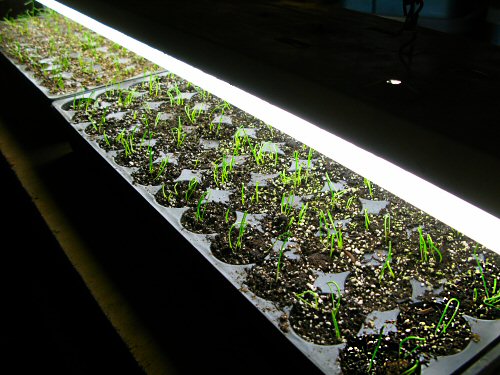
It took a day to sort things out after the move on Sunday, and now the onion seedlings are back in the light racks in the new seedling room, soaking up the cool white fluorescent light. Three trays in all of onions, along with a still-to-germinate tray of parsley, made the little old farm-new farm road trip, and that’s the season’s start so far!
Onions emerge
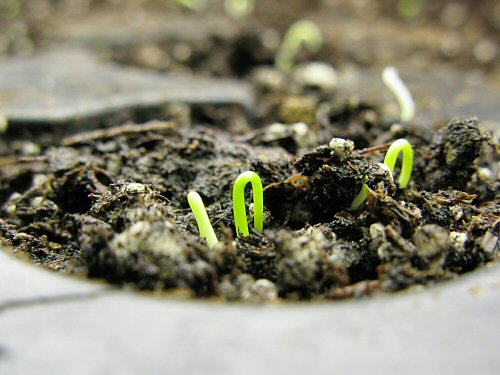
Four days from seeding and the first Red Wing onions are popping up. A fine sight to see, the first new on-farm veggie greenery of the season! These guys will be transported to the new farm on Sunday… So many things going on at once—seed starting while moving the tiny farm—if you’re a fan of the slightly surreal (I am!), this is just great!
New seed started!
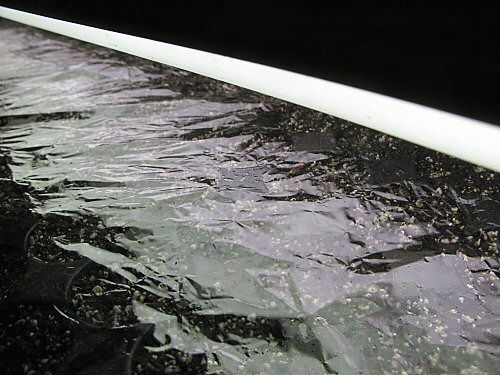
This is it, the official start of the new growing season (since there wasn’t time to plant out garlic in the fall at the new farm)! I seeded a fresh packet of 1,000 Red Wing red onion seeds in three 72-cell plug sheets. That’s 4-5 seeds per cell—after the good results last season, I’m going the multi-plant route again, 3-4 onions in one spot, instead of singles. There are lots more onions and leek to come, including sets, this is the beginning. I’m still at the old farm, the new seedling room is not quite ready, so I’ll be starting a few more things here in the next couple of days, and take them along on the move! For the Red Wing, I hung a couple of lights on one of the light racks. As usual, the trays are covered in plastic wrap to hold heat and moisture. This tiny farm marches on!
Old broadcast seeder
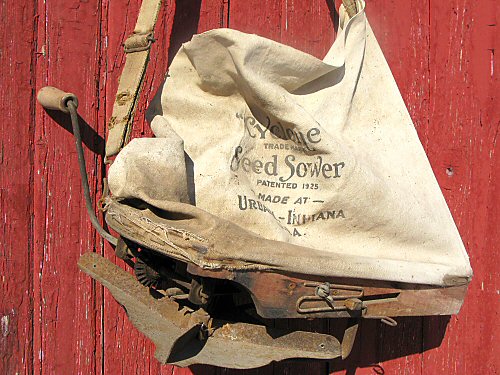
Found this antique broadcast seeder hanging on a nail in the drive shed, the Cyclone Seed Sower, made in Urbana, Indiana, sometime way back when (patented 1925). The canvas is torn, but it’s otherwise in good working order. Dunno exactly when it was last used, in the last decade or two. With a little patching—in a hurry, even duct tape would work—and a few drops of oil, it’d be good to go. In this case, time hasn’t improved on design: this seeder is essentially identical to the modern version I use, except the cloth and wood and most of the metal have been replaced by plastic. Operation is simple: fill the bag with seed, adjust the size of the opening, and start walking while cranking the handle—seed hits the plate and gets flung out by the ribs (here’s a more detailed description). Simple, then and now!
Main order done!
Five hours and done! This year’s main seed order was a first: finished in one session! Usually, it takes two. My head was starting to spin a little, but I felt COMPELLED by the late date to keep going (although I don’t think I’ve ever been much earlier, I always just plan to be). Guess I’m getting…better. A small order went in a while ago, for early starters like onions. This is all the rest!
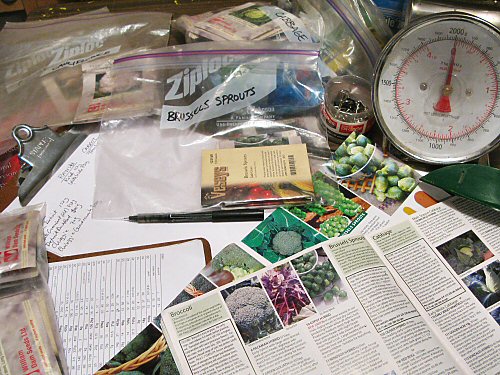
It’s a comfortably familiar routine. I cleared an end of a work table and set things out. A couple of clipboards, one with the always-handy, slightly magical seed calculator sheet. Catalogs from the main two seed houses I use. A scale for weighing heavier seed, and seed in larger quantities. A seed scoop for checking what’s left in packets (pour out, pour back!). Tiny (3/4″/19mm) bulldog clips, great for clipping together packets. And sitting by the table, three Rubbermaid bins that hold the precious seed inventory in freezer-weight ziploc storage bags.
First, I weighed the bulkier stuff: beans, peas, larger quantites of beets, radish, and so on, stored in their own bags. Then, I settled in, going through ziplocs, more or less alphabetically, from arugula to tomatoes. See what’s left, decide what more I need. Check the catalogs, try not to go wild with extra packets of stuff, “just to try”—the amount of seed needed per veggie is already worked out on that calculator sheet. A few of the ziploc bags have only a couple of packets of seed, each a different variety, like the Brussels sprouts in the pic. Most have 10-20. Tomatoes are getting near 200. It’s a lot to go through, but it’s like hooking up again with old friends. Easy. Fun. And I’m done!