
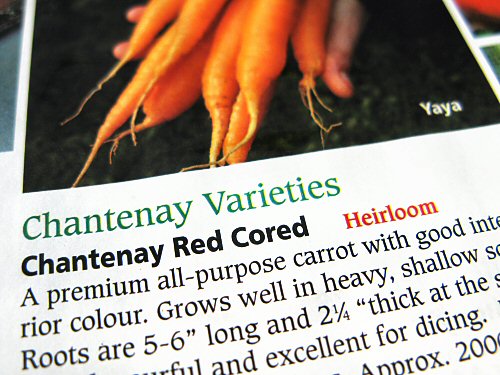
The first new seed catalog came in three weeks ago, but the first from the two seed companies I mostly use arrived on Friday. Today, I took a quick look, checking to see what’s new, but mainly making sure that reliable stand-bys are still around. Dusky eggplant, that manages to come through in the craziest conditions. Rich, earthy Bloomsdale spinach (open pollinated!). Earlivee sweet corn for its speed and it’s more-corn-less-sugar, not-overly-sweet taste (it’s…gone!). Early Dividend broccoli and First Crop beets, planted in spring for their reliably extreme earliness. The shortlist goes on. Most of ’em are still there! The ones that fall off tend to be open-pollinated varieties, as they make way for “better” hybrids… These catalogs are convenient, but I wonder when I’ll get around to seed-saving for real. Progress!
Seed & Seedlings
First catalog
In today’s mail, the first seed catalog of the season! They start arriving around this time every year, it’s always been EXCITING, and now is no different. What I said last year just about covers it once again. I strive to live in the moment and enjoy every day, but….SPRING IS COMING!
Potato fruit
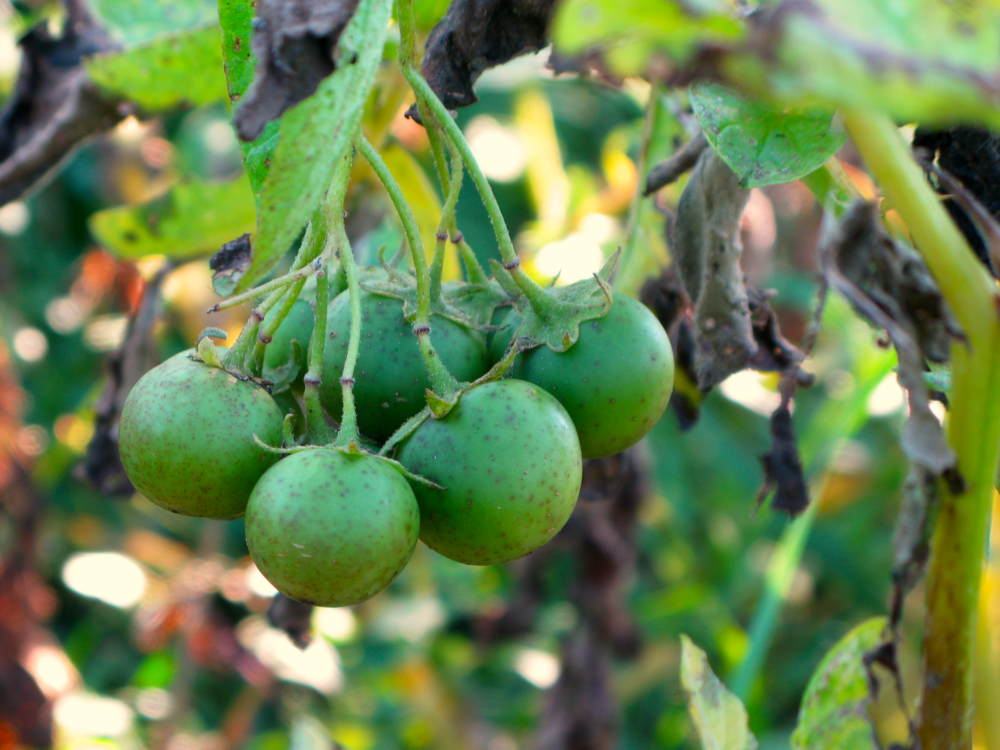
Here’s something I haven’t seen before in my, uh, six years of growing potatoes: green, tomato-like, walnut-sized potato fruit. Bob hadn’t seen ’em either, in 40 plus years of farming. I hit the web for education.
These are genuine fruit (also called berries), but not that common. Usually, potato flowers just drop off. Pollination can be an issue, but even when pollinated, little details of the season’s growing conditions can make the the difference. When fruit do form, they’re more likely found on certain varieties, like Yukon Gold. This year, there were fruit on just about every Chieftain plant, here and there on the Kennebec, and none that I noticed on the Yukon Gold. Since they suddenly appeared this year on two varieties I regularly grow, I’d guess it was about the weather!
Each fruit contains 300-500 seeds that don’t come true: planting them doesn’t result in the same potatoes as the parent plant or each other, there’s lots of genetic variation, each seed will produce a genetically different plant! Potato breeders plant out thousands of seeds, check out the results, then keep replanting the most desirable potatoes for many years or generations to get new commercial varieties—this is the traditional way new potatoes are bred.
Meanwhile, it takes only two seasons and one generation to breed a new potato, so for the small farm or home garden, as opposed to the big potato breeder, this seems worth a try. At least as an experiment. Harvest seed one season—you can hand-pollinate to cross two varieties—plant out the next and select the best-looking plants. The tubers (potatoes) from each individual plant are ready to go: planting out the tubers will produce genetically identical plants.
But there’s a kinda big BUT: even though a potato grown from a tuber is genetically the same, you can’t be sure how its genetic makeup will react to different growing conditions. For example, it may be the perfect potato after a wet summer, and quite different after a dry one. (That’s why professional breeders check over several generations, and now there’s also high tech genetic analysis, to make sure it will be the same potato in the full range of growing conditions.) Still, at the very least, fun to see what happens!
And, the fruit are poisonous, rich in solanine, not for eating. Potatoes, tomatoes, peppers, eggplant and tobacco are all members of the “deadly nightshade” family, all prone to having toxic parts (potato fruit are somewhat similar to little, hard green tomatoes). Interesting!
Since this is such a popular post, being dug up over and over via Google, I’ve started to update the article as I discover more. The post sounds the same as it always did, just surgically filled out a bit with more info. This is unusual. In general, I don’t edit old blog posts, and clearly mark the updates when I do!
Last of the lettuce
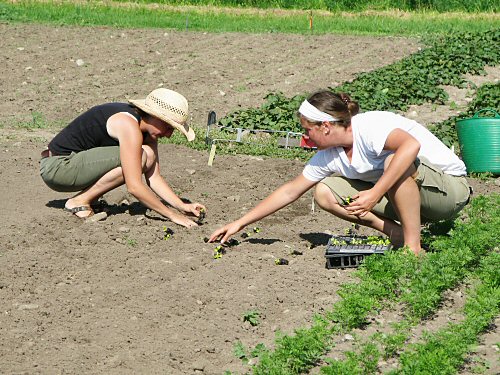
Can’t quite seem to stop planting! Lynn and Libby put in a last 200 or so lettuce seedlings to see how far they’ll go in fall growth. The soil is still moist an inch (2.5cm) or so down, but the surface is way DRY from a few days of sun and breeze, so we watered in these guys—the weather’s been great, sunny and warm this week…and it’s back to the hoses!
Bean watch
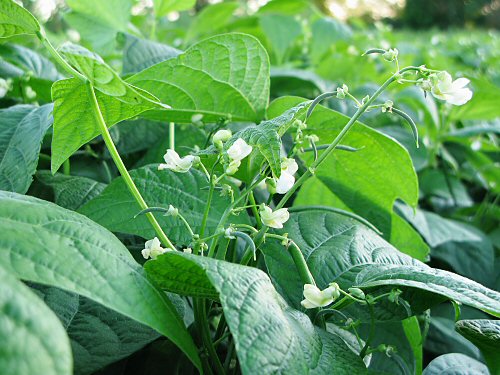
The second bean planting is setting and sizing up nicely, but we didn’t have beans at the farmers’ market today, after a good first and second picking of the first crop over the last two weeks. With succession planting, snap beans are usually a continuous harvest once they start, right through to a killing frost (usually in September, but with row cover, now extended into October in the last couple of years—more of that global warming, I guess). This year, cloudy weather slowed growth and the timing didn’t work out for continuity. There are a couple of ways to insure non-stop beans. Planting really frequently doesn’t work, because if the plantings are too close together, like, only a week or two apart, any two are likely to sync up, either by germinating at different speeds, or catching up during growth (both due to weather), and you’ll have too much one week, and not enough the next. Over-planting is the easiest way to go: if you have a lot ready at once, usually you can hold in the field a week past optimum harvest time and still have good quality, that is, nothing too oversize or woody. Of course, harvesting when ready, then storing in a cooler is the surest way: beans do quite well in cool storage, a good week in the most casual cooler conditions. But of course, there’s fresh and there’s FRESH!
Burlap expires
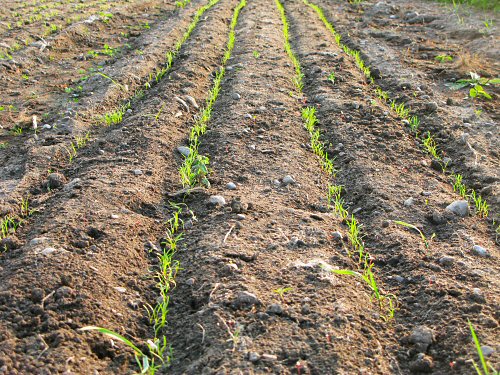
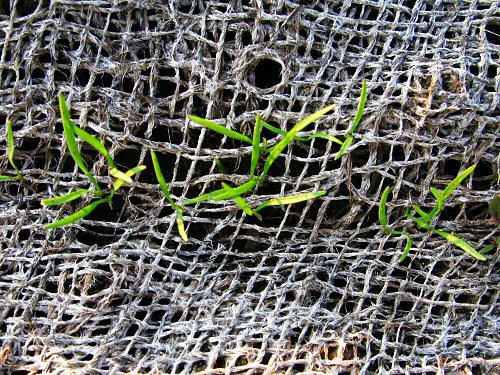
After a nice long ride, the burlap (of the burlap carrot germination method) is finally breaking down, shredding as we fold it up off the final carrot beds of the season.
Even in this wet weather, the burlap makes a big difference, probably because it holds the soil heat—the difference is clear at the ends of the beds, where the seed drills extend past the burlap, and germination has barely started.
I haven’t been keeping accurate count, but this batch has done at least eight seedings over the last two years. At about $30 a bed for a double layer of burlap (100’/30m) over a 50′ (15 m) x 4 row bed, that makes it less than $4 per 200′ (60m) of carrots, more than worthwhile. If we’d taken better care of it during this wet weather, mainly by making sure it dried out quickly, it may’ve even lasted for a seeding or two more.
Like floating row cover, burlap is an outside input that I don’t like to rely on, but for now…it works!
More carrots
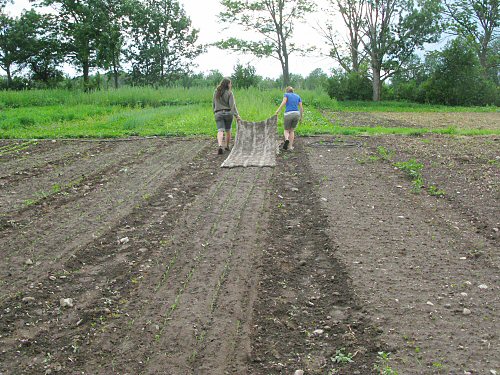
Wouldn’t DREAM of starting carrots without the burlap method now. Maria and Lynn remove burlap from the third planting of the season, using the fold and fold again approach rather than rolling it up…