
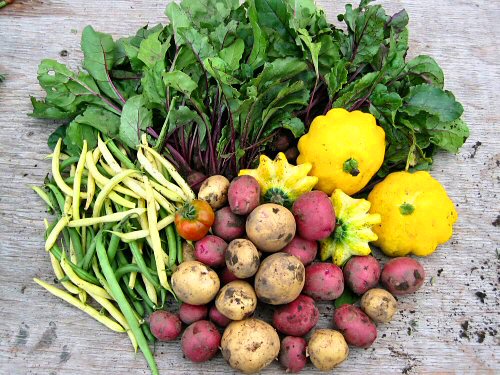
After a fairly lazy day in the field, half of it spent waiting for the ground to dry out a bit after an intense thunderstorm (only 15mm, though), it was off to a farm a couple of miles down the road to get some local rainbow trout for dinner. Then, a quick tour of the garden to pick the fixin’s: new potatoes (Norland, Yukon Gold), yellow and green beans (Indy Gold, Derby), summer squash (Sunburst, Flying Saucer…yes, FS), beet greens (mainly Detroit Dark Red). Nestled in by the beans, the first tomato to turn color, a Stupice, of course, not quite ready to munch, but only days away! And so, except for salt, pepper, olive oil and butter, your basic local dinner!
Veggies
Risk crop
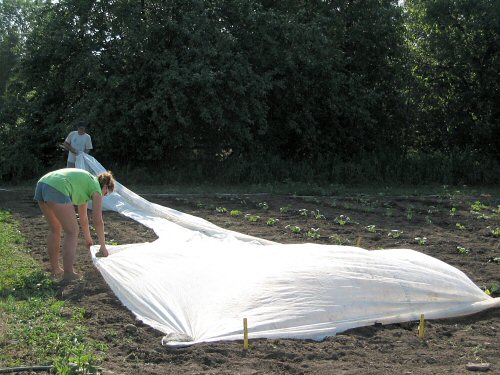
Protecting a final planting of the season, Jo and Conall lay row cover over a selection of summer squash. Also transplanted today from the squash family, more cucumber, an extra early muskmelon, and a couple of early maturity winter squash because there’s space. All of these are pretty much risk crops, with 50-65 day maturity up against our average first frost of around Sep. 20. They could have gone in a week or two earlier, but I’m gambling on another warm fall, with only a mild frost or two to get in the way (against which, row cover once again!), and MAYBE a harvest through October. Of course, the weather can be relied on less than ever, BUT, warm autumns seem to be a good bet. If this pays off, I’ll have some interesting veggies after the standard, safe season for ’em is over. Nothing ventured… You take your chances!
Red onions, golden beets
Veggie variety is great: different tastes, textures, shapes, colors… From the start, it seemed only natural to grow several varieties of each crop rather than just the most “efficient” one. This has worked out to at least a couple per crop (this year, two types of spinach so far, three potato, two corn…) to many (at the extreme end, 50+ varieties of tomato). The biggest difference is quite often in maturity date: crops fairly similar in taste and appearance can be two or three weeks or more apart in maturing for harvest. Sometimes the difference is only skin deep. The Red Baron spring onions in the pic are only red for a couple of layers, but they look great when you get ’em. The Golden Detroit beets taste a little different from red varieties, but the fun (for me, at least) is mainly in the striking and unusual golden-orange flesh. Look before you eat!
Freshly dug garlic
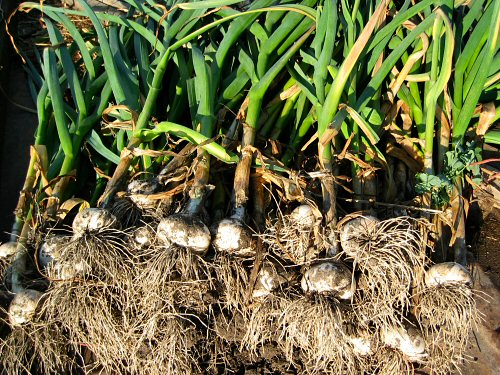
To add variety to this week’s CSA shares, I dug up 50 garlic a little ahead of the main harvest in a week or two. It’s looking great. Uncured garlic doesn’t store as well, but how long are you gonna let a single bulb of garlic hang around?! Really, there’s no such thing as too much garlic!
Milkhouse looking out
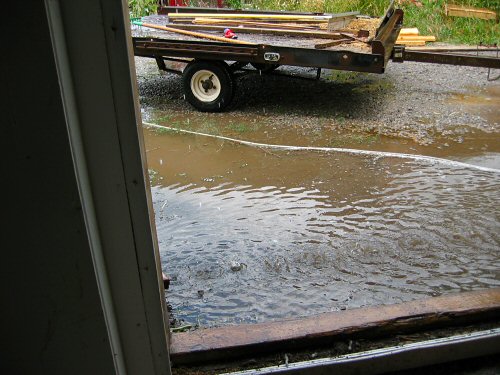
The view out of the extended Milkhouse sliding door is not yet a great one—gotta move the big storage shed that blocks the view straight out to the field—but it’s become a common one this year. Amongst other things, the Milkhouse is a place to take refuge from extreme heat and, very occasionally, from…rain. And the extreme teasing continues. The latest is rain from INDIVIDUAL CLOUDS in an otherwise largely clear blue sky, that comes down just heavily enough to make you take shelter. A gutter hasn’t yet been installed at the front of the Milkhouse, so water streams down from the roof, which picks up more from the main barn roof, creating a deceptively abundant pool in no time. Actual rainfall for this little session: 2mm. (The tiny grey hose running across the pic is the original lifeline from the barn well to the field that in the first two and a half years was all that supplied water when the weather didn’t!)
Pounding stakes
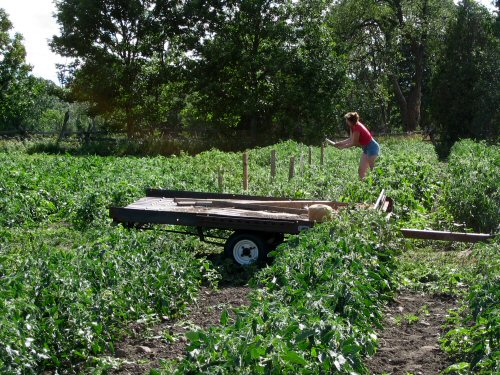
Jo pounds in wooden stakes for a somewhat catch-up version of tomato staking. I think of it as the Modified Sprawl. There are about 600 plants, with maybe 250 in home-style tomato cages. The rest are so far on their own. The cages work great, until a mighty wind comes along and blows a bunch over—they’re not really rugged field gear. It’s too late for proper basket weaving support, so it’s on to my previously tried and OK version, pulling the plants up with twine on both sides, to stakes set every three plants apart, with a bit of pruning and suckering as we go…
This is the point in the season where we start playing catch-up as a million different things need handling. It can get a little frantic, depending greatly on how it went earlier in the year. To add to the…decision-making puzzle, it’s last call, and even very iffy last call, for planting many crops (60 day maturity and under), with day length shortening and frost risk building to a significant consideration just 6-8 weeks down the road. So, thin here, or weed or seed there, or water elsewhere, you can’t do everything at once! It’s all in the timing, with much of the schedule in the hands of Ma Nature (where’s that RAIN!?!). Gambling, yes! Still and all, quite FUN.
Burlap method strikes again!
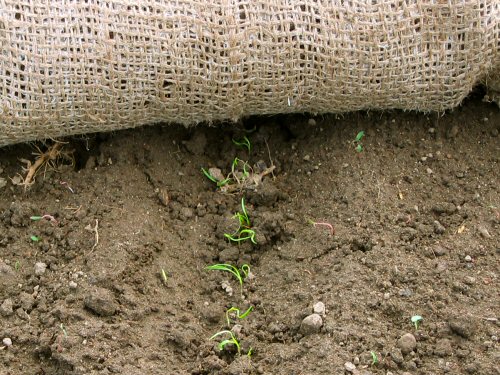
The carrots-under-burlap germination method is now 3 for 4, with this fine performance: solid rows and almost no weeds! The third attempt failed miserably with three different varieties, mainly due to underwatering (the extra drying effect of a very windy week wasn’t given proper respect) combined with using the Earthway seeder’s light carrot plate, which puts down much less seed (what a bad idea, I fall for the allure of little or no thinning every few plantings…). Anyhow, it was back to the regular seed plate and proper checking and watering, and now, a new 800′ of Nelson and Touchon is on its way (although, something’s been munching on carrot seedlings lately). Never dull! :)