
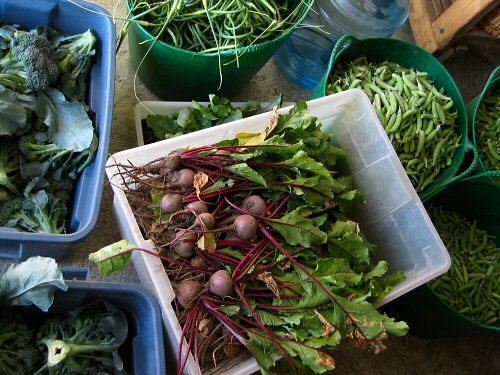
The harvest is still small: snap peas, broccoli, mesclun, the last of the garlic scapes and spring spinach, beet greens, the first few, baby beets. With 50 CSA shares to fill this year (around double from last year), plus the farmers’ market, a couple of local outlets, and the farm stand, I’ve really upped the ante. Even with PEOPLE at work in the field, I’m concerned about quantity. Where bad germination and losses from pest damage here and there have been no real worry so far, now every little setback seems…dire. Probably, most of this is in my head, endless millions of small farmers have done it before and are doing it now. Still, staying tiny and diversified at my particular scale seems tougher than before. It’ll work out, and for now, any uncertainty keeps the adrenaline on a steady slow drip! :)
Veggies
Corn
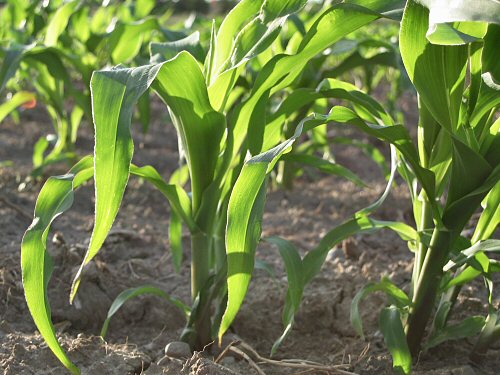
After a month, the first planting of corn is about a foot (30cm) high and doing fine. There are two varieties this year, Earlivee, an “old fashioned corn taste” (su) type, and Bon Appetit, a sweeter (se) type, only about 800′ of each. Corn every year is a battle all its own, the corn and me against the raccoons. The coons are my biggest (as in, size and intellect) garden foe, and unfortunately, they usually win. A couple of years ago, I invested in electric fence and a solar-powered controller. This only kept them at bay for a while. I still haven’t figured out how they got past it…I’ll have another chance to find out this year. No fence, positively no corn (maybe a few ears, literally, out of a couple of thousand). I grow only enough to eat and to include a dozen or so in the CSA shares. With the amount of sweet corn out there, and the ridiculously rock bottom prices when it’s in season, selling corn at the market or stand hasn’t seemed worth it. At the very least, it’s fun to watch it grow!
Pumpkins unveiled
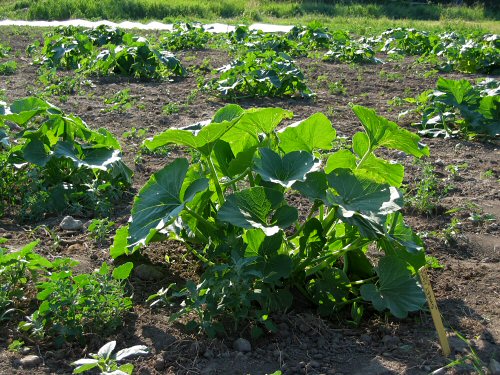
Removed the row cover that had been protecting the pumpkins from the cucumber beetles. The pumpkins are doing fine! The CBs will keep coming, but the plants should grow faster than the beetles can munch. There’s also a chance of CB-transmitted disease, that’s a chance I’m taking. One spray-free alternative is to reposition and replace the row cover more loosely, giving the plants room to grow, but the cover I’m using also traps heat under there, and cuts off some sunlight. I could buy super lightweight cover, designed for insect protection only—it doesn’t protect against frost and lets in most of the light—but that’s an unwelcome expense this year, and possibly more of an additional expense than it’s worth. From here, the pumpkins should come out fine, CBs and all!
Meet the beans!
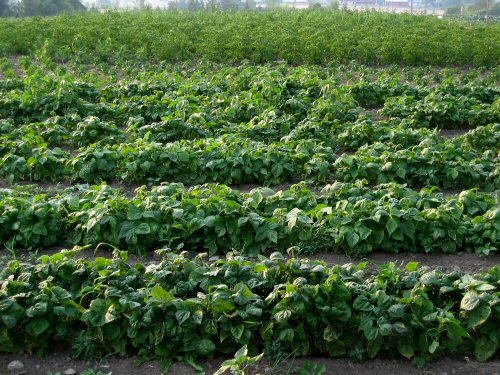
The first planting of snap beans is coming along quite well. Although the rows look nice and full now that they’re growing out, germination hasn’t been great this year, with annoying gaps that still have to be cultivated. If it’s not a matter of not enough water, I usually end up faulting it to the less-than-precise (but trusty!) Earthway seeder. A couple of days ago, I started looking more closely into what manner of germination troubles can happen underground. Yikes! For example, apparently some larval insects living in the soil (possibly earwigs, which are EVERYWHERE) will sometimes eat the emerging root tip (radicle), leaving the seed to absorb moisture with nowhere to grow, and quickly turn to paste. This would explain lots, starting with the pasty little blobs I discovered where beans should’ve been. I’m not sure if this is HOW it’s happening, but the little blobs are real enough—an exciting first! :) More as I discover it. In any case, we’re on our third planting, a fourth to go in right about now, and the first ones in are starting to flower. The selection this year is basic: green (Derby, Jade), yellow (Indy Gold) and purple (Royal Burgundy). Coming soon!
Where carrot seed comes from
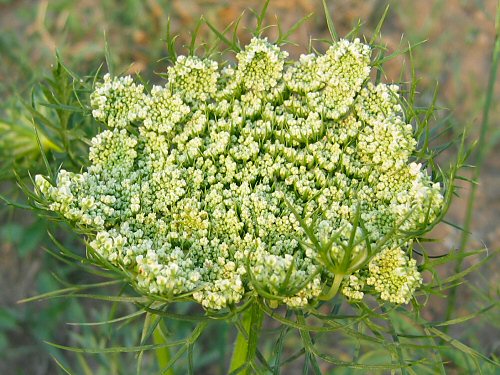
This is where those tiny, slow-to-germinate carrot seeds come from! For leaf and root crops, you often have to go out of your way in the veggie garden to see first-hand how exactly their seeds are produced—the crop is harvested and eaten before the flowering stage starts. Carrots are biennials, they go to seed only in their second year, so unless you’re seed-saving, or accidentally leave some behind over the winter (as we did here), the entire flowering process will remain a garden mystery. For carrots, if it was a mystery, no longer…!
Packing station
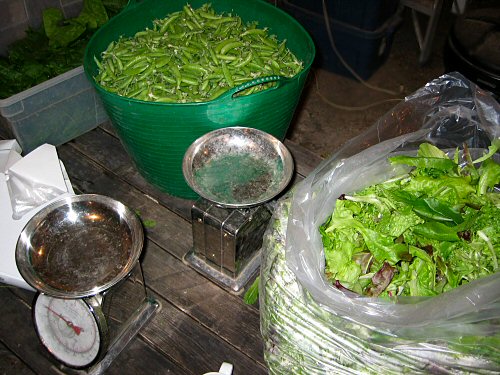
The post-harvest is a simple, straightforward process that has to be done fast since we don’t have a cooler. The set-up is manual and basic. Today, we packed indoors to get out of a stiff breeze that would’ve taken the salad greens sailing (usually, we do everything outside, in the shade of the barn; the indoor option is part of the new luxury of the Extended Milkhouse). There are a couple of 2 kg kitchen scales for the snap peas and lettuce mix. Everything is sold by bunch and bag, not weight, but the scales are useful for keeping things consistent. It’s quite easy to get the right amount by eye, so it’s into plastic bags and pop onto the scale for a quick check. If it’s underweight, add more, otherwise, somewhat over is just fine!
Doing the rounds
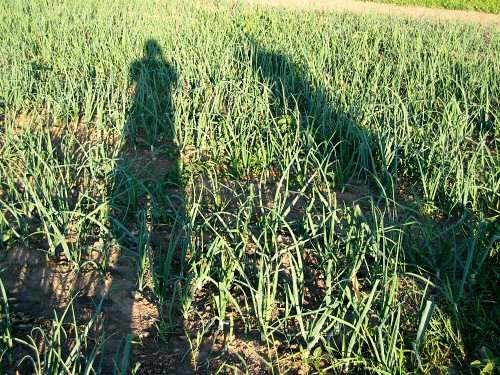
Since the start, the idea of a daily full garden inspection—”doing the rounds”—seemed to make sense. It sounds easy enough, but somehow, it doesn’t get fully done all that often, there’s almost always something that seems absolutely pressing to do early in the morning or in the evening when a stroll about is most practical and pleasant. But of course, I do get around to see everything every couple of days at least: checking for weeds alone insures that. Today, Conall and I managed to do a pretty full walk about. You look to see how things are doing in general, check for the start of new weeds and pests…it’s amazing how things can creep up and then jump out at you if you’re not watching closely. Here, we’re checking out the onions. So far, they’re doing well!