Hauling water

Filling water jugs

The seedling room is in a fully modern building with all the modern conveniences like electricity, heating, ample insulation and screened windows well-positioned for a bug-free cross-breeze and lots of natural light. The only thing missing is a handy supply of running water. Drilling for a new well located nearby ended in failure after a couple days of exploration produced only an expensive dry hole. So, until the gutter-fed rain barrels are turned over in warmer weather—overnight freezing of collected rainwater could crack them—I bring over water for the seedlings in 18 liter jugs filled from another well in a building not too far away. Simple systems and the rituals of spring!

First look of the year!

First view of the field for 2024

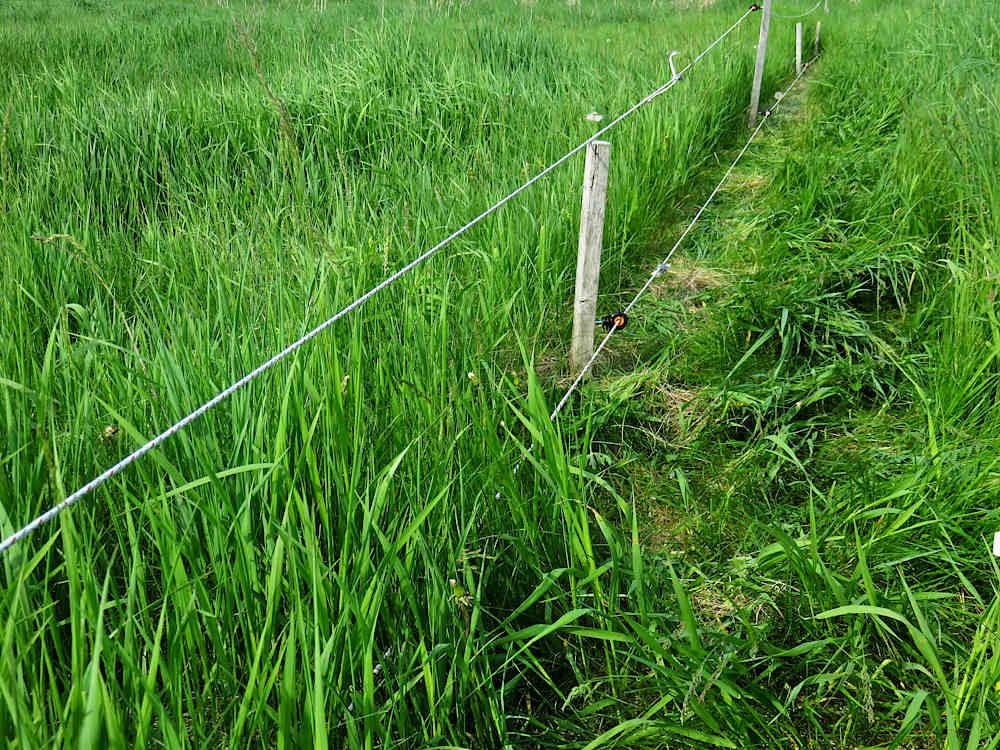
Today’s view of the field, my first since last fall! I’m about a mile (1.6 km) down the road, and I do sometimes pop by in the off-season. Usually, though, it’s out of sight, not out of mind for the whole winter. I’m still getting used to how much tinier the garden has been since I left the farmers’ market and the pandemic had its way. In any case, it’s looking fine. Most of it was cleared last fall. The straw-mulched garlic on the left seems cool, nothing poking up yet, I suppose not too early is good. And it’s really not wet, not the former usual dense, clinging, suck-you-down mud of the after winter melt-off (I’ve pulled my foot out of rubber boots trying to step forward in that stuff). Unless there’s a mini monsoon season coming up, I’ll be able to get out there pretty early, to set up the anti-deer-and-groundhog electric fence and prep beds. There’s still a broken rototiller to deal with on the tiny tractor, so that could slow things down. As always, we shall see!

Firestarter II

Wood burning in stove

Enjoying the flames and the slowly building heat from starting the wood stove for the night. Guess this is saying goodbye to the semblance of winter we’ve just had. Wood heat and tending the fire seems best enjoyed when it’s so cold outside, you really bask in the indoor warmth and outdoors seems like a harsh alien force trying to get in. This year, it’s hardly ever gotten so chilly inside that a decent sweater wouldn’t offset if you had to make do. Of course, the wood stove did bring a huge level of…comfort! Here, it’s in what I think of as stage two of firestarting. The kindling and smaller pieces have done gotten things started. Now, medium pieces are kicking in. The air vents are at least partially open, so fire burns hotter and faster. After 15 minutes or so like this, it’s burning nicely, and there’s the start of a bed of hot coals. Then the full-size chunks go in, the vents are closed, and another round of wood heating is underway. That’s my method with this particular stove, and it does seem to work!

Temperature the old way

It’s around noon, and an unseasonably, pleasantly warm 62°F/17°C. This cheap old plastic analog thermometer has been hanging in a doorway for at least the last 10 years. It’s a quick and reliable way to see how warm or cold it is. No worrying if batteries are running down. No looking for the right angle to read the screen. Only this column of dyed-red alcohol—safer-than-mercury!—expanding and contracting, going up and down. The simplicity is soothing. The way it’s positioned, the afternoon summer sun hits it on one side, causing it to shoot up. Otherwise, all through the winter, it’s shaded from the direct sun, and it gives a roughly accurate reading of the air temperature, 24/7. Why not reposition it so it’s always shaded? Checking it for the temperature on a hot summer afternoon hasn’t seemed to be a big concern. Not sure why!

For tiny farming, I’ve used a few electronic weather gadgets, alongside analog devices like the trusty old min-max thermometer, and a plastic weather vane/thermometer/rain gauge combo that looked like a toy, that I stuck on a post. The thing about seeing the temperature in real-time, it’s a little late to do anything. It’s mostly about satisfying curiosity. On the other hand, min-max thermometers, that record the lowest and highest temperatures they hit until you reset them, they’re super-useful tools, for example, to monitor how cold it gets in the greenhouse at night and adjust! And soil thermometers, now they can come in handy!

Weather forecasts are another story. A day or so out, I’d say they’re around 60% right maybe a bit more (I could be off, it’s just a guess). Overall, it’s hard to tell how useful they actually are, though if you’re in tornado country, you may have a different view! Since yesterday, there’s been a weather alert on my phone. Not color-coded in alarming red and yellow, so far this one is only grey. Still, it’s a “warning”, not the milder “advisory”… The temperature is may suddenly plunge in the afternoon, with heavy gusting wind, and the chance of instant ice on the roads. A cold front is coming, so, I guess, beware…

Firestarter

Wood heat has been the winter way around here for the last few years. The old wood stove, and stacks of firewood. In cold snaps, where it stays well below freezing, day and night, the fire is always burning. In the more usual dramatic temperature ups and downs, the fire is often left to run down overnight, and a new one built up early evening. I’ve become a little obsessed with firestarting using the least amount of paper and kindling, and only one match. I don’t suppose you could call that a skill, nor an art, but some kind of a game! I enjoy setting up for a dominos falling effect, but with fire. The easy-to-light, fast-burning paper lasting long enough to ignite the smallest pieces of longer-burning wood, which in turn start the next larger pieces, the bigger chunks get, the more steady, sustained fire it takes to set them ablaze. Idea for a video game?!

Kale under cover

Kale and Brussels sprouts under row cover

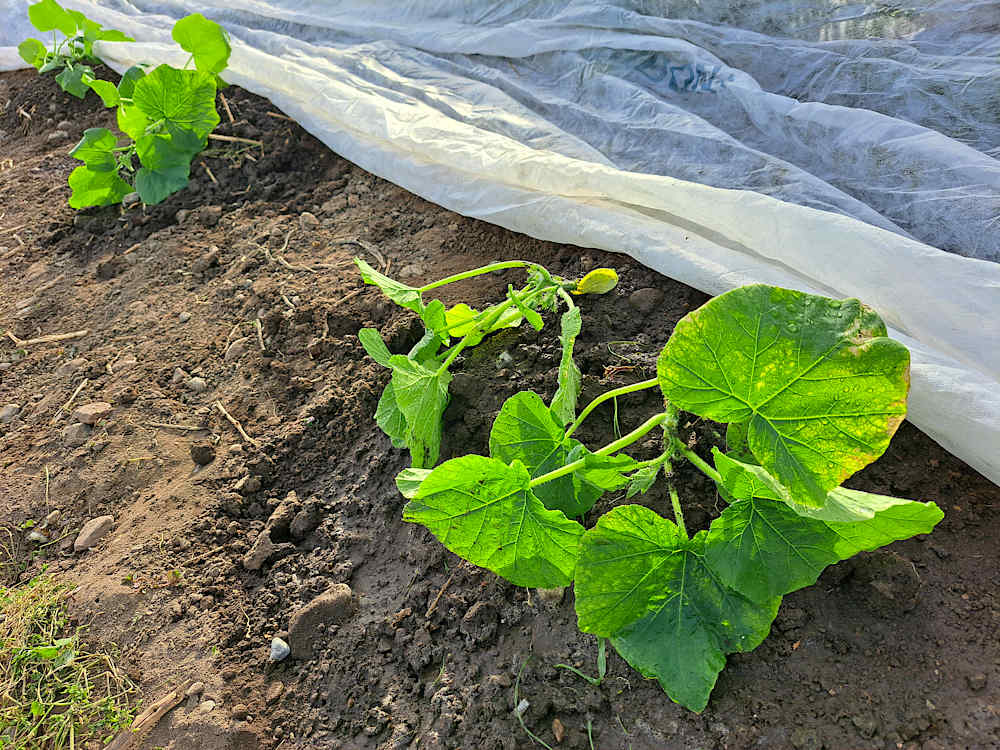
Kale and Brussels sprouts are tucked away under floating row cover (with straw-mulched garlic in the back). This is usually to protect them from flea beetles that can devour the seedlings. This year, unfortunately, it’s also a deterrent to the sudden invasion of groundhogs. Invasion isn’t the right word if we’re talking about numbers, as my best guess is that there are only two doing the damage. Their work, though, is so far somewhat alarming. They have a particular taste for lettuce; they’ve already gone under and through the cover to get a it. But in the last couple of weeks, it seems they’re out to at least sample just about everything. Since last year, and especially this spring, I’ve seen several groundhogs in the general area, which is new and a lot. Last season, there was a little veggie munching, but nothing out of hand. So, to a point, live and let live. This time around, seems like it could get more serious. As far as pests and disease, from year to year, if it’s not one thing, it’s another…

Simple system

Nothing like improving a way to keep organized! This may look like some sort of craft-y looking set-up, when in fact it’s my new, state-of-the-art seedling tracking system. For years, I’d print the variety and seeding the on these tiny plastic stakes with a trusted Sharpie fine point, and stick them in the plug sheets. You can see the old approach on some of the stakes I’m reusing (old-fashioned recycling). Recently, I started instead to use a number code, writing the variety, date, and notes on a form I printed up. Why the change? Who knows, it just suddenly seemed like the thing to do.

It’s so much better! With only a number to read, the stakes can be half the height and don’t stick up and get in the way. It’s also a lot easier to see what’s going on overall by looking at the sheet. I always kept a list anyway, but now I’m doing half the printing and labeling work. I can also reuse the numbers season to season. The biggest advantage is psychological: I find that, when doing repetitive manual work, like seeding a few plug sheets, the less steps, the smoother the process, and less mental resistance. Rather than find a clean stake, print the info, pierce the plastic covering the plug sheet to stick it in, and rewrite the info on paper, I just insert the next number at almost soil level (no holes in the plastic wrap covering) and fill out the form! If this doesn’t resonate with you with a feeling of simple satisfaction, well, I guess you never had to keep track of a bunch of seedlings! :)