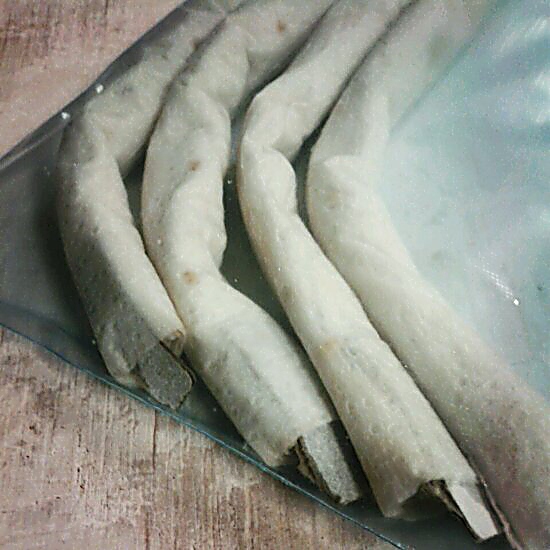
Bare root seed starting

Germination in ziploc

It doesn’t get simpler than this for seed starting in controlled conditions: the bare root approach. Spread seeds on paper towel, place another paper towel on top, mist with a spray bottle, roll up (don’t forget to mark the rolls if you are doing more than one), and place in a ziploc-type sealable plastic bag.  Then, put the bag in a warm spot, light not required. Be sure to check on the seeds daily, as they can use the oxygen! Within a few days, you will see the little white radicle tip emerge, and from there it is root growth in action. When to take them out is open to experimention: all the veggie seeds I’ve come across are pretty tough and wanting to grow, given the minimum reasonable conditions, so you can plant right at germination, or a couple days down the line with more root. As always, there are lots of variables to consider, play around with, and so forth, but you should be generally fine no matter what. Since I usually only do this for germination tests, I don’t actually plant them (cruel, huh?!). Other materials than paper towels (they shred easily when wet, an advantage when separating if roots start growing into them) and plastic bags could be used—kinda interesting, a while back I checked the book and called my certification agency to see whether there were organic standards for the paper towels used with this method, since they are in such intimate contact with the seeds at such an early stage and who knows what’s in the paper, but no…this is not covered, anything goes, if you’re certified, this would be, well, certified organic. Anyhow, this year, these seeds are for production: here, it’s sweet peppers, eggplant, and tomatoes! We’ll see how it goes!

NOTE: Yeah, I am still messing around with my phone camera and the sometimes cheesy photo filter effects in Instagram for Android…
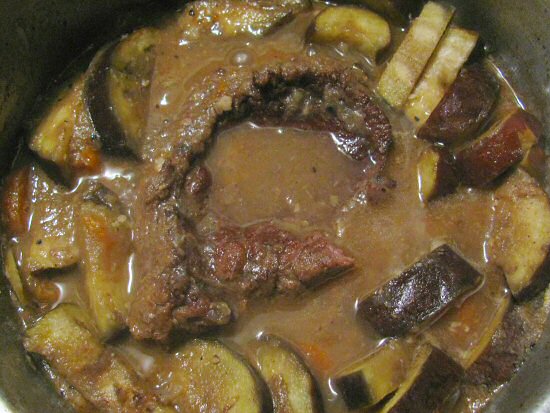
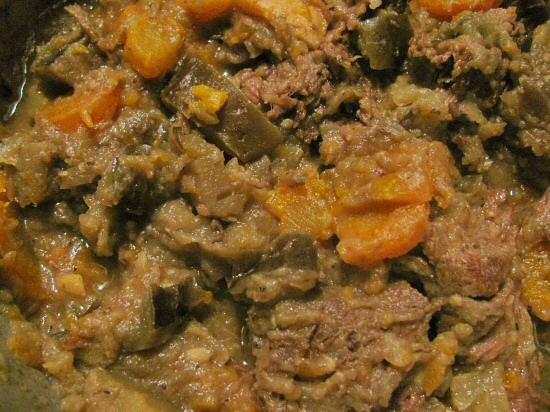
Beef and eggplant stew!

Beef and eggplant stew, simmering

Beef and eggplant stew

Another in my series of possibly-not-so-appetizing photos of oh-so-delicious food. Local food. Ingredients either grown by me or gotten from those who did. I still find knowing where your food comes from endlessly satisfying, it doesn’t get old. Anyhow, without further ado, on to the one-pot, no-culinary-skills-required Beef and Eggplant Stew.

Read more

Patchy frost

Eggplant under row cover

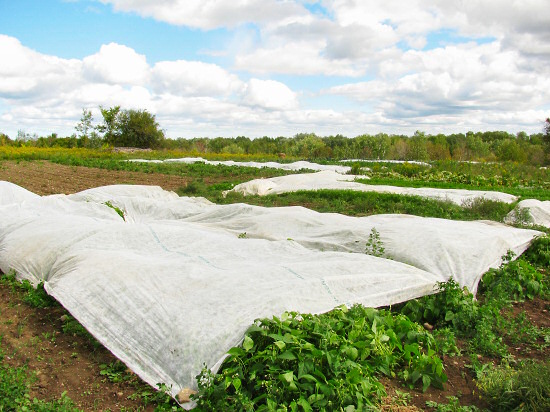
[Fri, Sep 16, 2011] First frost wasn’t too bad at all, a patchy frost that hit the field lightly, and in some areas, hardly at all. Still, the row cover, over some beans, peppers, eggplant, and a couple of beds of cherry tomato, worked out well, the exposed plants in those areas did get mildly to quite well…toasted. In the pic, we have Dusky eggplant, under its thin layer of salvation. Raising the floating row cover with a few non-pointy sticks, so it’s not pressing on the leaves, is a good idea—moisture often collects where the leaves touch the cover, freezes, and can deliver some pretty severe leaf burn. But for mature plants at this point in the season, I usually don’t worry about that—it’s different with seedlngs at the other end—and just float on the cover and leave it at that!

Frost protection time again

Row cover frost protection

The frost-warning forecast from a couple of days ago, for 1°C (34°C), moved up a day to tonight. so there’s row cover all over the field. Some of it was floated out against the possibility of frost, the rest, as so-far-effective deer deterrent. Up front, around 800′ of snap beans, just starting to form, are bundled up against the cold. Then, row cover over carrots, and farther, lettuce, has been in place for a few days, and seems to still be keeping the deer from munching. In the distance, peppers and eggplant are under frost protection. Elsewhere, we’ve covered a few beds of cherry tomatoes to prepare for tonight. Winter squash and pumpkins are mostly in, and summer squash and cucumbers are finished, and the rest out there are hardy enough, and that’s about it!

Weekly Harvest Share #2

Weekly Harvest Share #2

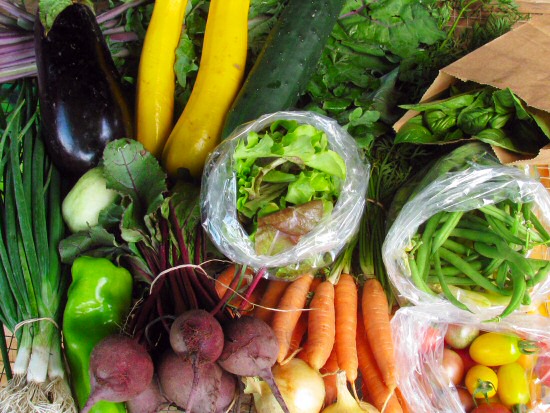
A pretty satisfying second installment of our “experimental” Weekly Harvest Share:  “Like CSA, but one week at a time…”! Satisfying because, for the first time this season, harvest day felt kinda normal, with around 20 items harvested, enough variety to have to pick what went into the shares. And the winners, the veggies that made it through thick and thin: kale (Red Russian—no worries about running out of RR…), beets (Kestrel), carrots (Nelson), zucchini (Golden Dawn III, always there in numbers), cukes (Fanfare, Lemon), baby leaf lettuce (house blend, and a nice first cut!), beans (Jade, Indy Gold, first picking of this planting), assorted cherry tomatoes, green onion (Ramrod), sweet pepper (Cubanelle, picked young and green), onion (yellow cooking, from sets, kinda…compact), peppermint & spearmint (bagged, for tea!), and eggplant (old reliable Dusky). So, better late than never!

Seedlings on the move

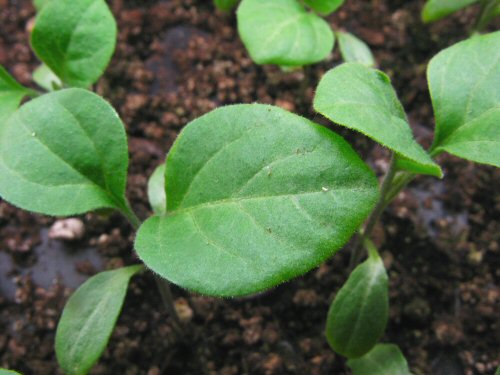
Seedlings seem to expand in spurts, like these Vittoria eggplant, growing quietly for two weeks or so since they first appeared, then suddenly reaching out to touch their neighbors practically overnight. Even the tomatoes, a week old in 200-cell trays, will soon be getting crowded. In just a few more days…

I haven’t yet stumbled upon or otherwise discovered the absolutely best time to transplant up. Generally, I try to move plants to bigger containers before their leaves start to overlap and steal each other’s light. But in practice, since potting up means the same number of seedlings take way more space, the timing ends up being determined by how much room there is under the lights.

The first plants started, in late winter-early spring, tend to also be quite cold-hardy—onions, the brassicas, various herbs—so they can usually be moved out to the unheated/barely heated greenhouse in March and April, making room under the lights for the next wave of seedlings. This year, until the greenhouse is set up, as the seedlings expand, there’s nowhere for them to go. Gotta get that greenhouse up!

Eggplant check

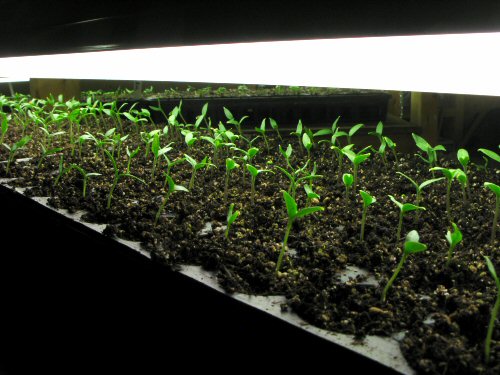
Around 10 days since they first appeared, a little over two weeks from when they were seeded, and the eggplant are doing fine. A few of them already sport the tiniest first true leaf. I imagine they’re as hungry for light as any of the veggies, but eggplant are a little more restrained than some others when it comes to stretching: where every millimeter farther from the light counts, there’s not that much difference between the edge of the tray and the center. It’s kind of intense, the little details you track when you’re raising seedlings under fluorescent lights. Even the eggplant lean isn’t too extreme… These are two of the three 72-cell trays of eggplant for this year. Off in the distance, it’s PEPPERS!