
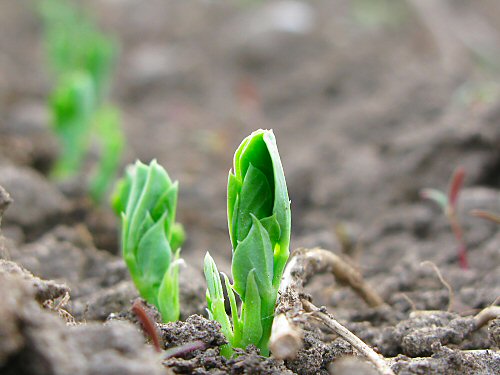
The first peas suddenly popped. A bit of welcome action in the field, amidst all the dryness and slow germination. These are Sugar Ann snap peas, edible pod. There’s 1000′, double rows, 3-4″ row spacing. They’re coming up well in stretches, but a lot haven’t yet appeared. Well, there should be some real rain tonight! On the right of the pic, a fine example of PIGWEED doing its stuff as well, keeping pace with the gardening effort all on its own. (Yes, lying on your stomach in the dirt is the easiest way to get the macro centered on these little guys!)
germination
Spring fieldwork continues
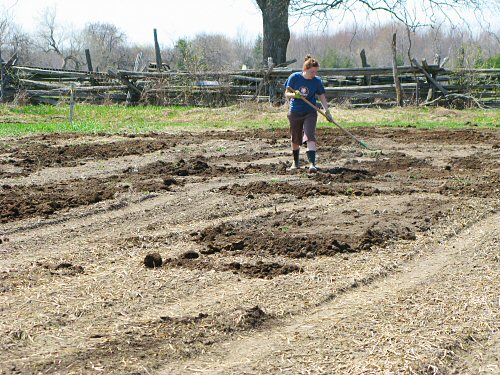
Bed preparation and first seeding continue. Today, Lynn’s tiny farming experience broadened to include rakes, and using them to spread compost. Moderately hard work in the heat, but it was a fairly small area. Overall, things are generally on schedule, but at least a week behind last year for the earliest stuff (and first peas were in last year on April 3rd!). Also, after the lingering snow, conditions changed practically overnight, but with the extremely hot, dry week, despite some watering in, the crops seeded so far are slower to germinate (we need rain!), and may come up a little thin when they do. So far, peas, spinach, beets, radish, all-lettuce mesclun and green onions have gone in over the last few days, and everything but the peas got one watering… I should have direct-seeded leek and parsnips in, but I’m kind of waiting for some rain. Also coming up in the next day or two, carrots and Swiss chard. And there’s a mountain of onion sets and seedlings ready to go, plus a few other transplants. And potatoes arrived today…
How odd…
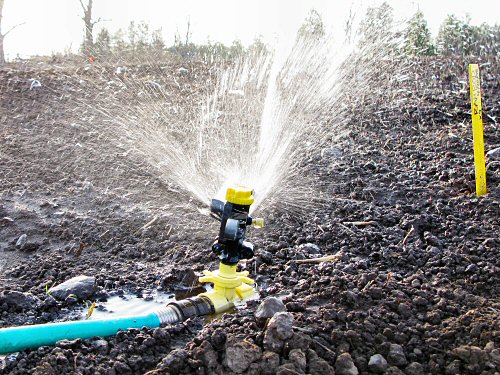
It’s like we’ve gone directly from winter to summer. Less than a WEEK since the ground dried out enough to walk on it and till it, I’m actually out there WATERING… This is really odd.
I’m sure we’ve had unseasonably hot Aprils before, where watering in newly seeded crops was necessary, still, it’s only common sense to chalk this up as another of the consistently bizarre weather events we’ve been having in the last three years or so… In other words: global warming, I guess.
“Normally,” April is a good month once it warms up, because our rather heavy clay-loam soil holds moisture well, and just post-snow, it’s wet enough that you don’t have to water in what you’ve seeded. A spring bonus!
Instead, what’s going on here is, in a handful of days, the top inch or more of the ground has dried out completely in the unusual heat. That means shallowly-sown seed, like spinach, lettuce, radish, beets, and chard, is sitting in perfectly dry soil.
I put in peas at around 1.5″ (4.25cm), and they were just barely in nice, moist earth. But these other guys, what can I do?
I considered setting the seeder deeper, but that could just bury them too far for good, quick germination (I’ve messed around with too deep before…).
Or, out with the sprinkler.
I don’t like using sprinklers, I don’t have water to waste, but here, it’s much the more reasonable alternative to hand-watering a 50’x100′ area, when there’s so much else to do.
The pond irrigation isn’t yet set up, so the water’s coming from the barn well, where there’s such low pressure that only the cheapest, most lightweight garden sprinkler will oscillate, where better quality, heavier duty ones shoot a stream of water straight ahead and won’t budge.
Irrigation comes early, and cheap gear is every once in a while…good!
Seedling action
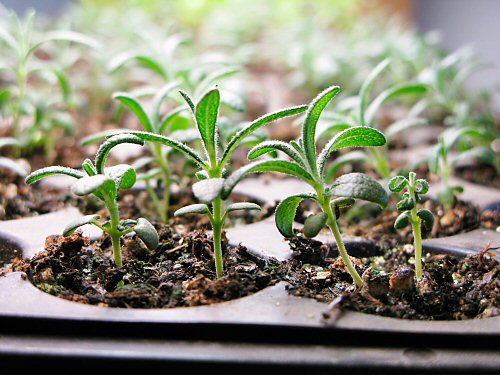
The main tiny farming action is with the seedlings now; even if the snow melted off tomorrow (which it won’t), it’d still take a sunny, windy couple of weeks, give or take, for the field to dry out enough to fully work. Indoors, with the new grow rack, there is still space, but there’s also quite a bit left to be started, including most of the tomatoes. And some of the seedlings are beginning to call out for MORE ROOM. The rosemary (above) did really well, germinating steadily over several weeks, to the point where there are up to four and five crowded in 1.5″ (3.75cm) diameter cells. And the celeriac (celery root; below), a trial crop this year and the only one started in flats not cells (I sprinkled a packet of seed across two fibre trays), is healthy, dense and stretching. Transplanting tiny seedlings is fun at first few, but can get tedious, especially if you have hundreds to do in a session. To save on time and tedium, I try to avoid potting up by sowing into final locations whenever it makes sense. One way or another, the trays inevitably start adding up, until there’s not enough LIGHT to go around. Into the equation, there’s the barely heated seedling greenhouse and the WEATHER: as soon as it’s reasonably warm enough at night, I can move the hardier stuff out—this month, at least every other night has dropped down to around 5°F (-15°C)… And that’s what this stage of the action is all about: adjusting lighting, timing and starting cell size and, as always, gambling on the weather…!
New rosemary
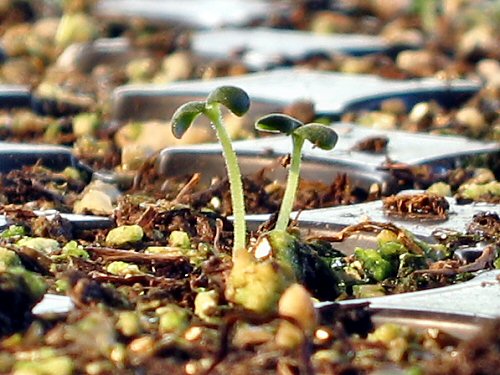
Rosemary, seeded 10 days ago, has been coming up over the last couple of days. I’ve heard that germination for this herb can be hard, under 50%. I’ve usually done better than that. This tray is about half started, and more will come…. Ideally, this would’ve been in at least a month earlier, but I didn’t realize I was out of seed. And it’s so slow to grow… Of course, there are still plants out in the field (I never did bring them in), and although chances are slim, I have high hopes for survivors. I dunno, seems to be something a little off between rosemary and me. I’ve frozen potted up plants by leaving them too long in the hoophouse (after digging them up and putting them in nice big pots), I’ve rescued cuttings at the last minute off of the frozen plants, I’ve left plants in the winter field… It’s odd. I love rosemary! What’s going on? :) Anyhow, there will be rosemary…
Leeks appear
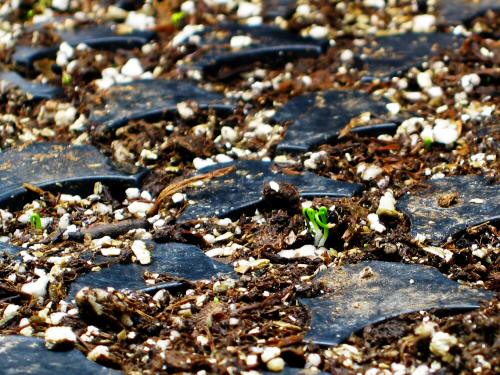
That was quick! After barely four days, the Jolant 75-day early leeks are poking up quite vigorously (there are early leeks and long season one’s that’re usually 100 days+ and more cold hardy). I used a mix of seed from last year and three years ago. Seed from the onion family has a short shelf life, it’s usually rated good for only a year, and I’ve noticed a pretty big drop in germination rate (I tested 2-year-old green onion seed, and it went from 88% germination to around 50%). Anyhow, because of that, I was pretty generous, dropping in maybe 6-8 seeds per, which will be thinned down to one or two. Anyhow, these guys are just raring to go…!
First cuts
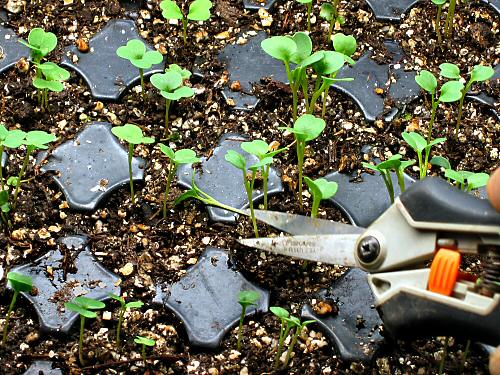
Time to thin out the lettuce and arugula. Between the seven varieties, some of the seed I used was up to four years old, so to be safe, I was quite generous, maybe 4-5 seeds per cell for the arugula, and a bit more for the lettuce (that tiny seed can get away from you, though with new seed, I try to go lighter). Germination was good, and the little seedlings are already shading out each other as they push for the light. I’m still getting used to timely, to-the-point thinning, both in the trays and in the field. I usually have the urge to leave ’em a while longer, but almost always, this ends up being not the best thing to’ve done. Give the best ones the biggest break as early on as possible, which means, kill off the rest. This also takes some timing experience, but in general, it’s hard to go wrong by not waiting around. Sounds brutal, but that’s about it! The lettuce will eventually be one per cell, although for now I’ll leave a couple per. Starting arugula indoors is a first for me, I usually direct-seed, so I’m figuring things out this time around. I’ll leave two per cell, and plant them out two together at 6″ (15cm) spacing and see how that works out. Here, I’m snipping arugula at the soil level with wickedly pointy little shears…