Carrot germination refinement continues

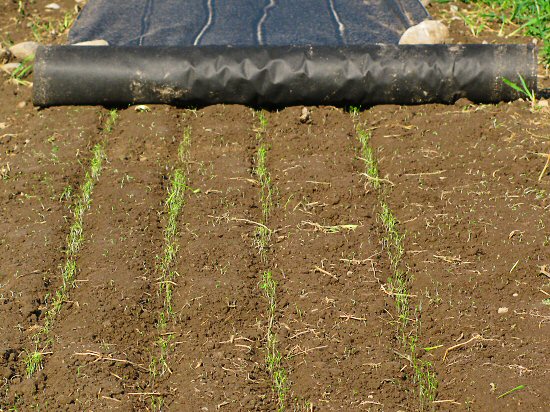
Dense carrot germination from Earthway seeder

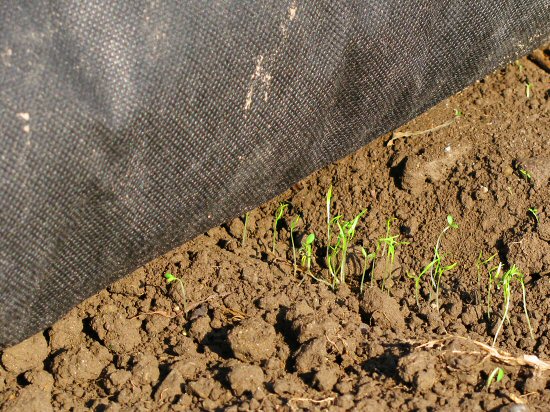
Another successful carrot germination event, with trusty, open-pollinated, heirloom Touchon, and our latest refinement in cover. Although this landscape fabric looks like the stuff we started with last year, it’s a heavier grade that doesn’t tear and become useless after one or two outings—it should last FOREVER, or, hopefully, for at least 10 uses, at which point, the cost will be near zero.

This germination, in mainly hot, sunny weather, is exactly one week after seeding, with no watering in. Pretty good! Deprived of light, the seedlings are already stretching—I might’ve taken off the cover a day or two earlier if I’d checked—but they’ll be fine. And if you’ve used an Earthway seeder, and ever doubted the incredible amount of seed it can dump down, don’t (see above): I’d rather see all those carrots pushing up than too few, but the waste from overseeding is quite severe, and major thinning is in order, adding to the labor. Still, it’s all part of the joy of farming largely by hand… :)
Field to go

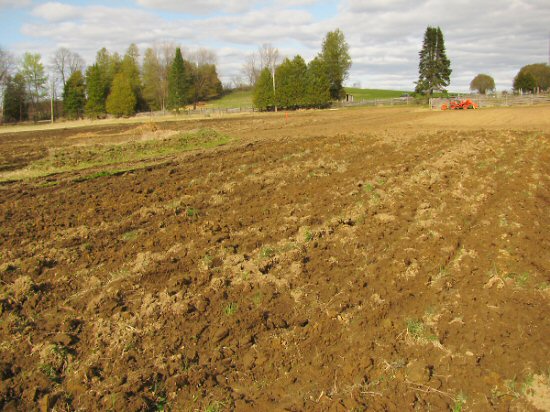
Prepping the field

Here’s the new field, in various states of readiness. Up front, it’s only been plowed and disked, with big hunks of sod waiting to be busted up. Further off, the trusty Kubota compact tractor has done its thing with a 48″ rototiller, and the ground is nearly ready to go. This time around, more or less everything that’s early and direct seeded will go in at once, including a first planting of PEAS. New year, new garden—it will be interesting.

Play in mud!

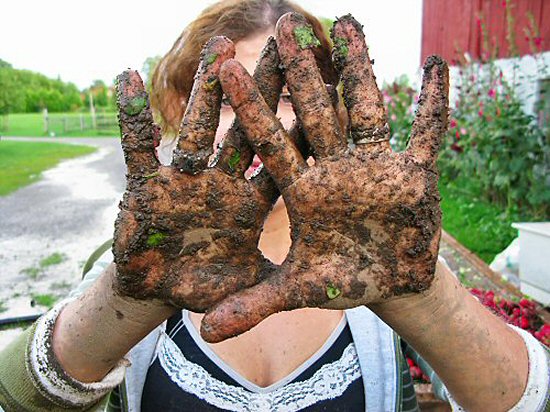
Muddy hands

A mid-winter flashback to one of my favorite farm photos—it’s just so…hands-on. On the tiny farm, many of the things we otherwise consider inconvenient, like rain and MUD, are actually just fine. Sunny days are NICER, but there’s plenty of room for wet as well. Originally posted on Friday, Aug. 8, 2008, when we were harvesting-around-the-rain.  (That’s Michelle.)

Winter storage

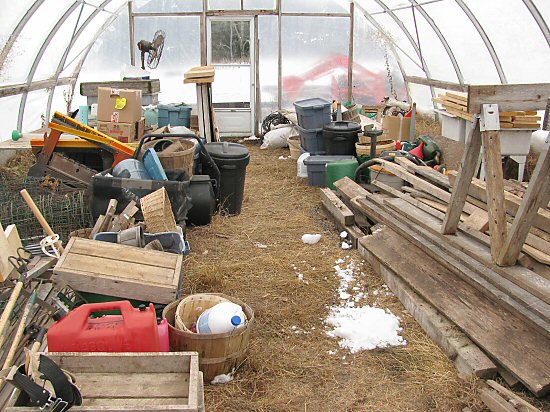
Farm gear stored in hoophouse

Snow’s here—it’s definitely overwinter storage time! Winter storage is a little different every year, as needs, facilities, and plans change. This time around, a fair bit of gear is in the 20’x32′ (~6×10 m) hoophouse, with its full sun exposure and fairly extreme temperature spread (from double-digit subzero at night, to 80-100°F/25-38°C on a sunny day!). Sooo, you don’t want to be storing just anything in there. Anything that’s damaged by freezing isn’t a good idea. And plastics that aren’t UV-resistant will break down, fading and weakening (really, most plastics not meant for constant outdoor use should probably be kept out of the sun whenever possible). Here, it’s mostly wood—extra rough cut cedar from a project a couple of years back, tomato stakes, tables, farmers’ market display trays—which is OK, and I’ll get the plastic items under cover. Except for checking the snow load on the hoophouse after big storms, that’s all she wrote until early spring. The outdoor part of veggie farming in our growing zone will now take a bit of a snooze…

Last of the chokes

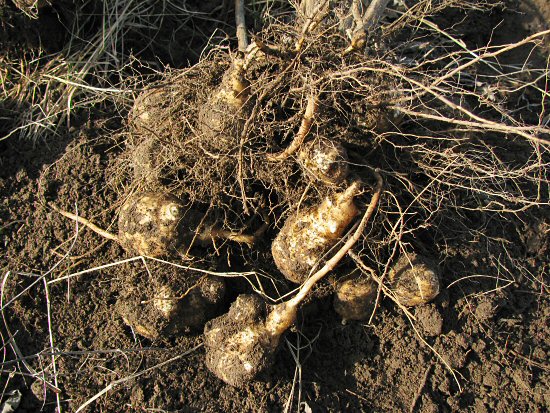
Digging up the very last of the Jerusalem artichoke, this is pretty much the final harvest of the year, besides a little kale and maybe a last few tiny cauliflower and cabbage. The few remaining feet of the original 50′ (15m) double row yielded about half a bushel. Not bad. Plenty for spring planting, and some to experiment with in the winter kitchen (I still haven’t fully figured out the eating part of chokes, I’ve steamed and roasted, the texture is nice, the taste mild, but the JA’s true culinary delights have yet to be revealed to me).

Anyhow, despite many freezing nights, the ground is still perfectly soft, and the harvest is all just pulling chokes, with the digging fork around only to turn the nearby soil in search of tubers that strayed from the conveniently compact root ball. Quick and easy, and the season in this field is suddenly…done!

Tiny fall cauliflower tastes good

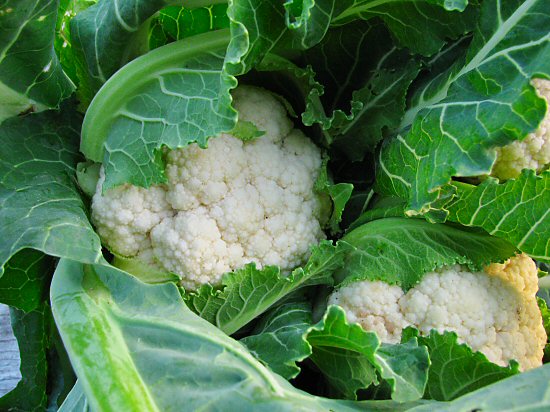
Harvested a few tiny (tennis ball to softball-sized, like, orange to grapefruit…little ones!) cauliflower from the last-planted section of brassicas that also has kale and broccoli. It’s still producing in home-consumption quantities, but with the exception of some strap kale, they entirely missed sizing up in time for CSA or the farmers’ market at the end of October. This is the normal. I usually take a chance on a final, extra-late planting—sometimes they make it, sometimes they don’t. Now, growth is so slow, the field is really just convenient live storage.

Not ideal storage, though. These plants are hardy, but the cold—many sub-zero nights—does take its toll on the parts you want to eat. Kale fares the best, broccoli is quickly savaged, and exposed heads of cauliflower get cold-burned to an unappetizing, mushy in spots, brown. BUT, with self-blanching varieties (this one is Minuteman), the leaves curl close to cover the heads, protecting them from sun discoloration (so our white cauliflower can be…snowy white), and this works fine against cold as well.

Then there’s the eating. The summer’s abundance of fresh-picked veggies has been over for a while, and every little taste of what remains becomes more of a treat as winter approaches, supplies dwindle, memories fade. The wheel keeps on turning…! :)

Spinach finale

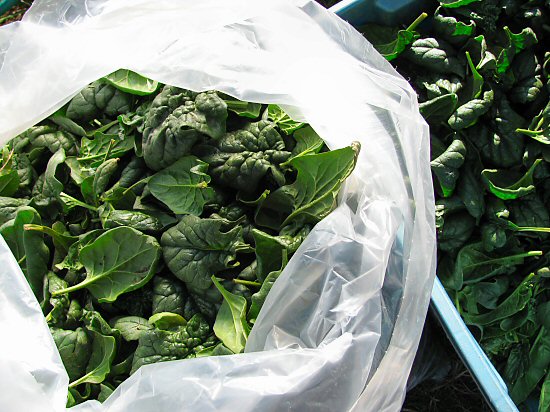
Last spinach harvest of the year

So this is it for the season’s spinach, a last 18lbs (8kg) of Spargo, unfazed by many subzero nights and all sorts of up-and-down weather antics. Spinach is one of the great ones for cold-climate tiny farming, easy-going once it gets started, tough under freezing conditions, and always in demand… The deer that’ve been lurking and circling the field all year have started to come in for an exploratory nibble here and there, working their way in from the edges. At this point, it’s slim pickings! They discovered one edge of this final, late-planted, slowly-growing spinach patch a couple of days ago, so we (Lynn, Steve, and I) grabbed the rest this morning.  Between us and them (mostly us!), the spinach is done!