Last day of summer in the garden!

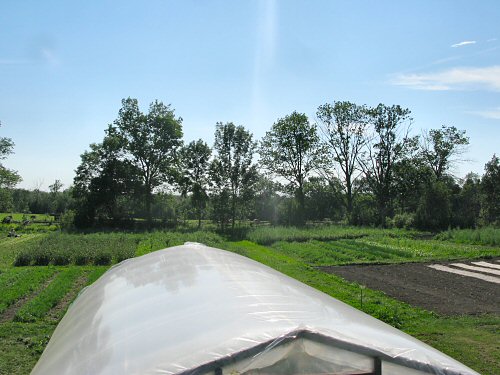
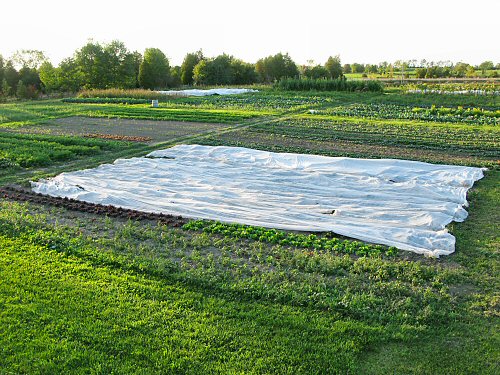
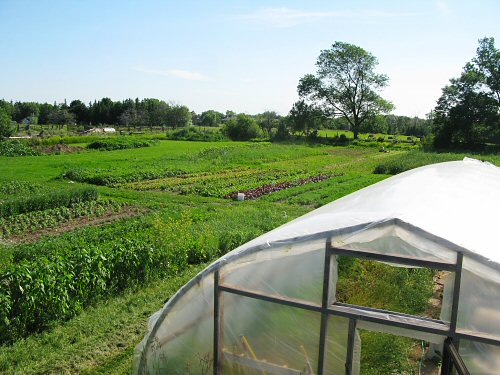
Here we are at the end of the calendar summer, a season of crazy weather largely gone by! Cooler fall conditions have been around for a couple of weeks now, with ample frost watch nights, so summer’s end at this point is only…ceremonial. Still, there’s that little twinge of melancholy that comes with the official end… The fall harvest is looking fine, with lots of brassicas, a good deal of lettuce, and the last of the fall spinach in the north end of the field (above), along with some last tomatoes, lots of peppers and eggplant, spared by frost so far. There’s also Jerusalem artichoke and potatoes, still in the ground. Green beans! And, of course, that section of sweet potato, fully row covered…

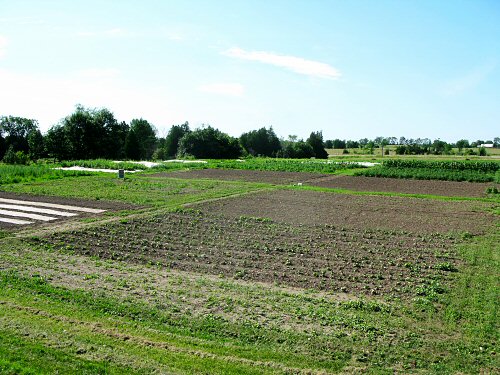
Moving down the field, there are the last plantings of beets and carrots, parsnips, some Swiss chard, and lots of mowed but still untilled empty sections…

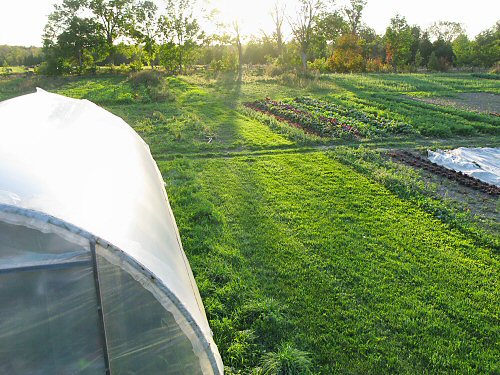
At the south end of the garden, the herbs and flowers are all hanging in there—row cover has kept even the super-cold-sensitive basils alive and well. If I’ve missed anything in the rundown, well, it’ll still be there!
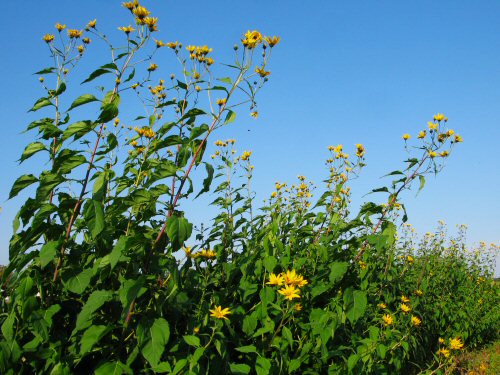
Jerusalem artichoke in full flower

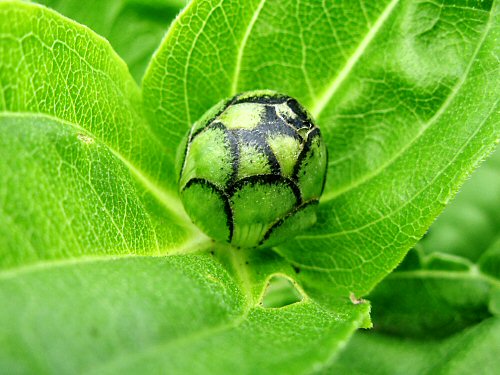
Last seen simply soaring up above 7′ (2m), the Jerusalem artichoke recently exploded with flowers. Last year, flowers appeared on some plants, and I read that flowering chokes isn’t that common. You couldn’t tell from here… The plants continue to thrive, weathering pretty heavy wind recently with only a bit of a lean. I haven’t dug around to see what the tuber harvest may be like, but I expect it’ll be massive…

Flowers galore

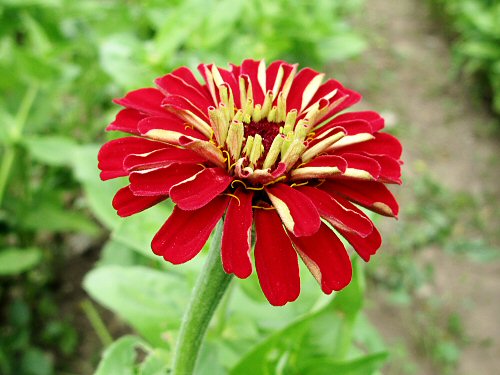
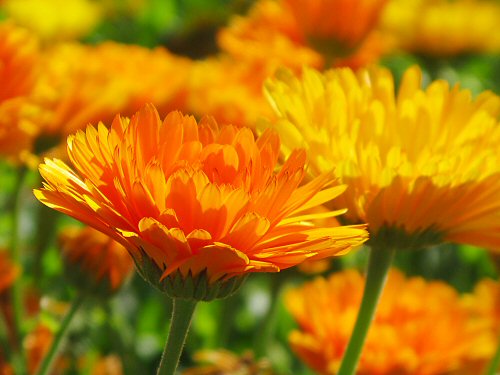
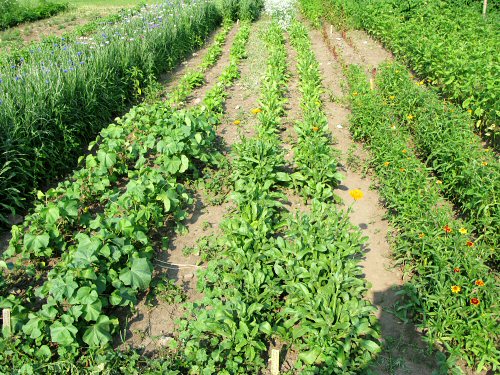
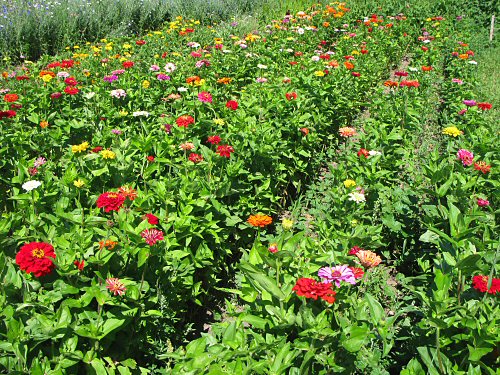
The flower sections have pretty well taken off over the last month, with the several beds of zinnias (above, directly below) offering up the biggest splash of color. We’re not harvesting the flowers, this season is a trial run, but they get regularly cut by everyone working in the field, and by a couple of CSA members, so they’re not out of control or going to waste. Besides, they’re pretty to look at, right there at the bottom of the field…

Since we’re not harvesting, I’m really not learning much about the world of cut flowers, beyond the growing. There’s lots of detail, like exactly when to cut for maximum vase life, and where to cut on multi-flowered plants. Right now I’m somehow not focussed on learning cut flower stuff that I don’t have an immediate, practical use for. So I just watch and enjoy…

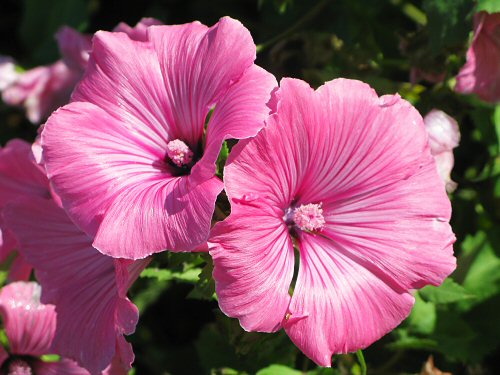
Lavatera has broken out in the last couple of weeks.

And sunflowers are in fine form (this variety’s called Sunrich Pro)…!

View from the stand

It’s mid-July, and on a (recently rare) sunshiney afternoon, things are looking OK. Better from a distance than up close, because a few sections, like the summer and winter squash, are quite severely in the weeds and in need of intensive hand pulling. And the ground remains almost constantly wet. Our moisture-retaining clay-loam soil, such an advantage in the usual near drought conditions we’ve had over the last three years, is now a bit of a hindrance. Sprawled tomatoes are particularly at risk if they don’t dry out against damp ground, and instead contract early blight (more about that another time!). Still, carpe diem, huh—seize the day! From atop the farm stand, the view is fine! We have the north end (above), with carrots under burlap (third planting), brassicas (newer transplants still under row cover), the cover in the far middle over squash, in front and more to the right, tomatoes, with a windbreak of giant sunflowers at the very right, and sweet potato bottom center. Open sections will include brassica transplants in a couple of weeks, and a fall cover crop. Out of sight to the north are onions…

In the middle, clockwise from the left, there’s a second planting of carrots, fifth mesclun right in the corner (with Maria weeding on the Greens Machine), garlic and parsnips, and potatoes in the distance (with more big WEEDS), the first planting of beets, carrots and green onions, and the edge of the third carrots under burlap from the first photo.

And then, the south end of the field, going left from the peak of the greenhouse, the garlic and Maia in the mesclun, the second planting of carrots and beets (that slash of of red is Bull’s Blood beets), the fourth mesclun , a weedy area with nasturtiums and tomatillos, and to the bottom left, herbs and flowers (fairly towering Jerusalem artichoke at the bottom left). (Guest photos by Lynn)

Cut flowers arrive

Zinnias bloom! At least, a few varieties are starting, along with many of the other cut flowers in this year’s trial bed. Much of last year’s first trial bed wound up worse for the wear after drought and infrequent weeding. This year, I tripled the amount of the same flower selection, about a dozen direct-seeded annuals, divided into two sections.

With all of the rain and and more attention, they’re doing a lot better…

Grow lights, on!

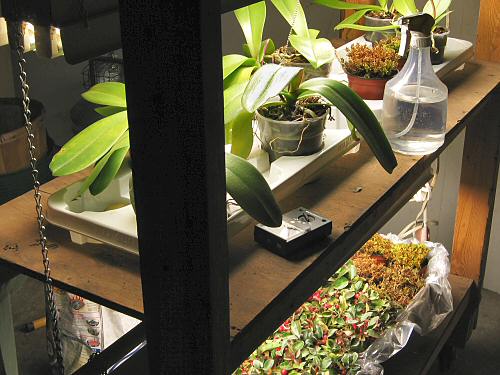
Grow rack lights went on today for the first time this season. They’re only for the rescued houseplants (orchids, wintergreen, heather)—I guess every plant deserves a place in the sun—but, I’ll be starting super-early lettuce soon, a month earlier than ever, for an experiment in planting them out to the greenhouse at the beginning of March. Getting the grow racks ready is another familiar routine. In early summer, I remove the fluorescent light fixtures and the chains and dowels they hang from and store ’em somewhere (last year, it was on the new Big Shelf). For spring, I dust them off, wipe them down, hang them, and a new seedling season begins!

Orchid, wintergreen, heather…

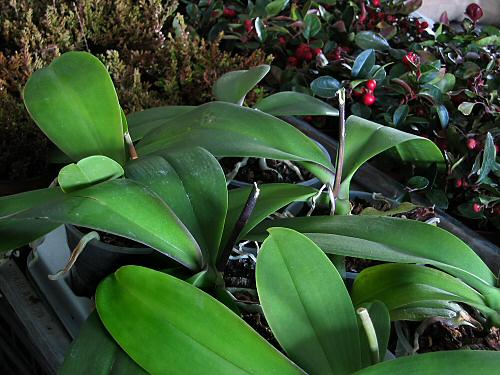
Surprise! I’m used to getting helpful recycling donations, like carefully saved flower pots, mesh onion bags, fruit baskets, plastic bags, even elastics, but a boatload of plants is a first. I was given about 20 each of potted heather and wintergreen, and six orchids. No idea what I might do with them. They’re from a big floral design company that makes up fancy settings for high-end special events, and throws everything out afterwards. I could easily be buried in random decorative plants if this stuff was to keep coming… In any case, these are here now! I looked up wintergreen, it’s a creeping evergreen shrub. Outdoors in winter, it holds its clusters of bright red berries—they stand out in the snow. Good eating for birds! Heather is quite the versatile plant, seems to have a cult of its own. A heather garden? The main stems of the orchids have been clipped, but apparently they’ll flower again. After a good watering, the orchids and most of the wintergreen are doing fine. Most of the heather came in bone-dry soil, and except for a few, it looks like they’re toast. Well, there’s space on the grow racks for a few weeks, so I’ll keep ’em around and see what happens next…!