
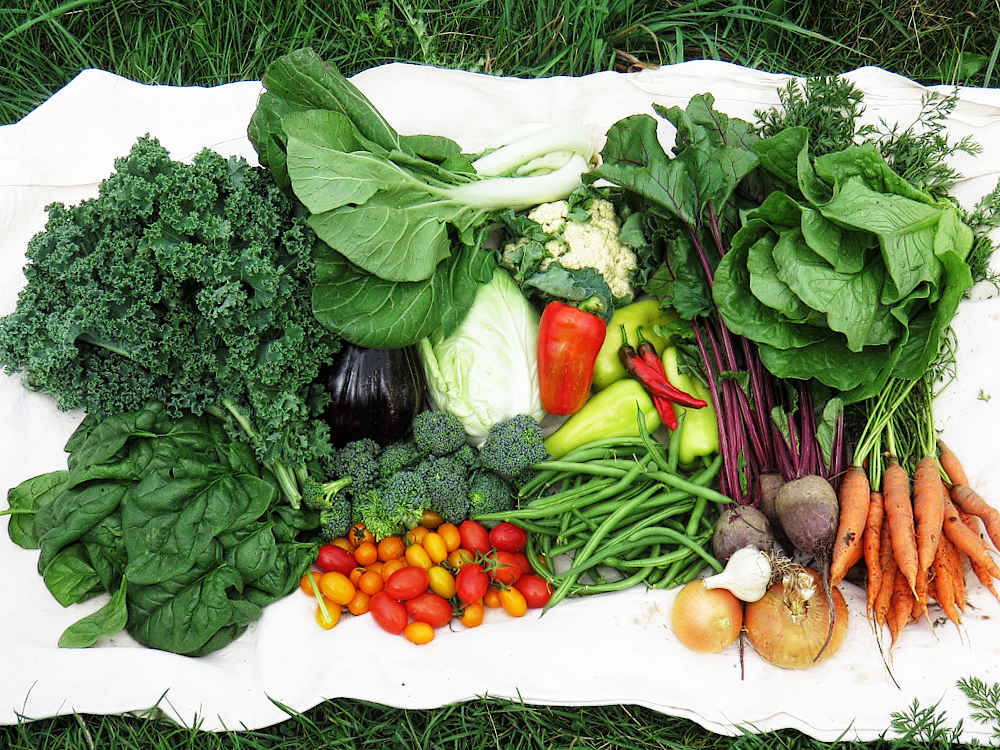
The weather’s been fine, no big frost worries, and the harvest is nice. For the sake of a list, in no particular order, we have: spinach, onion, garlic, carrots, bok choi, broccoli, lettuce, cabbage, kale, hot and sweet peppers, cauliflower, cherry tomatoes, green beans, beets, and…eggplant! I think I got ’em all. The set-up on a strip of canvas is for a newsletter photo–the lighting is an overcast sun, the studio is the field!
Veggies
Early summer harvest
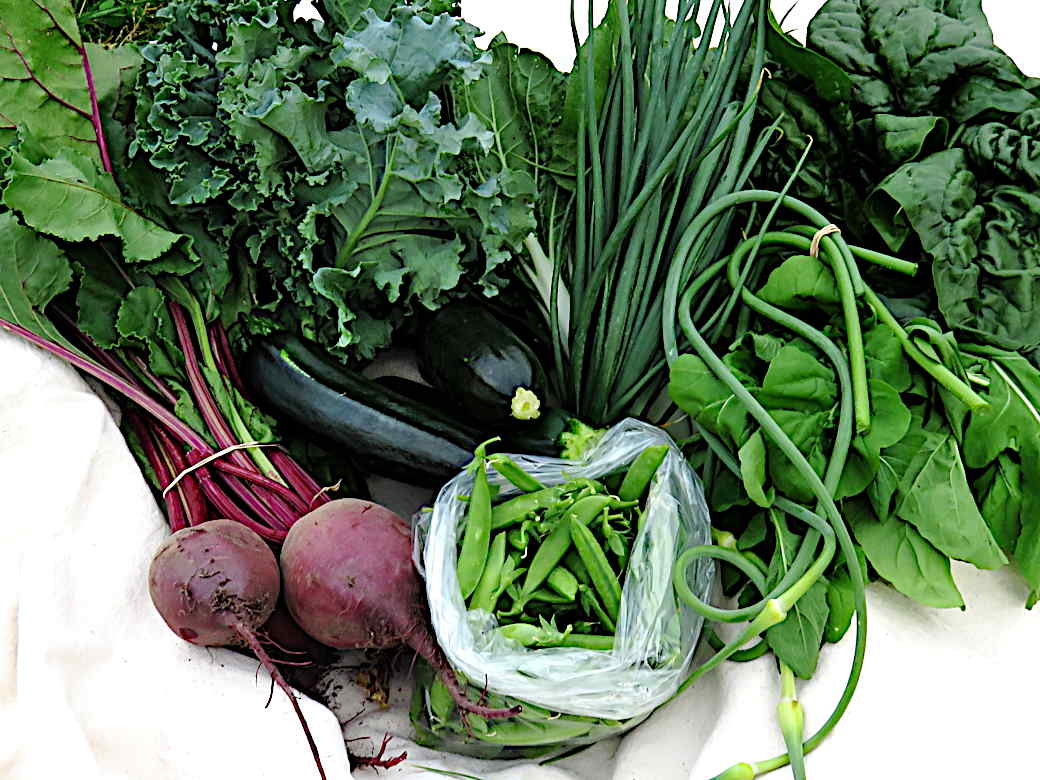
Bigger harvest, still mostly green. Beets, snap peas, spinach, garlic scapes, zucchini, kale, green onions, arugula, bok choi.
Veggies appear
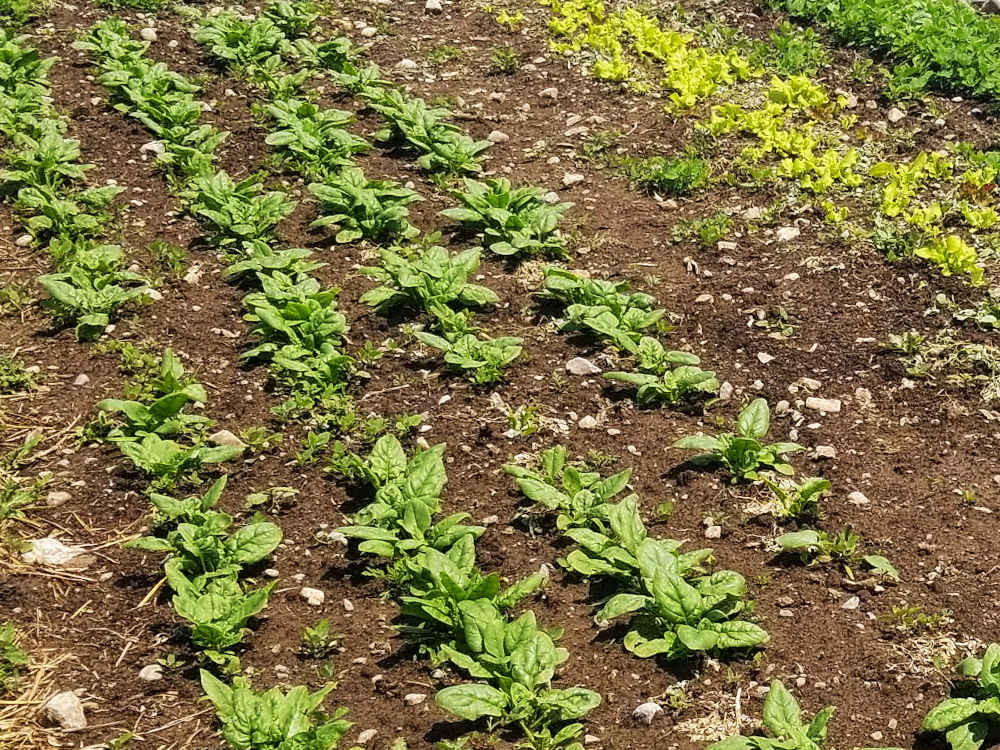
Veggies are starting to size up! Pretty good germination for this spinach. And the weeds.
Seed in the field
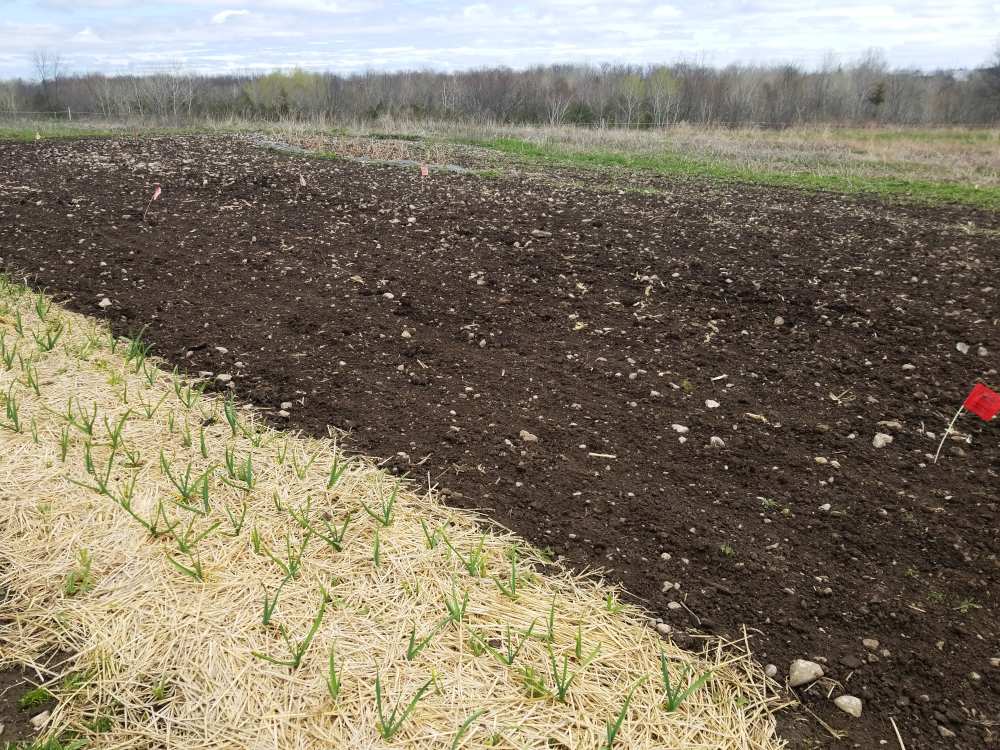
Pretty drab view of an empty patch on a partly cloudy day, but there’s new seed under there! Spinach, radish, peas, beets, green onion, lettuce, went in a few days back, perfectly timed for the last couple of days of slow, steady rain to get them started. You can see the faint lines of the seeder. (In front, mulched with straw, this year’s garlic is coming along well.) Rain also exposes the many stones and pebbles in this ground. Thousands have been cleared away, and they keep pushing up. It may look like a lot, but they’re not a problem. Live and…let be rocks!
Seeds under plastic
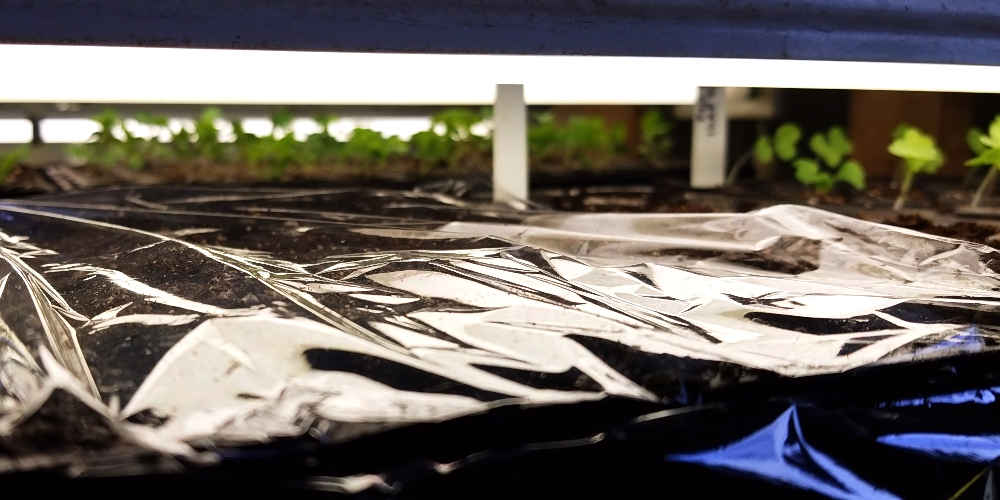
Plastic that looks like plastic adds its own surreal touch to any scene. I use sheets of food wrap to cover plugsheets trays until the seedlings push up above the surface. The plastic holds in heat and keeps the seedling mix moist, both of which the seeds definitely like. As soon as the seedlings emerge, off comes the plastic. Time to let the air flow. I reuse new sheets of wrap for a whole season. With use, they lose their clinginess and are that much easier to handle. The little things add up!
First up: garlic!
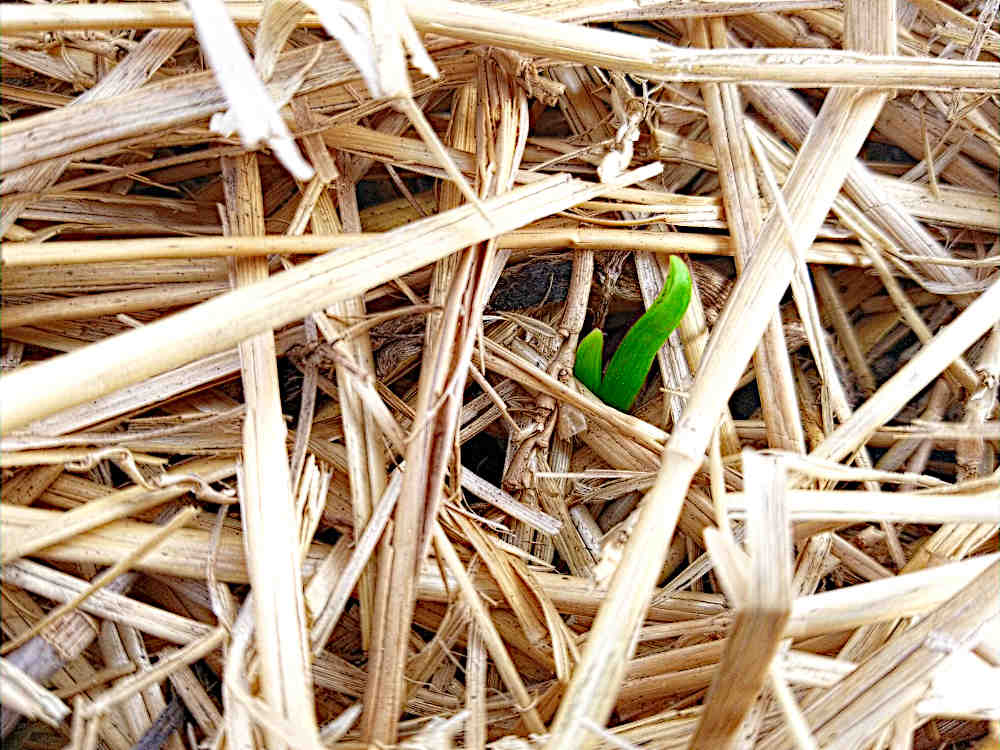
Clear away some straw and there it is, a garlic shoot pushing its way up to the light! It’s the first sign of new veggie growth in the field this season. Garlic planting happens in the fall. It spreads its roots for a while, goes dormant for the winter when the ground freezes, and wakes as the weather warms. That’s what the books say. Whatever it’s doing in the frozen ground is fine by me, as long as it shows up for spring. Which it always has. It’s been…reliable!
Bare root Brussels sprouts
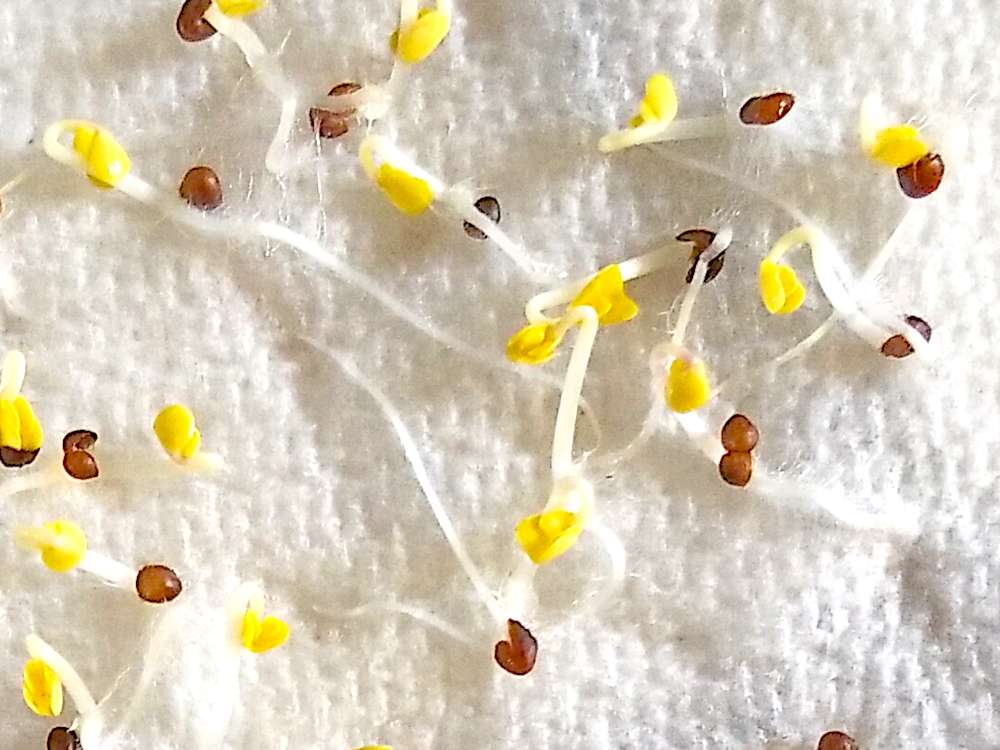
Yep, a wonder of Nature, up close. Three days or so after folding up the pinhead-sized seed in a damp paper towel, we have Brussels sprouts! Of course, this is only step one of many before we get to the deliciousness of actual Brussel sprouts. (Halved, tossed in corn meal and sautéed in butter is one way to go!)
Bare root germination like this is good for at least two things. It’s a useful germination test to see if old seed is still good. It’s also a way to start seedlings: transfer the sprouted seeds to a plug tray or pot, wait a few more days, and up they’ll pop. Let the greening begin.
The bare root approach adds an extra step compared to putting the seed directly in the plug or pot. It’s a little more work. It can be good with hard-to-germinate crops. Or if the seed is old, with a low germination rate, and you want to be sure that every plug has a plant. That it’s fun to see what’s going on is also a fine reason!