
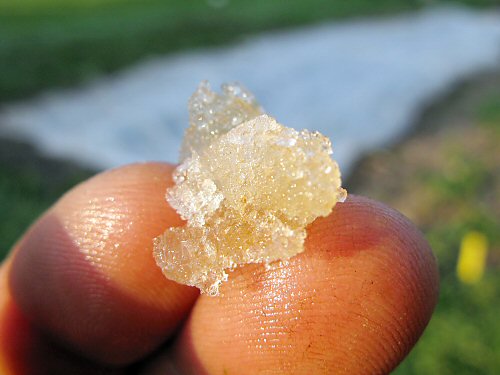
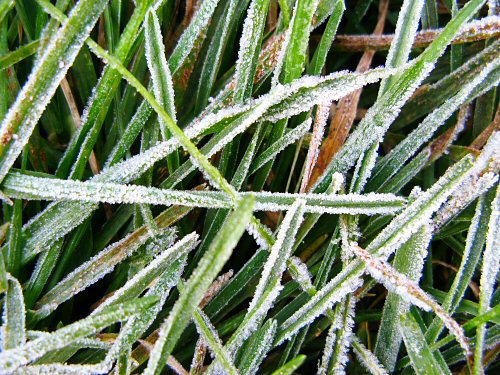
Frost finally hit the garden…but it missed the veggies! Just after sunrise this morning, there was ice on the grass at the very bottom of the field, but it stopped maybe 10′ feet from where the garden begins. Pretty cool. There’s a gentle slope from a high point about two-thirds of the way up the garden, and cold air flowed downhill and pooled at the very bottom of the field. Fun with science: when there’s no wind to mix things up, cold air rolls with gravity along the ground!
Veggies
Last day of summer in the garden!
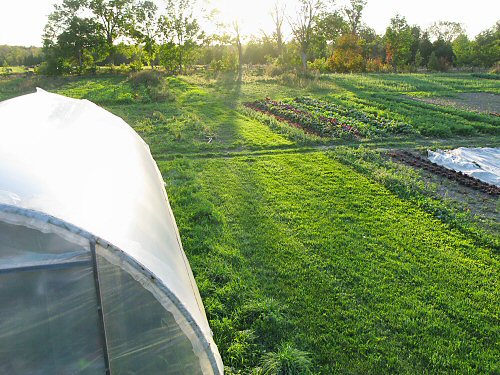
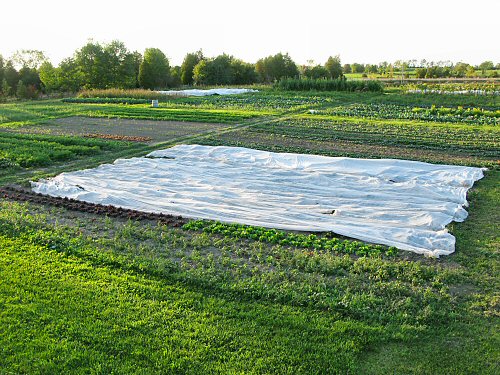
Here we are at the end of the calendar summer, a season of crazy weather largely gone by! Cooler fall conditions have been around for a couple of weeks now, with ample frost watch nights, so summer’s end at this point is only…ceremonial. Still, there’s that little twinge of melancholy that comes with the official end… The fall harvest is looking fine, with lots of brassicas, a good deal of lettuce, and the last of the fall spinach in the north end of the field (above), along with some last tomatoes, lots of peppers and eggplant, spared by frost so far. There’s also Jerusalem artichoke and potatoes, still in the ground. Green beans! And, of course, that section of sweet potato, fully row covered…
Moving down the field, there are the last plantings of beets and carrots, parsnips, some Swiss chard, and lots of mowed but still untilled empty sections…

At the south end of the garden, the herbs and flowers are all hanging in there—row cover has kept even the super-cold-sensitive basils alive and well. If I’ve missed anything in the rundown, well, it’ll still be there!
Jerusalem artichoke in full flower
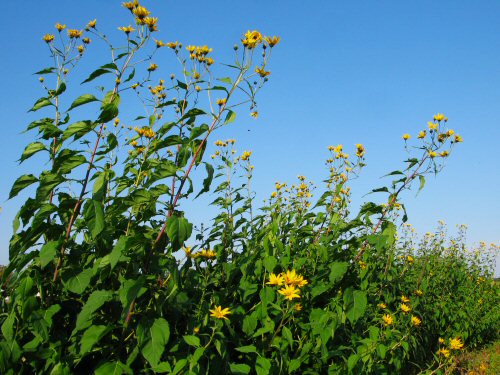
Last seen simply soaring up above 7′ (2m), the Jerusalem artichoke recently exploded with flowers. Last year, flowers appeared on some plants, and I read that flowering chokes isn’t that common. You couldn’t tell from here… The plants continue to thrive, weathering pretty heavy wind recently with only a bit of a lean. I haven’t dug around to see what the tuber harvest may be like, but I expect it’ll be massive…
Farm share
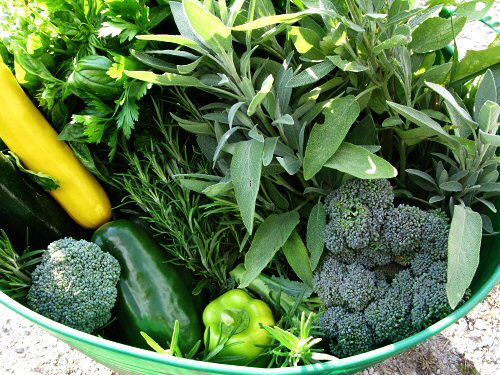
It’s interesting to see what everyone here helping in the field choose to harvest. Smaller selections always surprise me, I’d be, “A little of EVERYTHING, thanks!” Lynn, who’s off till Friday, went for herbs—sage, parsley, rosemary—a couple of zucchini, a couple of peppers, and some broccoli shoots… Where are the carrots, beets (with beet greens!), onions, green onions, potatoes, parsnip, carrots, spinach, baby lettuce, beans, basil, tomatoes, garlic, kale, eggplant,…FLOWERS?! UPDATE: Lynn pointed out that there was OTHER STUFF hidden underneath the herbs…
Restaurant run
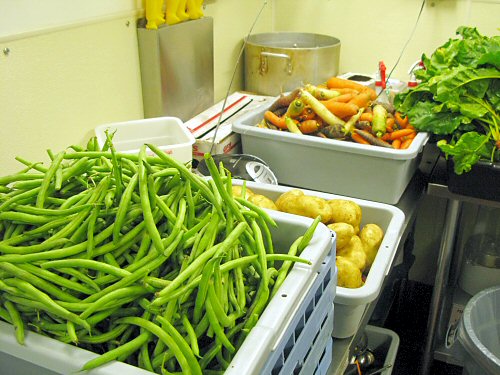
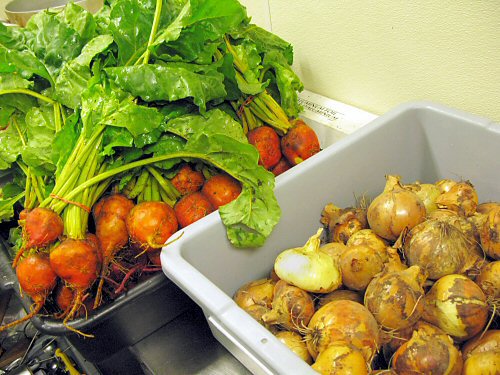
A phone call on the weekend lead to this, our first real restaurant sale. It was cool! A chef called looking for local, organic veggies for a special menu this week. They’d joined at the last minute a regional food festival, featuring local food in restaurants in several towns. I ran down what we had available and followed up with an emailed price and available quantity list. Today, we harvested and delivered: green beans (Jade), potatoes (Kennebec), beets (Golden Detroit, Scarlet Supreme), carrots (Nelson, Purple Haze, White Satin), and onions (Stuttgarter-type yellow cooking, yellow Spanish), in the 25lb (11kg) range for each. Pricing was the normal market unit price, no “wholesale” discount. It was great pulling up to the back of the building, delivering into the kitchen, checking out and describing each veg with the chef. The dinner plans: a “hearty fall soup” and a “steamed vegetable pasta with olive oil and herbs.” Market gardens and progressive local restaurants are a natural and quite common direct fit…as seen on TV (I’ve been known to watch the Food Channel)! I’ve had some minor dealings with restaurants in seasons past, but we’d never got round to a classic chef’s order and kitchen delivery. so it was interesting to go through the whole routine. We had lunch there afterwards, and the food was refreshingly good: bruchetta, flatbread pizza, sweet potato fries, salt and pepper rib tips, an asparagus sandwich (yeah, the asparagus aren’t exactly in season around here, but their special local food menu is a step in a cool direction…). Fun! Oh, and no frost last night.
Fall frost watch 2008
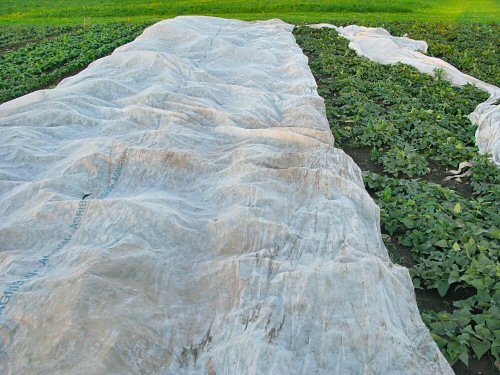
Tonight is the first real frost watch of the year. I covered a bunch of beds for a couple of nights last week, but the chance of frost seemed slim, with the overnight forecast around 35°F (<2°C). Today, they say it’s supposed to go down to 33°F (0.5°C), with clear skies and no wind, perfect frost conditions. Under cover: peppers, eggplant, summer squash, beans, cucumber (a really late experimental planting), basil, sweet potato (above). It’s floating row cover is the usual Agribon AG-19, in 14′ ((4.3m) widths. Let’s see how it goes…!
The field heading into autumn
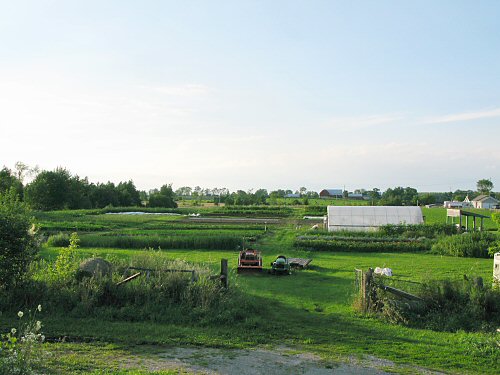
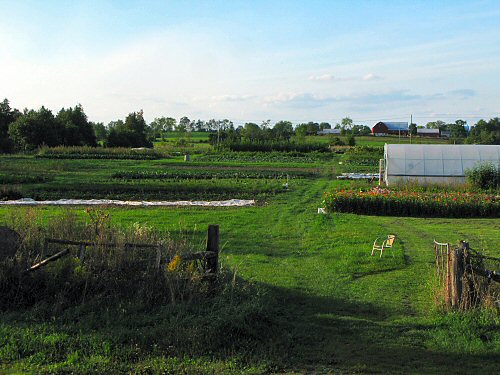
Here’s how the market garden looks as a quiet Sunday, and the summer, wind down. A lot of the low-growing greenery is mowed weed cover on sections that have been finished for the season, waiting to be tilled under. This year, the final fall field prep plan is to direct-seed fall rye…