
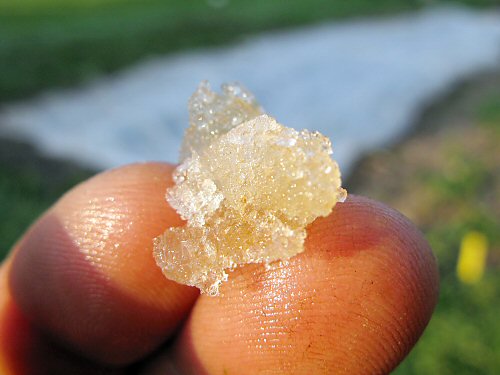
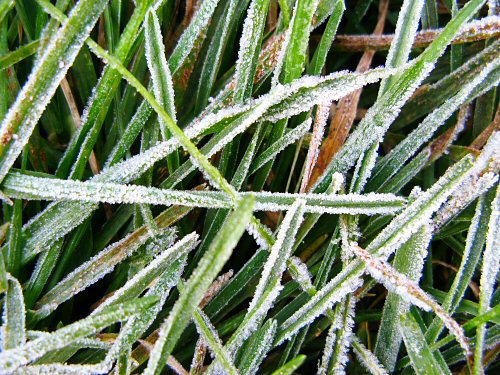
Frost finally hit the garden…but it missed the veggies! Just after sunrise this morning, there was ice on the grass at the very bottom of the field, but it stopped maybe 10′ feet from where the garden begins. Pretty cool. There’s a gentle slope from a high point about two-thirds of the way up the garden, and cold air flowed downhill and pooled at the very bottom of the field. Fun with science: when there’s no wind to mix things up, cold air rolls with gravity along the ground!
Tools
Equipment for large-scale agriculture is too big or too expensive, and many home gardening tools don’t work efficiently on larger jobs or break easily. Tiny farming on plots up to two or three acres requires its own special gear…
Fun with harvest bins

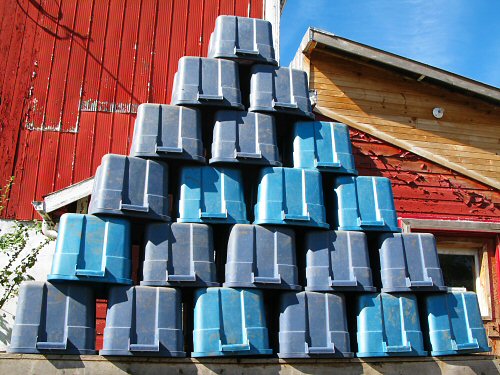
After rinsing harvest bins for the regular Friday harvest, instead of spreading them around to dry as usual, I stacked ’em high to represent the house-of-cards global economy—I was trying to illustrate a point! What on Earth? Well, a few days ago, I became sadly hooked on the US presidential election action, especially on the endlessly fascinating PALIN. I slipped off the wagon and started obsessively sneaking in quick peeks at CNN through the day, and actually WATCHING in the late evening. This is so not in sync with the natural flow of…tiny farming. It’s been a couple of years now since I actively stopped consuming news: no TV, newspapers, Web, radio, just no news, except what came by word-of-mouth. (No-news really does wonders for your head…) Suddenly, I was back in, in an intense but luckily limited-to-presidential-politics way. Or so I thought. Earlier this week—overnight, it seemed—the ENTIRE U.S. ECONOMY STARTED TO MELT DOWN, and now the election thing has gotten SO MUCH CRAZIER. Wow. Anyhow, after I’d stacked the bins, Lynn and Libby tried to rapidly destabilize the economy by throwing potatoes at it—guess my model wasn’t too realistic, ’cause it wasn’t easy to knock down… We went on to a great harvest day, beautiful fall weather, a fine time to be in the field!
Restaurant run
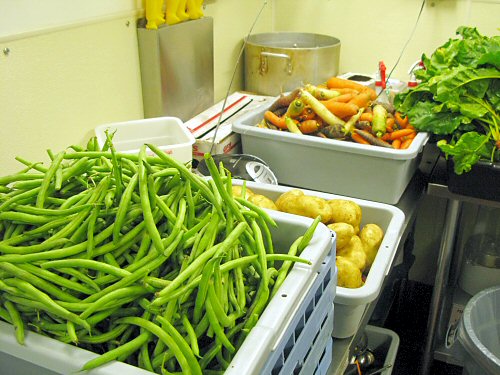
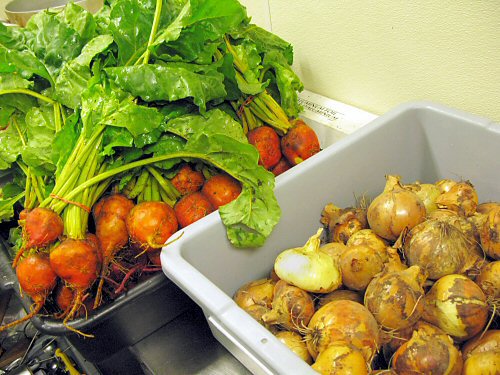
A phone call on the weekend lead to this, our first real restaurant sale. It was cool! A chef called looking for local, organic veggies for a special menu this week. They’d joined at the last minute a regional food festival, featuring local food in restaurants in several towns. I ran down what we had available and followed up with an emailed price and available quantity list. Today, we harvested and delivered: green beans (Jade), potatoes (Kennebec), beets (Golden Detroit, Scarlet Supreme), carrots (Nelson, Purple Haze, White Satin), and onions (Stuttgarter-type yellow cooking, yellow Spanish), in the 25lb (11kg) range for each. Pricing was the normal market unit price, no “wholesale” discount. It was great pulling up to the back of the building, delivering into the kitchen, checking out and describing each veg with the chef. The dinner plans: a “hearty fall soup” and a “steamed vegetable pasta with olive oil and herbs.” Market gardens and progressive local restaurants are a natural and quite common direct fit…as seen on TV (I’ve been known to watch the Food Channel)! I’ve had some minor dealings with restaurants in seasons past, but we’d never got round to a classic chef’s order and kitchen delivery. so it was interesting to go through the whole routine. We had lunch there afterwards, and the food was refreshingly good: bruchetta, flatbread pizza, sweet potato fries, salt and pepper rib tips, an asparagus sandwich (yeah, the asparagus aren’t exactly in season around here, but their special local food menu is a step in a cool direction…). Fun! Oh, and no frost last night.
Fall frost watch 2008
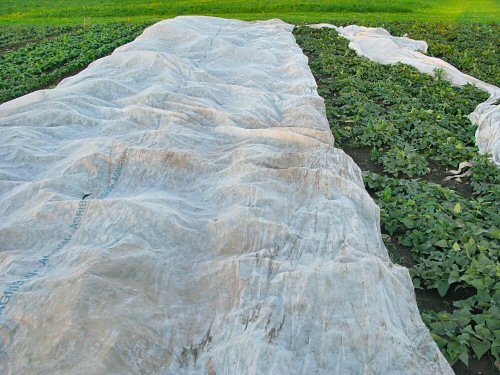
Tonight is the first real frost watch of the year. I covered a bunch of beds for a couple of nights last week, but the chance of frost seemed slim, with the overnight forecast around 35°F (<2°C). Today, they say it’s supposed to go down to 33°F (0.5°C), with clear skies and no wind, perfect frost conditions. Under cover: peppers, eggplant, summer squash, beans, cucumber (a really late experimental planting), basil, sweet potato (above). It’s floating row cover is the usual Agribon AG-19, in 14′ ((4.3m) widths. Let’s see how it goes…!
Fall harvest…
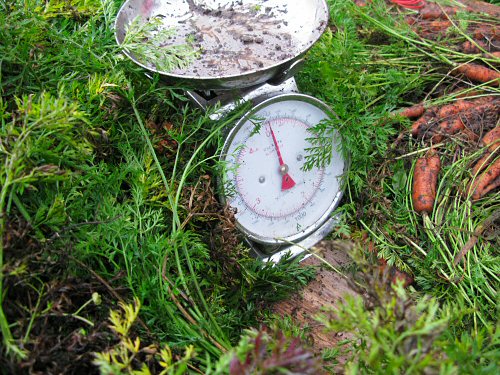
We’re definitely into fall weather now: the thermometer may still read “warm” but there’s always a cool edge in the air. This is the best field-working weather, you can go on for hours. Today was a bit damp, and the abundant root crops were muddy from the overnight rain (they get rinsed, with a spray of the hose on Jet for the roots, then a dunk in the laundry sink to rinse off the leaves). Carrots were in 2 lb (900g) bundles, by the trusty kitchen scale we’re still using…
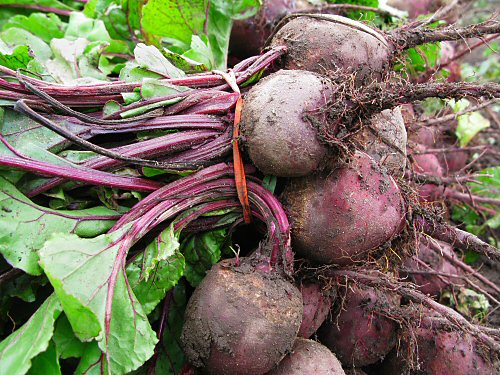
We bundled the beets in the field—these are the red standbys of the season, Scarlet Supreme. Always reliable, they’re in great shape and flavor, and the greens are particularly substantial…
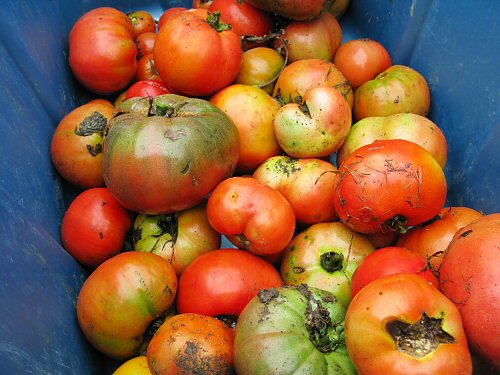
The tomato harvest was fairly slim and motley, maybe 120 lbs (54kg), enough for CSA shares only. We’re picking them even partially ripe—frost may come at any time, no sense in waiting. The toms may not be too pretty, but they’ve somehow become real tasty in the last couple of weeks, steadily developing from the milder flavors of the first pickings, to really quite fine! Was it the recent sunshine? Whatever the reason, it’s a pleasant surprise!
Fantastic egg tray technology!
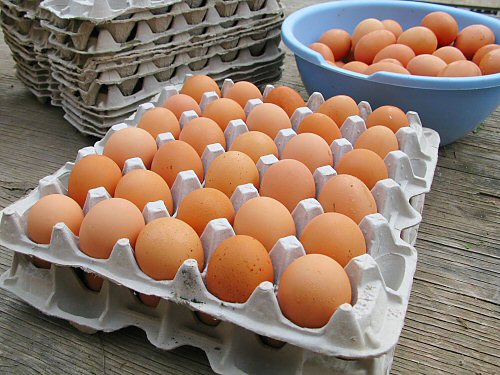
OK, so they’re just regular cardboard egg trays from the commercial kitchen world, and they’ve probably been around exactly like this for decades. BUT, they haven’t been around HERE. Lynn recycled them from Shelter Valley Folk Festival, where she was last week, where they were feeding big groups of volunteers. The trays are fantastic! Our chickens produce only about two dozen eggs a day, but that still adds up. I’d been keeping them at first in regular one-dozen cartons, then in bowls and small baskets. It was getting a little out of control. Now, they simply, efficiently stack in the fridge, 30 per tray. Every second week, like today, we bring a bunch to the farmers’ market as a bonus in the CSA shares, and the trays make transport a lot easier as well. Amazing. :)
Cutting spinach
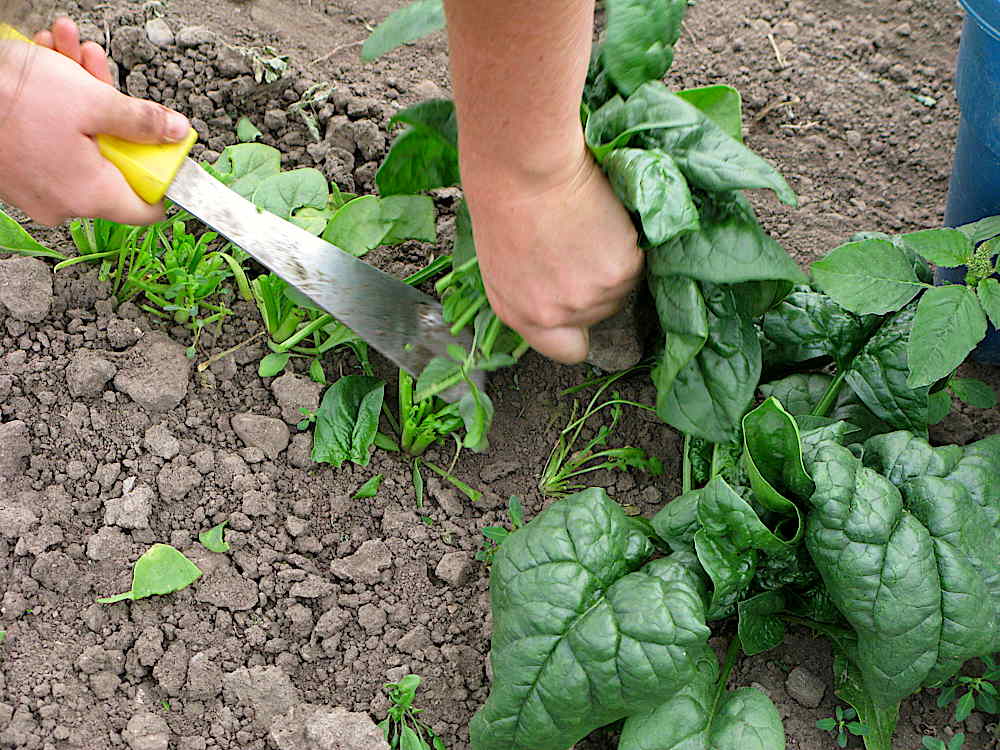
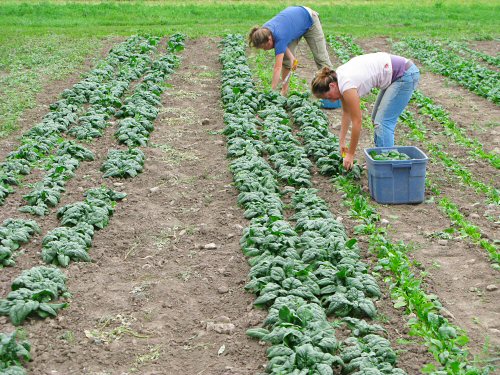
Spinach has kinda been the star of the harvest for the last couple of weeks. After a “normal” summer—hot and dry for the last three years—it’s usually not around at this time of year due to poor germination. This season, with cloudy, cooler days and all the rain, spinach is in abundance: glossy, deep green, succulent, full of flavor. Libby and Lynn chop away, cutting an inch or two up the stems. This technique takes out the small new growth leaves, but it’s fast and efficient, and the plants still grow back for a second harvest. The alternate picking-single-leaves approach is more laid back, great for leisurely field chats—this harvest, we opted for quick…
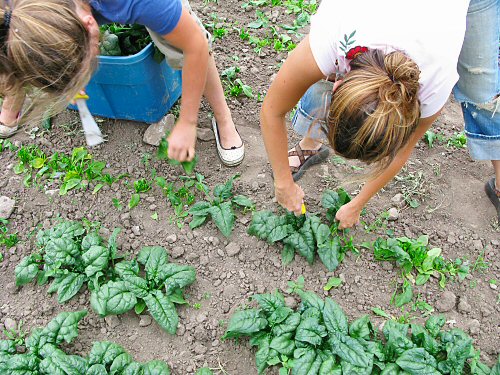
Nothing like teamwork: head down, knife in hand, side by side…
My, what a nice, wide path!