Restaurant run

Beans, potatoes, carrots

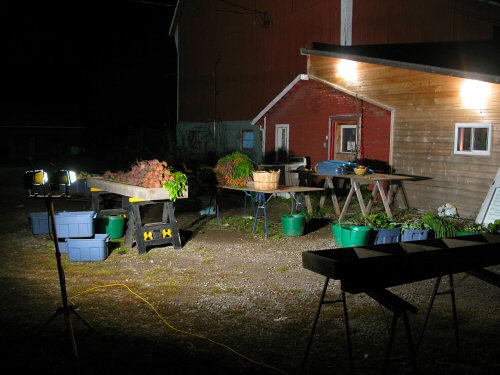
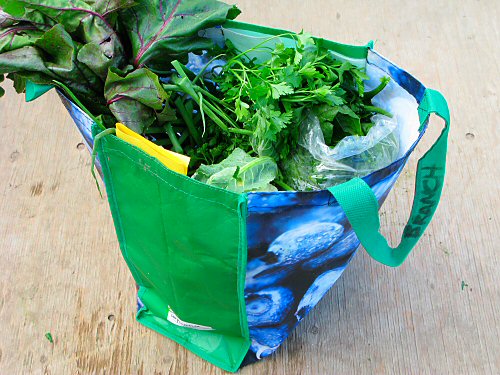
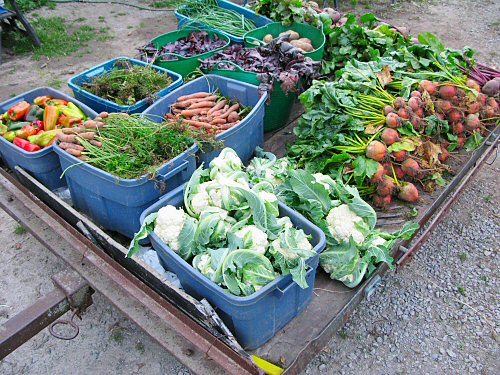
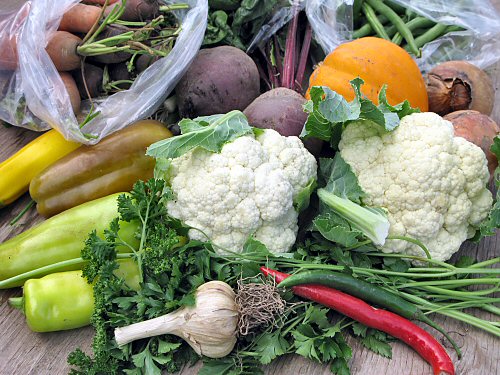
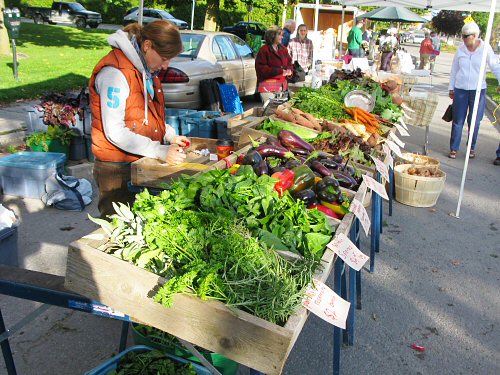
A phone call on the weekend lead to this, our first real restaurant sale. It was cool! A chef called looking for local, organic veggies for a special menu this week. They’d joined at the last minute a regional food festival, featuring local food in restaurants in several towns. I ran down what we had available and followed up with an emailed price and available quantity list. Today, we harvested and delivered: green beans (Jade), potatoes (Kennebec), beets (Golden Detroit, Scarlet Supreme), carrots (Nelson, Purple Haze, White Satin), and onions (Stuttgarter-type yellow cooking, yellow Spanish), in the 25lb (11kg) range for each. Pricing was the normal market unit price, no “wholesale” discount. It was great pulling up to the back of the building, delivering into the kitchen, checking out and describing each veg with the chef. The dinner plans: a “hearty fall soup” and a “steamed vegetable pasta with olive oil and herbs.” Market gardens and progressive local restaurants are a natural and quite common direct fit…as seen on TV (I’ve been known to watch the Food Channel)! I’ve had some minor dealings with restaurants in seasons past, but we’d never got round to a classic chef’s order and kitchen delivery. so it was interesting to go through the whole routine. We had lunch there afterwards, and the food was refreshingly good: bruchetta, flatbread pizza, sweet potato fries, salt and pepper rib tips, an asparagus sandwich (yeah, the asparagus aren’t exactly in season around here, but their special local food menu is a step in a cool direction…). Fun! Oh, and no frost last night.

Fall frost watch 2008

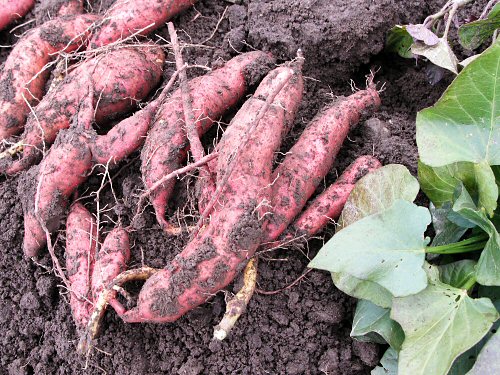
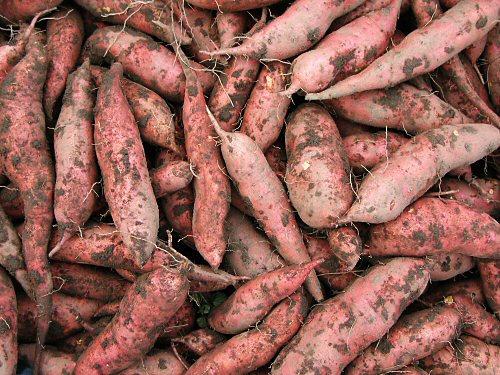
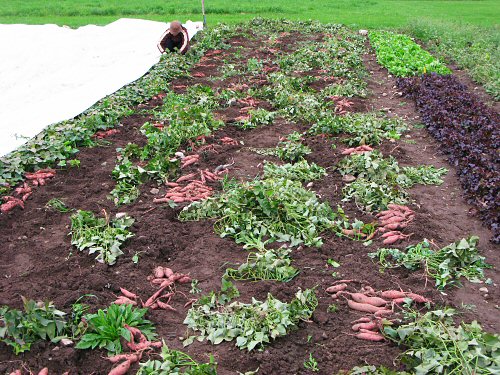
Tonight is the first real frost watch of the year. I covered a bunch of beds for a couple of nights last week, but the chance of frost seemed slim, with the overnight forecast around 35°F (<2°C). Today, they say it’s supposed to go down to 33°F (0.5°C), with clear skies and no wind, perfect frost conditions. Under cover: peppers, eggplant, summer squash, beans, cucumber (a really late experimental planting), basil, sweet potato (above). It’s floating row cover is the usual Agribon AG-19, in 14′ ((4.3m) widths. Let’s see how it goes…!

Fall harvest…

We’re definitely into fall weather now: the thermometer may still read “warm” but there’s always a cool edge in the air. This is the best field-working weather, you can go on for hours. Today was a bit damp, and the abundant root crops were muddy from the overnight rain (they get rinsed, with a spray of the hose on Jet for the roots, then a dunk in the laundry sink to rinse off the leaves). Carrots were in 2 lb (900g) bundles, by the trusty kitchen scale we’re still using…

We bundled the beets in the field—these are the red standbys of the season, Scarlet Supreme. Always reliable, they’re in great shape and flavor, and the greens are particularly substantial…

The tomato harvest was fairly slim and motley, maybe 120 lbs (54kg), enough for CSA shares only. We’re picking them even partially ripe—frost may come at any time, no sense in waiting. The toms may not be too pretty, but they’ve somehow become real tasty in the last couple of weeks, steadily developing from the milder flavors of the first pickings, to really quite fine! Was it the recent sunshine?  Whatever the reason, it’s a pleasant surprise!

Fantastic egg tray technology!

Egg trays

OK, so they’re just regular cardboard egg trays from the commercial kitchen world, and they’ve probably been around exactly like this for decades. BUT, they haven’t been around HERE. Lynn recycled them from Shelter Valley Folk Festival, where she was last week, where they were feeding big groups of volunteers. The trays are fantastic! Our chickens produce only about two dozen eggs a day, but that still adds up. I’d been keeping them at first in regular one-dozen cartons, then in bowls and small baskets. It was getting a little out of control. Now, they simply, efficiently stack in the fridge, 30 per tray. Every second week, like today, we bring a bunch to the farmers’ market as a bonus in the CSA shares, and the trays make transport a lot easier as well. Amazing. :)

Cutting spinach

Harvesting spinach

Spinach has kinda been the star of the harvest for the last couple of weeks. After a “normal” summer—hot and dry for the last three years—it’s usually not around at this time of year due to poor germination. This season, with cloudy, cooler days and all the rain, spinach is in abundance: glossy, deep green, succulent, full of flavor. Libby and Lynn chop away, cutting an inch or two up the stems. This technique takes out the small new growth leaves, but it’s fast and efficient, and the plants still grow back for a second harvest. The alternate picking-single-leaves approach is more laid back, great for leisurely field chats—this harvest, we opted for quick…

Nothing like teamwork: head down, knife in hand, side by side…

My, what a nice, wide path!

After the row cover: weeding!

Weeding after row cover

It’s been about six weeks, time to permanently remove the row cover from the last transplanting of fall brassicas! There are two sections, about 20 x 50′ beds in all, with broccoli, caulflower, cabbage, collards, kale. The cover protected against flea beetles, and at this point in the season, the FBs aren’t around much. Which leaves the post-cover weeding! I generally plan to remove the cover earlier, weed, and then replace it quickly, but this seldom seems to happen. Instead, it’s one big weed-a-thon at the end… Here, the mainly pigweed looks fairly big and dense, but it’s actually not much of a problem. The row cover has protected the ground from many days soil-packing rain, so the beds are nice and loose (it’s amazing how much rain can compact clayey soil).  Weeds come out easy! With two people, it’s a relatively quick job, 2-3 hours for a pretty thorough clean-up. We worked with a combination of hoe and wheel hoe, me doing the paths and between-row clearing, and Lynn hand hoeing in-row, between the plants spaced at 18″ (45cm)…

Each time I use the wheel hoe, I grow to love it that much more. So easy, so TIME-SAVING! It’s such a sophisticated yet simple tool, a perfect marriage of wheel, leverage and steel (you could say! :)… Today’s job is heavier work than it’s usually used for, the weeds aren’t just emerging, they’re pretty big. Rather than rolling the wheel hoe continuously down the rows, I’m cutting the weeds with a series of forward and backward strokes that either slice the plants below the surface, or pull them out, roots and all…

Clearing a path (before and after, above) in the loose soil takes maybe 3 minutes for 50′, many times faster than hoeing or hand pulling…

For this heavier weeding work, I use a fairly forceful forward stroke that travels about 1-1.5′ (30-45cm), then raise the blade to clear the felled weeds as I step forward to start the next bit…

The wheel hoe is equally good at cutting on a backstroke, which comes in handy for dense areas and tough specimens… It’s not particularly strenuous work: the blade is sharp, the wheel and angle of the handles give lots of leverage and momentum, and some part of the hoe is always in contact with the ground, so you’re never completely lifting the whole tool. Like most things I do here in the field, I’ve figured out how to use the wheel hoe on my own, by reading instructions, looking at pictures and applying my version of common sense. Techniques no doubt vary. It’ll be interesting to eventually see how others do things! Meanwhile, everything seems to work out…especially, the wheel hoe! (Wheel hoe action photos by Lynn)

Outhouse deluxe in action

The deluxe outhouse—deluxe because this converted ice fishing hut houses a slick new composting toilet—has been sitting out in the field for a month now, nestled behind the drive shed, just inside the gate at the top of the market garden field. It’s all clean and shipshape, but the interior decorating plans bouncing around back in early summer haven’t come to pass. No whitewash, no Tibetan prayer flags, candles, incense, or other deluxe fittings and accessories, just single-ply toilet paper and a small bucket of peat moss, for tossing in, a handful a day. No frills! The toilet is equipped with an electric heater and fan for dealing with high traffic—up to eight people, three times a day—but I haven’t plugged it in so far, as I’m the only regular client. So far, in fact, there’ve been only TWO other takers to pass through the door. Oh well, if you haven’t experienced convenient, in-field evacuation, without plumbing…you haven’t tried it all! No odor, no flies… It’s great!