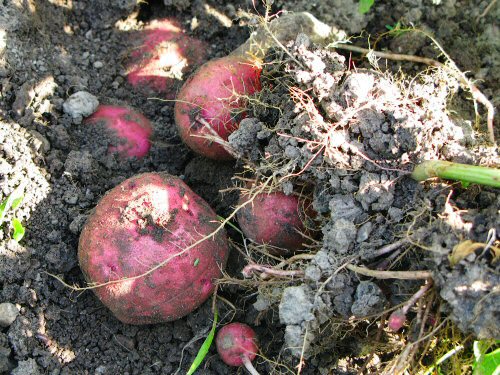
Considering that our clayey soil has hardly had a chance to dry out with all the rain, this year’s garlic is looking good. With Lynn digging away, the first third of the garlic patch is up and stacked to dry in the barn. I’d been worried about rotting (and Con at the market had already reported losing a lot of his to rot), and checking every couple of days for the last two weeks. Maybe 20% of the bulbs are soaked and come up pinkish-brown—dunno how they’ll look when they dry out, but the cloves are fine, so it’s lots of home use and seed garlic at the worst…
Beans and big weeds
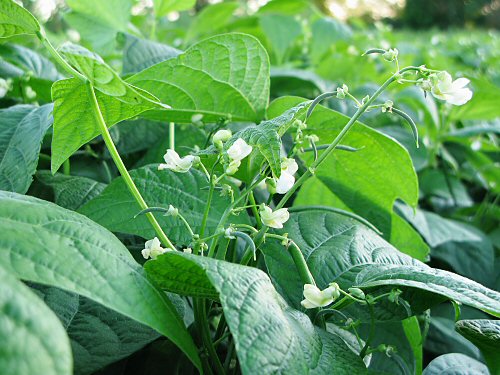
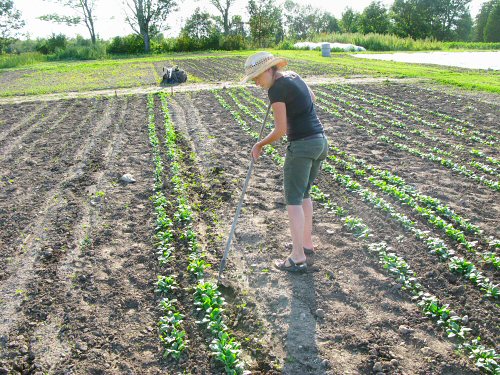
Hand pulling big weeds is a regular garden feature this summer of rainy, weed-favoring weather. In the before and after, the second and third plantings of snap beans (Jade and Indy Gold) are disappearing under soaring lamb’s quarters and pigweed: a couple of hours and a couple of pairs of hands later and they’re looking good.
More carrots
Wouldn’t DREAM of starting carrots without the burlap method now. Maria and Lynn remove burlap from the third planting of the season, using the fold and fold again approach rather than rolling it up…
Summer days
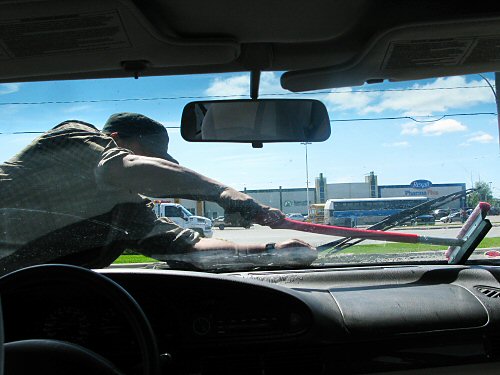
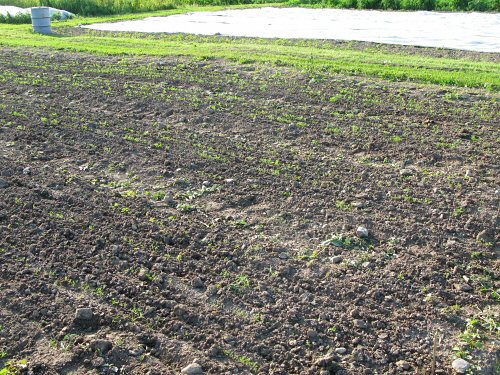
For a the better part of most days for the last couple of months, this, the return view from dropping off Monday CSA shares, has been the Weather. Cloud and rain. There are occasional sunny days. I haven’t been keeping accurate count, but that can’t be far off. We’ve several times enjoyed 2″ (5cm) of rain in a week. I haven’t thought about hoses in weeks, except when moving them out of the way to mow down prolifically multiplying weeds on the garden paths. On the way to the Saturday farmers’ market, I barely glance at the pond to check the level (the pond is out of the way down near the highway, most easily seen when driving by). This summer, water has not been a problem!
Backstage at the farmers’ market: harvest bins
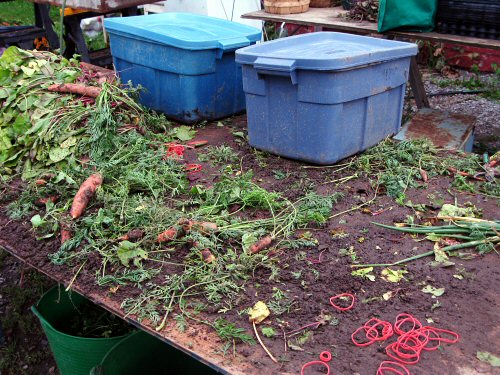
Rubbermaid storage bins are the main harvest containers again this season (I suppose that’s a plug for Rubbermaid, unintended, it just seems like they’re the only company in the plastic storage bin market!). They’re inexpensive (around $8 each), hold a little over a bushel, and the lids fasten well. They’re easy to clean, and they stack well, loaded and covered, or empty. And they’re durable. I somehow ran over one with the Kubota compact tractor, pulled it back in shape, and it’s in service again. They’ve changed color this year, the new ones available around here are a kinda tacky metallic blue, but that’s no reason to give ’em up. We have about 25, along with a dozen or so green bushel trugs…so I guess that’s the cap for the maximum harvest haul for now! Today at market, there were about 15 of ’em full… Balanced on the edge of one is a stack of three selected gardening books, brought to market for customers to check out…
Harvest wet work
Yet another in this summer’s series of wet and gray afternoons, the weather blending perfectly with the wet work of rinsing and sorting muddy root crops. Instant efficient team chemistry between Rachel and Mel, both doing post-harvest here for the first time. (Above, carrots, below, beets.) The process is very small scale and manual. Crops are first dumped from harvest bins onto the screen table, clinging earth is quickly blasted off with the jet setting on the water wand. Next, double handful bunches are dunked for a final rinsing. Then it’s back into the bins… Simple and quick for a few bushels. Get wet!
Last of the season’s brassicas
These brassica seedlings—broccoli, cauliflower, kale, early-maturing cabbage—were started a week ago, way late by any planting guide standard for our region, but I’m going by the reality of our recent crazy weather. Last year’s “late” cabbage family seedlings did just fine, so I’m gambling again! There are a couple of 200-cell trays of lettuce in there as well…