
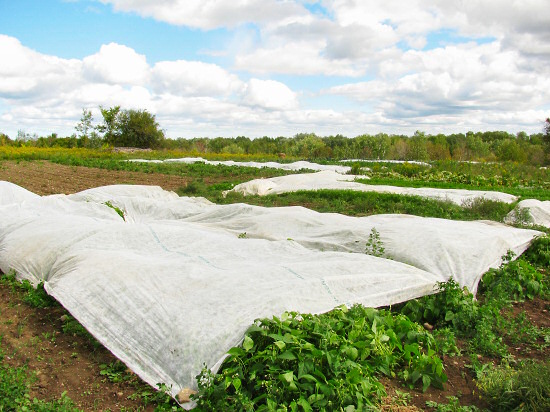
The frost-warning forecast from a couple of days ago, for 1°C (34°C), moved up a day to tonight. so there’s row cover all over the field. Some of it was floated out against the possibility of frost, the rest, as so-far-effective deer deterrent. Up front, around 800′ of snap beans, just starting to form, are bundled up against the cold. Then, row cover over carrots, and farther, lettuce, has been in place for a few days, and seems to still be keeping the deer from munching. In the distance, peppers and eggplant are under frost protection. Elsewhere, we’ve covered a few beds of cherry tomatoes to prepare for tonight. Winter squash and pumpkins are mostly in, and summer squash and cucumbers are finished, and the rest out there are hardy enough, and that’s about it!
Summer
Pumpkins in!
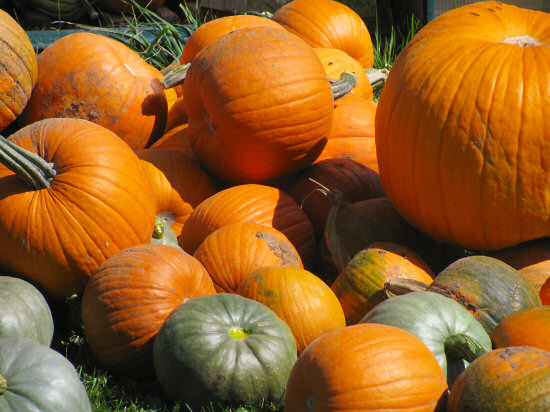
Brought in our compact collection of pumpkins today, ahead of likely frost this weekend. Never been big on pumpkins as far as quantity, but they are fun to have around. This year, some standards like Connecticut Field, a bunch of Small Sugar pie pumpkins—always handy—and one novelty type, Jamboree, in a fetching shade of greenish-grey-blue. Some went into the seedling room, the rest, under cover in the tiny greenhouse. One more fall thing done…and it’s still SUMMER!
Frost? Take your pick!
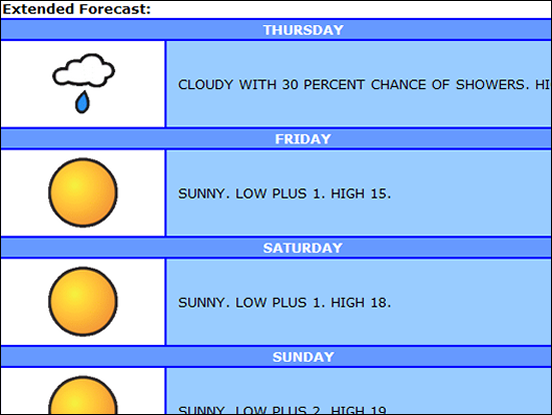
First frost on Friday? It all depends on whose forecast you believe in. Because, as I’ve discovered over time, all weather forecasts are not created equal. The online weather page we’ve used for the last few years is often in sync with the others, but when it comes to cold, it can go its own way, and it’s usually right. Here, we have a low of 1°C for Friday, OR, I can go for a more veggie-friendly choice of two 6°C’s and a 5°C, from three of the big weather outlets. That’s the difference for me between row covering all the tender crops we’d like to save, and…not. There is a pattern: sites like this one that’re based on Environment Canada’s weather service (that’s the Canadian government) tend to be several degrees lower and more accurate. So it’s on with the row cover on Friday, then wait and see!
Beautiful bok choi
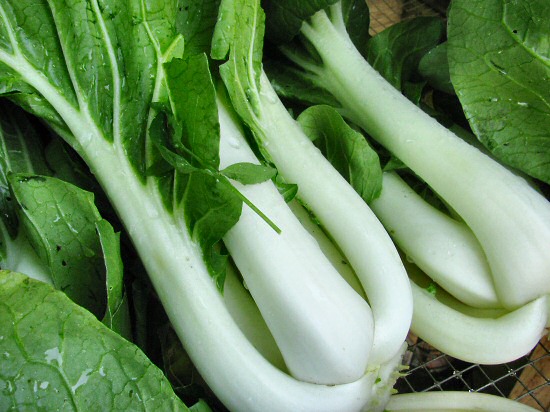
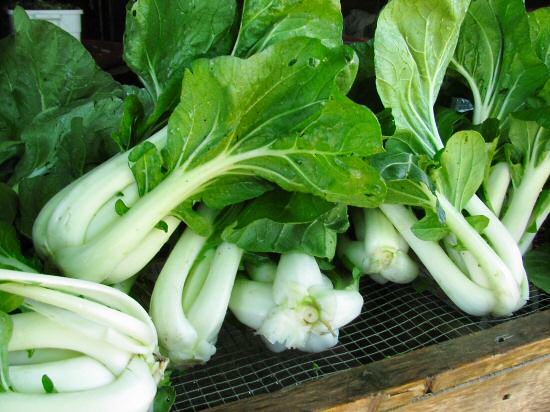
Friday harvest. Each week, there’s usually one crop that kinda catches my eye: a perfect first cut of baby lettuce, lush green onions with straight white stems, or today’s chunky, crunchy bok choi (aka bok choy, pak choi). The variety here is Joi Choi, it’s worked out well over several seasons, slow to bolt, willing to roll with varying amounts of rain. This batch caught good conditions, with lots of sun and weekly rain. The stems are thick and crisp, and the leaves startlingly flea beetle unbitten, thanks to row cover and to the FBs dying down for the year. With minimal help…things worked out for these guys! Nice.
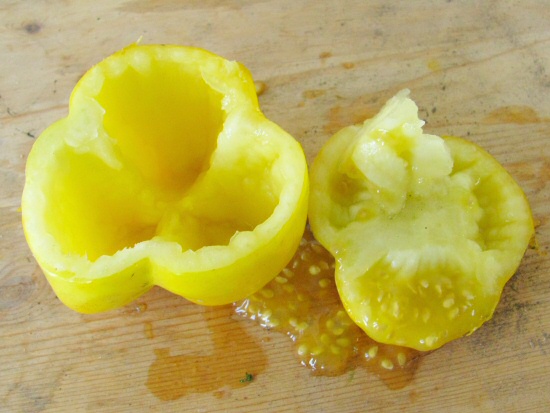
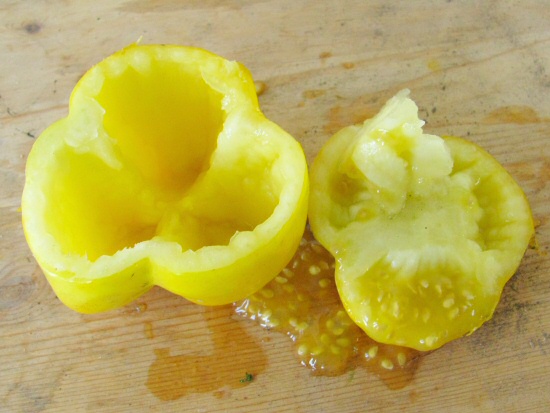
Yellow Stuffer, a tomato
Some winter squash
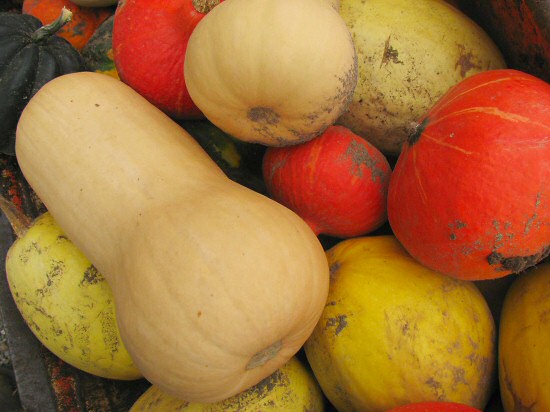
Brought in the first of the winter squash, an early variety of butternut (called…Early Butternut), Uchiki Kuri (orange, Japanese Hubbard-type), acorn and pasta. We didn’t grow a lot, a few 50′ beds, mainly for the weekly harvest shares and personal use. Curing here is usually not involved at all, just keeping them out of the fall cold, but this year, we may try high temperature/high humidity curing for some, not so much for improved storage, but for taste. More as we decide.
Simple stew
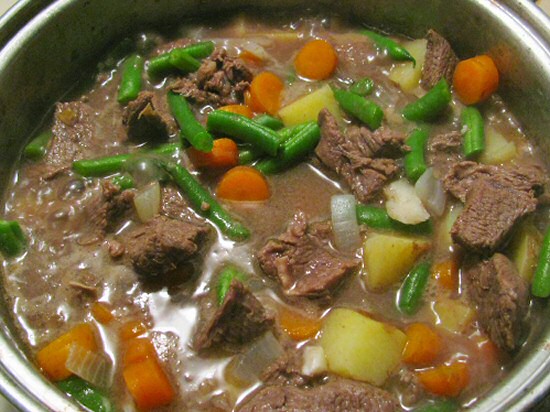
In the end, this is all about food and eating. Tonight, back to basics: heat applied to simple, locally grown ingredients, no culinary art or even a favorite recipe, just some mellow cooking. In the pot: grass-fed beef from a few miles down the road, plus, from our harvest, onions, carrots, potatoes, garlic, and green beans, well water, and a little store-bought salt and pepper. Simmered, covered for a while, for a couple of hours. The Yukon Gold potatoes, medium starchy, added thickness without melting away to mush. The beans, teaming up with the carrots, contributed a little veg lightness to the…stew. Dinner! (Fall must be in the air…)