Thu, Aug 09, 2007 · Filed under Market & Stand, Summer, Veggies

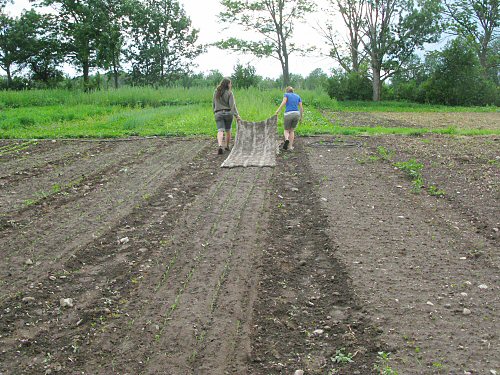
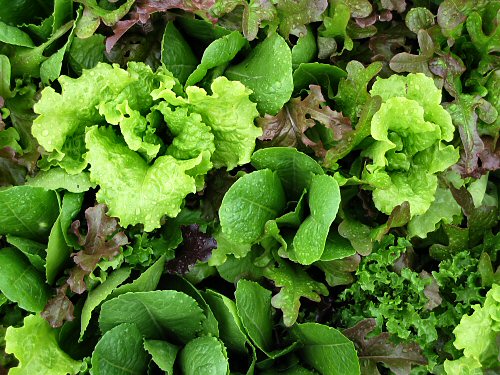
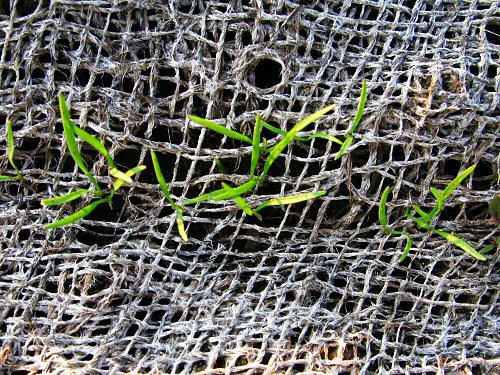
Mesclun remains the mainstay crop on this tiny farm. What I grow is perhaps not strictly “mesclun”, it’s nine varieties of lettuce with no other, more exotic greens—arugula, mizuna, and so forth—mixed in. Also, at times if it gets away a bit, the leaves can be kinda large, making it more of a basic salad mix. Still, it’s all mesclun around here, and this year particularly, we’ve grown LOTS. Salads are popular, and for no reason easily explained, the acceptable price at our farmers’ market is way higher than for any other crop (except, perhaps, blueberries?!). It’s a top seller on market day, it’s dead easy to grow, most of the time, and none of the other, larger local growers bother with it (only one other farm regularly has lettuce). So it’s an all-around winner. Then there’s the big BUT: hot, dry mid-summer weather, when the germination rate is usually terrible, the beds grow rapidly and are hard to time, and the heat can easily turn a fine, fresh-tasting crop into a messier, partially bolted bit of a nightmare. Simply seeding in many extra beds isn’t a solution, because the watering and weeding this would require would be insane. You simply have to keep planting moderately and frequently, and hope for nice weather breaks. Shortages are inevitable, and cut directly into customer satisfaction (expectations, expectations!!). For these reasons, at this time of year, mesclun is always on my mind. For the last couple of plantings, we’ve used…BURLAP for the first few days after seeding, which actually works, reducing watering in time and increasing the germination rate quite a bit. Next year, I intend to finally figure out an even better way…
Permalink
Mon, Jul 09, 2007 · Filed under Fieldwork, Gear, Seed starting, Summer, Veggies

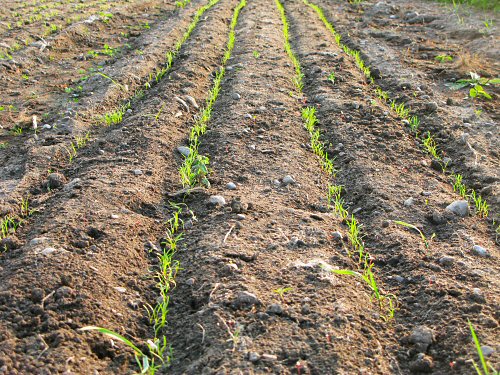
The carrots-under-burlap germination method is now 3 for 4, with this fine performance: solid rows and almost no weeds! The third attempt failed miserably with three different varieties, mainly due to underwatering (the extra drying effect of a very windy week wasn’t given proper respect) combined with using the Earthway seeder’s light carrot plate, which puts down much less seed (what a bad idea, I fall for the allure of little or no thinning every few plantings…). Anyhow, it was back to the regular seed plate and proper checking and watering, and now, a new 800′ of Nelson and Touchon is on its way (although, something’s been munching on carrot seedlings lately). Never dull! :)
Permalink
Wed, May 09, 2007 · Filed under Fieldwork, Seed starting, Spring, Veggies

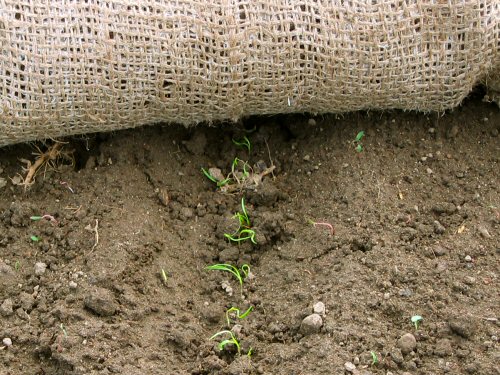
The carrot germination experiment worked like a…charm! They were coming up pretty good three days ago, conditions looked great under there (moist, airy, seedlings nice and green), so I left the burlap on a while longer to push the germination rate a bit more, and that worked as well. This bed just had a 10-minute clean-up of some grass and dandelion, and I test cultivated a few feet at this end for smaller weeds getting started. With the moist soil, it’s all easy. Now it’s off with the rest of the covers and time for a little irrigated rain (since Ma Nature is presently not obliging). Excellent!
Permalink
Wed, Apr 25, 2007 · Filed under Fieldwork, Gear, Spring, Veggies

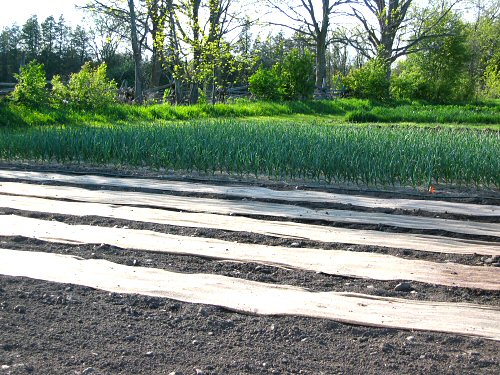
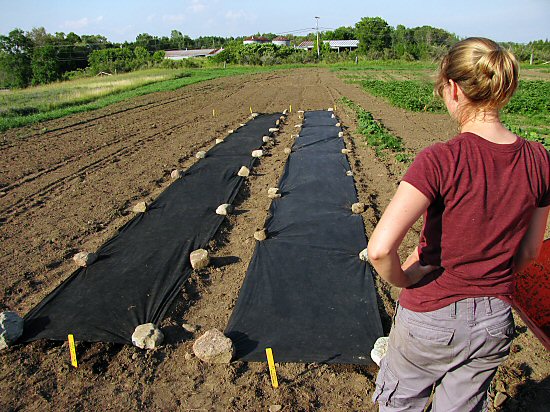
Welcome to my carrot lab! Carrots have been my biggest early spring headache. In cool weather, they take forever to germinate, 2 or 3 weeks, and by that time, the chance of weed competition is pretty good, and just about anything growing around the tiny seedlings makes excruciatingly time-consuming surgical hand weeding a necessity. What to do? Last year, I tried IRT (plastic) mulch over the bed. This worked great, heating up the soil, speeding germination to 7 days, and keeping weeds down. Problem was, miss the germination window (when a good number have emerged) by a few hours or a day, and the seedlings got toasted in the heat. Too delicate a balance. So, a new approach, something I’d read about. It involves a double layer of (untreated!) burlap. Simple. The burlap acts as a mulch to retain moisture and increase soil temperature, and it also allows in water and some light. What could be easier?!?! Now, all it has to do is WORK! (Update: it worked like a charm…)
Permalink