Peas appear

Sugar Ann sugar snap peas

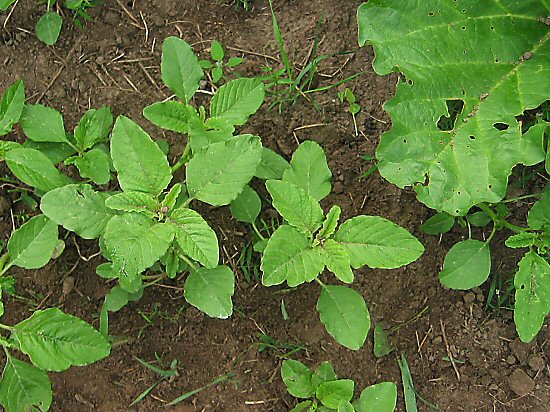
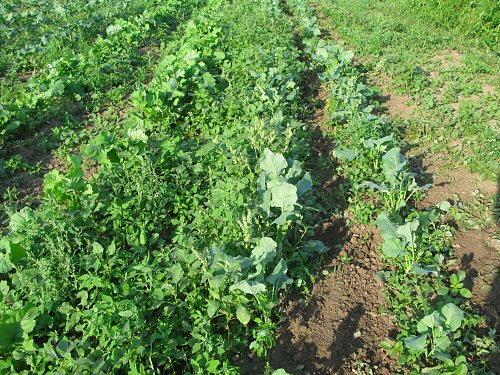
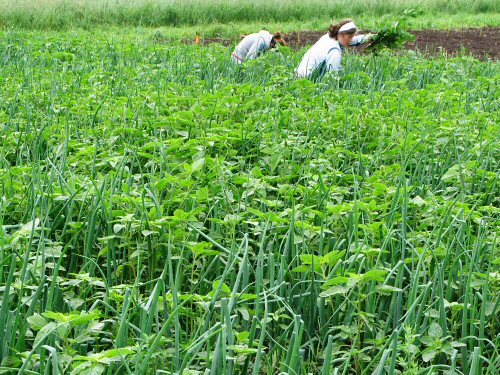
The first peas suddenly popped. A bit of welcome action in the field, amidst all the dryness and slow germination. These are Sugar Ann snap peas, edible pod. There’s 1000′, double rows, 3-4″ row spacing. They’re coming up well in stretches, but a lot haven’t yet appeared. Well, there should be some real rain tonight! On the right of the pic, a fine example of PIGWEED doing its stuff as well, keeping pace with the gardening effort all on its own. (Yes, lying on your stomach in the dirt is the easiest way to get the macro centered on these little guys!)

Comments (10)

Rye arrives!

Emerging fall rye

Where the oats arrived with a dramatic, iridescent splash of green, the fall rye made a much more sedate entrance, so much so that I didn’t notice it until today. It probably emerged a couple of days ago. It’s looking great! I dunno why I’m so extremely pleased by these green manure cover crops…but I am! The rye comes with a lot of promise. It probably won’t winterkill, instead, start up again in spring, making it good for sections that won’t be planted out till May. It thrives in cool weather, also making it great for fall and spring service. And it may have an allelopathic effect on PIGWEED, meaning that, on a plant-produced chemical level, future pigweed may suffer… That’s nice. On the caution side, if it gets too well-established, it could be a little tough to eradicate. No worries. I won’t seed it on sections that’ll be used for the earliest spring planting (there won’t be time to till it in), but otherwise, I’ll spread this around everywhere I can for the next month or so and see what happens!

Comments

Oats vs pigweed!

Oats and pigweed

The cover crop-smother crop-green manure oats is doing rather well! Strolling by the several sections checkerboarded through the field is one of my newfound small fall pleasures. It’s so vigorous and vibrant and…vigorous… In different sections, you can also see pigweed and round-leaf mallow in mad profusion, but low to the ground, towered over by the tall, slender stalks (you can spot some pigweed in the pic, but I gotta admit, I chose a shot that favors the pretty oats! :). Question is, will the oats actually SMOTHER its weed competition. I can hardly imagine the near unstoppable pigweed just giving up. And mallow is no lightweight in the pernicious weed department, either. So, WE SHALL SEE!

Comments (1)

Pigweed piled high

A mountain of pigweed

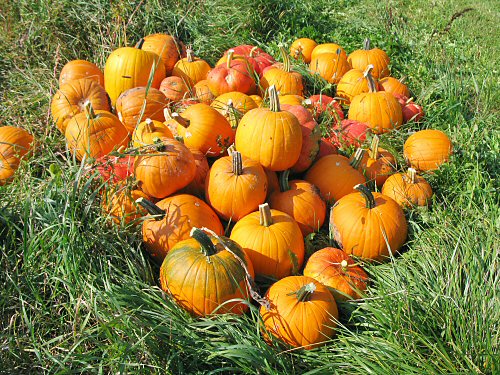
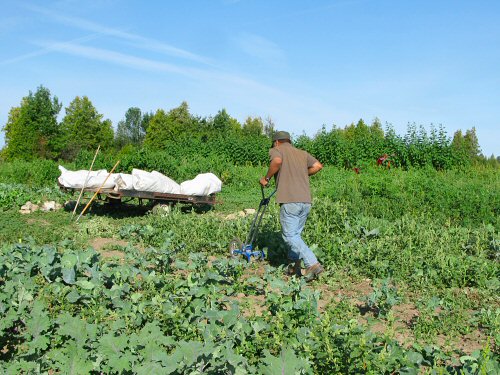
A vast repository of uprooted pigweed is collecting by the wagon load in the southwest corner of the field. It’s crazy the amount of effort that’s been put into pigweed pulling this year, that in addition to hoeing and tilling in younger specimens. The pigweed pile has already achieved almost surreal dimensions and a fascination all its own. I stop and gaze at it on the way by… What can I say? PIGWEED!!!!! Guest photo by Mami.

Comments (2)

Pigweeding and local food

Pulling pigweed

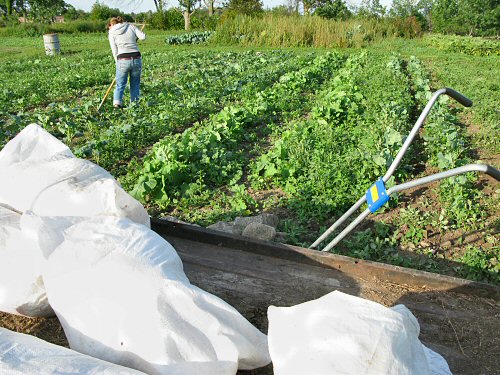
In the foreground, a pigweeding throwdown with the crew of the day: Eoghan and Alison (trying out a little tiny farming for the first time), Jo, Mami (our second WWOOFer, also from Japan), Conall. Everyone pull! (The most alarming giant pigweed specimens had already been ERADICATED by the time this photo was taken!) In the background, a house on the subdivision to the east of the garden field (it was severed from the farm years ago), home of our nearest CSA member. Their veggie farm for the season is literally a stone’s throw away—local food doesn’t get closer than that!

Comments (1)

Pigweed: going in!

Pigweed!

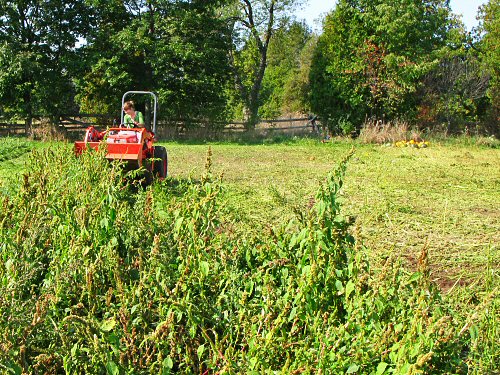
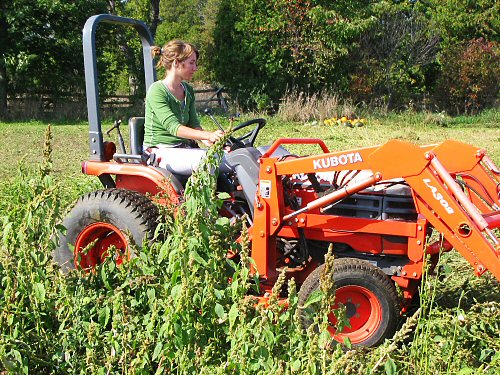
There’s no exaggerating the amount of pigweed in some sections of the field. Here, where the last seedings of spinach and peas failed—really poor germination in the heat—pigweed happily took over in no time. I mowed it down, and now I’m going in with the 48″ rototiller, prepping for fall spinach. Ideally, I’d keep the rototilling and any heavy gear off the garden beds, but this is practically an emergency. I apply the in-moderation rule here… It’s growing on me that round about next year, much of the pigweed seed, deposited three years ago in two-year-old manure, is due to expire… Right now, though, the seed seems pretty healthy to me.

Comments (4)

Extreme makeover

Weeding mesclun

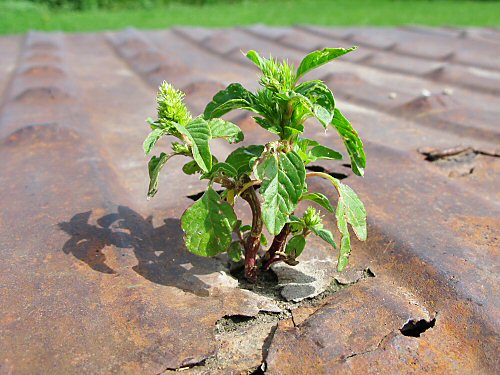
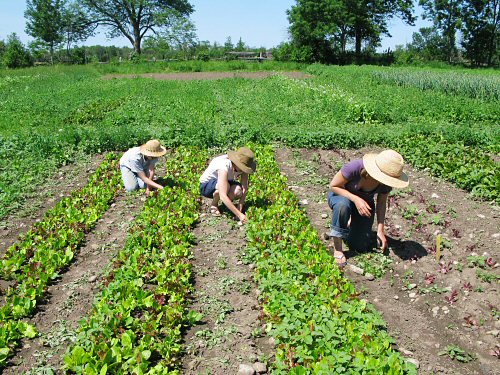
The one dark secret of this organic field—something you couldn’t really tell from selected photos—is the prevalence of pigweed (amaranth, mostly or all Amaranthus retroflexus). About two-thirds of the garden seems to be completely saturated with pigweed seed. Weeding two or three times for all-new outbreaks is common. In some spots, it’s literally as if some kind soul is broadcasting new seed, thickly, every couple of weeks. And when it’s a closely space crop like the all-lettuce mesclun mix in the pic, this means painstaking fingertip weeding. Here, Andrea and I spent about two and half hours clearing 200′ of 5-row beds, the entire latest succession planting. Luckily, conversation made the time transparent (thinking about all of the extra labor devoted just to depigweeding is a little painful). As best as I can figure, the pigweed came along with the two-year-old, not-fully-composted cow manure that we spread in the fall of Year 2 (three years ago). We put down around 100 tons on just over an acre—the ground was positively springy!—which was great. Except for the pigweed seed. Eventually, the vast store will be depleted (the seed is viable for five years). Until then, it’s a lot of extra work… The question I’d now ask: “What has that cow been eating?!”

Comments (1)

TFB & the Web

Locations of visitors to this page

Best Green Blogs

Home and Garden Blogs - Blog Catalog Blog Directory

Add to Technorati Favorites

Foxkeh banners for Firefox 2