Flowers galore

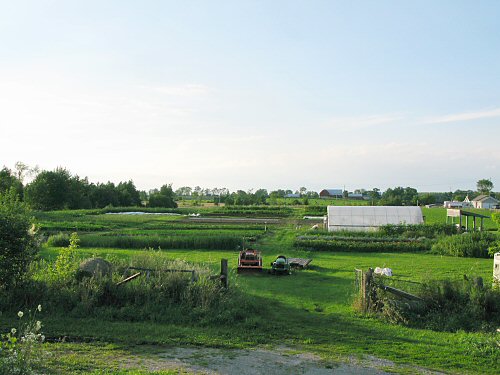
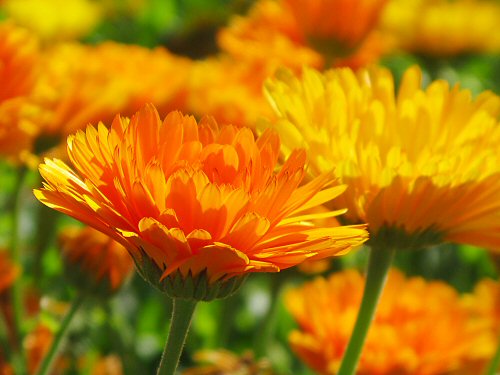
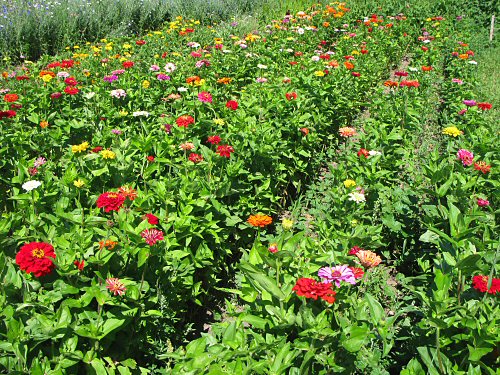
The flower sections have pretty well taken off over the last month, with the several beds of zinnias (above, directly below) offering up the biggest splash of color. We’re not harvesting the flowers, this season is a trial run, but they get regularly cut by everyone working in the field, and by a couple of CSA members, so they’re not out of control or going to waste. Besides, they’re pretty to look at, right there at the bottom of the field…

Since we’re not harvesting, I’m really not learning much about the world of cut flowers, beyond the growing. There’s lots of detail, like exactly when to cut for maximum vase life, and where to cut on multi-flowered plants. Right now I’m somehow not focussed on learning cut flower stuff that I don’t have an immediate, practical use for. So I just watch and enjoy…

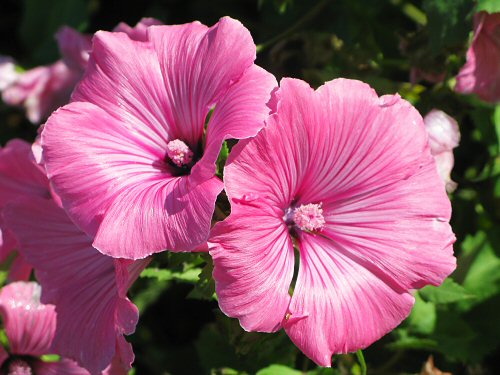
Lavatera has broken out in the last couple of weeks.

And sunflowers are in fine form (this variety’s called Sunrich Pro)…!

Burlap expires

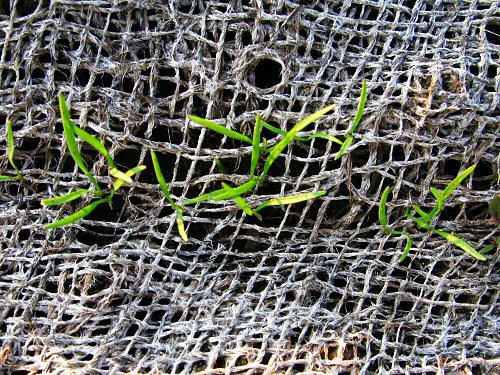
After a nice long ride, the burlap (of the burlap carrot germination method) is finally breaking down, shredding as we fold it up off the final carrot beds of the season.

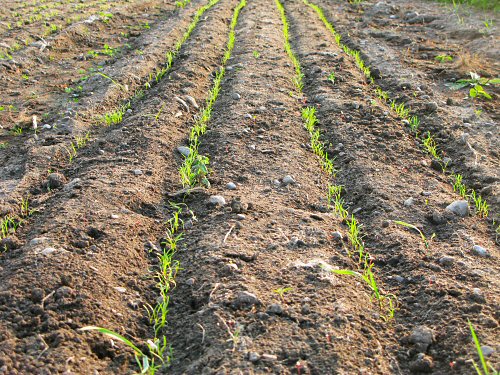
Even in this wet weather, the burlap makes a big difference, probably because it holds the soil heat—the difference is clear at the ends of the beds, where the seed drills extend past the burlap, and germination has barely started.

I haven’t been keeping accurate count, but this batch has done at least eight seedings over the last two years. At about $30 a bed for a double layer of burlap (100’/30m) over a 50′ (15 m) x 4 row bed, that makes it less than $4 per 200′ (60m) of carrots, more than worthwhile. If we’d taken better care of it during this wet weather, mainly by making sure it dried out quickly, it may’ve even lasted for a seeding or two more.

Like floating row cover, burlap is an outside input that I don’t like to rely on, but for now…it works!

What’s new at the farmers’ market…

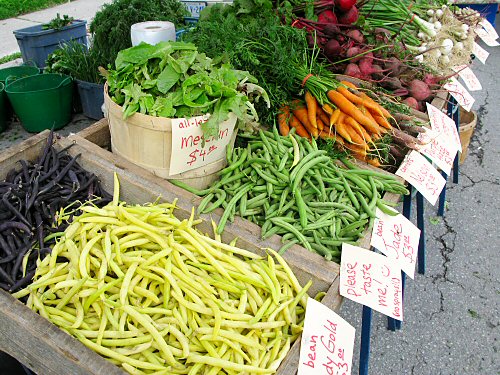
Ahhh, something new on the farmers’ market stand: BEANS in three colors (we had the first green beans last week)! There’s yellow (Indy Gold), purple (Royal Burgundy), and of course, green (Jade). One way I watch the season unfold is through the debut market days for the headliner crops, the big people pleasers. Lettuce is always the first up, a hit partly because it’s the first fresh veg of the season. Then, roughly in order, there’s spinach, peas, carrots, beans, garlic, and tomatoes. Strawberries and corn are also standard hits around here, but we don’t grow berries, and when we do have corn, it’s only for CSA shares. I find it odd that these particular veggies are so generally popular. What about delicate and delicious summer squash, lightly grilled? Versatile and tasty beets, diced and broiled, or grated raw with carrots in salad? Beet greens and Swiss chard, sauteed in butter and olive oil? The list goes on and on… Just about ALL of the 20+ basic garden veggies we grow are equally great to me, but that’s not the case for most people. Curious…

Harvesting around the rain

Muddy hands

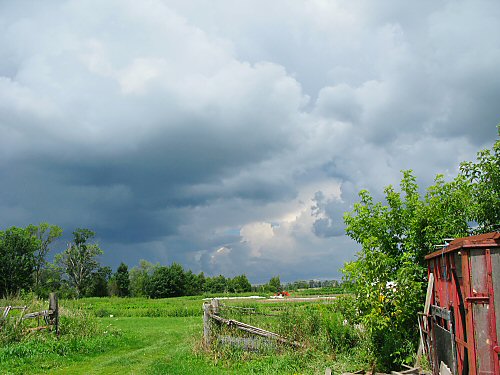
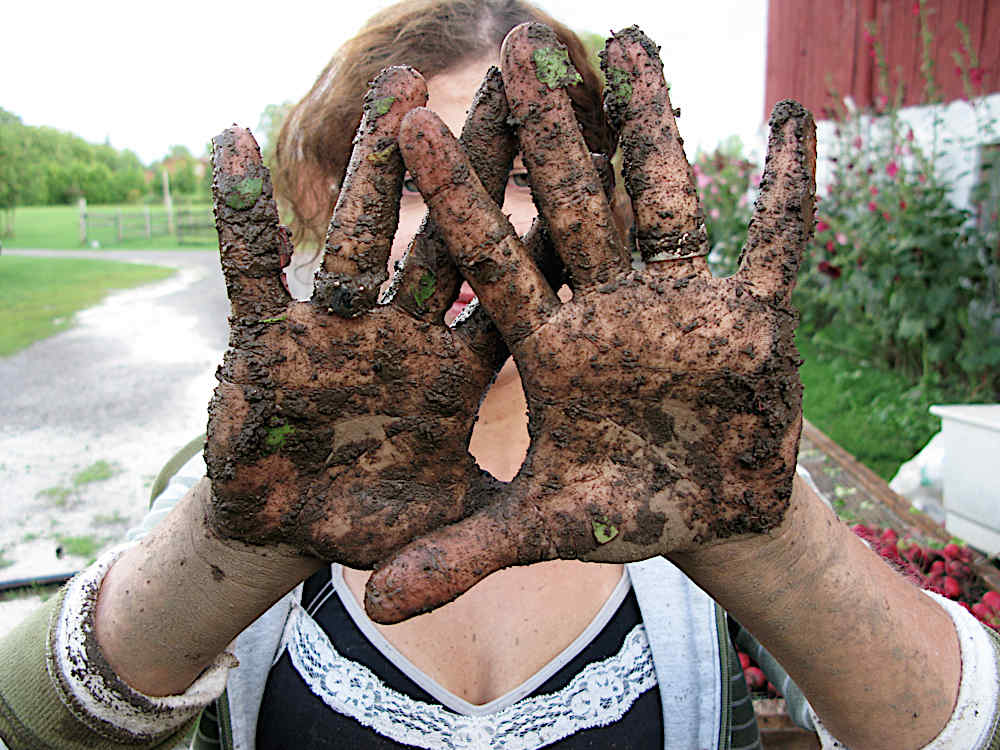
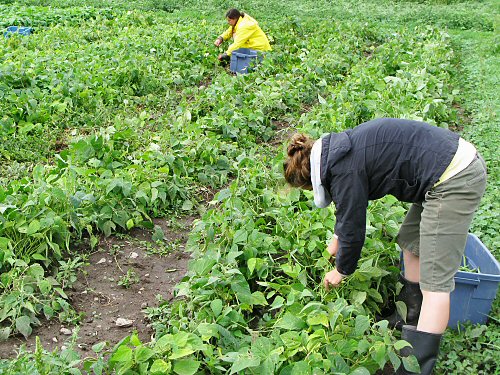
Have I mentioned that it’s been RAINING a lot all summer, like, a few times a day? We’ve taken to planning the Friday harvest to fit the slots between downpours, using…weather radar on the web! It works pretty well, checking the national and local maps, you can see precipitation quite accurately up to 3-4 hours out (it’s a little…high tech, but so is this crazy weather!). To avoid a late morning downpour, we started picking beans—finally, our first snap bean harvest of the year!—first thing in the morning (Maria, Lynn and that’s my bin at the top left of the pic below), so that we wouldn’t be messing with wet bean plants (they really don’t like being touched when wet, they get…diseased). That was pretty satisfying, picking about five bushels before the first shower, which arrived as foreseen. And so it went for the day. You can work between the daily rains, but mud avoidance is not an option—Michelle illustrates!

Pigweed rehabilitated?

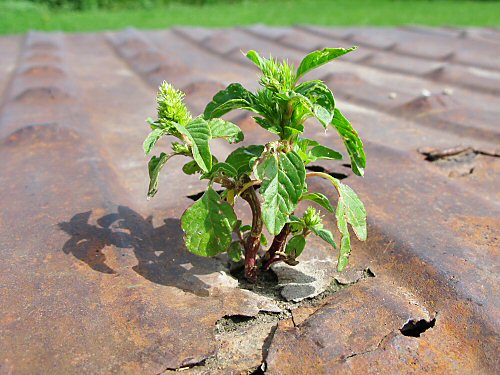
You’ve gotta respect pigweed. It’s resourceful, extremely flexible and adaptable, prolific…it just keeps on coming! It’s managed to grow in tiny dirt deposits, through rust holes in the trailer we use to get things around the field. It’s also run wild in one of the potato sections, where we’ve taken to hand-pulling it in one-hour concentrated weeding missions—it comes out by the trailerload…

The strangest development is that, this season, pigweed seems to be turning into a FOOD, a gourmet crop, even. Going down the lambs’ quarters urban trendiness path, I suppose. I started to hear about it from a couple of people, that it was being sold in Toronto (big city) farmers’ markets. There was even a comment here on the blog… Finally, browsing the web site of a farm not so far from here a couple of days ago, I read how they harvest PIGWEED at 12″ (30cm) and sell it as a tasty and nutritious cooking green…and they named it: Amaranthus retroflexus. Wow. Pigweed is the common name for a couple of varieties of amaranth, retroflexus being one of ’em. I’ve learned a fair bit about amaranth over the last few seasons, and there’s lots to like. There are many varieties and four general classes: vegetable (eat the leaves), decorative (the seed heads make colorful filler for cut flower arrangements), grain (more protein than wheat!), and…the WEED. Yes, I know a weed is only what you make of it, and it’s great to discover that we can EAT a plant rather than destroy it…but after all our hard-fought pigweed battles, this is hard to swallow. I CAN’T IMAGINE harvesting pigweed (that is, the weed varieties of amaranth) as a market crop. I mean, it would take some getting used to. And could I find a wholesale buyer, because I have a lot…? This year, I’m growing a couple of varieties of decorative amaranth in the cut flowers beds, last year, I grew one type of vegetable amaranth as a trial salad green, and a while back, I grew a couple of beds of grain amaranth, all from purchased seed, and all the while, weeding tons of pigweed… Weeding amaranth from amaranth. OK, I’m ranting a little… Maybe I’ll stroll out and gaze upon the mountain of pigweed for a while (that’s last year’s pic, it’s bigger now)—eventually, perhaps, I’ll get to a place where I’m simply wondering about all that wasted harvest… (Guest photo of trailerload of pigweed by Maria)

1 87 88 89 90 91 168