
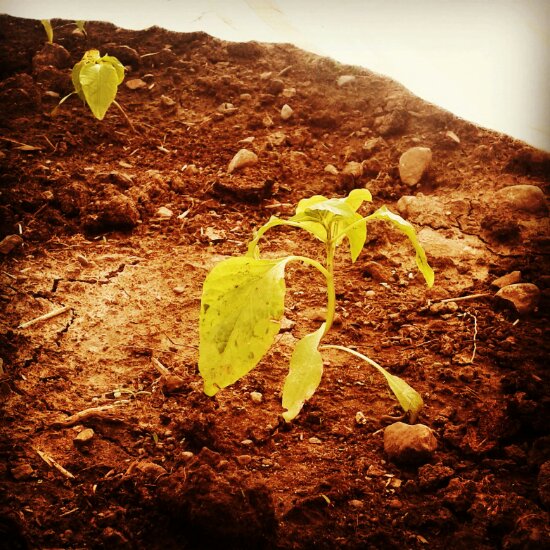
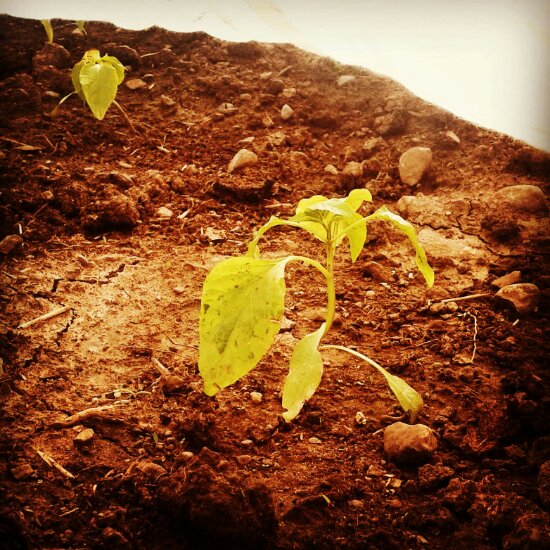
Not the happiest campers after three days and nights of frost protection, peppers and eggplant have one day and two nights more under row cover, if the forecast is to be believed. But the 15-day forecast a week ago was for no more cold nights, so…who knows! We’ve had about a week of frost warning nights so far since the second week of May, which I don’t think I’ve seen before. Normally, the covers would come off during the day, but with everything else to do now, and the kinda elaborate weighting-down-with-rocks setup, it’s simpler to leave it in place till the end…
peppers
Shrouded against the cold
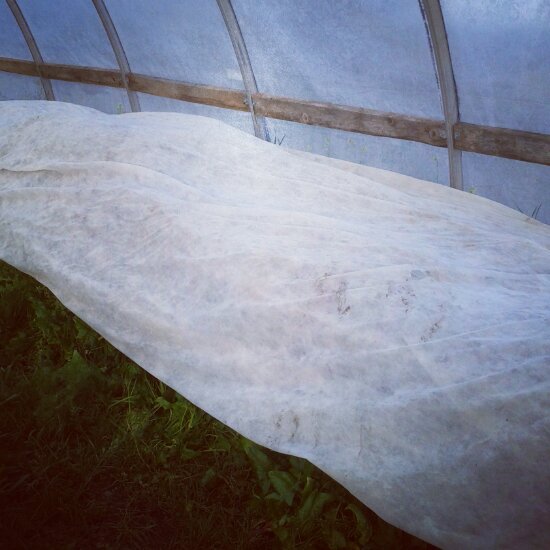
Shrouded against the cold: Not much to look at, but nice for the tomatoes, peppers and other seedlings on the tables underneath. It’s a double layer of medium weight floating row cover, tried and true, a familiar spring sight in the unheated greenhouse, good for a few degrees of protection in the forecast overnight near-freeze. Three days of chilly nights, they say.
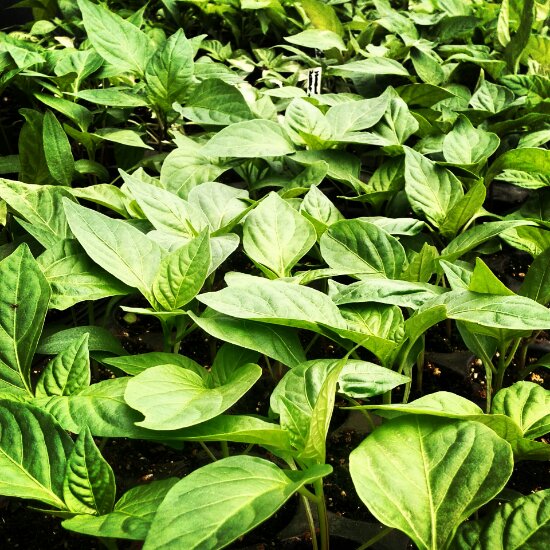
Bare root seed starting
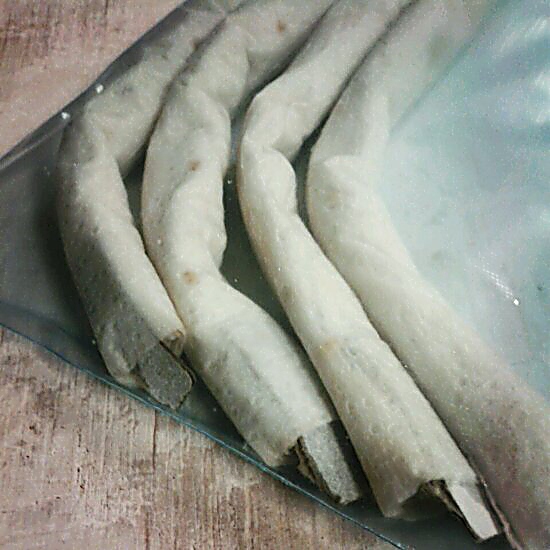
It doesn’t get simpler than this for seed starting in controlled conditions: the bare root approach. Spread seeds on paper towel, place another paper towel on top, mist with a spray bottle, roll up (don’t forget to mark the rolls if you are doing more than one), and place in a ziploc-type sealable plastic bag. Then, put the bag in a warm spot, light not required. Be sure to check on the seeds daily, as they can use the oxygen! Within a few days, you will see the little white radicle tip emerge, and from there it is root growth in action. When to take them out is open to experimention: all the veggie seeds I’ve come across are pretty tough and wanting to grow, given the minimum reasonable conditions, so you can plant right at germination, or a couple days down the line with more root. As always, there are lots of variables to consider, play around with, and so forth, but you should be generally fine no matter what. Since I usually only do this for germination tests, I don’t actually plant them (cruel, huh?!). Other materials than paper towels (they shred easily when wet, an advantage when separating if roots start growing into them) and plastic bags could be used—kinda interesting, a while back I checked the book and called my certification agency to see whether there were organic standards for the paper towels used with this method, since they are in such intimate contact with the seeds at such an early stage and who knows what’s in the paper, but no…this is not covered, anything goes, if you’re certified, this would be, well, certified organic. Anyhow, this year, these seeds are for production: here, it’s sweet peppers, eggplant, and tomatoes! We’ll see how it goes!
NOTE: Yeah, I am still messing around with my phone camera and the sometimes cheesy photo filter effects in Instagram for Android…
More local food, cooking!
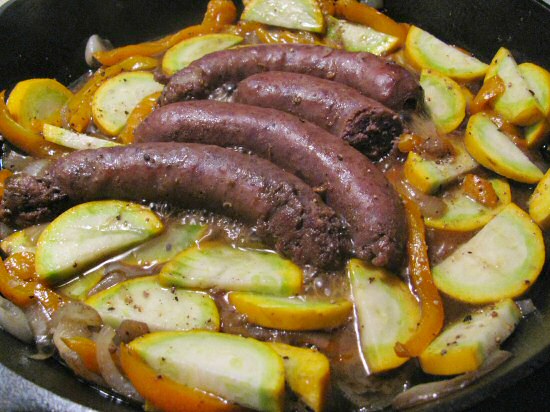
OK, perhaps not the MOST appetizing of food photos, but the point is, that’s how it looked, and it tasted great—more all-local, dead-simple cookery! Here we have my first time with this grass-feed beef honey garlic sausage from a few miles down the road—I could actually taste…honey; unusual and good! Alongside in the cast iron pan, sweet orange pepper (Orange Sun), the very last, slightly green zucchini (Golden Dawn III), and a mess of yellow cooking onion, all from the field. A little imported olive oil, salt and fresh ground black pepper, let braise-simmer for a while—an hour or so, with the zucchini added near the end—and…Bob’s yer uncle! Delicious, nutritious (I’m pretty sure), fun. :)
Peppers turn color!
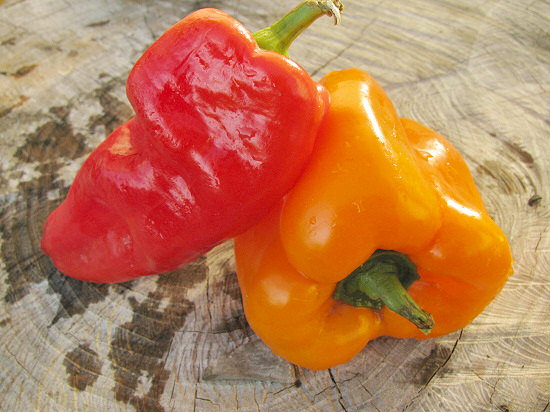
Red and orange peppers! It’d be nice if this was a normal sight, but with our short season and often as not inconsistent heat and sun—peppers love decent heat—peppers that fully turn color are fairly unusual in this market garden. Because they’re more uncertain, I’ve tended to give them lower priority, often transplanting them at the end of the queue, which doesn’t improve their chances. I also usually don’t mulch—peppers appreciate decent mulch of any sort (plastic especially, it’s so…efficient), the heated earth seems to really help them grow.
This year, we lucked out with the weather—unfortunately, we also planted the smallest amount of peppers ever. Oh, well, that’s how the garden gambling goes! Here we have Gypsy, a tapered hybrid that has a rather quick 65-day maturity, but takes longer to go from its pretty yellow-lime green starting color to…sweet red. I’ve grown this for a while, it always comes through, a tasty, prolific, all-purpose pepper that’s nice even when it’s not red. And then there’s the open-pollinated, heirloom Orange Sun, from seed I’ve had for years, a blocky bell pepper that needs a full 80 to 90 days, that I’ve seldom seen beyond its dark green initial color, now in a satisfyingly deep, rich orange. Taste changes with color, smoothing and sweetening—these guys are delicious!
Frost protection time again
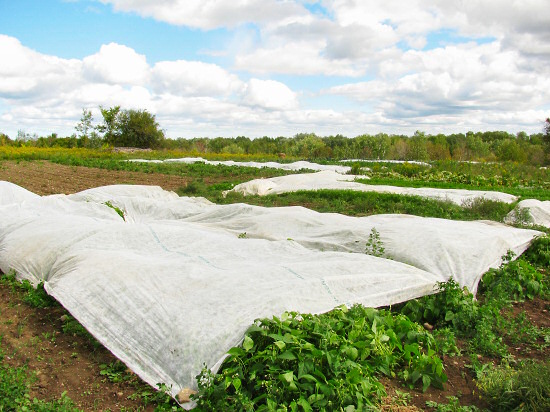
The frost-warning forecast from a couple of days ago, for 1°C (34°C), moved up a day to tonight. so there’s row cover all over the field. Some of it was floated out against the possibility of frost, the rest, as so-far-effective deer deterrent. Up front, around 800′ of snap beans, just starting to form, are bundled up against the cold. Then, row cover over carrots, and farther, lettuce, has been in place for a few days, and seems to still be keeping the deer from munching. In the distance, peppers and eggplant are under frost protection. Elsewhere, we’ve covered a few beds of cherry tomatoes to prepare for tonight. Winter squash and pumpkins are mostly in, and summer squash and cucumbers are finished, and the rest out there are hardy enough, and that’s about it!