Peering down a rabbit hole

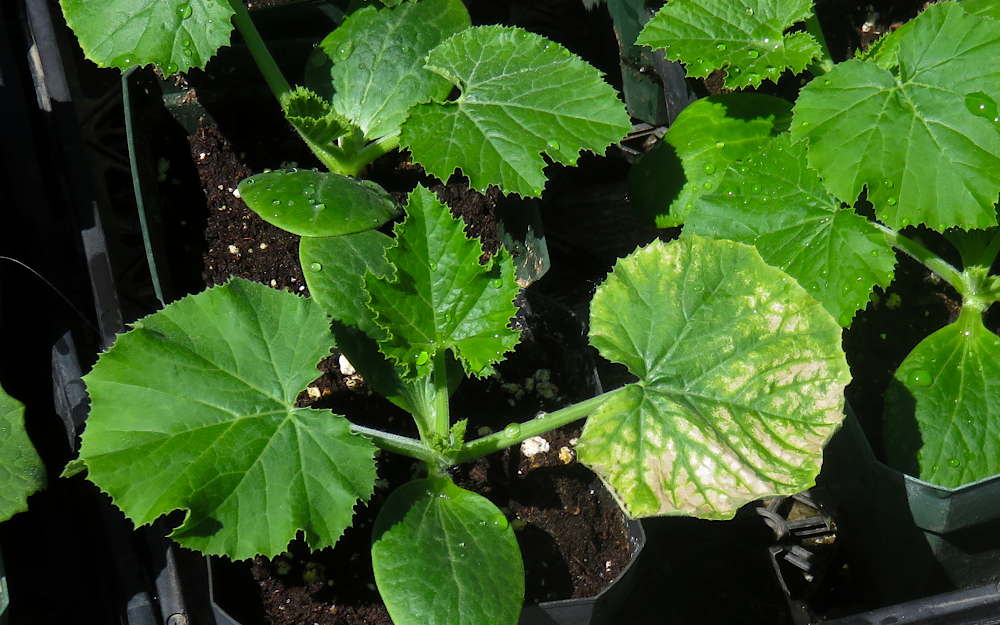
Not a literal rabbit hole, instead, the one that I encountered when just for fun I looked into sunburned leaf damage, like what appeared today on a single squash leaf. Sunscald during hardening off isn’t what you’re aiming for, but it happens and it’s never been a big deal. So long as the seedlings are well-watered and the roots aren’t getting cooked in their containers, they’ll be fine has been my experience. Still, since only one leaf among around three dozen squash and melon plants got burned, after several full days in the sun, and yesterday half overcast, I took a mild interest—if I was a lot busier, with hundreds or thousands of seedlings on the go, and everything else looked fine, it wouldn’t get a second thought. Odd one-offs happen all the time.

A bunch of reading and skimming of farm and garden blog posts, university agricultural extension papers, science mag articles, and scientific studies, and no answers. The sunburn itself seemed unusual, especially after a half-cloudy day. Of course, our SPF sunscreen-and-skin cancer training has told us that UV is still strong on cloudy days, but why did only one leaf get so toasted?

Then I discovered the UV spike. Not so widely written about, not as confidently stated as ~80% of UV makes it through clouds, but a real thing. When certain types of cloud pass in front of the sun, like perhaps the fluffy cumulus ones that floated by most of yesterday, the fringes of said clouds can act as a magnifying lens or filter that focuses and directs UV straight down, resulting in an intensity spike of maybe 25%. Could it be that one big early leaf hadn’t been shaded by the others on previous days and gotten more exposure and hidden damage, and just couldn’t take a day of high-powered UV micro-blasts, a few seconds each as the sun disappeared and reemerged, over and over. Hmm, that sounds maybe fairly reasonable…

Soon after, I lost interest—WHY would I want this explained? I could think of no good reason. I’ve found with tiny farming that learning is continuous and great, but what you choose to take in is also critical, sucking up everything is a waste of attention. The one burned leaf isn’t a mystery, it just clearly happened. And unless more similarly unusual things appear, I’m not particularly curious. The real thing to remember: harden off, a couple hours max outdoors the first day, and keep them well-watered and not boiling in their pots! When they get into the real ground, small ups and downs along the way will be forgotten, they’ll spread their roots and do just fine. Conditions in the field being favorable, of course!
Zukes in the field

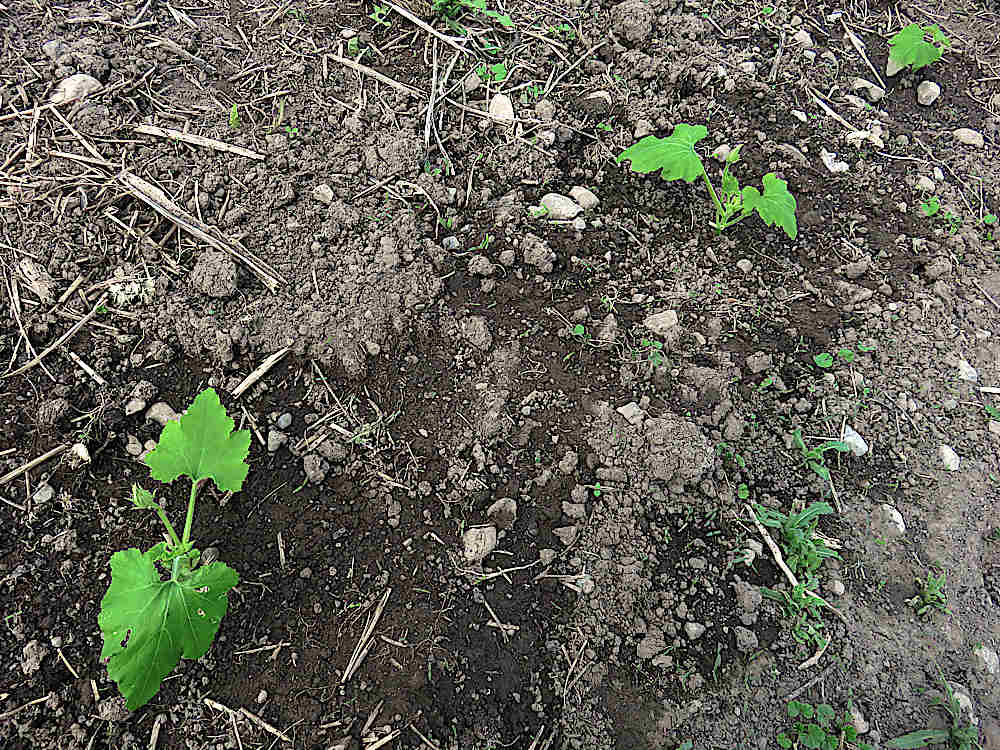
Zucchini, transplanted into the field a couple of weeks ago, don’t seem to be doing much so far. Don’t be fooled! Once they get settled—I imagine a lot of root action, spreading wide and down—they will explode. Pop! They’ve been under row cover to protect them from the cucumber beetles that attack all the cucurbits. I’m giving them some air on yet another mainly cloudy day. It’s generally not a good idea on the leaf disease front to keep our local garden veggies in warm damp conditions that can happen under row cover when there’s not a lot of sun. Looking at the photo, I can’t help but notice all the other garden would-be inhabitants, what we call weeds. I see some thistle, mallow, dandelion and of course, pigweed (aka amaranth). Like the zukes, they only seem like they’re not doing much…because I recently wheel hoed!

A day in the sun

Seedlings hardening off in the sun

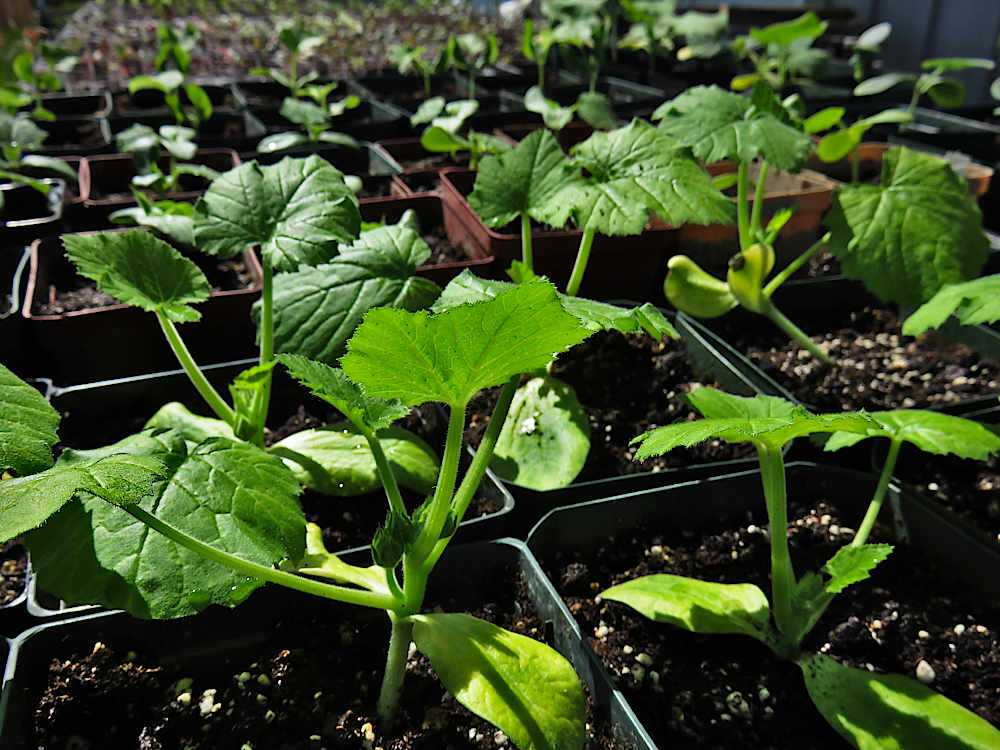
I’ve been hardening off trays of seedlings over the last few days, a few at a time, taking them out from the under the lights. Today, they were all outdoors, some for their first taste of the sun. It’s a manual routine, walking back and forth from the light racks with one or two trays at time, then bringing them back in in the early evening. I like it: a clear, simple, straightforward task, and the most important thing to do when you’re doing it. This is also exactly the type of routine that’s perfect for automation, or at least, optimization.

To grow a fair bit more than this year, I would put seedlings out in an unheated greenhouse where they’d stay until transplanting. That brings more convenience and efficiency, and also a few extra concerns. Voles tend to burrow in and munch on greens, so checking the perimeter becomes a thing to do. Daytime temperature in the greenhouse shoots up to 40°C+ (104°F+) on a sunny day, so ventilation is a must. When you open the doors in the day, you have to close them at night against cold and critters, and open them again early the next day. If the forecast is for freezing overnight, row cover placed in the evening and removed in the morning can handle a few degrees below (in a more extreme cold situation, a portable heater fired up in the middle of the night might be necessary).

Then there’s the new super-high winds that started happening around here within the last five years or so, there’s extra concern about the whole greenhouse staying up—mostly not in your control, but you still think about it with every weather warning!

Nothing wrong with scaling up and improving efficiency, while every step to bigger has its complications!

Veggie sleuthing

Asian veggies at the supermarket

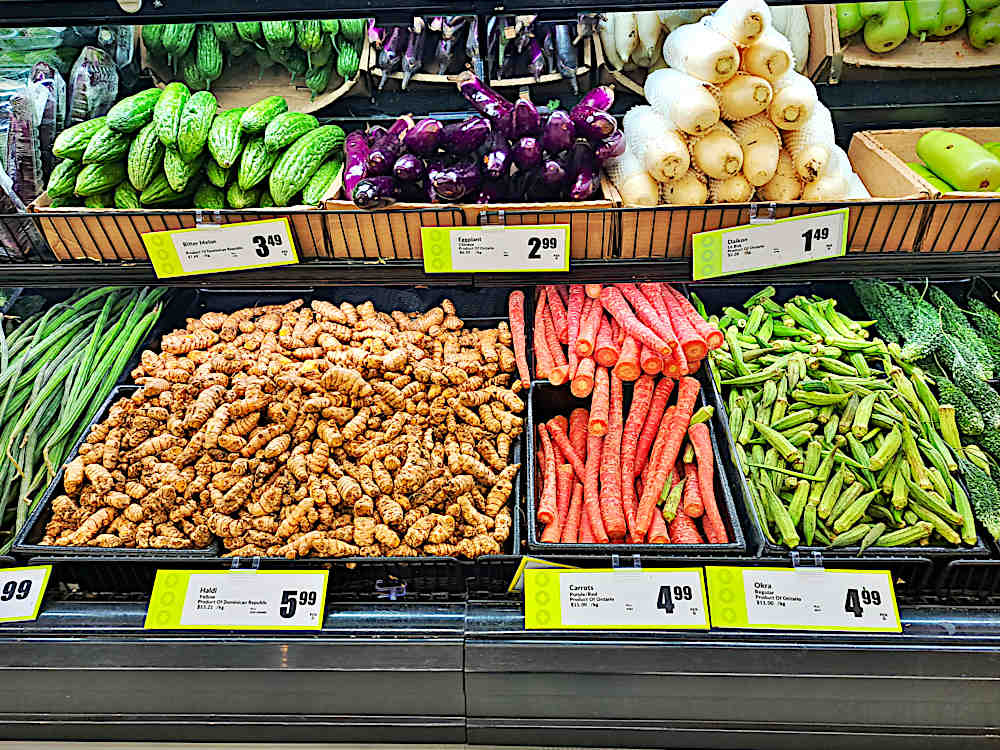
Part of the Asian/Southeast Asian veggie section at one of the local supermarkets. Most of these vegetables are unfamiliar, some I recognize. I usually scan for unusual shapes and textures when I roll by, but my curiosity is never that high. I suppose you could see them in an exotic, different cultures way; to me, they’re just…more veggies! This time, I decided to take a closer look, and took a pic on my phone (which was also my shopping list!). So what do we have?

ID-ing everything from the labels in photo and searching the interwebs for info, here goes. Top row, left to right: I couldn’t make out what that first plastic-wrapped veg is. Next, bitter melon, my mom grew this in her community garden. Used in Chinese cuisine. Remove seeds, keep skin, slice, use in stir fries. Or steam, or stuff. Next, eggplant, and daikon radish, both familiar, I’ve grown these. Then, squash (long) is what the label says, but this one has several names: opo squash, calabash, bottle gourd, and others. It comes in different shapes, like the decorative hourglass-shaped dried gourd version, or really long, or this stumpier look. For cooking, it’s another summer squash, like zucchini, so raw, steamed, boiled, sautéed, or grilled!

Bottom row, from the left: This long, skinny veg is labeled drumstick (label cropped out of photo), and it’s also called moringa. They’re the pods from the moringa tree, from Southeast Asia, India. Lots of superfood claims. When used as a veg, there are these pods, and also moringa seeds on their own. For the pods, cut up, put in soups and curries. Next, haldi, is another name for turmeric, which I have as a ground spice and use in my standard breakfast red lentils spice mix. Relative of ginger, native to Southeast Asia. Use fresh the same as powdered turmeric, grate or slice and add to soups, rice, whatever you like. Also, pickle (one way: lemon juice, salt, jar, fridge), use in marinades, blend. Then, carrot, purple/red, prepared a little differently with the tops and tips sliced off. And okra, also familiar. Last, the bumpy-textured veg is labeled karela, which turns out to be one of many names for bitter melon, so same as above!

And where are they from, fresh not frozen in the dead of winter? Carrot, daikon, eggplant and okra are from right here in Ontario, the drumstick is from India, and the rest were grown in the Dominican Republic. All of them I think can be grown here in colder country, except turmeric, which needs many months of warm weather (it apparently can be done here with a few months of indoor growing, then moved outside).

Now that I’ve finally LOOKED CLOSER, I’ll probably try some of the new veg. Of particular interest: drumstick and (remembering mom) bitter melon!

October harvest

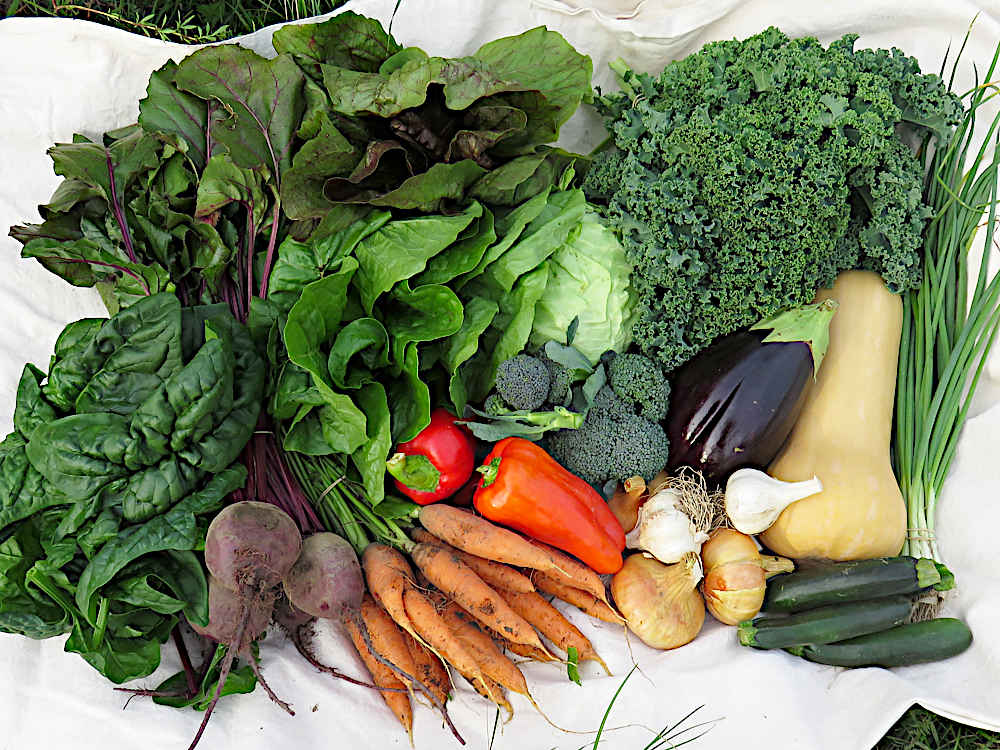
October vegetable harvest

Great weather into the first week of October, with no hard frost so far. The veggie harvest list: beets, carrots, peppers, garlic, onion, green onion, zucchini, spinach, kale, lettuce, cabbage, butternut squash, radicchio, broccoli, eggplant. Nice!

Frost protection time again

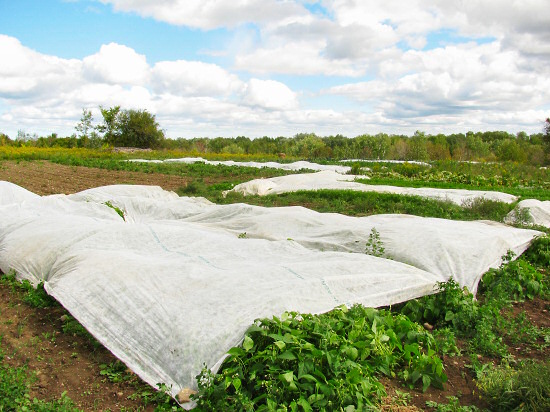
Row cover frost protection

The frost-warning forecast from a couple of days ago, for 1°C (34°C), moved up a day to tonight. so there’s row cover all over the field. Some of it was floated out against the possibility of frost, the rest, as so-far-effective deer deterrent. Up front, around 800′ of snap beans, just starting to form, are bundled up against the cold. Then, row cover over carrots, and farther, lettuce, has been in place for a few days, and seems to still be keeping the deer from munching. In the distance, peppers and eggplant are under frost protection. Elsewhere, we’ve covered a few beds of cherry tomatoes to prepare for tonight. Winter squash and pumpkins are mostly in, and summer squash and cucumbers are finished, and the rest out there are hardy enough, and that’s about it!

Another good market day!

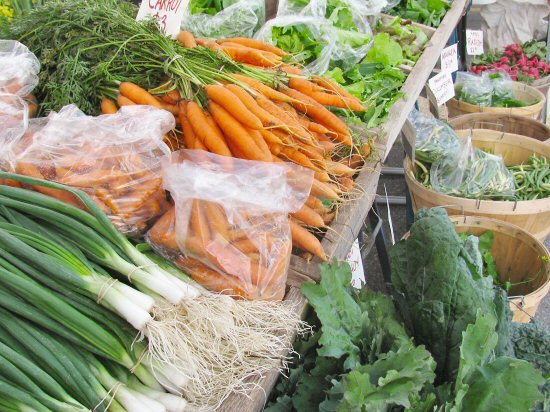
Last farmers' market of August

This is our second Saturday market with quite a solid harvest, both selection and quantity. Last week was fine, this week we’ve added the first of the fall spinach, also, an unexpected bushel of radish that sized up practically overnight, picked at the end of the day yesterday at the perfect maturity moment. For the record, we have: green onion (Ramrod), two kales (Red Russian, Nero di Toscana), green and yellow beans (Jade, Indy Gold), two carrots (Nelson, Touchon, mixed), radish (Rebel), cherry tomatoes (a mix of 7-8 varieties, hybrid and heirloom), Asian greens mix (mustards, mizuna, tatsoi, etc, our custom blend!), arugula, Swiss chard (Lucullus, a pale green heirloom), beet (Kestrel), salad mix (four varieties of lettuce), summer squash (Golden Dawn III, Baby Tiger and Raven zucchinis), cucumber (Fanfare and a few round heirloom Lemon), and spinach (Bloomsdale). For those who like lists!