Global Village Construction Set: Watch This!

Watching this video made me smile! It wasn’t the kind of smile you do when you’ve seen something cute or funny. This was the deep, involuntary smile of wonder and appreciation and, um, joy, that happens when you see something really cool and admirable. When you see something that…rocks! :)

I’ve been following the adventure at Factor e Farm, through their blog, for maybe three years now, not always diligently, but what they’re up to is always somewhere on my mind. The mission they’re on is incredibly ambitious and fundamental and world-class. You have to read through their blog and wiki, and watch some of their other videos, to get a full feel for what Factor e is up to, but to try and summarize:

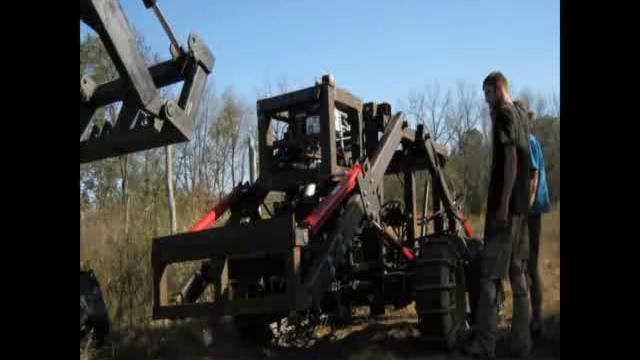
Using modern technological knowledge and methods, and very little cash, they are designing and building a set of machines and methods that are open source (plans are free for all), low cost, easy to replicate, highly efficient, simple to maintain, and sustainable to operate, called the Global Village Construction Set, just about everything you would need to build a community, from the house you live in to the food you eat, from scratch.

Or as their blog puts it: “We are farmer scientists – working to develop a world class research center for decentralization technologies using open source permaculture and technology to work together for providing basic needs and self replicating the entire operation at the cost of scrap metal.”

This video is their two-minute introduction:

You HAVE to check it out: Open Source Ecology.
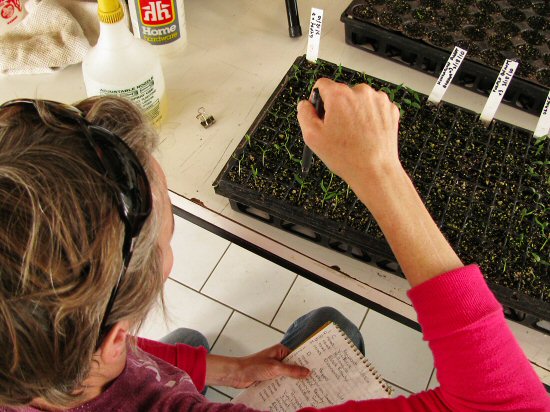
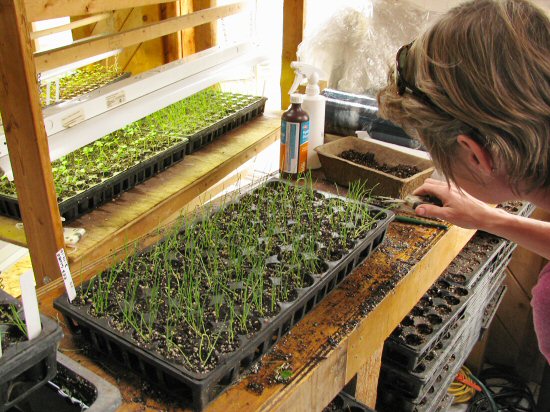
Editing onions, counting peppers

Counting pepper seedlings

The more things change, the more they stay the same, right? That’s how it seems, in a soothingly familiar way, as seed starting 2010 really gets in gear at this new farm location. A little over two weeks since we set up the seedling room, and the fairly intricate task of managing dozens of crops and varieties and thousands of seedlings is on!

It can be a little complicated, keeping track of all the details, but it’s also…simple. Kendall, trying her hand at tiny farming-style veggie production for the first time, shows no fear with the sharp, little snips, as she learns about thinning onions (above). We’re multiplanting this set of onions, aiming for four per plug sheet cell. Since I used seed from last year—a common rule is that you should get allium (onion family) seed fresh each year to ensure good germination, but why waste?!—we went a little generous in the seeding. Germination was great, and now we need to remove the extras.

Next, Kendall’s on to another kinda critical seed-starting task: taking inventory of what exactly we’ve got going. That means a lot of counting and note-taking, and making sure the markers in the trays don’t get pulled out. Below, she tallies some of the 20 or so varieties of sweet and hot peppers that’re on for this season. For the new girl, it’s business as usual!

Farm animals

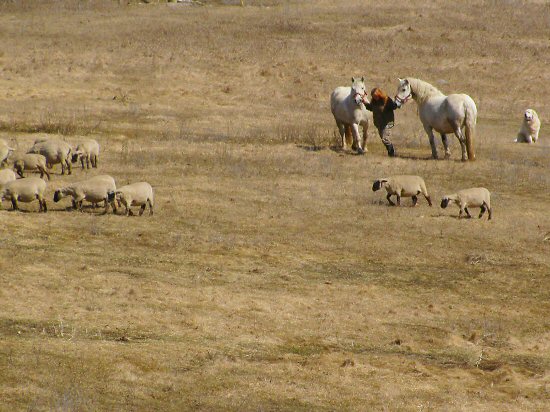
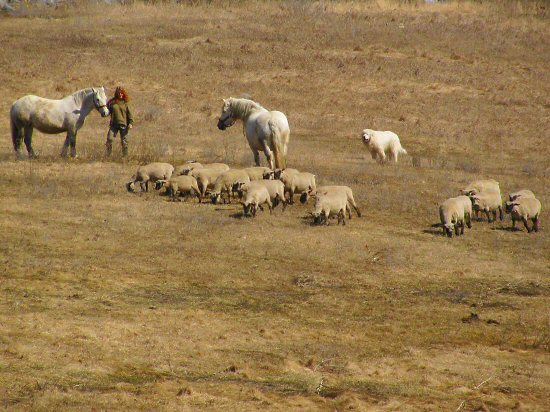
Montana with horses, sheep, dog

After only chickens last season, it’s farm animals in full force this time around. In the pic, Montana with the new-to-the-farm pair of Percheron work horses, the Shropshire sheep, and Rollie, the youngest of four Great Pyrenees livestock guardian dogs, looking on. Elsewhere, there are heritage breeds of pig, chicken, turkey and goose, plus other dogs, and two cats, as well. I’m looking forward to learning a lot. And if I ever fall behind in posting to the blog, quick and easy photo opportunities are…everywhere! :)

Play in mud!

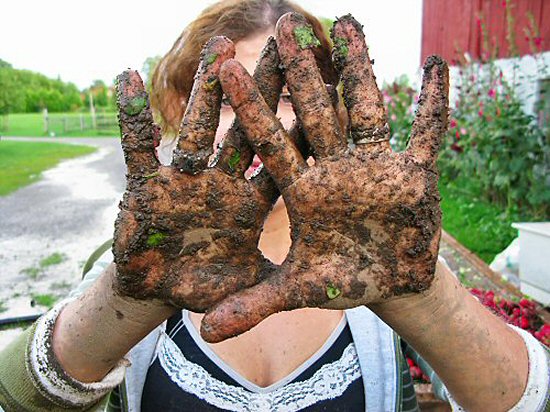
Muddy hands

A mid-winter flashback to one of my favorite farm photos—it’s just so…hands-on. On the tiny farm, many of the things we otherwise consider inconvenient, like rain and MUD, are actually just fine. Sunny days are NICER, but there’s plenty of room for wet as well. Originally posted on Friday, Aug. 8, 2008, when we were harvesting-around-the-rain.  (That’s Michelle.)

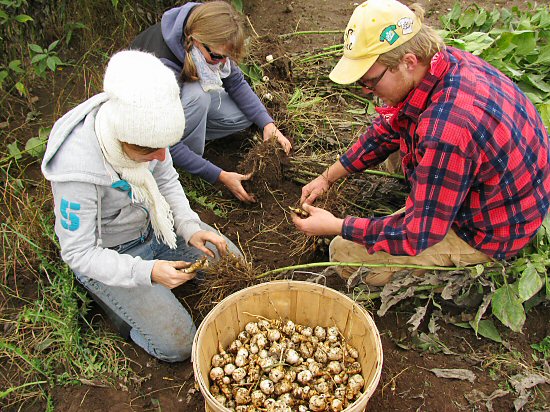
Harvesting Jerusalem artichoke

For tomorrow’s farmers’ market, Lynn, Andie and Jordan harvested more of this year’s Jerusalem artichoke. The tubers have gotten noticeably bigger since pulling some just a couple of weeks ago… Chokes are a really simple, satisfying harvest, at least, when you pull up the plants in their first year. These guys are spaced at 12″ (30cm), so we just grab the usually multiple stems at each spot and tug. The main root ball is shallow and contains most of the tubers: pull ’em off, and bang the root clump a bit to get at the ones in the middle. You also have to scrabble around for maybe a hand’s width or two past the little root crater to find a few extra outlying tubers—guess that’s where the “invasive” part of choke lore begins, they do try to spread. Overall, though, it’s quick and easy, especially when the fall weather is mild like today. Nice!

Harvest board revisited

As the afternoon shadows get longer, Michelle checks out the harvest board to see what’s left to do for tomorrow’s farmers’ market. This same whiteboard is now in its third season of service, a little worse for the wear, with the surface no longer coming clean, and one edge of the frame fallen off (it’s lying there, right behind, waiting for repair), but fully functional. As long as I remember to keep it out of the rain and too much sun, it could have a few years in it yet. And I’ve grown to really like it. The shiny WHITENESS is a little glaring and kinda office-like—I considered switching to a chalkboard—but the printing stands out so well… It makes things clear, which is always good!

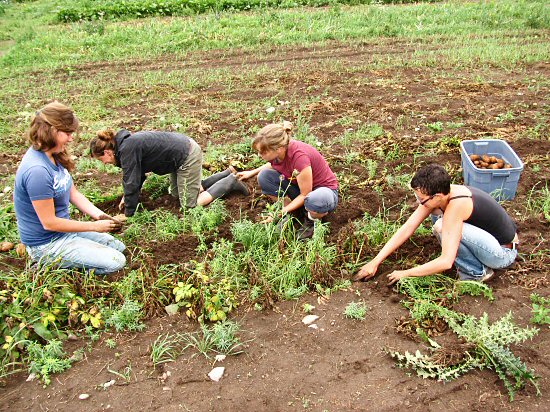
Potato digging party

It’ll be hard to top THIS one for extremely labor-intensive tiny farming involving lots of peeps! Here, Libby, Lynn, Andie, and Mel hand-dig potatoes for tomorrow’s farmers’ market. The taters happen to be Gold Rush russets, and they’re in fine form, with a little wireworm damage (surface blemishes or tiny holes) to only a few. We’re right at the end of the first (of three) potato areas of this year, 600′ (183 m), evenly divided between Penta, Chieftan and Gold Rush.

So, what’s with all these people, digging together in a cluster, with just one bin? A little inefficient, pehaps? Well, not really. When there’s a lot of folks happy to mix it up with the dirt, tackling a single task all together can work out! We only needed about 70 lbs of each variety (that blue bin full). With the moist-but-not-mucky soil, pulling plants and scrabbling around was quick and easy. BIG POTATOES helped. Working close together wasn’t a problem because we had so little area to cover. Each bin got filled in maybe 15 minutes. Satisfying!

In the photo, you can also see how relatively good shape we’re in with weeds. The bit of grass growing back is in separate clumps, all the runners haven’t started to reach out and hook up. Further up is a section of more heavily overgrown onions. But that’s actually doing well as well: the onions were thoroughly weeded twice, and hoed a couple more times, so what you see is mainly grass from the last three weeks (without much shading out from the onion plants, everything else grows fast!).

Anyhow, when we tackle the main potato patch, around 2,000′ (609 m), methods will change. But we’ll still be digging in the dirt…!