Potato fruit

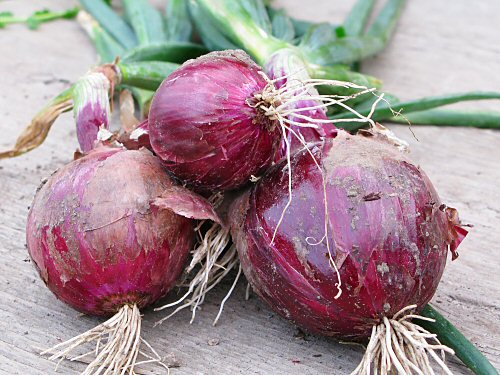
Potato fruit on Chieftain variety

Here’s something I haven’t seen before in my, uh, six years of growing potatoes: green, tomato-like, walnut-sized potato fruit. Bob hadn’t seen ’em either, in 40 plus years of farming. I hit the web for education.

These are genuine fruit (also called berries), but not that common. Usually, potato flowers just drop off. Pollination can be an issue, but even when pollinated, little details of the season’s growing conditions can make the the difference. When fruit do form, they’re more likely found on certain varieties, like Yukon Gold. This year, there were fruit on just about every Chieftain plant, here and there on the Kennebec, and none that I noticed on the Yukon Gold. Since they suddenly appeared this year on two varieties I regularly grow, I’d guess it was about the weather!

Each fruit contains 300-500 seeds that don’t come true: planting them doesn’t result in the same potatoes as the parent plant or each other, there’s lots of genetic variation, each seed will produce a genetically different plant! Potato breeders plant out thousands of seeds, check out the results, then keep replanting the most desirable potatoes for many years or generations to get new commercial varieties—this is the traditional way new potatoes are bred.

Meanwhile, it takes only two seasons and one generation to breed a new potato, so for the small farm or home garden, as opposed to the big potato breeder, this seems worth a try. At least as an experiment. Harvest seed one season—you can hand-pollinate to cross two varieties—plant out the next and select the best-looking plants. The tubers (potatoes) from each individual plant are ready to go: planting out the tubers will produce genetically identical plants.

But there’s a kinda big BUT: even though a potato grown from a tuber is genetically the same, you can’t be sure how its genetic makeup will react to different growing conditions. For example, it may be the perfect potato after a wet summer, and quite different after a dry one. (That’s why professional breeders check over several generations, and now there’s also high tech genetic analysis, to make sure it will be the same potato in the full range of growing conditions.) Still, at the very least, fun to see what happens!

And, the fruit are poisonous, rich in solanine, not for eating. Potatoes, tomatoes, peppers, eggplant and tobacco are all members of the “deadly nightshade” family, all prone to having toxic parts (potato fruit are somewhat similar to little, hard green tomatoes). Interesting!

Since this is such a popular post, being dug up over and over via Google, I’ve started to update the article as I discover more. I’m not marking the changes. This is unusual. In general, I don’t edit old blog posts, and clearly mark the updates when I do!

Burlap expires

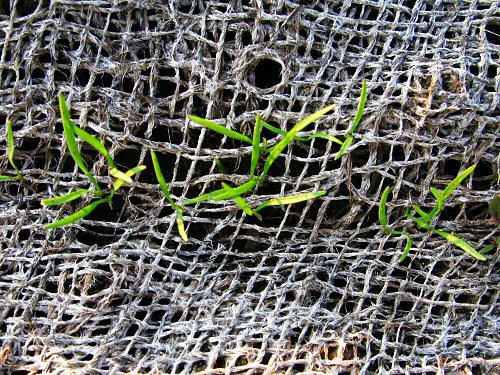
After a nice long ride, the burlap (of the burlap carrot germination method) is finally breaking down, shredding as we fold it up off the final carrot beds of the season.

Even in this wet weather, the burlap makes a big difference, probably because it holds the soil heat—the difference is clear at the ends of the beds, where the seed drills extend past the burlap, and germination has barely started.

I haven’t been keeping accurate count, but this batch has done at least eight seedings over the last two years. At about $30 a bed for a double layer of burlap (100’/30m) over a 50′ (15 m) x 4 row bed, that makes it less than $4 per 200′ (60m) of carrots, more than worthwhile. If we’d taken better care of it during this wet weather, mainly by making sure it dried out quickly, it may’ve even lasted for a seeding or two more.

Like floating row cover, burlap is an outside input that I don’t like to rely on, but for now…it works!

Ah, the Home Garden…

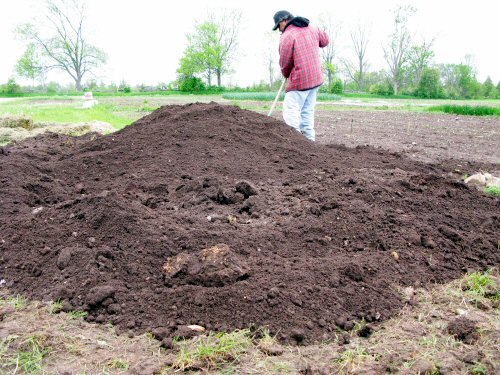
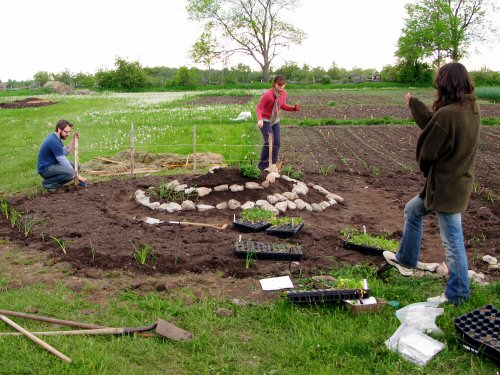
After quite a bit of talking about it, and last year’s false start, a Home Garden is suddenly in place in one corner of the field. The idea is to have a small demonstration veggie plot, to encourage people to grow at least some of their own stuff in whatever space they have. Why? Well, it seemed like fun. Located by the farm stand, it would be an extra little attraction to farm visitors… Just a thing worth doing… Anyhow, last year, I staked out a section, but didn’t get too far in planting anything in it, a couple of tomatoes and a few potatoes… This time around, I’d been chatting with Shannon, who has a lot of permaculture-based ideas, from reading and interning, so I asked her to plan it out. The final design was done really quickly earlier today (it was a busy month…), it’s more a freeform, jumbled garden with a permaculture flavor: all annual veggies, no rows, lots of interplanting, a herb spiral on a mound (a mix of annuals and perennials), an anti-pest barrier of alliums (onions and garlic chives) around the perimeter, and three little keyholes, which are dugouts that you can kneel in to garden within reach around you, as an alternative to working from paths. At about 10’x20′ (3x6m), it’s fairly small. One cool thing: the home garden layout is entirely unlike the rest of the market garden, which is all flat, linear and grid-like, lots of rectangles and squares and straight paths. Now, we have a deliberate elevation and CIRCLES! To make the mound, I dumped a few buckets of compost using the Kubota compact tractor, and raked it into shape. We then added stones for the spiral, and Erin and Mike dropped in and helped plant it out, using odds and ends of transplants and also seed, with Shannon directing. The rough plan is to have Lynn and Raechelle develop and tend it over the season (Shannon leaves tomorrow after a solid month in the field).

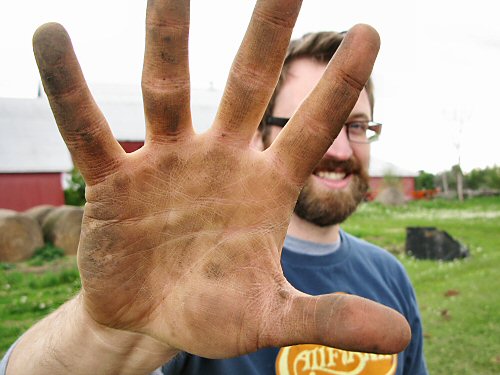
At just over two acres of veggies, the tiny farm is really small by most any modern agricultural standard, and starting up a MUCH TINIER space is its own private…thrill for me. It’s so…opposite! ;) It’ll be interesting to see how Home Garden 1 turns out as the season rolls along! Any way you can, getting your hands dirty is what it’s all about… (Guest photos: top by Shannon, below by Erin.)

Not THAT cold…

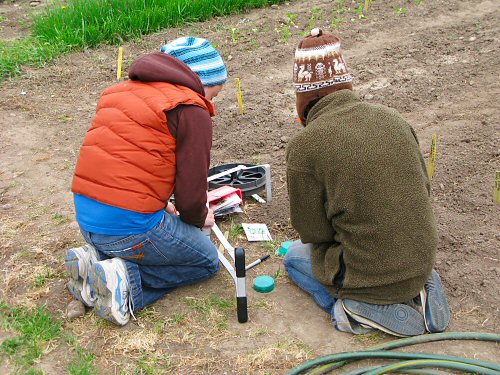
It’s not really as cold as the picture might make it look, but May continues to be an overall chilly one. The hats and extra layers are more a personal preference, but I’ve been wearing a lined flannel workshirt over my regular clothes much of the time. Here, as Lynn and Shannon sort seed for numerous smaller plantings in the herb garden, it’s about 60°F (15°C), cloudy and the kinda damp that can give you a shiver if you’re not a little bundled up. Shannon, sporting an illustrated, ear-flapped cap brought from her travels (it gets cold, especially at higher altitudes, even near the equator), has been back in Canada for less than a month after spending two years on farms in Central and South America, and is still getting used to the local weather. Lynn, in hoodie, vest and classic Canadian cold-weather headgear, was just…chilly! The slowdown in both crop and weed growth from the cold is quite noticeable, still, things are definitely moving along now… Weed watch, and the start of serious WEEDING, is on…

How odd…

Watering in with a sprinkler

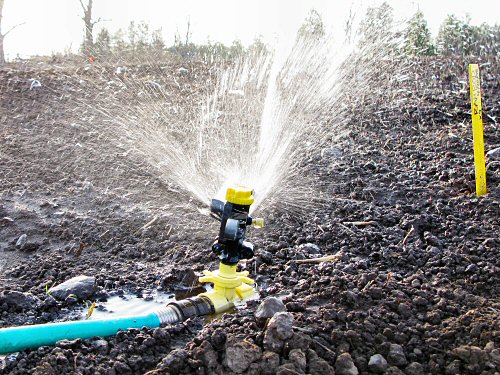
It’s like we’ve gone directly from winter to summer. Less than a WEEK since the ground dried out enough to walk on it and till it, I’m actually out there WATERING… This is really odd.

I’m sure we’ve had unseasonably hot Aprils before, where watering in newly seeded crops was necessary, still, it’s only common sense to chalk this up as another of the consistently bizarre weather events we’ve been having in the last three years or so… In other words: global warming, I guess.

“Normally,” April is a good month once it warms up, because our rather heavy clay-loam soil holds moisture well, and just post-snow, it’s wet enough that you don’t have to water in what you’ve seeded. A spring bonus!

Instead, what’s going on here is, in a handful of days, the top inch or more of the ground has dried out completely in the unusual heat. That means shallowly-sown seed, like spinach, lettuce, radish, beets, and chard, is sitting in perfectly dry soil.

I put in peas at around 1.5″ (4.25cm), and they were just barely in nice, moist earth. But these other guys, what can I do?

I considered setting the seeder deeper, but that could just bury them too far for good, quick germination (I’ve messed around with too deep before…).

Or, out with the sprinkler.

I don’t like using sprinklers, I don’t have water to waste, but here, it’s much the more reasonable alternative to hand-watering a 50’x100′ area, when there’s so much else to do.

The pond irrigation isn’t yet set up, so the water’s coming from the barn well, where there’s such low pressure that only the cheapest, most lightweight garden sprinkler will oscillate, where better quality, heavier duty ones shoot a stream of water straight ahead and won’t budge.

Irrigation comes early, and cheap gear is every once in a while…good!

Early spring rounds

Seeding plugsheets

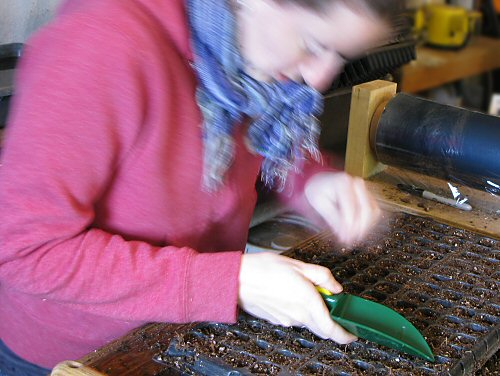
A gray and gloomy, windy day…but WARM. Well, fairly above freezing for the most part, and with a little rain, yesterday’s speeded-up melting continued. But we’re still a ways off from actually doing any work in the field. So, another pretty laid-back day. Lynn came by for her weekly installment of tiny farming. Out in the greenhouse, moving tables around and some hand-watering (those barrels of snow water are coming in handy!). In the Milkhouse, more seed starting: 400 more tomatoes, and a tray of leeks (a little late for this batch, but still better than direct-seeding). For her very first time starting seedlings, Lynn seeded 19 varieties into a 200-cell plug tray (10 each, 20 of one). Clearly, I trust her…accuracy. Working in the tiny cells, changing seed every row, and keeping track of names requires a bit of concentration. A little wandering attention, and who knows what tomatoes would be growing where… Living on the edge! :)

First tomato: 2008

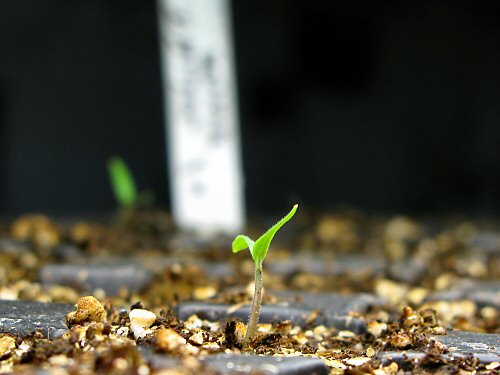
Here’s the very first tomato seedling to emerge and spread its seed leaves: a Striped German (a big, bi-color heirloom, one of my top 3-4 favorites over the last couple of years). This is six days after seeding. I don’t usually keep track THIS closely of the seedling action, but with the unusually slow, uneven emergence of most of the peppers and eggplant—new ones are still just breaking out, two weeks after seeding?I’m watching every little move right now with the toms as well. And there’s that fine MACRO feature on the new camera, always happy to take notes…