
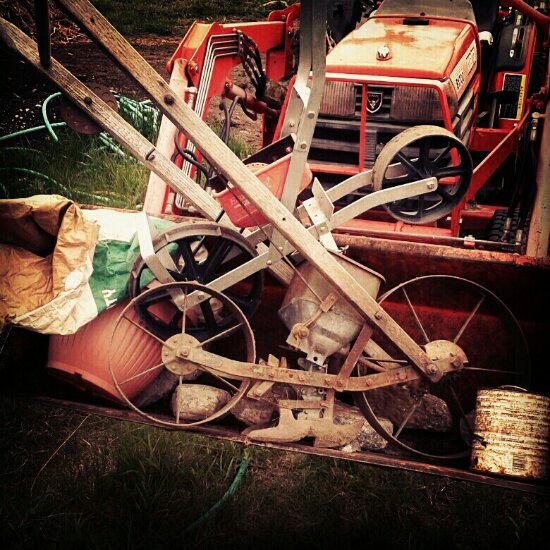
Especially in spring, with constant seeding and transplanting, moving gear around the field is a bigger deal than it may seem. Forget stuff, even little things like a hose fitting or a seed plate or some twine, and you’re heading back the equivalent of practically a city block to get it. A trailer of some sort is the ultimate for a 2-3 acre plot, but with decent packing skills, you can fit a lot into a tiny tractor bucket, too! This carefully balanced load includes everything needed for some direct seeding: the Planet Jr. and Earthway seeders (can’t forget the Earthway seed plates, they’re a perfect fit in that coffee can); seed, clipboard for notes, twine and stakes for row marking (all in that large flower pot); choice rocks for anchoring row cover (it’s never too early to protect brassicas from flea beetles!); and there’s the last of a 50lb bag of snap peas nestled in. It takes a practiced eye to fit everything you need so nothing falls out as you bump along—do it a few times and…easy peasy!
Tools
Mixing greens
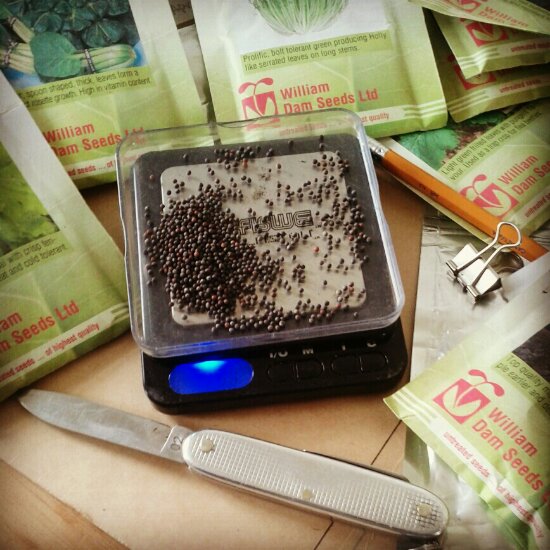
Measuring seed for lettuce and Asian greens mixes, using a digital gram scale from the local headshop. It works well, except I wish the auto-shutoff didn’t happen so quick. I was quite amazed by the selection of digital scales available, starting at, I think it was $20, and going up in $5 increments for a whole slew of models. Didn’t realize so many people were into making their own small-batch seasoning blends and custom salad mixes. Wow. Hahaha. The mixes are basically trial and error. For salad mix, it’s about color and texture at this point: frillier, greener, redder, crisper (baby Romaine is nice in there)—check the results, adjust the percentages for next round. For the Asian greens, it is more about taste, which so far has mostly come down to how much mustard to put in. Of course, how quickly they each grow is quite critically important, all varieties should grow at the same rate, in a fairly wide range of conditions. The lettuces are easier, and I started with some varieties recommended for baby leaf production for just that reason: fast-growing. The Asian greens, all brassicas at this point, are trickier. For example, tatsoi was included in our first runs, but it consistently grew lower than the rest, the leaves were a nice size, but when cutting, they tended to fall halfway below the blade. So, out goes the tatsoi, for now. It’s all about simple experimentation and adjusting things a bit as you go! (BTW, the knife is there just to slice open seed packs; for no real reason, that’s how I always do it…)
Planet Jr. rides again
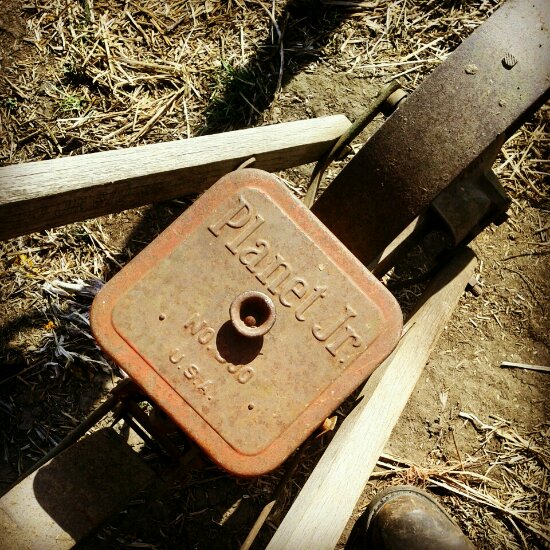
Rolled out the Planet Jr. seeder and got in a first 300′ of peas. Sugar Ann snap peas, that’s edible pod. This is just ahead of three days of colder temperatures, rain, and possibly snow. Since the weather forecast lately more often than not doesn’t even get the rest of the same day nearly right, who knows?! Still feels good to get that in. First direct seeding of the year. Yay. (Oh yeah, the new photo format is from Instagram, an app I’ve been playing with on my phone, kinda like Twitter for pics. And I started this post from my phone, but finished writing it on the laptop. Technology: enjoy it while you can! Hahaha. :)
Planting the rain gauge
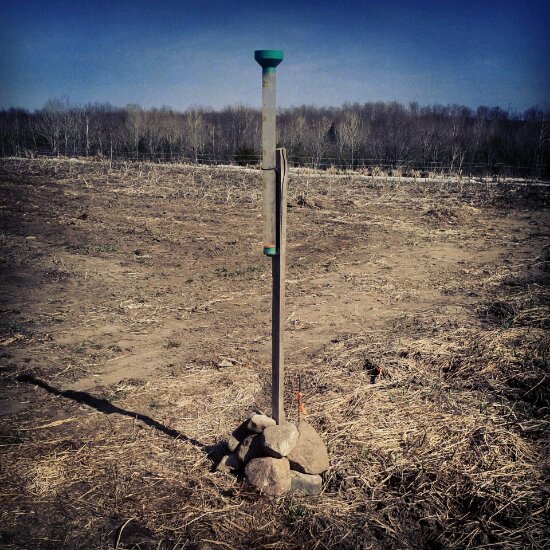
The field is way dry enough to till, so it’s time to get on the rain watch (yeah, and like as not there will be some snow in there)! Picked a new spot, just for variety, and set out the rain gauge once again. Hopefully it won’t fill up, then freeze and explode in some freakish lotsa-rain-then-cold-snap-all-in-one-night event. The 2×2 that it’s mounted on is starting to split from being pounded, so rather than change it at the moment, I only went down about a foot till it hit real resistance, and then shored it up with some rocks that were conveniently collected right there. Good for now, and probably all season! No effort wasted for real is my motto for the year. :)
It’s gotta be summer!
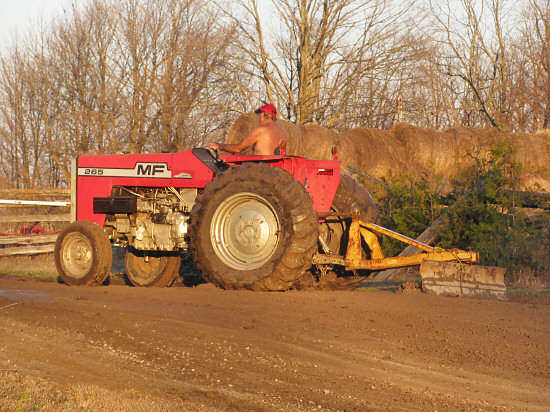
Wayne doing early evening yardwork SHIRTLESS on one of his trusty old tractors means it’s gotta be summer, right?! Well, this is actually only the first day of spring, a balmy 27ºC (80ºF) day that even managed to get the sweat rolling just a bit around midday walking around the field, and cooled down gently as it pulled into dusk. Nice, but freaky. Late March in the last few years around here has often been pretty clear of snow, but day after day of summer temperatures like this…not nearly. Birds are twittering, the grass is greening, and garlic is already pushing up through the mulch. Crazy weather continues…
Patchy frost
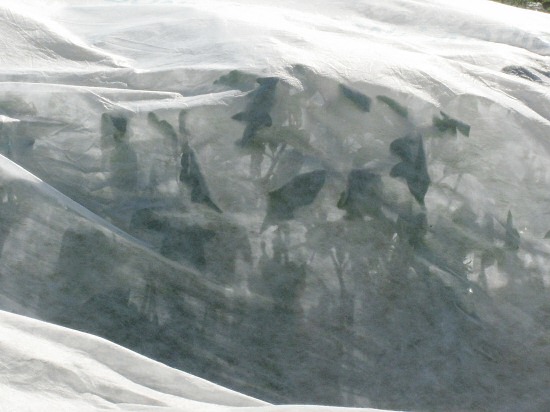
[Fri, Sep 16, 2011] First frost wasn’t too bad at all, a patchy frost that hit the field lightly, and in some areas, hardly at all. Still, the row cover, over some beans, peppers, eggplant, and a couple of beds of cherry tomato, worked out well, the exposed plants in those areas did get mildly to quite well…toasted. In the pic, we have Dusky eggplant, under its thin layer of salvation. Raising the floating row cover with a few non-pointy sticks, so it’s not pressing on the leaves, is a good idea—moisture often collects where the leaves touch the cover, freezes, and can deliver some pretty severe leaf burn. But for mature plants at this point in the season, I usually don’t worry about that—it’s different with seedlngs at the other end—and just float on the cover and leave it at that!
After market
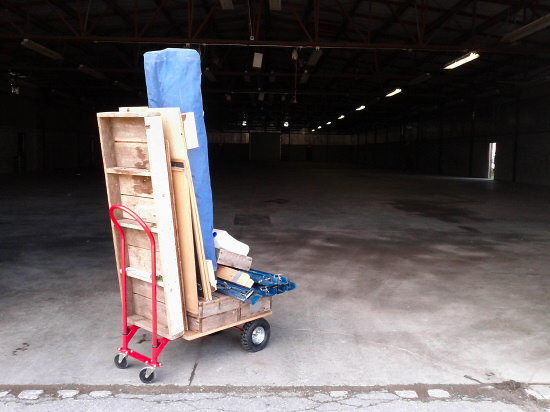
Around 1:25 p.m. and it’s just about time to head out from the farmers’ market, which officially ends at 1. This season, we’ve been storing the entire farm stand in the communal cage where vendors can leave stuff from Saturday to Saturday. The stand is quite the compact set-up, once it’s torn down and stowed away…efficiently. On the dolly, there’s the 10’x10′ E-Z UP canopy, half a dozen folding metal sawhorses and the plywood boards that turn them into tables, a pair of chalkboards, rough cut cedar display trays (a strip of four, and singles), pieces of 2×4 used to prop up the trays, and a plastic water jug used as a canopy weight (we normally have four, but this year we’ve been lashing the canopy legs to one of our neighbors, so weighting the four corners isn’t necessary). The only thing missing, besides the veg, of course, is our market box, which is a bin containing scales, bags, signage and so forth. Most farms come to market stand and all, as we did until last season’s start of…commuter farming—living off-farm—when logistics made leaving this gear at market a lot simpler. Anyhow, this huge exhibition hall houses the indoor market on Saturdays, November through April, and the big parking lot outside is where the summer outdoor market is located. The cage, a chain link fenced corner, is out of sight to the right. And that’s just about ALL the details. :)