Fall crops

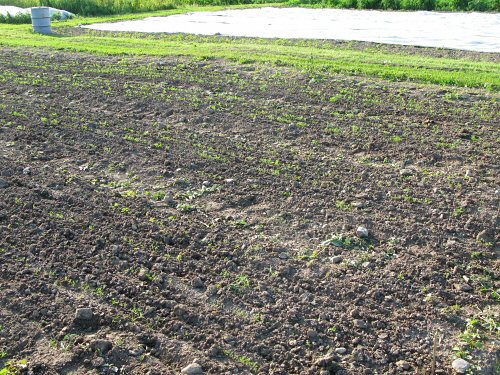
Not much to look at, yet, but the last plantings of 50-day-plus fall crops are doing fine. Here, carrots and, protected from flea beetles by floating row cover, one of two sections of brassicas, including broccoli, cauliflower and kale. There’s a bit of timing risk here, depending on the weather, if growing goes slow, they might not make it to maturity in time for market. But the sun’s been shining for a couple of days now, and the long range forecast is for more of the same. If all goes well, these will be ready for harvest through October!

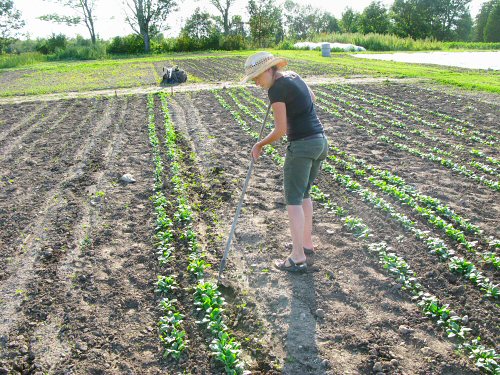
And the summer-seeded spinach couldn’t be doing better. There are two plantings, the first on July 22, and the second (left of the photo) a couple of weeks later. Here, Lynn hoes the first set: in this summer’s wet, cooler, cloudier conditions, germination was absolutely solid, as good as or better than regular spring seedings. Fall spinach has never been this good, by far. Excellent!
Last of the season’s brassicas

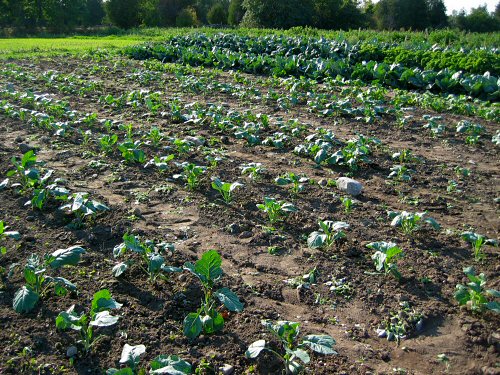
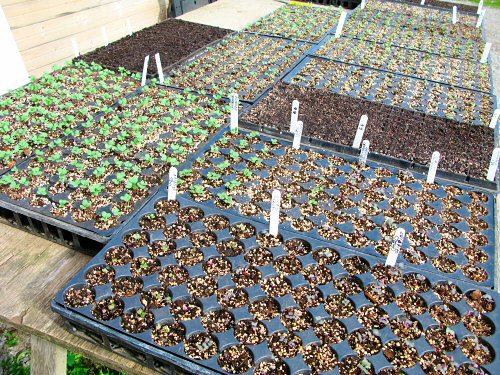
These brassica seedlings—broccoli, cauliflower, kale, early-maturing cabbage—were started a week ago, way late by any planting guide standard for our region, but I’m going by the reality of our recent crazy weather. Last year’s “late” cabbage family seedlings did just fine, so I’m gambling again! There are a couple of 200-cell trays of lettuce in there as well…

Checking under row cover

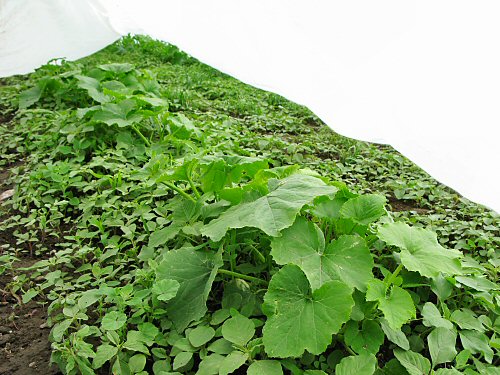
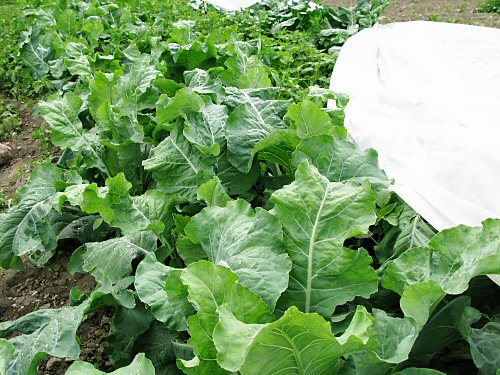
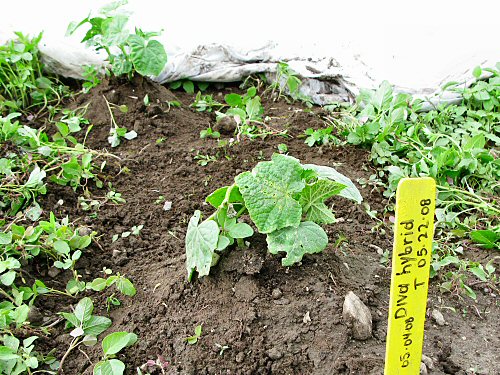
Three weeks ago, it was floating row cover everywhere. So, what was it worth? Today, I checked things out. Overall, growth has been startlingly slow, due to the lack of sun. This is really noticeable in the summer squash (above), which could be huge at this point, but…aren’t. Under cover, these zucchini (I didn’t check the variety) are doing fine, no cucumber beetle damage, but of course, weeds are doing fine as well: unmolested under there, pigweed runs rampant. I’ll take the cover off here in another week or so, and then there’ll be a whole lotta weeding to do… I removed the cover from the first beds of cauliflower (Snow Crown) and broccoli (below), they’re big enough to take a little flea beetle munching. The leaves have shaded out much of the potential weed action in the beds, but you can see a nice collection in the path (top center, where the row cover ends). The plants look untouched, although the flea beetles managed to get under and at the kale and collards, (they’re out of sight just to the left)—I left them covered, back in a week. If there’s any doubt about what the FBs will do, just check the radishes, which grow MUCH faster than these guys and can survive the damage…

Back with the cucurbits, the cucumbers are the most noticeably slow: after a month, they’re hardly bigger than the transplants they started as (hope it’s all going into the roots!)… I’ve cleared away the weeds between a couple of the plants, beetle damage is minimal (they tend to get in at the ends of rows, where the cover can get blown up by the wind), but there are weeds everywhere. Cover goes back on here for a while. Weird stunting weather and floating row cover: not the most peaceful and inspiring natural garden combo, but it should all straighten out in a bit… ;)

Kale under…snow

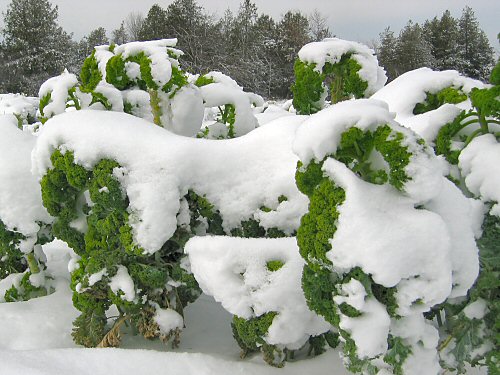
Kale under snow

Another installment in the snow-covered series: Winterbor kale! I’m so used to rollercoaster weather and the new winters that never really get started, it’s kind of a shock to have this much snow for three days in a row in November. And there’s no melt-off in sight, with the 15-day forecast predicting little sun and day temperatures hovering under 0°C (32°F). Picked a few pounds of the kale today, it’s still holding up, particularly the young new growth. It won’t last long if it stays frozen day and night. All this watching of cold-weather crops is bound to come in handy…sometime!

Seasonal eating

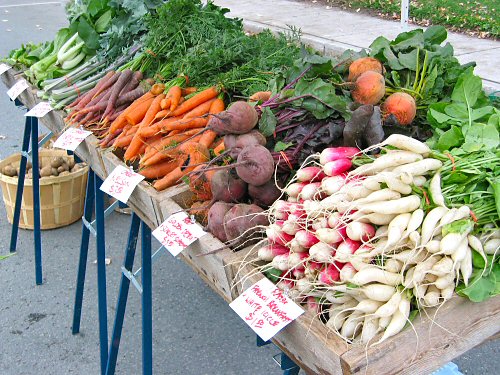
The veggie selection changes over the season, but it’s not necessarily reflected too dramatically on the stand at the farmers’ market this year. Compared to mid-August, the absence of snap beans and tomatoes is clear (with the mild weather, some vendors did have standard field tomatoes today). As for early June, well, more variety now is to be expected. Still, most of the cool-season crops for around here, like broccoli, cauliflower, and collards, also, winter squash, I have only enough of for CSA. On the stand, two types of radish (White Icicle, French Breakfast), three types of beet (Golden Detroit, Scarlet Supreme, Bull’s Blood, in smaller sizes here), two types of carrot (Nelson, Purple Haze), Red Russian kale, two types of bok choi (Mei Quing, Joi) and mesclun, plus Yukon Gold potatoes, Music garlic and Stuttgarter onions in baskets. The stand could be a lot bigger, offering more display space, and the harvest could be expanded (there are still herbs, summer squash, sweet and hot peppers, tomatillos, Brussels sprouts,…) but the marginal sales for many “secondary” veggies at this slowing down time of year don’t make it worthwhile. I’m still working on the balance between production planning, labor, harvest selection, post-harvest prep, and presentation… Sounds complicated, but it’s just…work! ;)

Latest brassicas released

On this bright and shiny Sunday, we finally released the last of the season’s brassicas from under row cover. The flea beetles have almost vanished and the plants need all the light they can get if they’re gonna make it to harvest. It’s still a bit of a long shot for the broccoli and cauliflower, but the early and prolific Red Russian kale should do fine. For what it’s worth, the long range forecast calls for a warm September—I’m still starting to slip into frost watch mode!

Crops for Fall

Fall brassicas

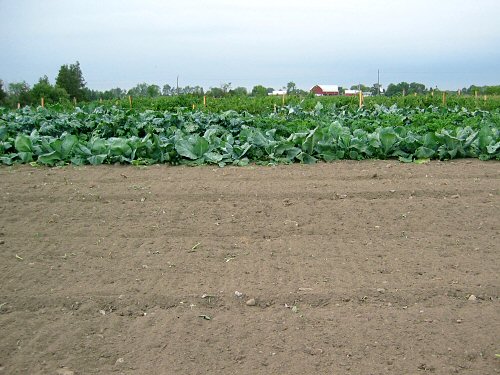
Newly released from row cover, five new beds of brassicas (cabbage, broccoli, cauliflower, kale) get ready for Fall. Beyond, tomatoes (and beyond that, the farm across the road, they gather honey). In front, a vacated section that contained the season’s first planting of peas seeded way back in April, and is now awaiting a mid-August green manure cover crop of…oats! And still, no rain…