
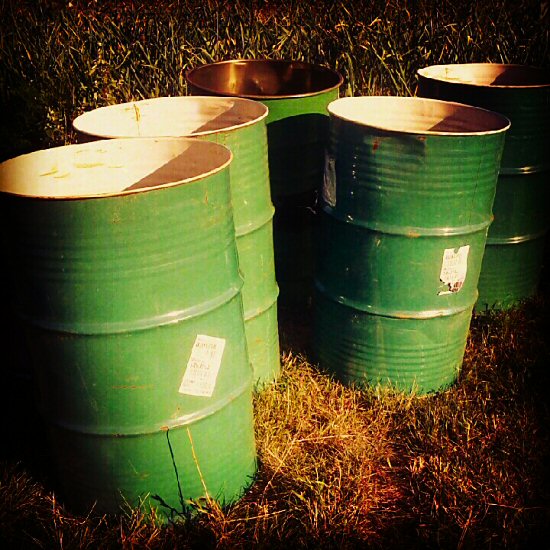
No luck with the dug well—at this point, the standing level has dropped around 10 ft. since spring, and the replenish rate is barely a foot in 24 hours—so it’s on to other water sources and delivery methods. As with most things on this tiny farm, the ultimate fallback tends to be something really labor-intensive. (Hahahahaha. I have to laugh.) In this case: WATER BARRELS. In a thankfully typical seek-and-ye-shall-find situation, there is a supplier of used barrels just down the road. Who’d have thought! These are standard 55 gallon, available in steel or plastic, and only about $10 a pop, with optional lids for a couple bucks more. Of course, they’re food-grade, which means, coated on the inside and used only for food, with those weathered white labels telling the story: pickles, perhaps. Strategically located around newly seeded beds, the barrels are filled from the house well (via the former dead well pipe) and then, 2-gallon watering cans do the final job. We still need rain as things grow, but this will work for germination and seedlings. Whatever it takes!
Fieldwork
When the well runs dry
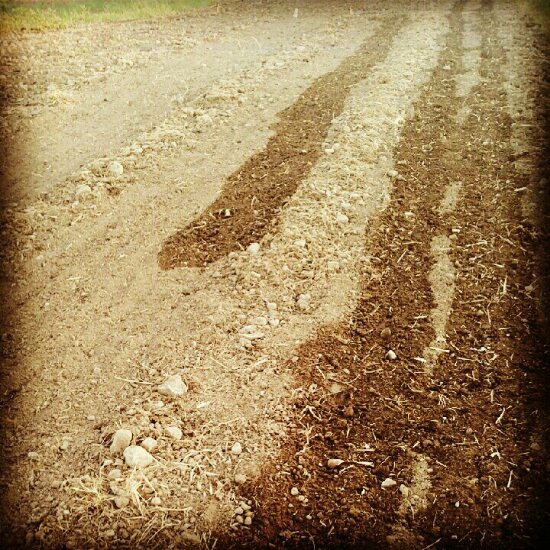
End of the line: what it looks like when your well bottoms out and the water stops flowing. Just like a power failure… We’ve been watching the level in the dug well we’re using, and the refresh rate is pretty dismal. Today, while watering in newly seeded beds, the water finally stopped. After last fall’s failed well drilling, figuring out short and longer term water solution is big here now. The water will come back eventually in this well, but the water table drops as the winter reserves go, and at this point, the well won’t refill high enough or quickly enough to be useful even for seedlings. Water barrels filled from the house well and distributed by watering can is a possible labor-intensive emergency measure. And of course, there is always…rain.
Your basic hand weeding
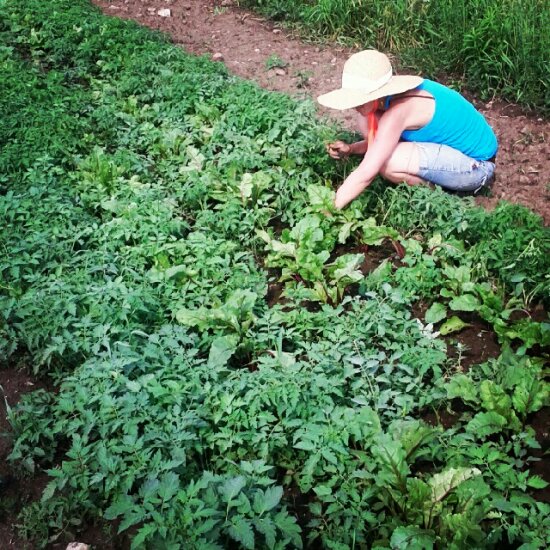
Hand weeding, what can I say, the cornerstone task on a tiny farm. Mel dives in (that’s beets in there, and volunteer tomatoes as weeds). This section has been unusually neglected, and still it’s really not as bad as it might look: in ideal start-of-summer conditions, what a difference just a few days can make, but it’s not too dense or deeply rooted, and a couple of hours of quick hand movements can cover a lot of area. We’ll also wheel hoe down the outside edges of the beds and down the paths, which is at least five times as fast! Give weeds too much of a head start, though, and Hand vs Weed is not a fair fight. Timing!
Rain watch begins
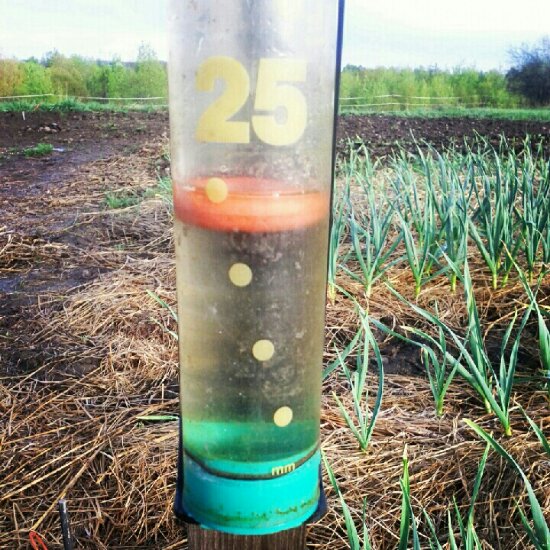
The season’s weekly rain watch begins. Weeks start on Monday. The big 25 on the rain gauge is the magic 25mm/1″ mark, the rule-of-thumb ideal for a week—an inch of slow and steady rain over a few hours, and of course all the rest, sunshine, that’s just…beautiful. A 1/2″ is an OK minimum for a bit. More than an inch a week ongoing for a while can be troublesome, depending on the crop and stage its—disease, small seed washed out, bigger seed rotting, whatnot, it is all possible :)—and it does occasionally happen. So far this week, 18mm here and 20mm total, so, doing fine!
Bucket loading
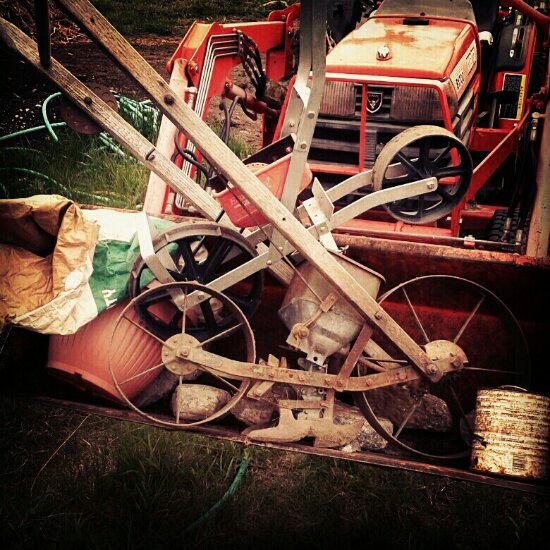
Especially in spring, with constant seeding and transplanting, moving gear around the field is a bigger deal than it may seem. Forget stuff, even little things like a hose fitting or a seed plate or some twine, and you’re heading back the equivalent of practically a city block to get it. A trailer of some sort is the ultimate for a 2-3 acre plot, but with decent packing skills, you can fit a lot into a tiny tractor bucket, too! This carefully balanced load includes everything needed for some direct seeding: the Planet Jr. and Earthway seeders (can’t forget the Earthway seed plates, they’re a perfect fit in that coffee can); seed, clipboard for notes, twine and stakes for row marking (all in that large flower pot); choice rocks for anchoring row cover (it’s never too early to protect brassicas from flea beetles!); and there’s the last of a 50lb bag of snap peas nestled in. It takes a practiced eye to fit everything you need so nothing falls out as you bump along—do it a few times and…easy peasy!
Planet Jr. rides again
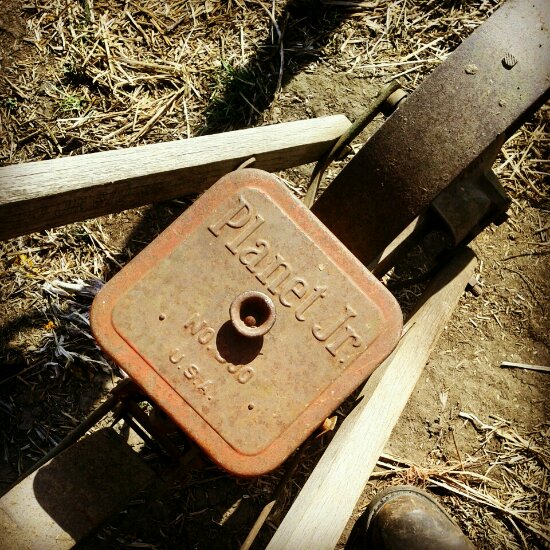
Rolled out the Planet Jr. seeder and got in a first 300′ of peas. Sugar Ann snap peas, that’s edible pod. This is just ahead of three days of colder temperatures, rain, and possibly snow. Since the weather forecast lately more often than not doesn’t even get the rest of the same day nearly right, who knows?! Still feels good to get that in. First direct seeding of the year. Yay. (Oh yeah, the new photo format is from Instagram, an app I’ve been playing with on my phone, kinda like Twitter for pics. And I started this post from my phone, but finished writing it on the laptop. Technology: enjoy it while you can! Hahaha. :)
It’s gotta be summer!
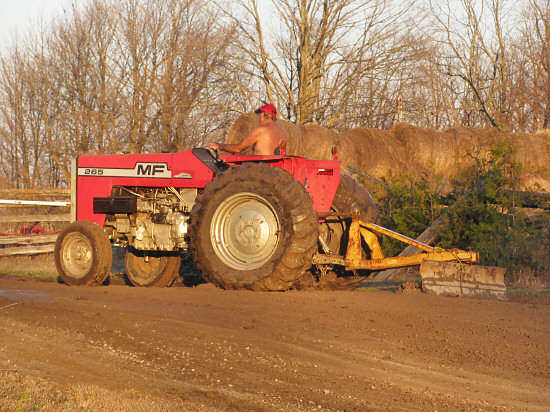
Wayne doing early evening yardwork SHIRTLESS on one of his trusty old tractors means it’s gotta be summer, right?! Well, this is actually only the first day of spring, a balmy 27ºC (80ºF) day that even managed to get the sweat rolling just a bit around midday walking around the field, and cooled down gently as it pulled into dusk. Nice, but freaky. Late March in the last few years around here has often been pretty clear of snow, but day after day of summer temperatures like this…not nearly. Birds are twittering, the grass is greening, and garlic is already pushing up through the mulch. Crazy weather continues…